
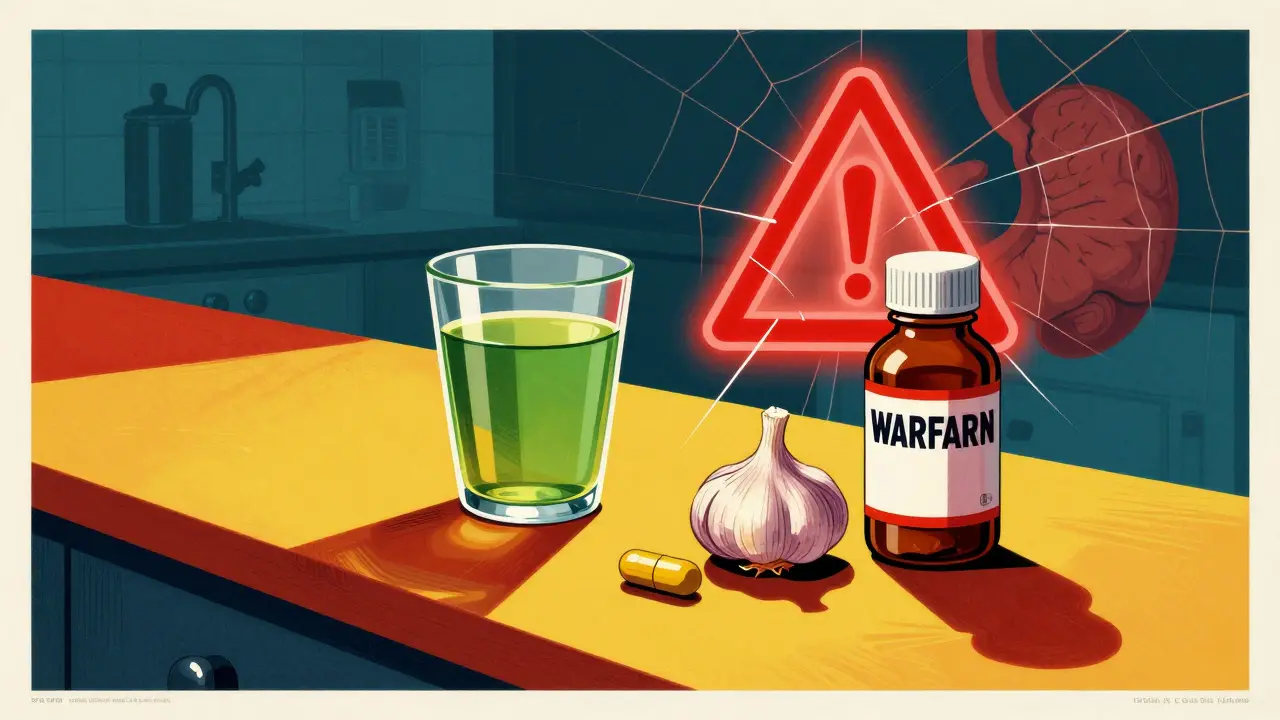
Every year, thousands of people on blood thinners end up in emergency rooms-not because of a missed dose or a fall, but because they took a daily herbal supplement they thought was harmless. Turmeric. Garlic. Ginseng. Green tea. These aren’t dangerous drugs. They’re sold in health food stores, labeled ‘natural,’ and promoted as immune boosters or anti-inflammatories. But when mixed with warfarin, apixaban, or rivaroxaban, they can turn a routine morning routine into a life-threatening event.
Why This Isn’t Just a ‘Maybe’ Risk
The truth is simple: herbal supplements don’t play by the same rules as prescription drugs. They aren’t tested for safety before hitting shelves. They don’t come with dosage guidelines approved by regulators. And most doctors don’t ask about them. A 2024 Medscape survey found that nearly 7 out of 10 people taking anticoagulants use herbal products-but only 1 in 3 told their doctor. Why? Because they believe ‘natural’ means ‘safe.’ That belief is deadly. In the U.S. alone, between 30,000 and 50,000 emergency visits each year are tied to these interactions. The FDA’s own data shows that Ginkgo biloba, garlic, and ginseng are behind nearly 70% of the most serious cases. Take warfarin, the most common blood thinner. It works by blocking vitamin K, which your body needs to form clots. Now add Ginkgo biloba, which inhibits platelet function. The result? Your blood thins twice as much as intended. INR levels-the measure of how long your blood takes to clot-can spike from a safe 2.5 to over 6.0 in under 72 hours. That’s not just risky. That’s bleeding territory: nosebleeds, bruising, internal bleeding, even strokes caused by ruptured vessels.The Top 10 Dangerous Herbs (And What They Do)
Not all supplements are equal. Some are harmless. Others are ticking time bombs. Based on data from the FDA, the European Medicines Agency, and over 20 clinical studies, here are the 10 most dangerous herbs when taken with blood thinners:- Ginkgo biloba: Blocks platelets. Increases bleeding risk by up to 300%. Documented in over 280 serious cases in the U.S. alone.
- Garlic: Thins blood and reduces clotting. Even one clove a day can raise INR. Many users don’t realize garlic pills are just as potent as raw garlic.
- Ginger: Inhibits thromboxane, a clotting factor. Safe at under 1 gram/day under supervision-but most supplements contain 500-1,000 mg per capsule. Easy to overdose.
- Ginseng: Can either increase or decrease INR unpredictably. Some users see bleeding; others develop clots. No safe middle ground.
- St. John’s Wort: Not a blood thinner-but it shuts down the liver enzyme (CYP3A4) that breaks down apixaban and rivaroxaban. Levels drop by 50%. You’re no longer protected from clots.
- Danshen (Salvia miltiorrhiza): A Chinese herb used for heart health. Causes INR to jump 300-400% in as little as two days. Used by 70% of anticoagulant users in parts of Asia.
- Chamomile: Contains coumarin, a natural blood thinner. Often overlooked because it’s in tea. One cup a day can be enough to interfere.
- Cranberry: Popular for urinary health. Interferes with warfarin metabolism. A 2023 study showed cranberry juice increased INR in 42% of users within a week.
- Green tea: High in vitamin K? No. But its catechins inhibit clotting factors. Two to three cups daily can destabilize INR in sensitive individuals.
- Dong quai: Often marketed as a ‘female tonic.’ Contains psoralens that increase bleeding risk. Linked to multiple hospitalizations in women on warfarin.
It’s Not Just Warfarin-Newer Blood Thinners Are at Risk Too
Many people assume that because they’re on apixaban (Eliquis) or rivaroxaban (Xarelto), they’re safe from herbal interactions. That’s a dangerous myth. St. John’s Wort is the biggest threat here. It activates liver enzymes that break down these drugs too fast. A 2021 clinical trial showed that just seven days of St. John’s Wort reduced apixaban levels by half. That means your risk of stroke or deep vein thrombosis shoots up-fast. Even CBD oil, now widely available, is a problem. A 2024 JAMA Internal Medicine trial found that 68% of warfarin users who took CBD saw their INR rise by 2.8 times. No warning labels. No doctor guidance. Just a bottle labeled ‘hemp extract.’ Newer anticoagulants may not interact with as many herbs as warfarin-but they still interact with enough to be deadly. And unlike warfarin, there’s no easy blood test to check if they’re working. You won’t know until it’s too late.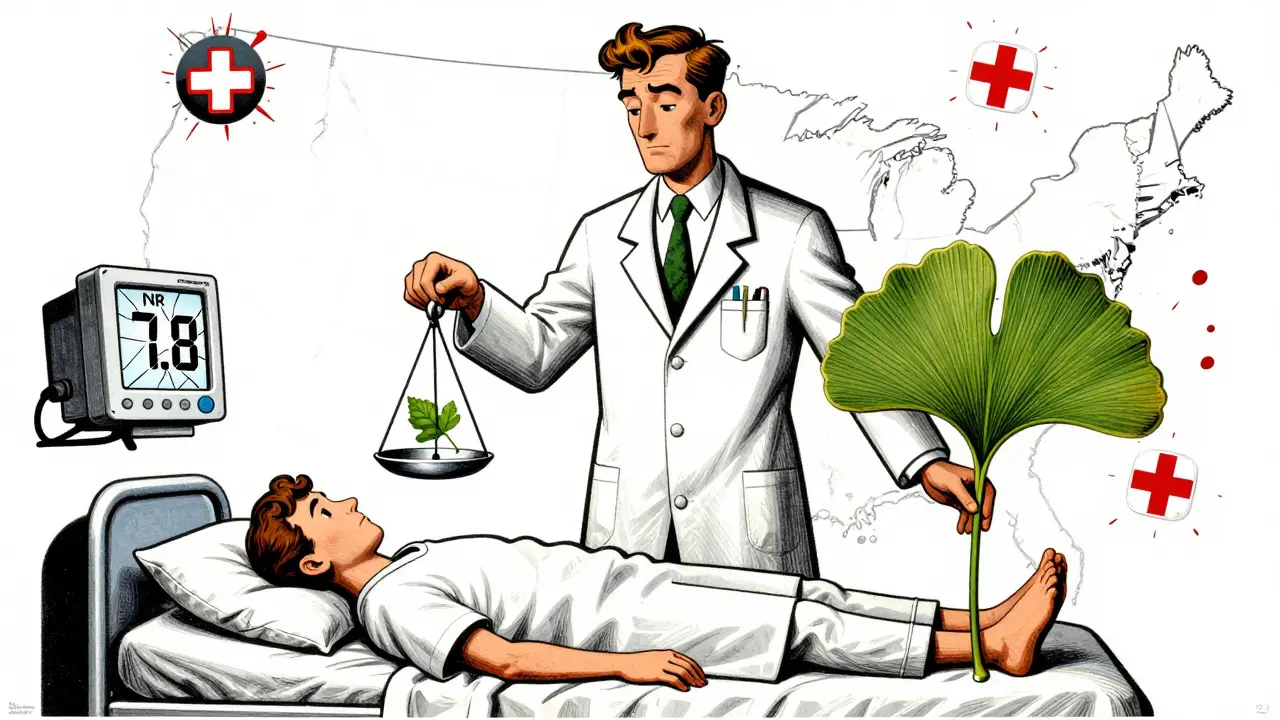
Why Doctors Don’t Always Ask (And What You Should Do)
Here’s the uncomfortable truth: most doctors don’t screen for herbal supplements. A 2022 study found that while 89% of physicians asked about prescription meds, only 37% asked about herbs. Only 27% documented supplement use in medical records. Why? Because they’re not trained to. Medical schools rarely teach herbal interactions. Pharmacists know more-but most patients never see one. So what do you do?- Always tell your doctor-every time you visit. Don’t wait for them to ask. Say: ‘I’m taking turmeric, ginseng, and green tea.’
- Bring your bottles. Photos of labels aren’t enough. Bring the actual containers. Many supplements have hidden ingredients or wrong dosages.
- Use the Natural Medicines Database. It rates interactions on a scale of 1-7. Level 7 = life-threatening. Ask your pharmacist to check your supplements against it.
- Don’t assume ‘natural’ = safe. The FDA doesn’t test these products before sale. A 2023 report found that 34.7% of herbal supplements contain unlisted drugs or contaminants.
What About Vitamin K? Isn’t That a Blood Thinner Too?
Yes and no. Vitamin K helps your body make clotting factors. Warfarin works by blocking it. So eating spinach or kale (which are high in vitamin K) can lower your INR. But here’s the key: consistency matters more than quantity. A 2023 JAMA Network Open study tracked 1,284 patients. Those who ate a steady amount of vitamin K-rich foods-like 1 cup of spinach daily-had more stable INRs than those who skipped greens for weeks, then ate a giant salad. Their INR didn’t swing wildly. Herbs, though? They’re unpredictable. One day you take garlic, the next you don’t. Your INR jumps. You feel fine. Then you bruise easily. Then you bleed internally. No warning.
Real Stories, Real Consequences
Reddit user u/WarfarinWarrior posted in January 2025: ‘Added turmeric to my smoothie for arthritis. Two days later, I was in the ER with an INR of 4.2. No bleeding yet-but they said if I’d kept going, I could’ve had a brain bleed.’ Another patient, a 71-year-old woman in Perth, started taking ginseng for ‘energy’ after retirement. She didn’t tell her cardiologist. Three weeks later, she collapsed with a gastrointestinal bleed. Her INR was 7.8. She needed 8 units of blood. Her ginseng supplement? Contained undisclosed danshen. On the flip side, some people do fine. A 2024 PatientsLikeMe survey found that 28.6% of users who took low-dose ginger (under 1 gram per day) under pharmacist supervision had no issues. But that’s the exception-not the rule.What’s Changing in 2025
Good news: things are starting to shift. In 2025, the FDA now requires all new anticoagulant prescriptions to include a standardized checklist asking patients about herbal supplement use. Pharmacists in Australia, Canada, and the U.S. are being trained to screen for these interactions during medication reviews. AI tools like MedCheck AI, approved by the European Medicines Agency in 2024, can now predict dangerous interactions with 92.4% accuracy. Soon, your pharmacist’s computer will flag ‘ginseng + apixaban’ before you even walk out the door. And in 2024, the International Warfarin Pharmacogenetics Consortium showed that genetic testing for CYP2C9 and VKORC1 genes can reduce bleeding risk by 31% in people using herbs. It’s not mainstream yet-but it’s coming.Bottom Line: What You Must Do Today
If you’re on a blood thinner:- Stop assuming. Don’t assume your supplement is safe. Don’t assume your doctor knows. Don’t assume ‘natural’ means harmless.
- Bring your supplements to every appointment. Even if you think they’re ‘just vitamins.’
- Use a pharmacy that checks interactions. Ask: ‘Can you run my meds and supplements through the Natural Medicines Database?’
- Track your INR. If you’re on warfarin, know your target range. If it’s suddenly higher or lower without reason, check your supplement use.
- Report side effects. If you bruise more, bleed longer, or feel dizzy, tell your doctor-and say what supplements you took.
Can I still take turmeric if I’m on a blood thinner?
Turmeric (and its active compound curcumin) can increase bleeding risk by interfering with platelet function and warfarin metabolism. While low doses (under 500 mg/day) may be tolerated by some under close INR monitoring, it’s not recommended without doctor approval. Many cases of dangerous INR spikes have been linked to turmeric supplements-even those labeled ‘standardized’ or ‘bioavailable.’
Do herbal supplements interact with Eliquis or Xarelto?
Yes. While newer anticoagulants like Eliquis and Xarelto have fewer interactions than warfarin, they’re not immune. St. John’s Wort can cut apixaban levels in half, making you vulnerable to clots. CBD oil has been shown to raise INR in warfarin users and may affect other anticoagulants too. Ginkgo, garlic, and ginger can still increase bleeding risk. Always check with your pharmacist before adding any supplement.
Why don’t my doctors ask about my supplements?
Most doctors aren’t trained to screen for herbal interactions. Medical curricula focus on prescription drugs, not supplements. A 2022 study found that while 89% of physicians ask about prescription meds, only 37% ask about herbs. Don’t wait for them to ask-bring your bottles and name every supplement you take, even if it’s just green tea or ginger capsules.
Is it safe to take vitamin K supplements while on warfarin?
No-not unless your doctor specifically prescribes it. Vitamin K directly counteracts warfarin. Taking a supplement can make your INR drop dangerously low, increasing your risk of stroke or clotting. However, eating consistent amounts of vitamin K-rich foods (like spinach or kale) is safe and actually helps stabilize your INR. The problem isn’t the food-it’s the unpredictable swings from supplements or inconsistent diets.
Are there any herbal supplements that are safe with blood thinners?
There’s no blanket answer. Even supplements like omega-3 fish oil or vitamin D can have mild effects on bleeding risk. The safest approach is to avoid all herbal supplements unless approved by your anticoagulation clinic or pharmacist. If you want to use something for health-like magnesium for sleep or vitamin D for immunity-choose single-ingredient, third-party tested products and get them checked against the Natural Medicines Database first.
What should I do if I’ve already taken a risky herb?
Stop taking the supplement immediately. Call your doctor or pharmacist and tell them exactly what you took, how much, and when. If you’re on warfarin, request an INR test within 24-48 hours. If you’re on a newer anticoagulant and experience unusual bruising, bleeding, dizziness, or weakness, go to the emergency room. Don’t wait. These interactions can escalate fast.


Sandeep Mishra
December 29, 2025 AT 20:46Been on warfarin for 8 years. Took turmeric for my knees. Didn’t think twice. One morning I woke up with a black eye and no memory of falling. INR was 5.9. They said if I’d kept going, I’d have bled out in my sleep. Now I bring my supplements to every appointment. Natural doesn’t mean gentle. It just means unregulated.
Also, ginkgo tea? Don’t. Even the ‘mild’ stuff. I learned the hard way.
Joseph Corry
December 30, 2025 AT 21:41How quaint. You treat herbal supplements like rogue actors in a Shakespearean tragedy. The real issue is the pathological ignorance of regulatory bodies. The FDA’s failure to classify these as drugs isn’t an oversight-it’s a moral surrender to pseudoscience. You’re not ‘managing risk.’ You’re capitulating to a culture that confuses tradition with evidence.
And don’t get me started on ‘Natural Medicines Database.’ It’s a glorified wiki with a fancy name. Real science doesn’t need databases-it needs double-blind trials. Which, of course, no one funds because herbs can’t be patented.
Colin L
January 1, 2026 AT 06:03I’ve been thinking about this for days, honestly. It’s not just the herbs. It’s the entire fucking paradigm of self-medication in the West. We’ve turned our bodies into DIY projects. We buy pills like they’re Amazon Prime deliveries-click, ship, swallow, feel better. But we don’t think about systems. We don’t think about metabolism. We don’t think about cytochrome P450 enzymes like they’re gods in a temple we’ve forgotten how to worship.
I took ginseng for three months because my therapist said ‘it helps with adrenal fatigue.’ My INR went from 2.1 to 6.3. I didn’t even know what INR meant until I was in the ER. And now? I cry every time I see a bottle of ‘organic turmeric.’ Not because I’m scared. Because I’m ashamed. We’ve been sold a lie, and we bought it with our blood.
And doctors? They’re just as guilty. They don’t ask because they don’t know. And they don’t know because medical school taught them to treat symptoms, not systems. We’re all just stumbling in the dark, trying not to bleed out while someone sells us a ‘natural’ solution that’s just a Trojan horse for hemorrhage.
kelly tracy
January 2, 2026 AT 23:56Wow. So now we’re blaming herbs? What’s next? Blaming gravity for falls? People are idiots. If you’re on blood thinners, you don’t take anything that isn’t prescribed. Period. No ‘maybe,’ no ‘low dose,’ no ‘I read it on Reddit.’ You’re not special. You’re not immune. You’re just a walking liability.
And don’t even get me started on ‘natural’ labels. That’s just marketing for people who can’t read a scientific paper. If it’s not FDA-approved as a drug, it’s not medicine. It’s candy with a yoga vibe.
srishti Jain
January 3, 2026 AT 20:25Garlic pills = bad. INR up. Done.
Stop.
Cheyenne Sims
January 4, 2026 AT 17:45It is imperative to recognize that the absence of regulatory oversight for dietary supplements constitutes a significant public health vulnerability. The conflation of botanical agents with therapeutic pharmaceuticals represents a dangerous epistemological error. Patients must be educated to understand that the term ‘natural’ is semantically vacuous in the context of pharmacokinetic interaction. One must consult a licensed clinical pharmacist prior to ingestion of any non-prescription phytochemical agent.
Shae Chapman
January 6, 2026 AT 09:17I just cried reading this. 😭
I took green tea extract because I wanted to ‘detox’ after the holidays. Two weeks later, I had a nosebleed that wouldn’t stop. My INR was 5.1. I thought I was being healthy. Turns out I was just being reckless.
Now I tell every doctor, nurse, and pharmacist: ‘I take nothing but my meds.’ And I check every supplement with my pharmacy before I buy it. I wish I’d known sooner.
Thank you for writing this. I’m sharing it with my whole family. ❤️
Nadia Spira
January 7, 2026 AT 01:48This is peak performative health literacy. You’re not educating people-you’re fearmongering with bullet points. You list 10 herbs like they’re all equally lethal, but you offer zero nuance. What about dose? What about duration? What about individual pharmacogenomics? You reduce complex biochemistry to a horror list because it gets clicks.
And yet you don’t mention that 90% of these cases involve polypharmacy, alcohol, or noncompliance with INR monitoring. But hey, blaming turmeric is easier than admitting the system is broken.
Also, ‘Natural Medicines Database’? That’s not science. That’s a subscription service run by a for-profit company that sells you the answers you already paid for.
henry mateo
January 7, 2026 AT 20:58just wanted to say thank you for this. i’ve been on xarelto for afib and took ginseng for a month thinking it’d help my energy. i didn’t know it could mess with my meds. i stopped it after reading this and went to my pharmacist yesterday. she ran it through the database and said i was lucky i didn’t have a clot. i’m gonna bring all my bottles to my next dr appt. i didn’t even know you could do that.
also i typoed a lot. sorry. 😅
Kunal Karakoti
January 8, 2026 AT 01:58There’s a deeper question here: Why do we feel the need to ‘enhance’ ourselves with supplements at all? We live in an age where wellness is commodified, and the body is seen as a machine that needs tuning. But what if the body isn’t broken? What if the real remedy is rest, consistency, and humility?
Herbs aren’t the enemy. Our arrogance is.
Kelly Gerrard
January 9, 2026 AT 20:57Stop taking supplements. Period.
Doctor knows best.
Trust the system.
Live longer.
Glendon Cone
January 10, 2026 AT 04:49Big thanks for laying this out so clearly. I’m a nurse and I see this all the time. Patients will say ‘I only take one pill’-and it’s a bottle with 12 ingredients, half of which aren’t even listed on the label.
My tip: If you’re on a blood thinner and you’re thinking about adding something new, wait 48 hours. Then ask your pharmacist this: ‘If this was a prescription drug, would you prescribe it to me?’ If the answer is no-don’t take it.
Also, CBD is a sneaky one. Even the ‘zero THC’ stuff can mess with your meds. Just say no.
And yes, I’m a fan of emojis. 🙃