
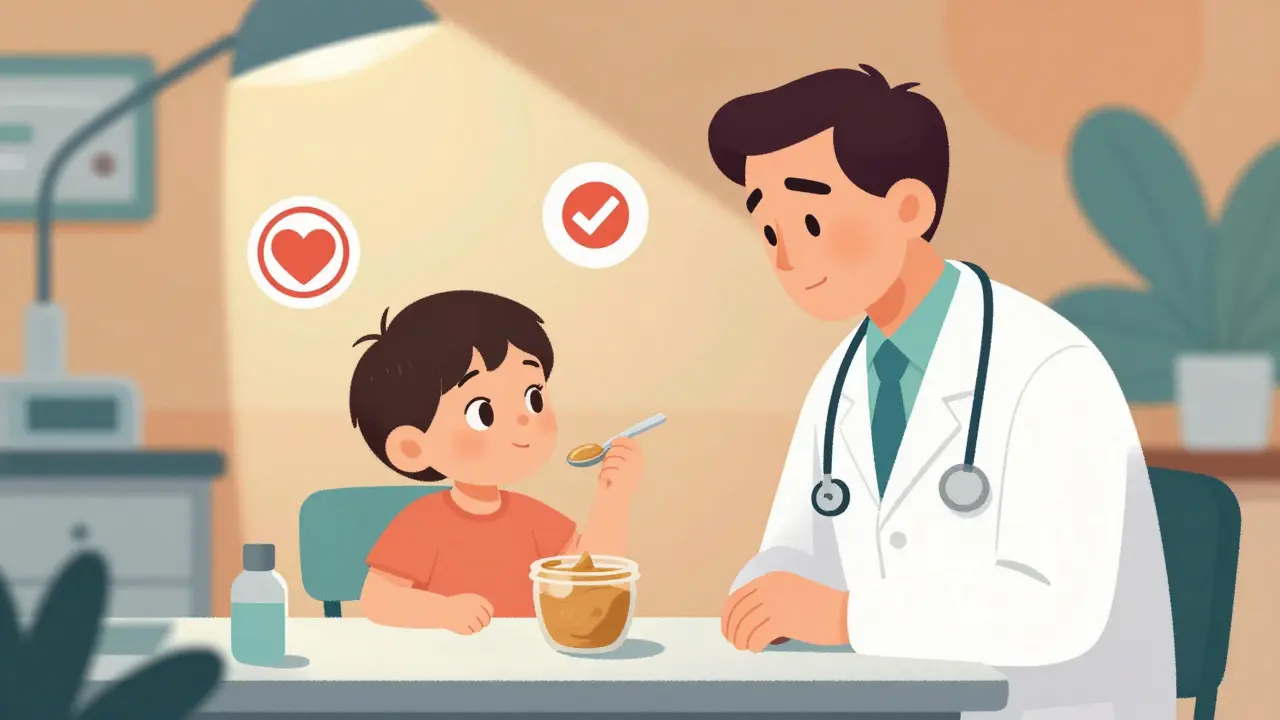
When you're told your child is allergic to peanuts-or milk, eggs, or shellfish-it's easy to assume the diagnosis is final. But what if they're not? What if years of avoiding a food they once tolerated were based on a false alarm? This is where the oral food challenge comes in. It’s not glamorous. It doesn’t come with a quick blood test result or a skin prick that leaves a tiny bump. But it’s the only test that gives you a real, definitive answer: yes, your body reacts to this food-or no, it doesn’t.
Why the Oral Food Challenge Is the Gold Standard
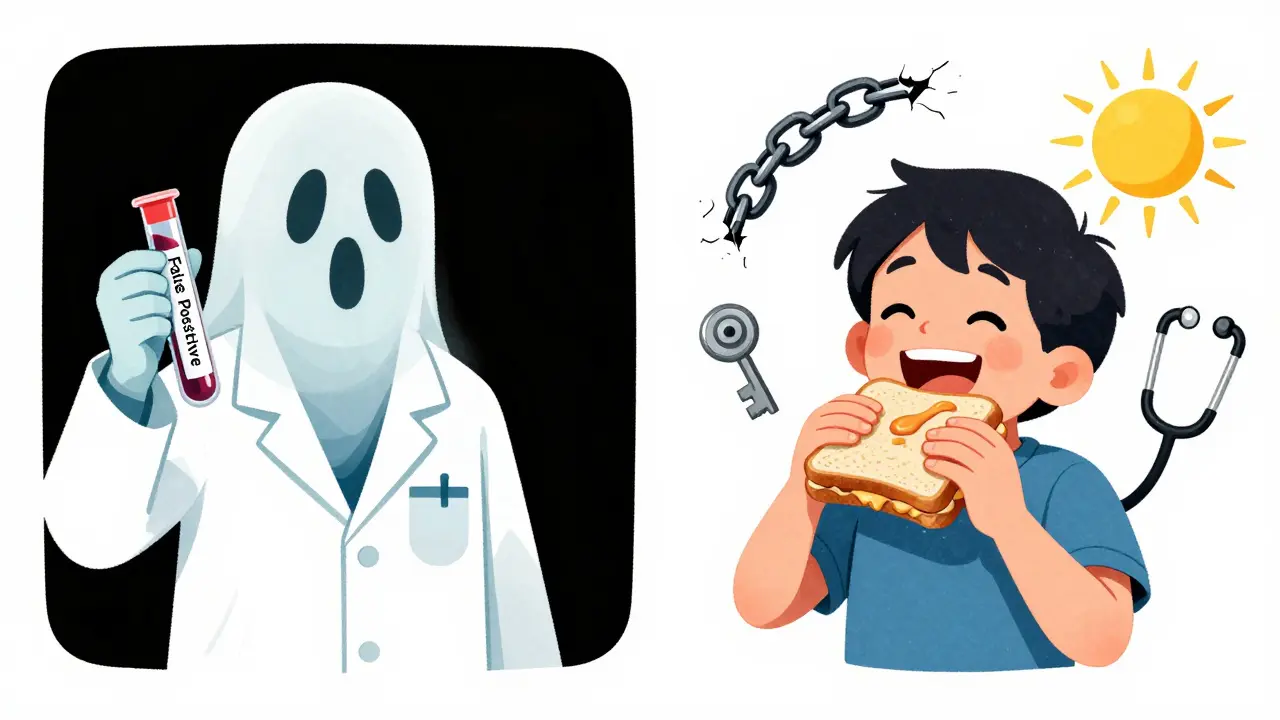
Skin prick tests and blood tests for IgE antibodies are common. But they’re not reliable on their own. A positive result doesn’t always mean you’ll have a reaction when you eat the food. In fact, studies show these tests are wrong more than half the time. That’s why allergists don’t make final decisions based on them. The oral food challenge is the only test that puts the food directly into the body and watches what happens. No guesswork. No indirect signals. Just real-time observation.Imagine you’ve been avoiding eggs for three years because a blood test came back positive. Your child hasn’t eaten one since they were a baby. But now they’re five. Could they have outgrown it? A blood test might still say "positive." Only an oral food challenge can tell you for sure. In about 65% of children with egg or milk allergies, the allergy fades by age five. But without an OFC, you won’t know if it’s truly gone-or just dormant.
How an Oral Food Challenge Works
The process is simple in concept, but tightly controlled in practice. You start with a tiny amount-often just 1 to 2 milligrams of the food. That’s less than a single grain of rice for peanut butter. You wait 15 to 30 minutes. If nothing happens, you get a little more. This continues, step by step, until either you’ve eaten a full serving-or a reaction occurs.The whole thing takes 3 to 6 hours. You’re monitored the entire time: heart rate, breathing, skin color, any signs of swelling or itching. The test can be open (you know what you’re eating), single-blind (only the doctor knows), or double-blind (neither you nor the doctor knows). Most of the time, it’s open. Why? Because it’s practical. But if a child is too anxious or a parent’s fear is affecting the outcome, doctors might use a disguised version-like hiding peanut butter in a cookie or encapsulating it in a capsule.
And yes, you’re in a medical setting. Not just any clinic. A place with epinephrine, oxygen, antihistamines, and trained staff ready to act. You don’t do this at home. Not unless you’re in a carefully monitored research study.
Safety: What Are the Real Risks?
People hear "food challenge" and think, "That’s dangerous." And yes, it carries risk. But the risk is low-and managed. About 40% to 60% of challenges result in mild symptoms: a few hives, a flushed face, a little stomach upset. These are treated quickly with antihistamines and monitored closely.Severe reactions requiring epinephrine? That happens in only 1% to 2% of cases when protocols are followed. A 2020 study in the Journal of Allergy and Clinical Immunology found just 0.9% of challenges needed emergency treatment. That’s lower than the risk of a car ride to the clinic.
And here’s the thing: if a reaction happens, it happens under supervision. That’s the point. You don’t want a reaction in the school cafeteria or at a birthday party. You want it in a room where someone can give epinephrine in seconds, where oxygen is ready, where the ambulance is on standby. That’s what makes this procedure safe-not the absence of risk, but the presence of control.
Who Benefits the Most?
The biggest winners are people who’ve been avoiding foods unnecessarily. Studies show that 25% to 30% of people told they have a food allergy turn out to be fine after an OFC. That means they’ve been living with restrictions that cost money, cause stress, and limit social life-all for no reason.Children outgrowing allergies are another major group. Egg, milk, soy, and wheat allergies often fade. Peanut and tree nut allergies less so. But even then, some kids do. Without an OFC, you’ll never know if your child can safely try that peanut butter sandwich again.
It’s also used to find the exact threshold. Some people can eat a trace of peanut without issue. Others react to a whole serving. Knowing that threshold helps families make smarter choices-like whether a product labeled "may contain peanuts" is truly dangerous for their child.
What You Need to Do Before the Challenge
Preparation matters. You can’t just show up and hope for the best. Here’s what you need to do:- Stop antihistamines 5 to 7 days before. They hide early symptoms, which could lead to a false negative.
- Don’t come in sick. A cold or asthma flare-up increases your chance of a reaction.
- Make sure your child is well-rested. Anxiety spikes when kids are tired.
- Bring distractions: tablets, books, favorite toys. The hours drag. Keep their mind off the food.
- Wear loose clothing. It’s easier to spot rashes if your shirt isn’t tight.
And talk to your allergist. Ask about the exact food form they’ll use. Will it be pure peanut butter? A baked muffin? A capsule? Knowing this ahead of time helps reduce fear.
What Happens After?
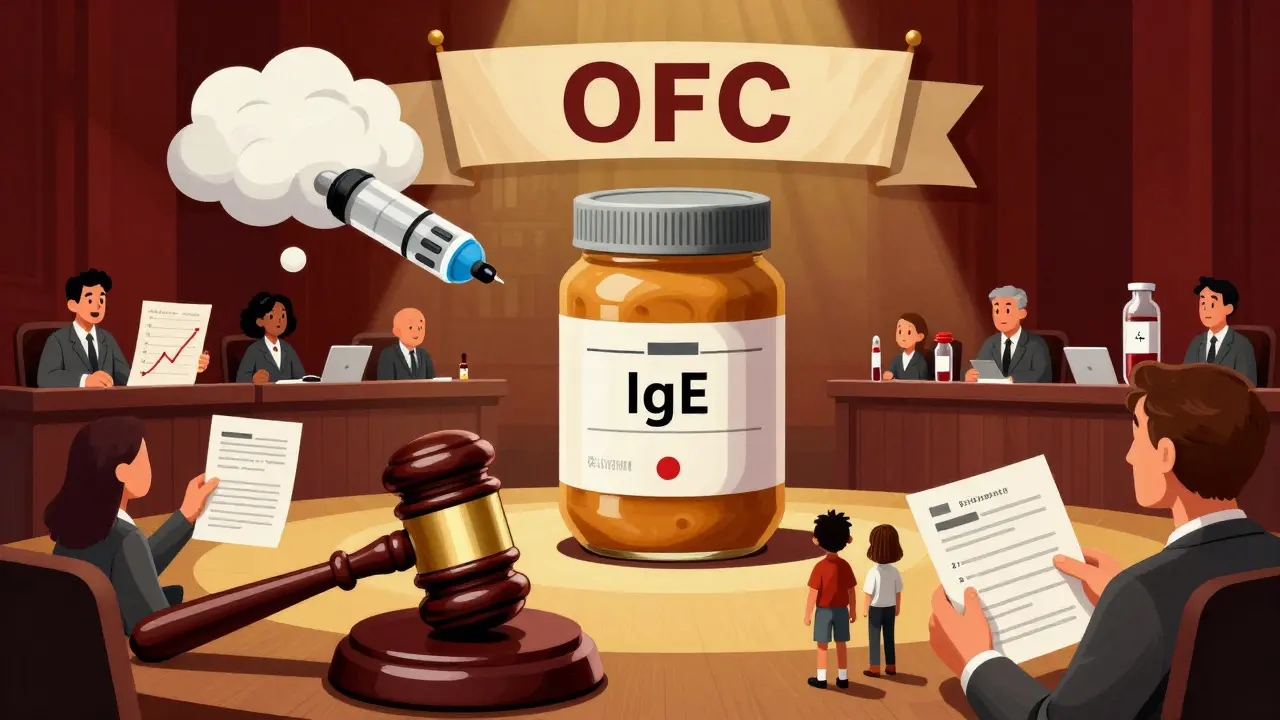
If the challenge is negative-you didn’t react-you’re cleared. No more avoidance. No more panic labels. You can eat the food freely. Your allergist will give you a written report to take to school, camp, or relatives.If you react? You’ll be treated immediately. Then you’ll get a clear diagnosis. You’ll know exactly what to avoid and how to manage it. You’ll leave with a plan, not a mystery.
Most families, even those who had scary moments during the challenge, report high satisfaction. A 2022 survey at Nationwide Children’s Hospital found 89% of caregivers felt the test was worth it. Why? Because they finally had an answer. No more guessing. No more "maybe." Just facts.
Why Other Tests Can’t Replace It
There are newer tests out there-component-resolved diagnostics, for example. These look at specific proteins in food, not just overall IgE levels. They’re better than old blood tests. But even they only get you to about 85% accuracy. The oral food challenge? Close to 100%.Why? Because no lab test can mimic what your body does when you actually swallow the food. The gut, the immune system, the skin-they all react together in real time. No machine can replicate that.
That’s why the European Academy of Allergy and Clinical Immunology says clearly: "No in vitro test can replace the oral food challenge for definitive diagnosis."
Is It Worth It?
It’s not easy. It’s long. It’s stressful. For parents, watching your child eat something you’ve been told could kill them is terrifying. For kids, it’s confusing. Why are they giving me this? Why are all these people watching?But here’s what parents say after: "It was the best decision we ever made."
One mother on Reddit wrote: "My son cried through the whole peanut challenge. I cried too. But when he finished the last bite and didn’t break out in hives? We hugged for ten minutes. We had our life back."
For the 32 million Americans with food allergies, the oral food challenge isn’t just a test. It’s a doorway to freedom-from fear, from restrictions, from uncertainty. It’s the only tool that turns suspicion into certainty. And in medicine, that’s priceless.
Can you do an oral food challenge at home?
Home-based oral food challenges are still experimental and only approved under strict research conditions. They’re not standard practice. The American Academy of Allergy, Asthma & Immunology (AAAAI) allows them only for low-risk cases with documented prior mild reactions, and only under direct telehealth supervision with emergency plans in place. For most people, the challenge must be done in a medical facility with trained staff and emergency equipment.
How long does an oral food challenge take?
Most oral food challenges last between 3 and 6 hours. The first 1 to 2 hours are for gradually increasing the food dose-usually every 15 to 30 minutes. The next 2 to 3 hours are for observation after the final dose to make sure no delayed reaction occurs. Some reactions, especially with cooked foods like milk or egg, can take hours to appear.
Do I need to stop my medications before the test?
Yes. Antihistamines (like Benadryl, Zyrtec, Claritin) must be stopped 5 to 7 days before the challenge because they can mask early signs of a reaction. This includes over-the-counter and prescription versions. You can usually continue asthma inhalers, nasal sprays, and other non-antihistamine medications. Always confirm with your allergist before stopping anything.
What if I have a reaction during the challenge?
Reactions are expected and managed on-site. Mild symptoms like hives or mild stomach upset are treated with antihistamines. More serious reactions-like trouble breathing, swelling, or low blood pressure-are treated immediately with epinephrine. The medical team is trained and equipped to handle this. The goal isn’t to avoid all reactions-it’s to safely trigger one so you know how to manage it in real life.
Can adults have oral food challenges too?
Absolutely. While children are more likely to outgrow allergies like milk and egg, adults can also benefit. Some adults develop new food allergies later in life. Others suspect they’ve outgrown an allergy from childhood. OFCs are used for both groups. The process is the same. The risks and benefits are similar. Age doesn’t disqualify you-it just means your history matters more in planning the test.
Is an oral food challenge covered by insurance?
Yes, in most cases. Oral food challenges are considered medically necessary diagnostic procedures by major insurers in the U.S. and other developed countries. Coverage depends on your plan and whether your allergist documents medical necessity-like inconclusive prior tests or a history of suspected allergy. Always check with your provider beforehand, but most patients pay little to nothing out of pocket.
How many oral food challenges do allergists perform each year?
Board-certified allergists typically perform between 50 and 200 oral food challenges per year. Larger hospital-based allergy centers, like Cleveland Clinic or Children’s Hospital of Philadelphia, perform 500 to 1,000 annually. With over 32 million Americans living with food allergies and rising diagnosis rates, demand for OFCs continues to grow-about 15% per year through 2028.
What foods are most commonly tested in oral food challenges?
The most common foods tested are the top eight allergens: milk, egg, peanut, tree nuts, soy, wheat, fish, and shellfish. Peanut and egg are the most frequent because they’re common in children and often outgrown. Shellfish and tree nuts are less likely to be outgrown, so challenges are often used to confirm persistent allergies. Newer challenges are also being done for sesame, which is now a required label allergen in the U.S. as of 2023.

Todd Nickel
January 1, 2026 AT 02:30Been through two OFCs with my kid-peanut and egg. The anxiety leading up to it was worse than the actual test. I mean, sitting there watching them eat a spoonful of peanut butter like it’s a science experiment… you feel like a monster. But when they finished the last bit and didn’t turn into a human balloon? Pure relief. I didn’t cry, but my wife did. We’ve been eating peanut butter on toast every morning since. No more reading ingredient labels like they’re ancient runes. It’s not just medical-it’s emotional liberation.
Austin Mac-Anabraba
January 2, 2026 AT 15:33Let’s be brutally honest here-this whole system is a profit-driven illusion. Allergists make bank on fear. Blood tests? $300. Skin prick? $200. OFC? $1,200 and a six-hour time suck. Meanwhile, the ‘positive’ IgE results are meaningless noise-false positives abound. And yet, doctors push this like it’s gospel. Why? Because if you tell parents their child isn’t allergic, you lose recurring visits, prescriptions, epinephrine auto-injector sales. The real gold standard is the parent’s intuition-not a lab. We’ve been conditioned to outsource our instincts to white coats in sterile rooms. Wake up.
Phoebe McKenzie
January 3, 2026 AT 09:56HOW DARE YOU normalize risking a child’s life like this?! This isn’t science-it’s Russian roulette with a side of anxiety. You’re telling parents to feed their kid something they’ve been told could KILL THEM? And you call it ‘safe’ because 99% of the time they don’t die?! That’s not safety-that’s gambling with pediatric lives. I’ve seen kids in the ER after ‘mild’ reactions turn into full anaphylaxis 45 minutes later. And now you want us to trust a clinic with ‘trained staff’? What if they’re tired? What if they’re understaffed? What if the epinephrine is expired? This isn’t medicine-it’s institutionalized negligence wrapped in a white coat.
gerard najera
January 4, 2026 AT 09:17Real diagnosis needs real exposure. No shortcuts.
Stephen Gikuma
January 4, 2026 AT 17:27They’re not testing for allergies-they’re testing for compliance. You think this is medicine? It’s a loyalty test. The CDC, FDA, AAP-they all push OFCs because they want you to trust the system. But why do they only allow this in hospitals? Why not at home? Because if you could do it at home, you’d realize how arbitrary the whole system is. And if people started questioning the fear-based control… what then? Who profits when parents stop being terrified? Not the pharmaceutical giants. Not the insurance companies. Not the allergists who get paid per test. This isn’t about health-it’s about control. And you’re being manipulated.
Bobby Collins
January 5, 2026 AT 17:00okay but like… what if you’re just weird sensitive to peanuts and not actually allergic?? like i had this cousin who got a positive test but could eat peanut butter just fine?? and they made her avoid it for 5 years?? then she did the challenge and was fine?? now she eats it every day and no one even cares?? why do we make this so dramatic??
Layla Anna
January 7, 2026 AT 01:14My daughter did the peanut challenge last year… she was so scared she hid under the table 😭 but then she ate the whole thing and smiled like she just won a prize 🥹 we’ve been eating PB&J every weekend since and i swear she’s a different kid-less anxious, more confident… i wish we’d done this sooner. thank you for writing this. it helped me feel less alone 💛
Heather Josey
January 7, 2026 AT 08:21As a board-certified allergist with over 15 years of experience, I can confirm the data presented here is not only accurate but critically important. The oral food challenge remains the only definitive diagnostic tool for food allergy, with a sensitivity and specificity exceeding 95%. The risks are minimal when protocols are followed, and the benefits-liberating families from unnecessary dietary restrictions-are profound. I’ve seen children thrive socially, academically, and emotionally after negative challenges. This is not experimental medicine-it is evidence-based, standard-of-care practice endorsed by every major allergological society worldwide. Please do not be misled by misinformation. Trust the science, not the fear.