
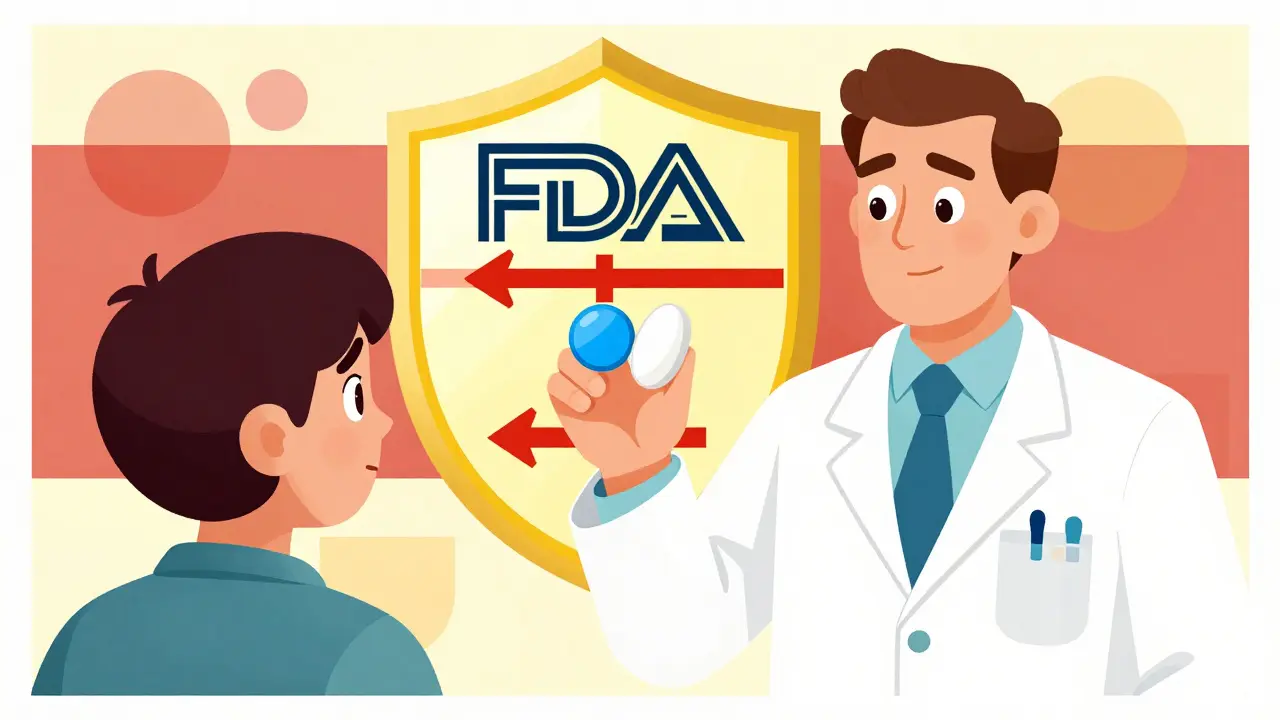
When a patient picks up a prescription and sees a pill that looks completely different from what they’re used to, panic can set in. Generic medication isn’t just a cost-saving option-it’s a legal, clinically proven alternative. But without clear, confident counseling from the pharmacist, that difference in appearance can lead to skipped doses, hospital visits, or worse. The truth is, most patients don’t understand what generic means. And if you’re a pharmacist, you’re legally required to fix that.
Why Generic Counseling Isn’t Optional
In the U.S., every state requires pharmacists to counsel patients when dispensing prescriptions. But when it comes to generics, the stakes are higher. Federal law under OBRA ’90 made patient counseling mandatory, and since then, the rules have only gotten stricter. The Centers for Medicare & Medicaid Services (CMS) says it plainly: “A patient’s complete understanding of how to use a prescription medication is critical to successful adherence.” That means if you hand over a generic pill without explaining why it’s safe, you’re not just missing an opportunity-you’re risking harm. The numbers don’t lie. Generics make up 90.7% of all prescriptions filled in the U.S., but only account for 23.7% of total drug spending. That’s billions saved annually. But here’s the catch: patients who don’t understand generics are 3 times more likely to stop taking their medication. A 2023 Consumer Reports survey found that 43% of patients believe generics are less effective. 37% think they cause more side effects. 28% believe they take longer to work. These aren’t myths-they’re widespread beliefs, and they’re rooted in lack of information.The 5-Point Framework for Generic Counseling
You don’t need a 20-minute lecture. You need structure. The BC Pharmacists Association’s 5-point framework is simple, effective, and covers everything you legally and ethically must address:- Confirm the patient. Make sure you’re talking to the right person. Use two identifiers-name and date of birth. This isn’t just paperwork; it’s safety.
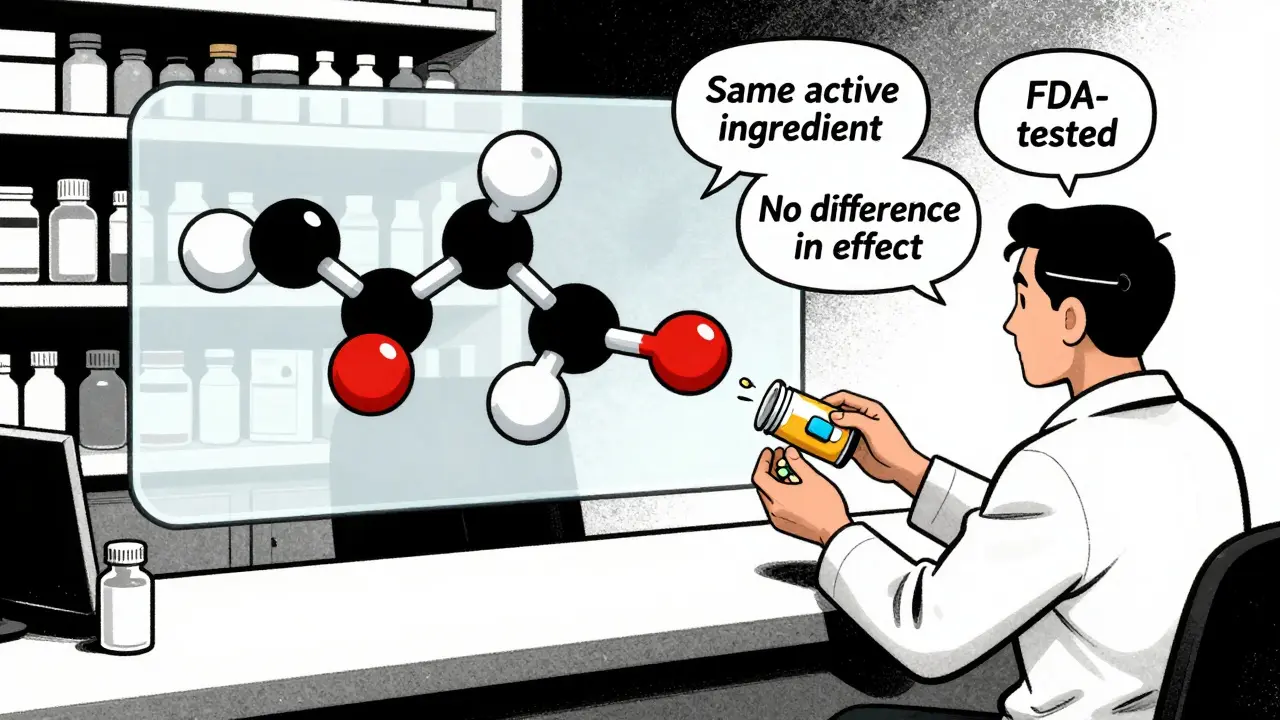
- Explain substitution. Say it clearly: “Your doctor prescribed [Brand Name], but we’re giving you the generic version. It’s the same active ingredient, same dose, same effect. The law allows this because it’s been proven to work just as well.”
- Describe the differences. Show them. “The brand pill was blue and round. This one is white and oval. That’s because the fillers and dyes are different. They don’t change how the medicine works.” Keep pictures or sample pills handy. A quick visual comparison can prevent a patient from tossing their meds.
- Reaffirm bioequivalence. Don’t just say “it’s the same.” Say: “The FDA requires generics to deliver the same amount of medicine into your bloodstream within the same time frame as the brand. If it didn’t, it wouldn’t be approved.” Mention that the FDA tests these drugs rigorously-no shortcuts.
- Verify understanding with teach-back. Ask: “Can you tell me how you’ll take this?” Or: “What would you say to a friend who’s worried about switching?” If they can repeat it back, you’ve done your job. If they can’t, you haven’t.
What You Must Say-And What You Must Avoid
Here’s the script you need to use, every time:- Do say: “This is the generic version of [Brand Name]. The active ingredient is identical. The only differences are the color, shape, or inactive ingredients-like the coating or filler. These don’t affect how the drug works.”
- Do say: “The FDA requires generics to be as effective and safe as the brand. Over 90% of prescriptions are filled with generics because they’re proven to work.”
- Do say: “If you’ve had side effects with the brand, you might have them with the generic too. But if you’re worried about how it looks, let’s talk.”
- Avoid saying: “It’s the same thing.” Too vague. Patients hear “same” and think “identical in every way.” They notice the difference and panic.
- Avoid saying: “It’s cheaper.” While true, this can reinforce the idea that cheaper = worse. Focus on equivalence, not cost.
Documentation Isn’t Just Bureaucracy-It’s Protection
You’re not just helping patients-you’re protecting yourself. Every state has different rules, but here’s what’s consistent: you must document what you discussed, not just that you talked. In California, you need a checkbox for “generic substitution counseling completed.” In Texas, you might just note “counseling offered.” But starting in 2024, CMS is tightening requirements. Now, you must record the specific points covered-bioequivalence, appearance, dosage, purpose. If a patient later claims they weren’t told, and your notes say “counseling provided,” you’re exposed. Use your pharmacy’s electronic system. Most chains now have prompts that pop up when a generic is dispensed. If yours doesn’t, create a simple checklist. Write down:- Patient’s name
- Drug name (brand and generic)
- Key points covered (appearance, bioequivalence, purpose)
- Teach-back response (e.g., “Patient repeated that it’s the same medicine, just different color”)
Time Is Short. But You Can Still Do It Right
The average pharmacist has 1.2 minutes per patient for counseling. That’s less than it takes to brew a coffee. But here’s the secret: you don’t need time-you need rhythm. Start with the script. Make it part of your routine. Don’t wait for the patient to ask. Lead with it: “I see you’re getting the generic version today. Let me show you how it compares to what you’ve taken before.” Use your technician. They can say, “The pharmacist will explain the change in your pill.” But only you can give the counseling. Let them set the stage. You deliver the message. And if you’re overwhelmed? Use technology. 68% of major pharmacy chains now use systems that auto-populate counseling prompts. They flag patients with prior concerns, language barriers, or multiple generics. You get a heads-up. You focus on the people who need you most.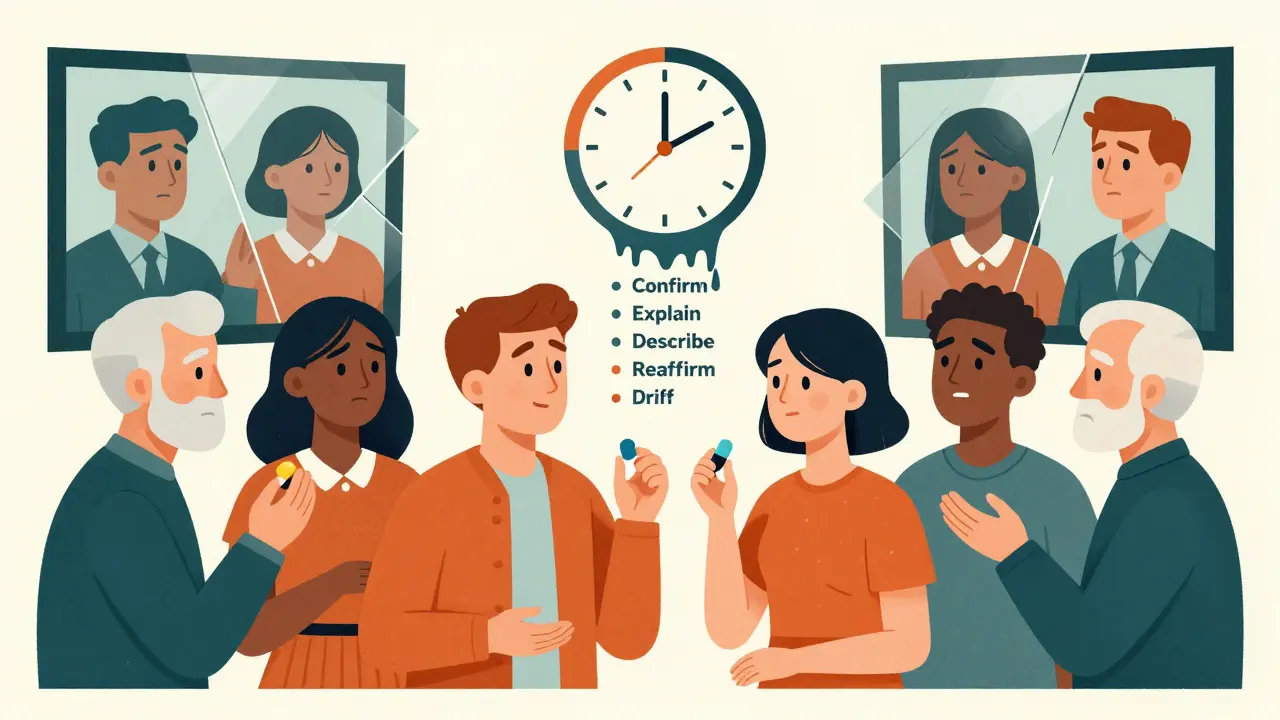
What Happens When You Skip It
One Reddit post from June 2024 says it all: “I stopped taking my blood pressure meds for two weeks because the pills looked different. I thought the pharmacy made a mistake.” That patient didn’t call their doctor. They didn’t call the pharmacy. They just quit. A 2024 NIH study found that 68% of patients who received thorough generic counseling reported higher confidence in their medication. Only 32% of those who got a generic without explanation felt the same. That’s not a small gap. That’s a treatment failure waiting to happen. And it’s not just about adherence. It’s about trust. If a patient feels rushed or dismissed, they’ll stop coming to you. They’ll go to a different pharmacy-or worse, stop taking meds altogether.What’s Changing in 2025-2026
The rules are evolving. By 2026, 75% of pharmacies will use AI tools that analyze patient history to predict who’s likely to worry about generics. Maybe someone switched from brand to generic three times and stopped taking it each time. The system flags them. You get a note: “Patient has history of non-adherence after generic switch. Prioritize counseling.” Medicare’s new quality metrics now include evidence of proper generic counseling as a factor for bonus payments. That means pharmacies that do this well will get rewarded. Those that don’t? They’ll fall behind. But there’s a catch. Pharmacists are spending 19% more time on paperwork since 2020. The American Medical Association warns that too much documentation can steal time from real conversations. So here’s your challenge: make your counseling efficient, accurate, and human.Final Thought: You’re Not Just Filling Prescriptions
You’re the last line of defense before a patient takes a pill they don’t trust. You’re the one who turns fear into confidence. You’re the one who prevents a hospitalization because someone didn’t know that white oval pill was still their medicine. Don’t treat generic counseling like a checkbox. Treat it like the clinical intervention it is. Because it is. And if you do it right, you’ll save more than money-you’ll save health.Do pharmacists have to explain generics even if the patient doesn’t ask?
Yes. Under OBRA ’90 and updated ASHP guidelines, pharmacists are legally required to counsel patients on all prescriptions, including generics, regardless of whether the patient asks. Simply asking, “Do you have any questions?” is not sufficient. You must proactively explain the substitution, bioequivalence, and physical differences. Many states require specific documentation of this counseling, and failure to provide it can result in regulatory action.
Can a pharmacy technician give generic counseling?
No. While pharmacy technicians can inform patients that counseling is available or remind them to speak with the pharmacist, only licensed pharmacists are legally permitted to provide counseling on medications. This includes explaining generic substitution, bioequivalence, or side effects. Technicians who attempt to counsel patients may be violating state pharmacy laws and exposing the pharmacy to liability.
Are generic drugs really as effective as brand-name drugs?
Yes. The FDA requires generic drugs to have the same active ingredient, strength, dosage form, and route of administration as the brand-name drug. They must also meet strict bioequivalence standards-meaning they deliver the same amount of medicine into the bloodstream at the same rate. Over 90% of prescriptions in the U.S. are filled with generics because they’ve been proven safe and effective through thousands of clinical studies. The only differences are inactive ingredients like color, shape, or filler-none of which affect how the drug works.
Why do generic pills look different?
Generic drugs must look different from brand-name drugs due to U.S. trademark laws. The shape, color, or markings on a pill are protected intellectual property of the brand manufacturer. Generics must use different inactive ingredients (like dyes or binders) to avoid copying the brand’s appearance. These differences don’t affect the drug’s effectiveness-they’re purely cosmetic. It’s why a patient might get a white oval pill instead of a blue capsule, even though both contain the exact same active ingredient.
What should I do if a patient refuses to take a generic?
If a patient refuses a generic, you must honor their request. However, you’re still required to explain why the generic is safe and equivalent. Document that you provided counseling and the patient declined substitution. Then, fill the brand-name prescription as prescribed. Some patients may refuse generics due to cost concerns, not safety. In those cases, offer to check if the brand is covered under their insurance or suggest a mail-order option. Never pressure a patient-your role is to inform, not to force.
How can I improve my counseling time with generics?
Use a consistent script and visual aids. Keep sample pills or printed images of brand vs. generic versions on hand. Use your pharmacy’s electronic system-it can auto-prompt you when a generic is dispensed. Practice the 5-point framework until it becomes second nature. Pair with your technician: have them say, “The pharmacist will explain your medication change,” while you focus on delivering the key message. Most importantly, don’t rush. A 60-second conversation done well is better than a 3-minute one done poorly.


Jim Johnson
February 11, 2026 AT 08:59Just wanted to say this post nailed it. I’ve been a pharmacist for 12 years and I still get that look from patients when they see a different pill. I keep a little card in my pocket with pics of common brand vs generic pairs. It’s dumb, but it works. One guy cried because he thought his meds were fake. We sat there for 10 minutes. He left saying ‘I trust you now.’ That’s why we do this.
Brad Ralph
February 11, 2026 AT 15:16Generics are the OG crypto of pharma. Same function, different logo. 🤷♂️
Pat Mun
February 13, 2026 AT 14:33I work in a community pharmacy and honestly? The biggest win isn’t the counseling-it’s the follow-up. I started asking patients two days later, ‘Hey, how’s the new pill treating you?’ Just a quick text. Suddenly, people feel seen. One lady told me she’d been hiding her pills because she thought they were ‘cheap knockoffs.’ We talked. She’s on track now. It’s not about the script-it’s about the human moment after the script.
Skilken Awe
February 14, 2026 AT 17:06Oh great. Another ‘pharmacist savior’ narrative. Let me guess-you also believe the FDA is a saintly organization that doesn’t get pressured by Big Pharma? Wake up. The bioequivalence standards are laughably loose. 80-125% range? That’s not ‘same drug’-that’s ‘close enough for government work.’ And don’t get me started on the ‘inactive ingredients’-some of those are toxic as hell. This whole system is a money grab dressed up as science.
andres az
February 16, 2026 AT 11:01Generics are a government scam. The real drugs are made in Switzerland. The pills you get are from India and China. They test them once a year. Your ‘bioequivalence’ is a lie. I’ve seen people die. The system is rigged. Why do you think the brand names are so expensive? Because they’re the only ones that actually work. You’re all being played.
Steve DESTIVELLE
February 16, 2026 AT 13:06When we reduce medicine to a transaction we lose the soul of healing. The pill is not the cure. The trust is the cure. The pharmacist is not a dispenser. The pharmacist is a mirror reflecting the patient’s fear and dignity. The color of the pill is a metaphor for the color of our society. White oval. Blue capsule. Same active ingredient. But who are we when we forget the humanity behind the chemistry?
Alyssa Williams
February 17, 2026 AT 02:14Yessss this! I’m a pharmacy tech and I’ve seen so many patients panic. I always say ‘I know it looks weird but the pharmacist is gonna explain why it’s totally the same.’ Then I hand them the script and go get the doc. It’s not my job to counsel but I can set the tone. One guy told me he’d been skipping his meds for 3 months because he thought the new pill was poison. We got him talking. He’s fine now. Small moments matter.
Gloria Ricky
February 17, 2026 AT 11:23soooo i just wanted to say i work in a small town pharmacy and last week this old lady came in for her blood pressure med. she was so scared because the pill was white instead of blue. i showed her the box, the fda info, the pics on my phone. she cried. said her husband died because he stopped his meds once because they looked different. i hugged her. then i wrote down every point we talked about. she came back yesterday and brought cookies. that’s why i do this. not for the paycheck. for the cookies.
Stacie Willhite
February 17, 2026 AT 17:50I just wanted to say thank you for writing this. I’m a new pharmacist and I was terrified of counseling. I thought I’d sound robotic. But I started using your 5-point framework. It’s not perfect. I stumble. But now I look forward to those moments. The patient who says ‘I didn’t know that’? That’s my favorite part of the day.
Kristin Jarecki
February 19, 2026 AT 04:54While the intent of this piece is commendable, one must consider the systemic pressures under which pharmacists operate. The 1.2-minute counseling window is not a failure of individual diligence-it is a failure of healthcare policy. Mandating comprehensive counseling without adequate compensation, staffing, or time allocation is a form of institutional neglect. The solution lies not in better scripts, but in structural reform that recognizes the clinical labor of pharmacists as essential, not ancillary.
Rachidi Toupé GAGNON
February 19, 2026 AT 14:05Love this. I’m in Canada and we do this same thing. I keep a little poster of pill shapes taped to my counter. One guy said, ‘Dude, you’re a lifesaver.’ I high-fived him. 🙌 That’s the good stuff right there.