
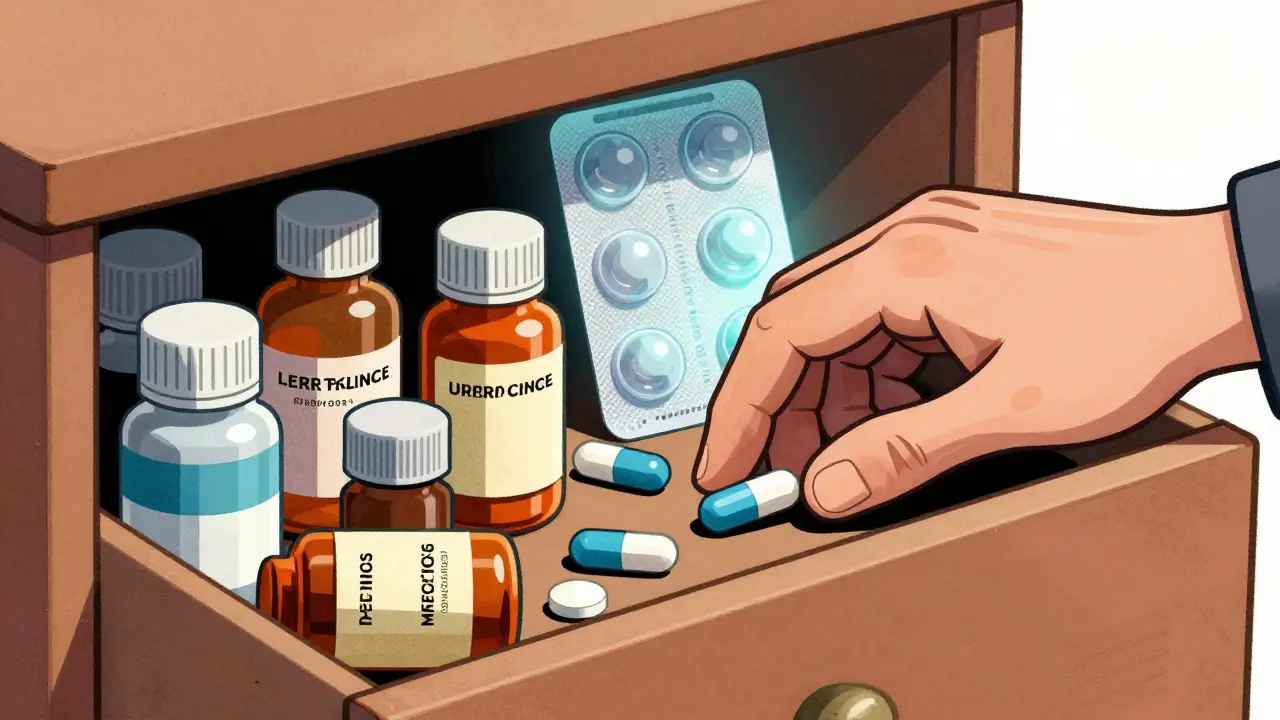
Every year, thousands of people accidentally take the wrong pill, double-dose, or skip a medication entirely-often with serious consequences. For older adults managing five or more prescriptions, the risk of a medication error is high. But there’s a simple, proven way to cut those mistakes in half: blister packs and pill organizers. These aren’t just convenient tools-they’re lifesavers.
Why Medication Mistakes Happen
It’s not about forgetting. It’s about confusion. Imagine this: you’ve got a drawer full of pill bottles. Some are half-empty. Others are labeled in tiny print. You take your blood pressure pill in the morning, but was it the blue one or the white one? Did you already take your heart medication today? Was it before or after breakfast? Now add in a new prescription, a change in dosage, or a day when you’re feeling tired or unwell. Mistakes aren’t rare-they’re predictable.According to a 2022 study in the American Journal of Epidemiology, nearly half of people with chronic conditions don’t take their meds as prescribed. That’s not laziness-it’s system failure. And the cost? Over $100 billion in avoidable hospital visits each year in the U.S. alone. The fix isn’t better memory. It’s better packaging.
What Are Blister Packs?
Blister packs, also called multi-dose packaging or pre-sorted med packs, are sealed plastic sheets with individual compartments for each dose. Each bubble holds one pill, clearly labeled with the day and time-like "Mon AM," "Tue PM," or "Bedtime." They’re made by specialty pharmacies, not bought off the shelf. Once your doctor finalizes your regimen, the pharmacy prints your exact schedule into the pack, seals it, and sends it to you.These aren’t just plastic trays. Modern blister packs include tamper-evident seals, child-resistant features, and even QR codes you can scan to hear a voice explanation of what the pill is for. A 2023 report from Pharmcare USA found they reduce medication errors by 67% compared to traditional vials. Why? Because you don’t have to count pills, sort them, or guess. You just open the bubble and take what’s there.
How Blister Packs Prevent Overdoses
The biggest danger isn’t missing a dose-it’s taking too much. People often think, "I didn’t feel anything after I took my pill yesterday. Maybe I missed it." So they take another. That’s how accidental overdoses happen. Blister packs stop this cold.Each compartment is sealed. If it’s open, you took it. If it’s still sealed, you didn’t. No guessing. No doubt. A caregiver in Seattle shared on Reddit: "My 82-year-old mom used to miss 3-4 doses a week. After switching to blister packs, she went from missing 3-4 a week to 1-2 a month. She can see exactly what’s left. No more double-dosing."
Studies show blister packs improve adherence by 23% over standard bottles. For someone on blood pressure meds, that means fewer emergency visits. One trial found patients using blister packs had a 4.2 mmHg greater drop in diastolic pressure than those using regular bottles-even though both groups were told the same thing. The difference? Clarity.
What Are Pill Organizers?
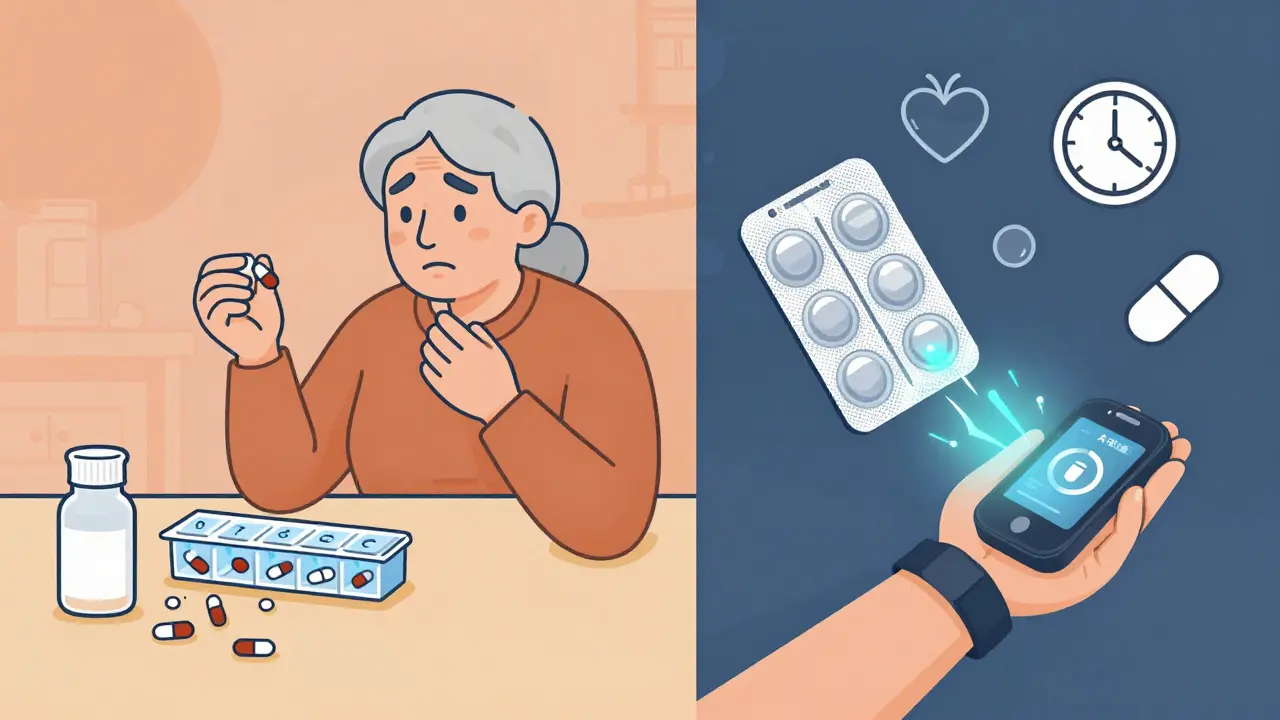
Pill organizers are reusable plastic containers with compartments for each day-or multiple times per day. Basic ones have seven slots (one for each day). Better ones have four slots per day: morning, noon, evening, bedtime. Some even have alarms or Bluetooth reminders.They’re cheap. You can buy a weekly organizer for under $10. But they have a big flaw: you have to fill them yourself. And that’s where mistakes creep in. If you’re tired, in a hurry, or have shaky hands, you might drop a pill into the wrong slot. Or fill Monday’s compartment with Tuesday’s meds. A 2021 study of arthritis patients found that even with multi-time organizers, adherence only improved by 18%. Blister packs? 28%.
And here’s the real problem: when your meds change-say, your doctor drops a pill or increases a dose-you have to empty the whole organizer and refill it. That’s a recipe for error. One caregiver on AgingCare.com said her dad with dementia kept taking extra doses because he thought he’d missed one. Switching to blister packs cut his ER visits from quarterly to zero.
When to Choose Blister Packs Over Organizers
You don’t need both. You need the right one for your situation.- Choose blister packs if you take 4+ medications daily, your regimen changes often, you have memory issues, or you’re at risk of overdose.
- Choose a pill organizer only if you take 1-3 meds, your schedule is stable, and you’re physically able to refill it weekly without help.
The American Society of Health-System Pharmacists recommends blister packs for anyone taking four or more pills a day. That’s not a suggestion-it’s a safety standard. And it’s backed by data: blister packs reduce administration errors by 42% in home care settings, especially for people with mild cognitive decline.
How to Get Blister Packs
You can’t buy them at the drugstore. You need a pharmacy that does multi-dose packaging. Most community pharmacies don’t offer it-but specialty ones do. Start by asking your pharmacist: "Do you provide blister pack services?" If not, ask for a referral to a pharmacy that does.The process is simple:
- Your doctor sends your current prescription list to the pharmacy.
- The pharmacy reviews it for interactions and duplicates.
- They create your custom pack-usually ready in 3-5 business days.
- You get your first pack, plus a printed guide showing what’s in each bubble.
- A pharmacist calls you back in a week to make sure you’re using it right.
Cost? Around $1.50 to $3.50 per day, depending on how many pills you take. That’s $45-$105 a month. But many Medicare Advantage plans cover it. Check your plan’s benefits-some even cover delivery.
What About Easy-Open Blister Packs?
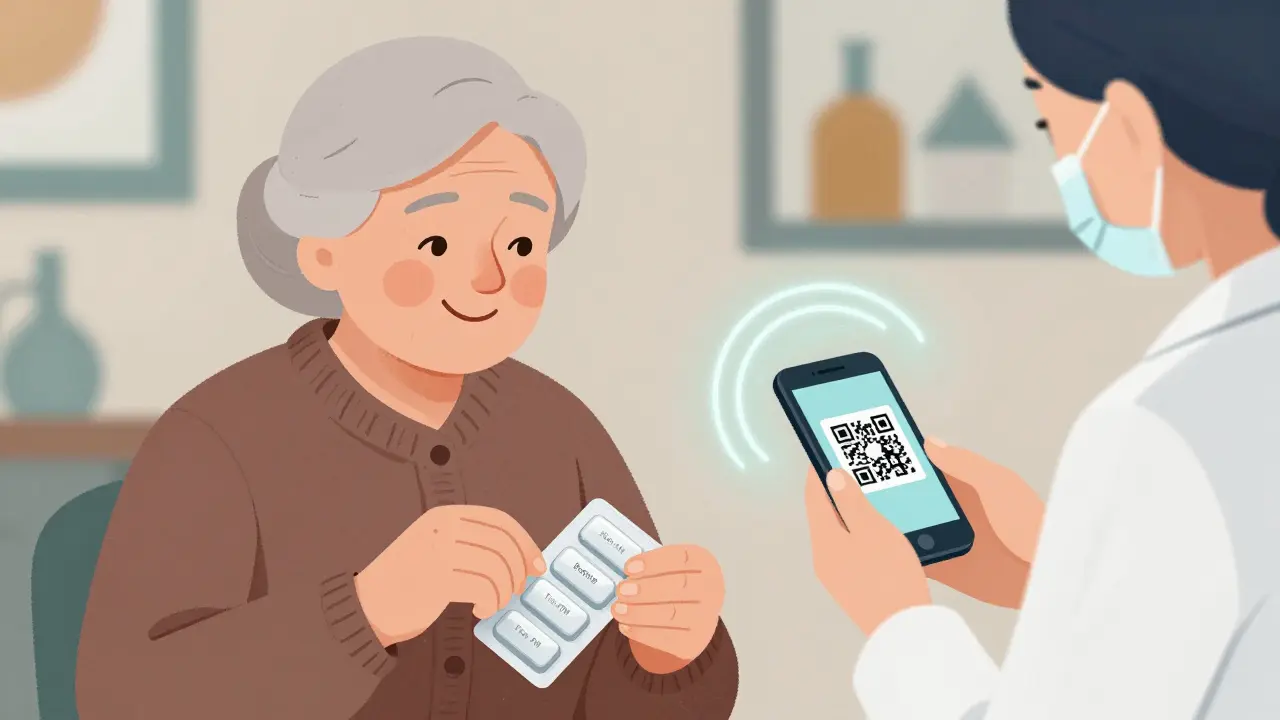
A common complaint? They’re hard to open. If you have arthritis or weak hands, tearing through sealed plastic can be painful-or impossible. That’s why many pharmacies now offer easy-open versions. These have perforated edges, peel-back tabs, or even a small plastic tab you pull to pop the bubble open without force.One survey found 23% of arthritis sufferers struggled with standard blister packs. But 68% of them said easy-open versions solved the problem. Always ask for them. Don’t settle for something that causes more stress than it prevents.
Technology Is Making Blister Packs Smarter
In 2023, the FDA approved the first blister packs with QR codes. Scan the bubble with your phone, and you’ll see a video of your pharmacist explaining what the pill is for, why you take it, and what side effects to watch for. That’s huge for people who don’t understand their meds.Some companies now make "smart" blister packs with sensors. Each time you open a compartment, it logs the time and sends a notification to your caregiver’s phone if you miss a dose. In a pilot study, adherence jumped 37%.
And by 2025, AI-powered systems will automatically update your pack if your doctor changes your prescription. No more waiting for a new pack to be printed. The system will know, and the pharmacy will send the updated version before you even notice the change.
What You Can Do Right Now
You don’t have to wait for a big change. Start today:- Write down every medication you take-name, dose, time, reason.
- Check your pill bottles. Are any expired? Are labels faded?
- Ask your pharmacist: "Do you offer blister packs?" If not, ask for a pharmacy that does.
- If you’re using a pill organizer, make sure it has separate slots for morning, afternoon, evening, and bedtime. No more "daily" slots.
- Set a weekly reminder to check your pack or organizer. Are all the bubbles open? Are any pills missing?
Don’t wait for a mistake to happen. Medication errors don’t announce themselves. They sneak in quietly-until it’s too late. Blister packs turn confusion into clarity. They turn guesswork into confidence. And for someone managing a complex regimen, that’s not just helpful. It’s essential.
Common Questions About Blister Packs and Organizers
Are blister packs covered by insurance?
Many Medicare Advantage plans cover blister pack services, especially for people taking four or more medications. Medicaid and some private insurers do too. Call your plan and ask: "Does my plan cover multi-dose packaging or pre-sorted med packs?" If you’re in a long-term care facility, it’s often included in your care plan.
Can I use blister packs for all my medications?
No. Some meds can’t go in blister packs-like insulin, liquid antibiotics, or pills that need refrigeration. Your pharmacist will review your list and tell you what can and can’t be packaged. You’ll still use original bottles for those, but everything else goes into the pack.
What if I need to change my meds?
If you’re on a blister pack and your doctor changes your dose or adds a new pill, the pharmacy will create a new pack. Unlike pill organizers, you don’t have to refill it yourself. The whole pack is updated. Some new systems even auto-update based on electronic prescriptions-so you get the right pack before you even know the change happened.
Are pill organizers useless?
No-they’re useful for people with simple regimens. If you take one pill a day, a weekly organizer works fine. But if you’re on four or more meds, or have memory issues, the risk of error goes up fast. Blister packs are safer. Organizers are a backup, not a replacement, for complex cases.
How do I know if I’m a good candidate for blister packs?
You’re a good candidate if you take four or more medications daily, have trouble remembering when to take them, have had a near-miss or mistake in the past, or have trouble opening bottles or reading labels. If you’ve ever thought, "Did I take that already?"-you’re a candidate. Talk to your pharmacist. They’ll help you decide.

ellen adamina
January 16, 2026 AT 06:38My grandma started using a blister pack last year and she hasn’t missed a single dose since. I used to have to call her every morning to make sure she took her pills. Now she just points to the open bubbles like it’s a checklist. Simple, but it works.
Haley Graves
January 18, 2026 AT 00:36Blister packs aren’t a luxury-they’re a necessity for anyone on more than four meds. I’ve seen too many elderly patients end up in the ER because they mixed up their blood pressure pills with their cholesterol ones. The pharmacy I use charges $2.75 a day and my mom’s Medicare Advantage covers it. No excuses.
Diane Hendriks
January 18, 2026 AT 22:41The notion that pill organizers are ‘sufficient’ for simple regimens is statistically indefensible. Even one misplaced tablet introduces systemic risk. The data is unequivocal: blister packs reduce administration error by 42% in home care settings. To suggest otherwise is to ignore the empirical evidence and romanticize human fallibility.
Nicholas Urmaza
January 19, 2026 AT 02:43If you’re still using a weekly organizer and taking more than three meds you’re playing Russian roulette with your health. Get the blister pack. It’s not expensive. It’s not complicated. It’s just the right thing to do. Stop making excuses.
Amy Vickberg
January 19, 2026 AT 06:02I used to think these were for old people until my dad had a stroke. Now he’s on seven meds. We tried organizers. He got confused. The blister pack? He opens it like he’s opening a snack. No stress. No doubt. Just clarity. Thank you for writing this.
Nishant Garg
January 19, 2026 AT 12:13In India, we don’t have blister packs widely available but we do have something similar called ‘dose boxes’-small plastic boxes with compartments filled weekly by family members. It’s not perfect but it’s better than nothing. The real issue is access. If this system works so well, why is it not standard in every pharmacy? Why does it feel like a privilege?
Dan Mack
January 20, 2026 AT 17:13Blister packs? Sure. But who’s really behind this push? Big Pharma. They profit when you take pills daily. They don’t care if you live or die-they care if you keep buying. QR codes? Smart packaging? Sounds like surveillance wrapped in wellness. You think you’re safer but you’re just more tracked.
Iona Jane
January 22, 2026 AT 09:18They’re watching you open your pills now. Every time you pop a bubble, someone somewhere gets a notification. Next thing you know, your insurance will raise your rates if you miss a dose. They’ll say it’s for your health but it’s really for their profit. This isn’t safety-it’s control.
Gloria Montero Puertas
January 23, 2026 AT 23:14How dare you call this a ‘lifesaver’? This is corporate sanitization of medical responsibility. You’re outsourcing your cognitive burden to a plastic tray because you refuse to engage with your own health. And now they’re adding QR codes? Next they’ll implant microchips. This isn’t progress-it’s infantilization disguised as care.
Jaspreet Kaur Chana
January 24, 2026 AT 17:34My uncle in Delhi uses a metal box with five compartments and writes the names on sticky notes. He’s 84, blind in one eye, and still takes his meds right every single day. Technology helps, sure-but human care, routine, and family involvement? That’s what actually keeps people alive. Don’t let fancy packaging make you forget that.
Mike Berrange
January 26, 2026 AT 01:57My mom’s pharmacist told her blister packs were ‘not medically necessary’ so she didn’t get one. Two months later, she took two blood thinners by accident. She spent a week in the ICU. The hospital bill was $42,000. The blister pack? $80 a month. This isn’t about convenience. It’s about survival. Why are we still debating this?
Jan Hess
January 26, 2026 AT 18:57I got my first blister pack last week. Took me 10 minutes to open the first bubble. My hands are shaky from arthritis. I asked for easy-open and they laughed. Then I called the corporate number and demanded it. They sent me a new pack with peel-tabs the next day. Don’t settle. Ask. Push. You’re worth the effort.
Frank Geurts
January 28, 2026 AT 08:40As someone who has worked in geriatric care for over 25 years, I can state without reservation that blister packs are the single most effective intervention for medication adherence in complex regimens. The data is overwhelming, the outcomes are measurable, and the cost-benefit ratio is undeniable. This is not an innovation-it is a standard of care that has been neglected for far too long.