
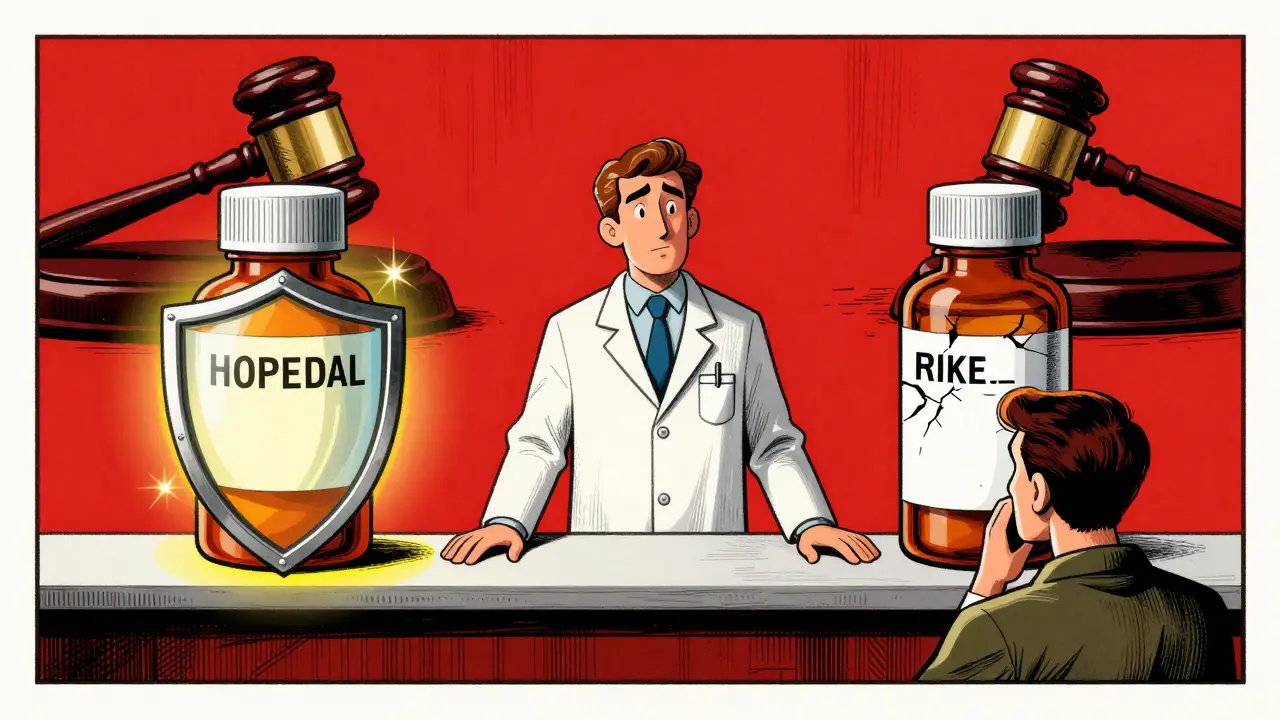
When a pharmacist swaps a brand-name drug for a generic, it’s not just a cost-saving move-it’s a legal decision. And in many cases, that decision carries real risk. In 2023, over 6 billion prescriptions in the U.S. were filled with generic drugs. That’s 90% of all prescriptions. But behind that number is a patchwork of state laws, federal preemption, and patient safety concerns that can leave pharmacists exposed to liability-even when they follow the rules.
Why Generic Substitution Creates Legal Gray Zones
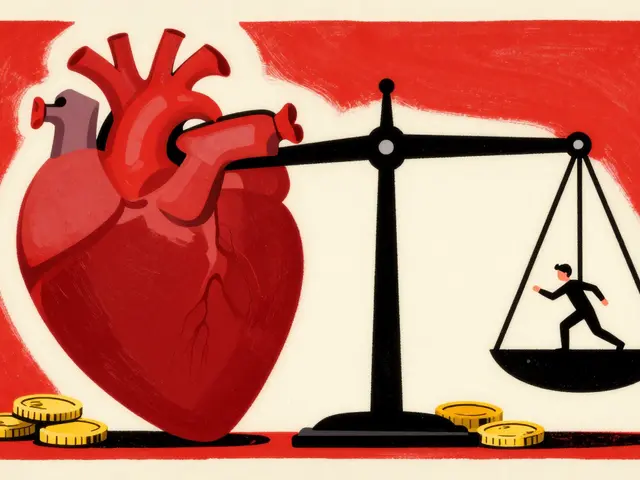
The legal foundation for generic drugs was laid in 1984 with the Hatch-Waxman Act. It allowed manufacturers to bring cheaper versions to market by proving bioequivalence, not by repeating full clinical trials. But here’s the catch: under federal law, generic manufacturers can’t change their drug labels. That’s because the FDA requires them to use the exact same labeling as the brand-name product. This rule, reinforced by the Supreme Court’s 2011 decision in PLIVA v. Mensing, means if a generic drug causes harm due to missing or outdated safety warnings, patients can’t sue the maker. The court ruled federal law preempts state tort claims. That leaves a dangerous gap. If the brand-name manufacturer updates its warning label to reflect a new risk-say, a dangerous interaction with another medication-the generic version doesn’t change. And if a patient is harmed, they have no legal recourse against the generic company. Meanwhile, the pharmacist who dispensed the drug may be the only one left standing in the line of fire.State Laws Vary Wildly-And So Does Your Risk
There’s no national standard for how pharmacists handle generic substitution. Each state has its own rules, and the differences matter.- 27 states require substitution when a generic is available and the prescriber hasn’t said “dispense as written.”
- 23 states only allow substitution but don’t force it.
- 32 states let patients refuse substitution-but only 18 require pharmacists to notify the patient directly.
- 27 states offer legal protection: if you substitute correctly, you’re not liable for more than if you’d given the brand.
- 23 states offer no such protection. In Connecticut, for example, pharmacists have been held liable for substitution-related adverse events even when following state law.
The Real Danger Zone: Narrow Therapeutic Index Drugs
Not all generics are created equal. For drugs with a narrow therapeutic index-where the difference between a therapeutic dose and a toxic one is tiny-the risk spikes. These include:- Warfarin (blood thinner)
- Levothyroxine (thyroid hormone)
- Phenytoin, valproate, carbamazepine (antiepileptics)
What Pharmacists Are Doing to Protect Themselves
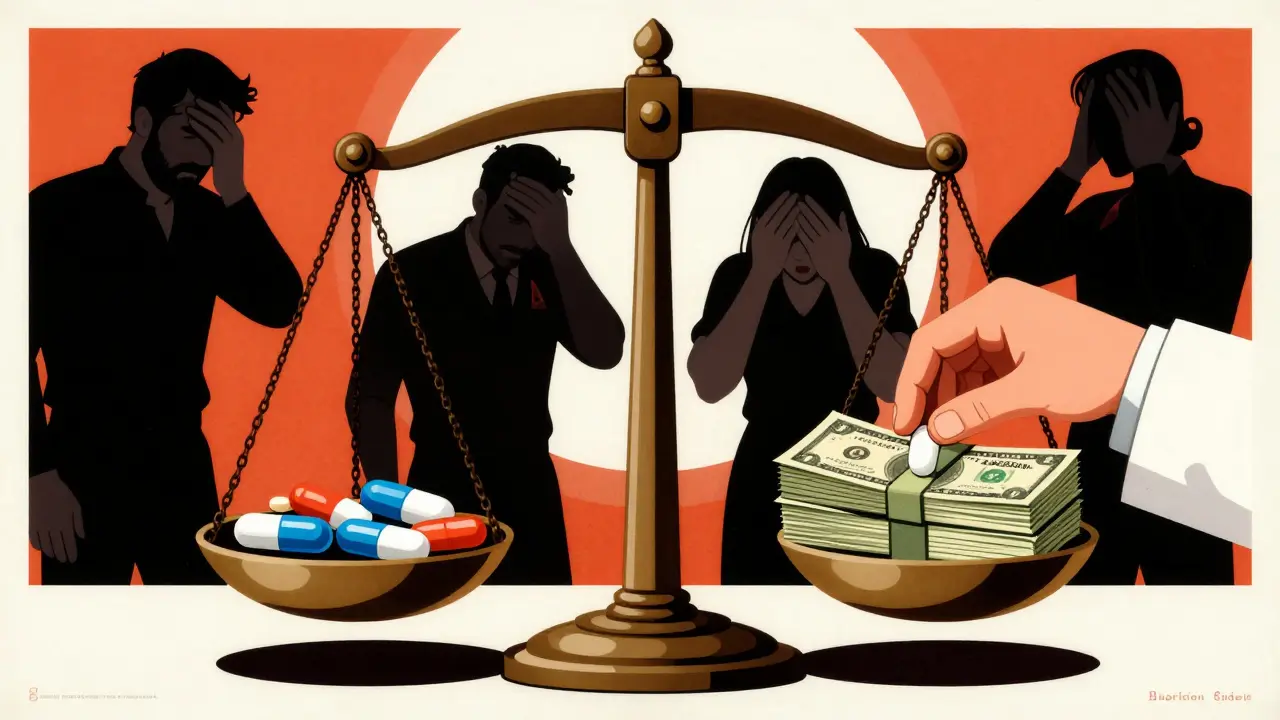
Most pharmacists aren’t waiting for lawmakers to fix this. They’re taking action.- 74% of pharmacists surveyed in 2022 said they’ve refused to substitute generics for narrow therapeutic index drugs-even when state law allowed it-because they feared liability.
- 87% of pharmacists support mandatory patient notification before substitution, according to the National Association of Chain Drug Stores.
- Top-performing pharmacies now use electronic alerts in their systems to flag high-risk drugs. When a prescription for levothyroxine comes in, the system pops up: “Verify patient consent. Document substitution.”
- Check your state’s current substitution laws (updated annually by the National Association of Boards of Pharmacy).
- Use EHR alerts to flag narrow therapeutic index drugs.
- Get written consent from the patient using a standardized form.
- Communicate directly with the prescriber if substitution raises concerns.
- Log the generic manufacturer and batch number-traceability is your defense.
- Complete an annual liability risk assessment using the 27-point framework from the Journal of the American Pharmacists Association.
- Get supplemental malpractice insurance that covers substitution-related claims.
What’s Changing? The Push for Reform
The system is under pressure. In 2023, 11 states introduced the Generic Drug Safety Act. It would require brand-name manufacturers to update their labels within 30 days of new safety data-and force generics to adopt those updates within 60 days. This would close the federal preemption loophole. The FDA’s 2023 pilot program for label change notifications has already processed 217 requests. But here’s the problem: generic manufacturers initiated only 12% of them. They’re still waiting for someone else to act. Meanwhile, the Congressional Budget Office estimates the current liability gap costs the healthcare system $4.2 billion a year in untreated adverse events. The Institute for Clinical and Economic Review says fixing it could raise generic drug prices by 7-12%-but prevent 14,000 serious injuries annually.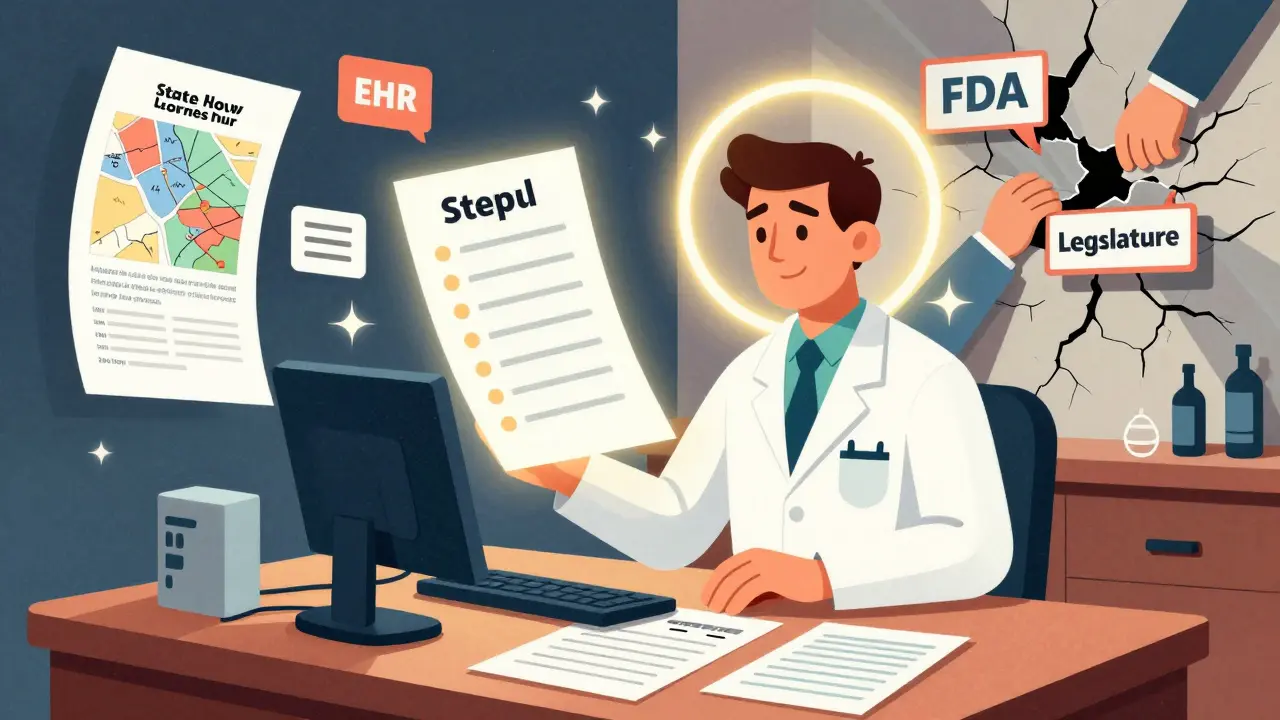
What You Need to Do Right Now
If you’re a pharmacist, here’s what you can do today:- Review your state’s substitution law. Don’t assume you know it-laws change every year.
- Ask yourself: Did I notify the patient? If not, you’re at risk.
- For warfarin, levothyroxine, or antiepileptics: always get consent in writing. Even if your state doesn’t require it.
- Document everything. The date, the drug, the manufacturer, the patient’s response.
- Talk to your malpractice insurer. Make sure your policy covers substitution.
FAQ
Can a pharmacist be sued for substituting a generic drug?
Yes. While federal law shields generic manufacturers from liability for labeling defects, pharmacists can still be held liable under state law for negligence-especially if they fail to notify the patient, don’t document consent, or substitute without checking for contraindications. States without explicit liability protections, like Connecticut and Massachusetts, have seen higher rates of lawsuits against pharmacists.
Are all generic drugs safe to substitute?
No. For drugs with a narrow therapeutic index-like warfarin, levothyroxine, and antiepileptic medications-even small differences in absorption can lead to serious harm. Studies show 18% of patients experience therapeutic failure after switching these drugs. Bioequivalence doesn’t always mean therapeutic equivalence.
Do I need patient consent to substitute a generic?
It depends on your state. Thirty-two states allow patients to refuse substitution, but only 18 require pharmacists to notify them. Best practice? Always get written consent for high-risk drugs-even if your state doesn’t require it. It’s your best defense against liability.
Why can’t generic manufacturers update their drug labels?
Federal law requires generic drugs to have the same labeling as the brand-name version. The Supreme Court ruled in PLIVA v. Mensing (2011) that generic manufacturers can’t be sued under state law for failing to update warnings because they’re legally barred from changing the label. This creates a legal gap where patients harmed by outdated safety information have no recourse against the maker.
How can pharmacists reduce their liability risk?
Follow the seven-step protocol from the American Society of Health-System Pharmacists: check state laws, use EHR alerts, get written consent, communicate with prescribers, log batch numbers, complete annual risk assessments, and carry supplemental malpractice insurance. Documenting every step is critical.
Is there a movement to fix the liability system?
Yes. In 2023, 11 states introduced the Generic Drug Safety Act, which would require brand-name manufacturers to update labels within 30 days of new safety data, with generics required to adopt them within 60 days. The FDA is also testing a pilot program for label changes. These efforts aim to close the federal preemption gap and restore accountability.
What’s the financial impact of substitution-related claims?
The liability insurance market for pharmacists grew to $1.2 billion annually by 2023, with premiums rising 18% since the 2011 Mensing decision. States with weak protections see 27% more malpractice claims. The Congressional Budget Office estimates the current system costs $4.2 billion per year in unaddressed adverse events.

Alexander Erb
March 11, 2026 AT 14:36Bro, I just switched my thyroid med to generic last month and felt like a zombie for two weeks. 😅 Turns out my pharmacist didn't even tell me - I found out when I Googled my symptoms. This article hit hard. Always ask for the label now. Seriously.
Donnie DeMarco
March 13, 2026 AT 12:19generic swap = legal russian roulette. i swear some pharmacists treat warfarin like it’s a bag of chips. ‘oh it’s just as good’ - nope. one time my aunt’s INR went nuclear and she ended up in the ER. they didn’t even document the switch. smh.
Tom Bolt
March 15, 2026 AT 09:21Let me be perfectly clear: this isn’t about cost savings. It’s about systemic negligence disguised as efficiency. The Supreme Court’s ruling in PLIVA v. Mensing wasn’t just a legal decision - it was a moral abdication. Pharmacists are being forced into the role of unintended scapegoats in a broken system. And the FDA’s ‘pilot program’? A PR stunt with 217 requests and 12% initiation by manufacturers? Pathetic.
Adam Kleinberg
March 16, 2026 AT 02:29Who’s really behind this? Big Pharma. They don’t want generics to have updated labels because then you’d have to pay more. They know patients won’t notice the switch - until they start bleeding or seizing. And now pharmacists are the ones getting sued? This is engineered. It’s not incompetence - it’s exploitation. The whole system is rigged to protect profits, not people.
Denise Jordan
March 17, 2026 AT 05:39So… we’re supposed to get written consent for every generic now? Like, for real? That’s gonna take forever. I’m tired. Can’t we just trust the system?
Gene Forte
March 18, 2026 AT 06:50Every pharmacist has the power to be a guardian - not just a dispenser. Small steps matter. Asking one question. Writing one note. Getting one signature. That’s how you change the system. You don’t need a law to do what’s right. You just need courage. And you’re already doing it. Keep going.
Kenneth Zieden-Weber
March 18, 2026 AT 19:09So let me get this straight - you’re telling me a pharmacist in Connecticut gets sued for doing exactly what the state law says… but a generic manufacturer in Ohio can’t be touched even if their label is from 2008? Classic. The system is so broken it’s almost poetic. I’m not mad, I’m just disappointed. And also, can we please get an app that auto-generates consent forms? I’m begging.
Chris Bird
March 18, 2026 AT 21:46Why do you think they let this happen? It’s because they want you scared. Scared to switch. Scared to ask. Scared to speak up. That’s how they keep control. You think this is about safety? Nah. It’s about control. Always has been.
David L. Thomas
March 19, 2026 AT 14:47From a health-system pharmacy ops standpoint, implementing the 7-step protocol isn’t just risk mitigation - it’s compliance infrastructure. The EHR alerts + batch logging + consent documentation form a defensible audit trail that’s literally your shield against malpractice. We’ve seen a 68% drop in incident reports since rollout. The $2,350 investment? ROI in under 9 months. This isn’t theory - it’s operational excellence.