
RA Medication Comparison & Guide
Select Medication Category:
Click a category on the left to explore the characteristics, costs, and mechanisms of RA treatments.
How it Works:
Key Considerations:
Imagine your immune system, which is supposed to be your body's personal security team, suddenly decides that the lining of your joints is a foreign invader. This is exactly what happens with Rheumatoid Arthritis is an autoimmune condition where the immune system attacks the synovial lining of joints, leading to chronic inflammation, pain, and potential joint damage . For most people, the goal isn't just to stop the pain-it's to stop the disease from permanently altering their joints. This is where the complex world of Rheumatoid Arthritis Medications comes in, specifically the interaction between conventional drugs and advanced biologics.
The First Line of Defense: Conventional DMARDs
Before we get into the heavy hitters, we have to talk about the foundation. csDMARDs is conventional synthetic disease-modifying antirheumatic drugs, which serve as the first-line therapy to slow disease progression . Unlike a simple painkiller, these drugs don't just mask symptoms; they actually modify how the disease behaves. The absolute anchor in this category is Methotrexate is a folate antagonist that inhibits purine synthesis to suppress immune overactivity, typically dosed between 7.5-25 mg per week . It's been the gold standard since the 1980s because it's effective and affordable, usually costing only $20 to $50 a month.
But Methotrexate isn't the only player. Others like Hydroxychloroquine (originally for malaria) and Sulfasalazine are often used. Some patients might start with a "triple therapy" combination of these three. While they are powerful, they come with a learning curve. About 20-30% of patients struggle with Methotrexate intolerance, often feeling nauseous or exhausted. A pro tip here is that taking folic acid supplements (5-10 mg daily) can significantly cut down these side effects without reducing the drug's effectiveness.
The Precision Strike: Biologic DMARDs
When conventional drugs aren't enough, doctors move to Biologic DMARDs is large protein molecules produced in living cells that target specific parts of the immune system to stop inflammation . If csDMARDs are like a wide-net approach to calming the immune system, biologics are like precision-guided missiles. They target specific proteins that trigger inflammation.
One of the most common types are TNF inhibitors, such as Adalimumab and Etanercept. These bind to tumor necrosis factor-alpha, a protein that signals your body to create inflammation. Then you have other targeted options: Rituximab, which clears out specific B cells, and Tocilizumab, which blocks IL-6 receptors. Because these are proteins, you can't just swallow them as a pill-they'd be digested like a piece of steak. Instead, they must be injected under the skin or infused through a vein.
| Feature | csDMARDs (e.g., Methotrexate) | bDMARDs (e.g., Adalimumab) |
|---|---|---|
| Delivery Method | Oral Pills | Injection or Infusion |
| Mechanism | General Immune Suppression | Targeted Pathway Blocking |
| Monthly Cost | Low ($20 - $50) | High ($1,500 - $6,000) |
| Onset of Action | Slow (Weeks to Months) | Faster (Days to Weeks) |
The Power of Combination Therapy
Here is where things get interesting: the interaction between these two. You'll often hear your doctor suggest taking a biologic *and* Methotrexate at the same time. Why bother with both? Because they work better as a team. Data shows that while a biologic alone might hit a 30-40% success rate (ACR50 response), adding Methotrexate can bump that up to 50-60%.
Methotrexate does more than just suppress the immune system; it helps prevent your body from developing antibodies against the biologic drug itself. If your body views the biologic as a foreign invader, it might create "anti-drug antibodies" that neutralize the medication, making it useless. Methotrexate keeps the immune system "quiet" enough that the biologic can do its job without interference.

The New Wave: Targeted Synthetic DMARDs
There's a third category that bridges the gap: JAK Inhibitors is small molecule drugs that block Janus kinase pathways inside cells to stop the production of inflammatory cytokines . Drugs like Tofacitinib and Upadacitinib are a game-changer because they offer the precision of a biologic but come in a simple pill. This is a huge win for patients who have a phobia of needles or find infusions too time-consuming.
However, this convenience comes with a warning. The FDA has issued black box warnings for JAK inhibitors due to increased risks of serious infections, certain cancers, and cardiovascular events. It's a trade-off between the ease of a pill and a more complex safety monitoring process. For instance, the SELECT-EARLY trial showed that Upadacitinib could actually be as effective as Methotrexate even when used alone, which is a big shift in how we think about early RA treatment.
Managing Risks and Side Effects
Taking these powerful medications means you're intentionally lowering your immune system's guard. This makes you more susceptible to infections. It's common for patients to experience respiratory infections that require antibiotics. Because of this, anyone starting a TNF inhibitor must be screened for tuberculosis (TB) and Hepatitis B, as these dormant infections can wake up and cause serious problems when the immune system is suppressed.
Cost is another massive hurdle. With biologics costing thousands per month, many patients face financial stress. This is why Biosimilars have become so important. A biosimilar is essentially a "generic" version of a biologic. While not identical, they are highly similar and often 15-30% cheaper, making the treatment more accessible for the millions of people dealing with RA.
The "Treat-to-Target" Strategy
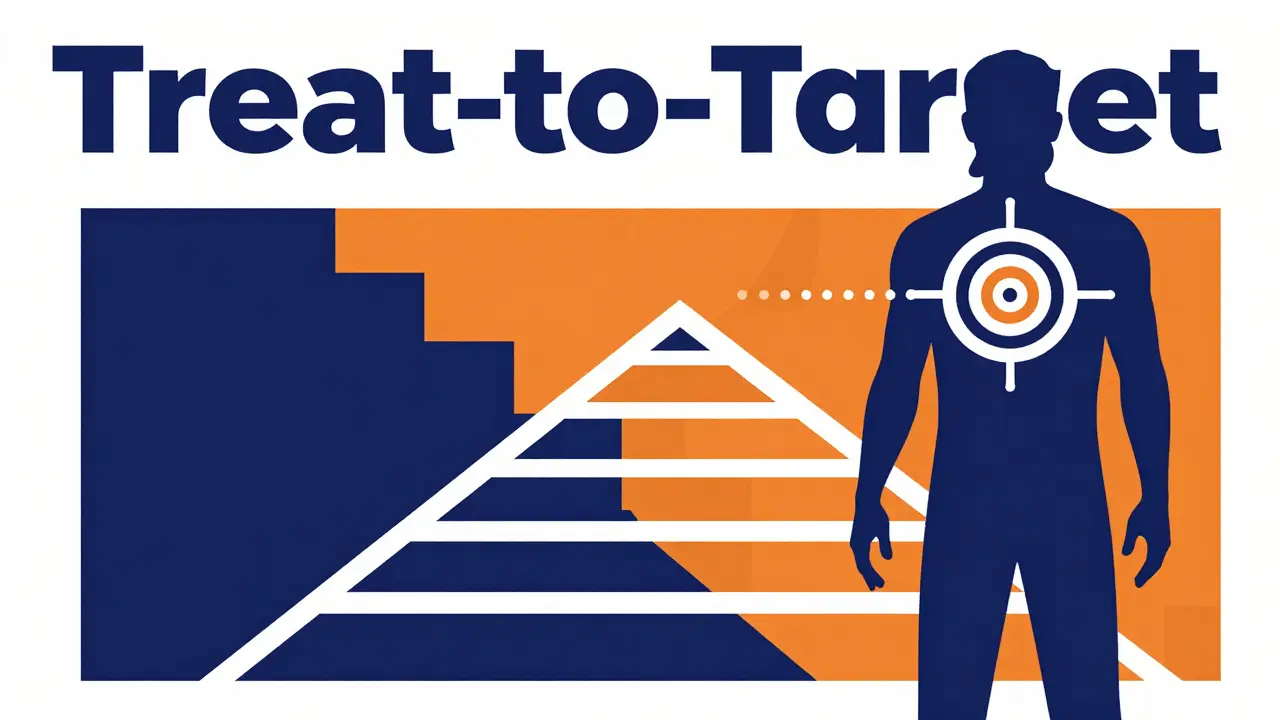
Modern RA treatment isn't about just "feeling better." It's about a strategy called "treat-to-target." The target is usually total remission or "minimal disease activity." Doctors use a tiered approach: start with csDMARDs, evaluate after 3-6 months, and if the target isn't met, add or switch to a biologic. Some are now even using ultrasound to check for hidden inflammation that a physical exam might miss.
For those with "poor prognostic factors"-like high levels of RF (Rheumatoid Factor) or existing joint erosions-the jump to combination therapy happens faster. In these aggressive cases, combining a biologic with a csDMARD can lead to a high-level response (ACR70) in nearly 50% of patients, compared to only about 30% using conventional combinations alone.
Why do I have to take Methotrexate if I'm already on a biologic?
Combining Methotrexate with a biologic often increases the overall effectiveness of the treatment. More importantly, Methotrexate helps prevent your immune system from attacking the biologic drug itself, ensuring the medication continues to work over the long term.
Are biosimilars as safe as the original biologic drugs?
Yes. Biosimilars undergo rigorous testing to ensure they are highly similar to the reference biologic in terms of safety, purity, and potency. They provide the same clinical results while being significantly more affordable.
What are the biggest risks of JAK inhibitors?
JAK inhibitors carry a black box warning for an increased risk of serious infections, malignancy (cancer), and major adverse cardiovascular events (MACE), such as heart attack or stroke. Your doctor will monitor your blood work and cardiovascular health closely.
How do I deal with the nausea caused by Methotrexate?
Many patients find relief by taking folic acid supplements (usually 5-10 mg daily). Other options include splitting the dose over two days or switching from oral pills to subcutaneous injections, which bypasses the digestive tract.
How long does it take for these medications to start working?
Conventional DMARDs are slow and can take several weeks or even months to show a full effect. Biologics and JAK inhibitors typically work faster, with some patients noticing an improvement in a few days to a few weeks.
Next Steps for Your Treatment Journey
If you're just starting out, your first goal is usually to find the right dose of a csDMARD. Don't be discouraged if the first one doesn't work perfectly; it's often a process of trial and error. If you're moving toward biologics, ask your nurse about "patient assistance programs"-many pharmaceutical companies offer these to help cover the high cost of the drug.
Keep a detailed log of your symptoms and any side effects. Because RA treatment is so personalized, the data you provide your rheumatologist is the most valuable tool they have to adjust your la-dosage or switch your medication to a more effective one. If you're considering a JAK inhibitor, make sure to have a thorough cardiovascular screening first to ensure it's a safe option for your specific health profile.