Imagine you're playing a pickup game of basketball or skiing down a slope when suddenly, you feel a loud 'pop' in your knee. Within an hour, your joint looks like a balloon. Or perhaps you've noticed your knee "catches" or locks up during a simple walk, leaving you wondering if you've just tweaked something or if there is real damage. Dealing with ACL reconstruction or a meniscus tear isn't just about the immediate pain; it's about deciding whether you can live with a "loose" knee or if you need to commit to months of grueling physical therapy.
The knee is a complex hinge, and its stability depends on a few key players. When one fails, the rest of the joint takes the hit. Understanding the difference between a ligament tear and a cartilage rip is the first step in deciding how to get back on your feet.
The Core Players: ACL vs. Meniscus
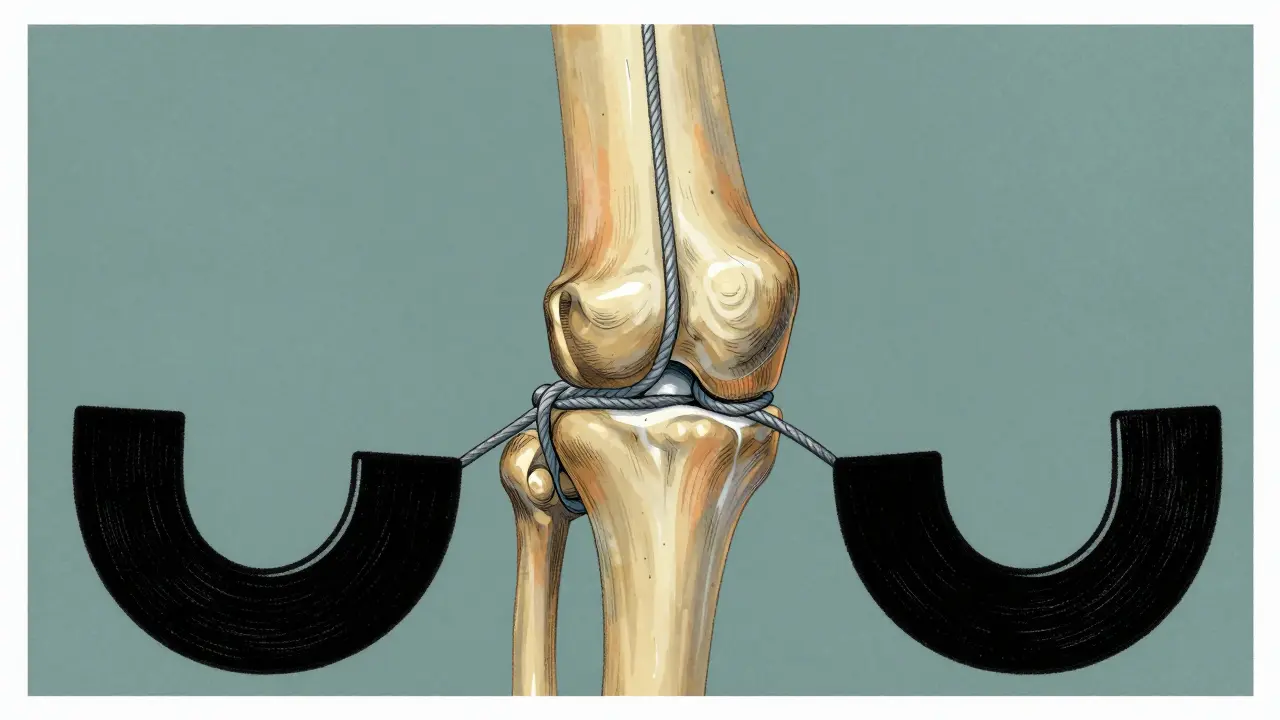
To understand the injury, you have to understand the anatomy. Anterior Cruciate Ligament is a strong band of tissue that prevents your shinbone (tibia) from sliding too far forward in front of your thighbone (femur). It acts as the primary stabilizer for rotational movements. If the ACL is gone, your knee feels unstable, especially during pivots.
On the other hand, Meniscus is a pair of C-shaped fibrocartilage pads that act as shock absorbers. Think of them as gaskets that distribute the weight of your body across the joint. While the ACL is about stability, the meniscus is about cushioning and load distribution.
| Feature | ACL Tear | Meniscus Tear |
|---|---|---|
| Primary Symptom | Instability, "giving out" | Catching, locking, clicking |
| Swelling Time | Rapid (usually within 2 hours) | Delayed (6 to 24 hours) |
| Common Cause | Sudden deceleration/pivot | Twisting with foot planted |
| Surgical Urgency | High for active athletes | Depends on the "zone" of the tear |
Identifying the Damage: How to Tell the Difference
Not all knee pain is created equal. If you heard a pop and your knee swelled up almost immediately, there is a very high chance you're looking at an ACL rupture. In fact, about 90% of people with a complete ACL tear report that audible sound. This is often accompanied by a "pivot shift," where the knee feels like it's sliding out of place when you try to change direction.
Meniscus tears are a bit sneakier. You might not feel a sudden "snap," but you'll notice mechanical issues. About 78% of patients report that their knee "locks" or feels like something is stuck in the joint. The pain is usually localized right along the joint line-the space between the bones-rather than a general feeling of instability. Swelling happens, but it's usually a slow creep over a full day rather than a sudden ballooning.
The Surgical Crossroads: To Operate or Not?
One of the biggest myths in sports medicine is that every knee tear requires surgery. For the ACL, the decision usually depends on your lifestyle. If you're under 40 and want to return to "pivoting" sports (like soccer, basketball, or skiing), surgery is recommended for about 95% of cases. Without a stable ACL, you risk further damaging your meniscus every time your knee slips.
Meniscus surgery is much more nuanced because of how the tissue heals. The meniscus has different zones: the outer "red-red zone" has a rich blood supply, while the inner "white-white zone" has almost none. If your tear is in the red-red zone, a surgeon can often sew it back together, and it has a high chance of healing. If the tear is in the white zone, it simply won't heal on its own because there's no blood to fuel the repair. In those cases, the surgeon may perform a meniscectomy-trimming away the damaged piece.
Here is the catch: removing too much meniscus is dangerous for your long-term health. Research shows that for every 10% of the meniscus removed, your risk of developing osteoarthritis increases by about 14%. This is why modern surgeons fight to "save the meniscus" whenever possible, even if the recovery is longer.
Choosing Your Graft: Autografts vs. Allografts
If you're going through an ACL reconstruction, you'll have to decide where the new ligament comes from. You can't just "sew" a torn ACL back together; you need a replacement graft.
- Autografts: This is your own tissue. The most common sources are the hamstring tendon or the patellar tendon (bone-patellar tendon-bone). These are generally the gold standard for young athletes because they have lower re-tear rates. For example, patients under 25 see significantly better outcomes with autografts compared to donor tissue.
- Allografts: This is donor tissue from a cadaver. The main perk is a faster initial recovery and less immediate pain because there's no second surgical site. However, they have a higher failure rate in high-impact athletes.
The Long Road Back: Recovery and Rehab
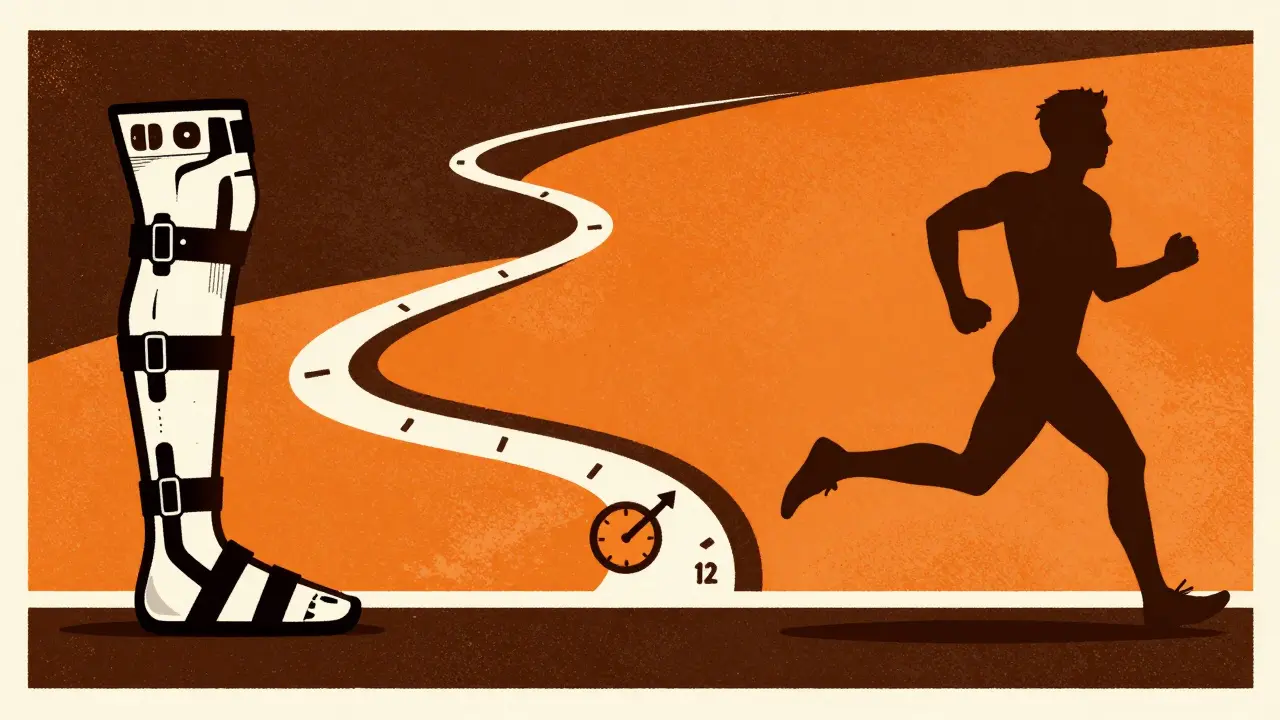
Surgery is only half the battle. The real work happens in physical therapy. If you rush back to sports, you're asking for a re-injury. Data shows that athletes returning to sport before the 9-month mark have a failure rate of 25%, compared to just 5% for those who wait until 12 months.
For an ACL, the timeline is a marathon. The first few weeks are all about regaining full extension (getting the leg straight) and hitting 90 degrees of flexion. By months 4 to 9, you move into sport-specific drills. A pro tip: don't skip "prehabilitation." Spending six weeks strengthening your quads before surgery can reduce your postoperative weakness from 22% down to about 8%.
Meniscus repair has a different set of rules. If you have a repair (sewing the tissue), you'll likely be in a brace for six weeks with limited weight-bearing. This is frustrating, but it's necessary to let the tissue knit. If you had a meniscectomy (trimming), you might be back to light activity in two weeks, but you lose that long-term cushioning.
| Procedure | Weight Bearing | Return to Light Work | Full Sport Return |
|---|---|---|---|
| ACL Reconstruction | Immediate (as tolerated) | 4-8 weeks | 9-12 months |
| Meniscus Repair | Partial (0-6 weeks) | 6-12 weeks | 5-6 months |
| Meniscectomy | Immediate | 2-3 weeks | 4-8 weeks |
Common Pitfalls and Warning Signs
Recovery isn't always a straight line. Some people develop arthrofibrosis-essentially internal scar tissue that prevents the knee from straightening. If you can't get your leg fully straight by six weeks, you need to alert your surgeon immediately; sometimes "manipulation under anesthesia" is needed to break those adhesions.
Another common issue is quad atrophy. Even a year after surgery, many patients find their injured leg is significantly thinner than the other. This isn't just a cosmetic issue; if your quad is weak, your knee joint takes more impact, which accelerates the onset of osteoarthritis.
Can I treat an ACL tear without surgery?
Yes, depending on your age and activity level. About 35% of patients over 40 manage ACL tears non-surgically through targeted physical therapy and activity modification. However, if you plan to return to sports involving cutting or pivoting, surgery is usually necessary to prevent the knee from "giving out" and damaging the meniscus.
What is the difference between a meniscus repair and a meniscectomy?
A repair involves suturing the torn cartilage back together, which preserves the joint's cushion but requires a much slower, more restrictive recovery (often 6 months). A meniscectomy is the surgical removal of the torn piece. It offers a much faster recovery (weeks), but because you've lost a piece of your "shock absorber," you have a higher long-term risk of arthritis.
Will I ever get 100% of my strength back?
Most patients regain 90% or more of their strength, but it takes a long time. Many athletes still see a 10-15% difference in muscle cross-sectional area even 12 months post-op. The key is consistent, high-load strength training beyond the initial PT window.
How do I know if my meniscus repair failed?
Signs of failure include the return of mechanical symptoms, such as the knee locking, catching, or a sudden increase in swelling after activity. Because about 15-35% of complex repairs can fail, a follow-up MRI is usually the only way to confirm if the tissue has healed.
Is a hamstring graft better than a patellar tendon graft?
Neither is objectively "better" for everyone. Patellar tendon grafts are often praised for their extreme strength (up to 2,900N) and are common in professional athletes, but they can cause pain when kneeling. Hamstring grafts are popular because they have a smaller incision and less front-of-knee pain, though they may have slightly higher stretch rates over time.