
If you’ve ever spent a sunny afternoon sneezing, crying, or gasping for air - even though the weather felt perfect - you know how sneaky pollen can be. It doesn’t care if you planned a hike, a soccer game, or just a quiet walk with your dog. Pollen doesn’t wait for you to be ready. But here’s the good news: you don’t have to guess anymore. With modern pollen forecasting, you can know exactly when to step outside - and when to stay inside.
What Pollen Forecasting Actually Tells You
Pollen forecasting isn’t just a fancy weather app. It’s a science-based system that measures how many pollen grains are floating in the air per cubic meter. That’s right - scientists literally count them. They use greased rods called rotorods that spin in the air, collecting pollen over 24 hours. Then they look at the results under a microscope. This number is called the pollen count.
The scale is simple:
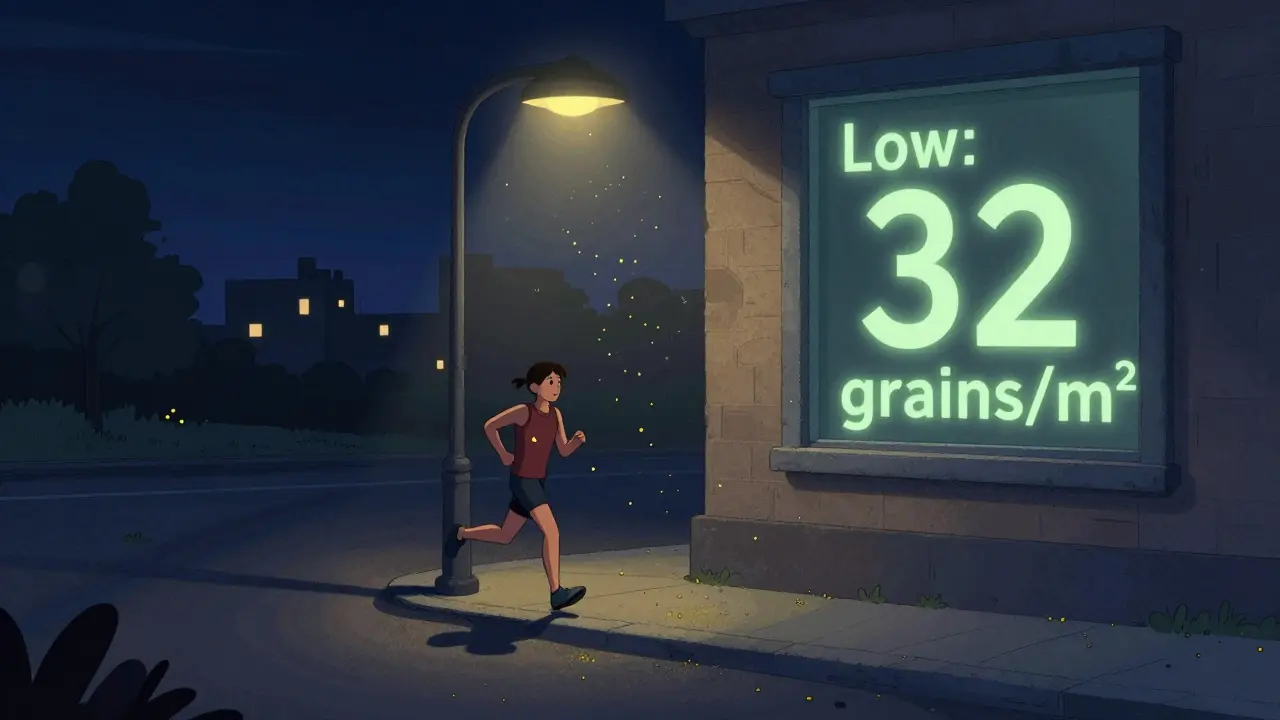
- Low: 50 grains or less per cubic meter - safe for most people
- Moderate: 51-149 - some sensitive people may feel symptoms
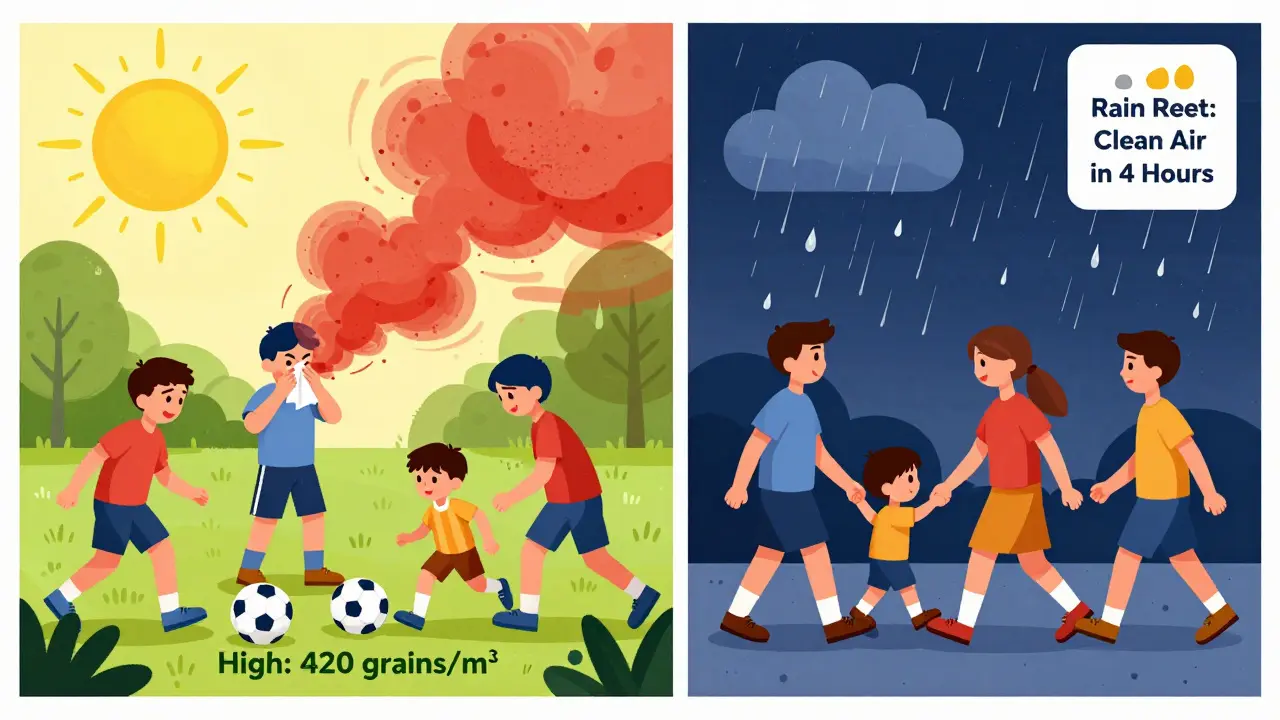
- High: 150-499 - most allergy sufferers will struggle
- Very High: 500+ - avoid being outside if you can
For ragweed, the bar is even lower. Just 20 grains per cubic meter can trigger a full-blown reaction. And it’s not just about quantity - it’s about type. Oak, birch, grass, and ragweed all peak at different times. If you think you’re allergic to “spring pollen,” you might actually be reacting to a specific tree that’s blooming in your neighborhood. That’s why local forecasts matter more than national ones.
When Pollen Hits Its Peak - And When It Doesn’t
Most people assume pollen is worst on warm, sunny days. That’s partly true - but timing matters just as much as temperature.
Here’s how it breaks down by type:
- Tree pollen: Peaks early morning, 5-10 AM. This is why so many people wake up with a runny nose. The dew dries, and the air fills with pollen from oaks, maples, and birches.
- Grass pollen: Hits hardest midday, 10 AM-4 PM. If you’re playing soccer or mowing the lawn during these hours, you’re in the danger zone.
- Weed pollen (like ragweed): Rises in the late afternoon, 4-8 PM. Even if the morning felt fine, your evening walk could set off a storm of symptoms.
And here’s the trick: the lowest pollen times are 5-7 AM and 7-9 PM. That’s when counts drop by 30-50%. If you want to run, garden, or take the kids to the park - do it then. I’ve personally shifted my weekend hikes to early morning. My sneezing? Cut in half.
Weather Changes That Make Pollen Worse
Pollen doesn’t just float around randomly. It rides the wind. And wind doesn’t care about your schedule.
- Wind: A 10 mph breeze can lift pollen into the air and carry it miles. A day with strong, dry winds? Expect counts to spike.
- Temperature: Just a 2-3°C rise can increase pollen production by 15-20%. That’s why warm spells in March or April often trigger early peaks.
- Humidity: Low humidity = more airborne pollen. When the air gets dry, pollen grains don’t weigh down - they fly.
- Rain: This is your friend. A light rain (0.1 inch or more) washes pollen out of the air. Within two hours, counts can drop 30-50%. But wait - don’t go outside right after. The ground dries, and pollen rises again. Wait 4-6 hours for the cleanest air.
Thunderstorms are the wild card. In Melbourne, a 2016 storm caused a 300% spike in pollen counts within 30 minutes. Grass pollen particles broke apart in the rain, got sucked into clouds, then rained down as tiny, inhalable fragments. People who had never had asthma before ended up in the ER. No forecast saw it coming. That’s the biggest gap right now - these sudden events are still unpredictable.
How to Use Pollen Forecasts Like a Pro
You don’t need to be a scientist to use this. Here’s how real people do it:
- Check two sources. One app isn’t enough. Use BreezoMeter and Pollen.com together. One might say “moderate,” the other “high.” When they disagree, assume the worst.
- Know your local pollen. In Perth, the big triggers are grasses and certain eucalyptus species. In Texas, it’s mountain cedar. In New York, it’s birch. Google “[your city] pollen types” and find out what’s actually in your air.
- Time your activities. Schedule outdoor time for early morning or evening. Avoid midday, especially on windy days.
- Use rain as a reset. After a shower, wait a few hours, then go out. You’ll breathe easier.
- Track your symptoms. Keep a simple log: “March 10 - sneezing after 4 PM. Forecast said ‘high’ - match.” Over a few weeks, you’ll start to see patterns. Your body is your best sensor.
One dad in Perth told me he checks the forecast every night before bed. If it’s high for the next day, he moves his kid’s soccer practice to the evening. His daughter hasn’t needed an inhaler since. That’s the power of planning.
Free vs. Paid Forecast Tools - What’s Worth It?
You’ve got options. Here’s the reality:
| Service | Accuracy | Resolution | Forecast Length | Cost |
|---|---|---|---|---|
| BreezoMeter | 82% | 1.5 km | 5 days | Paid API ($0.0005/call) |
| Pollen.com | 75% | 10 km | 3 days | Free |
| WeatherBug | 78% | 5 km | 4 days | Free (with ads) |
| Copernicus (EU) | 87% | 25 km | 5 days | Free |
For most people, free apps like Pollen.com or WeatherBug are enough. They’re accurate enough for daily planning. But if you’re an athlete, parent of a child with severe allergies, or live in a high-pollen area like Perth’s eastern suburbs - pay attention to BreezoMeter. Its hyperlocal data (1.5 km) can tell you if your neighbor’s backyard is spiking pollen while your street is calm.
And here’s a tip: Apple Health now syncs with BreezoMeter. If you’ve got an Apple Watch, it can track your heart rate and breathing during outdoor time - then cross-check it with pollen levels. If your heart races on days the app says “low,” you might be reacting to something else - like mold or pollution. That’s next-level insight.
What’s Changing in 2026 - And Why It Matters
Pollen seasons are getting longer. Since 1990, the U.S. pollen season has grown by over 20 days. In Australia, it’s similar. Warmer winters mean trees bloom earlier. Drier summers mean weeds thrive longer. That means your allergy window is expanding.
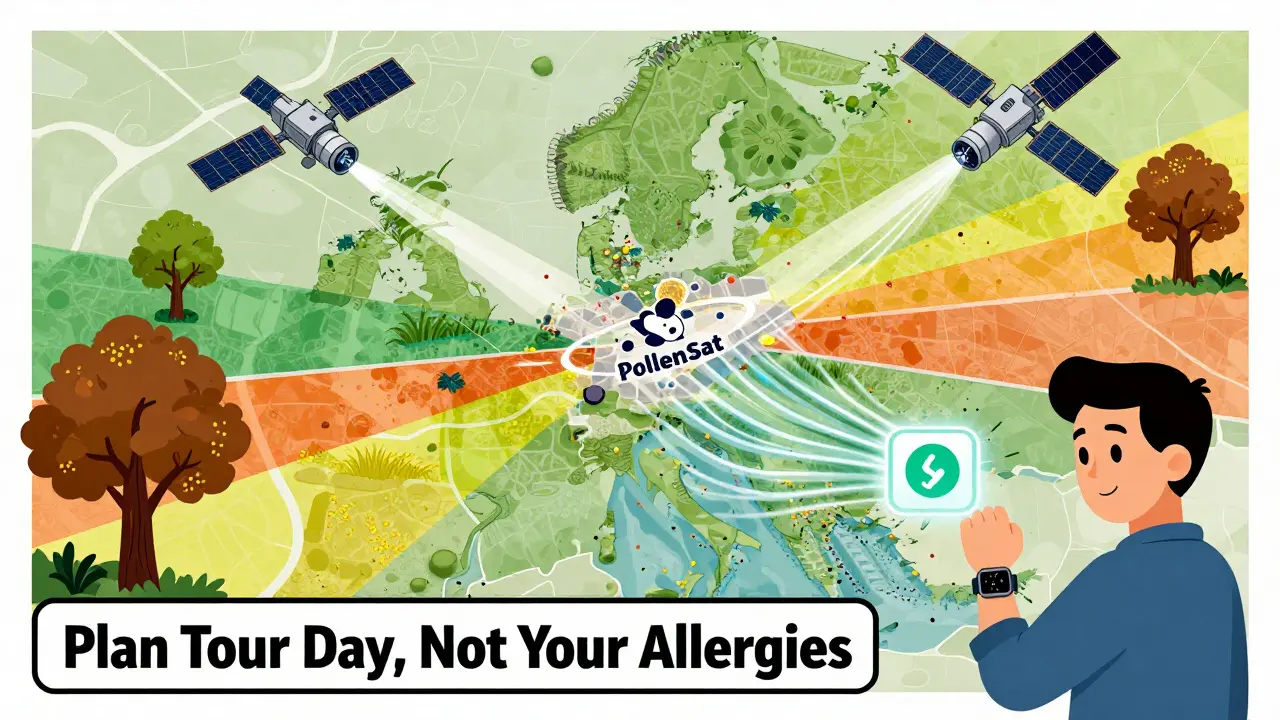
Scientists are working on solutions. NASA and the European Space Agency are launching a satellite in 2025 called PollenSat. It’ll detect pollen types from space - something never done before. That means, in a few years, you might get a global view of what’s floating in the air - even if you’re in rural Western Australia.
AI models are also getting better at predicting thunderstorm asthma. The NIH just funded a $2.4 million project to build a system that watches for sudden drops in air pressure, rising humidity, and wind shifts - all before a storm hits. If it works, it could save lives.
But here’s the truth: you don’t need satellites to feel better. You just need to know when to go out - and when to wait.
Real-Life Tips From People Who’ve Mastered This
I’ve read hundreds of posts from people on Reddit’s r/Allergies. Here are the top three tips they swear by:
- “I shift my runs to 6-7 AM.” One runner in Perth cut her antihistamine use in half. She used to run at 6 PM - when ragweed peaked. Now she runs before sunrise. No more coughing fits.
- “I check the forecast and the weather app together.” If it says “light rain” tomorrow, she knows she can do yard work after it clears. If it says “windy,” she skips it.
- “I don’t trust one app.” She checks BreezoMeter, Pollen.com, and her local hospital’s allergy bulletin. If two say “high,” she stays inside.
One user said: “I used to think pollen was just part of spring. Now I treat it like a weather forecast for my health. I plan my life around it.”
What You Should Do Today
It’s March 14, 2026. Tree pollen season is in full swing across Australia. Right now, in Perth, grass and eucalyptus are peaking. Here’s your action plan:
- Open your phone. Go to BreezoMeter or Pollen.com.
- Check today’s pollen count for your suburb.
- Look at tomorrow’s forecast.
- Decide: Is it high? Then plan your outdoor time for 6-8 AM or 7-9 PM.
- Set a reminder: “Check pollen before every weekend plan.”
You don’t have to live in fear of the outdoors. You just have to be smart about it. Pollen forecasting isn’t magic. It’s information. And information, used right, gives you back control.
Sabrina Sanches
March 14, 2026 AT 17:43I used to hate spring until I started checking BreezoMeter every night. Now I plan my runs like clockwork-6 AM, no exceptions. My allergies? Gone. Seriously, this changed my life. Don't overthink it. Just check. Then go out.
Also-rain? Best. Reset. Ever.
Adam M
March 15, 2026 AT 11:37If you're still guessing when to go outside, you're doing it wrong.
Scott Smith
March 17, 2026 AT 09:52This is exactly the kind of practical, science-backed info that gets buried under fluff online. I’ve shared this with my daughter’s school nurse. She’s already adjusting outdoor recess times based on pollen counts. Small changes, big impact.
Leah Dobbin
March 18, 2026 AT 19:57It’s fascinating how society has normalized suffering through ignorance. People still walk their dogs at 3 PM like it’s a virtue. The fact that we need a $0.0005 API call to avoid chronic inflammation says more about our healthcare system than any pollen map ever could.
Noluthando Devour Mamabolo
March 19, 2026 AT 09:24The hyperlocal resolution of BreezoMeter (1.5 km) is a game-changer for phenological epidemiology. When your microclimate shifts due to urban canopy fragmentation, aggregated regional data becomes statistically irrelevant. Prioritize granular temporal-spatial analytics over broad-spectrum forecasts. Your IgE response will thank you.
tamilan Nadar
March 20, 2026 AT 06:42In India, we don’t need apps. We just look at the neem tree. If it’s flowering, we stay inside. Simple. No data needed. But I guess if you like numbers, go ahead. We’ve been breathing through allergies for centuries.
Sally Lloyd
March 21, 2026 AT 02:50Did you know the EPA has been quietly funding pollen manipulation programs since 2018? The satellite they’re launching isn’t to track pollen-it’s to *control* it. They’re seeding clouds with anti-allergen particles. That’s why the forecasts are getting so accurate. They’re not predicting. They’re engineering.
Aaron Leib
March 22, 2026 AT 21:17Love this breakdown. Seriously. One thing I’d add-don’t forget to clean your shoes and clothes after being outside. Pollen sticks to fabric like glitter. I started wiping my dog’s paws before she comes in. My sinuses haven’t been this clear in years. Small habits, huge difference.
Emma Deasy
March 24, 2026 AT 02:53I cannot BELIEVE how many people are still using Pollen.com as their primary source. The resolution is 10 KM. TEN KILOMETERS. That’s like using a weather app that tells you the temperature for an entire state. If you’re allergic to birch and live in a valley surrounded by oaks, you’re not getting accurate data-you’re getting a guess wrapped in a corporate logo. This is why people are still suffering. This is why we need hyperlocal, real-time, open-source, community-driven pollen mapping. Not apps. Systems.
rakesh sabharwal
March 24, 2026 AT 15:37All this tech is just distraction. The real solution? Stop living in cities. Move to the countryside. Breathe real air. No apps. No data. Just nature. The fact that you need a subscription to avoid sneezing is a symptom of civilizational collapse.
Rosemary Chude-Sokei
March 25, 2026 AT 05:31I’ve been tracking my symptoms alongside pollen data for six months now. What I’ve learned: humidity and mold are bigger triggers than grass in my area. I never realized that until I cross-referenced my journal with the local weather station’s humidity logs. It’s not just about pollen. It’s about the whole ecosystem. Thank you for the reminder to look beyond the obvious.