
More than 10% of people in the U.S. say they’re allergic to penicillin. But here’s the truth: 9 out of 10 of them aren’t. That’s not a typo. Most people who think they have a penicillin allergy don’t actually have one. And that misunderstanding is putting their health-and the health of others-at risk.
Why So Many People Think They’re Allergic to Penicillin
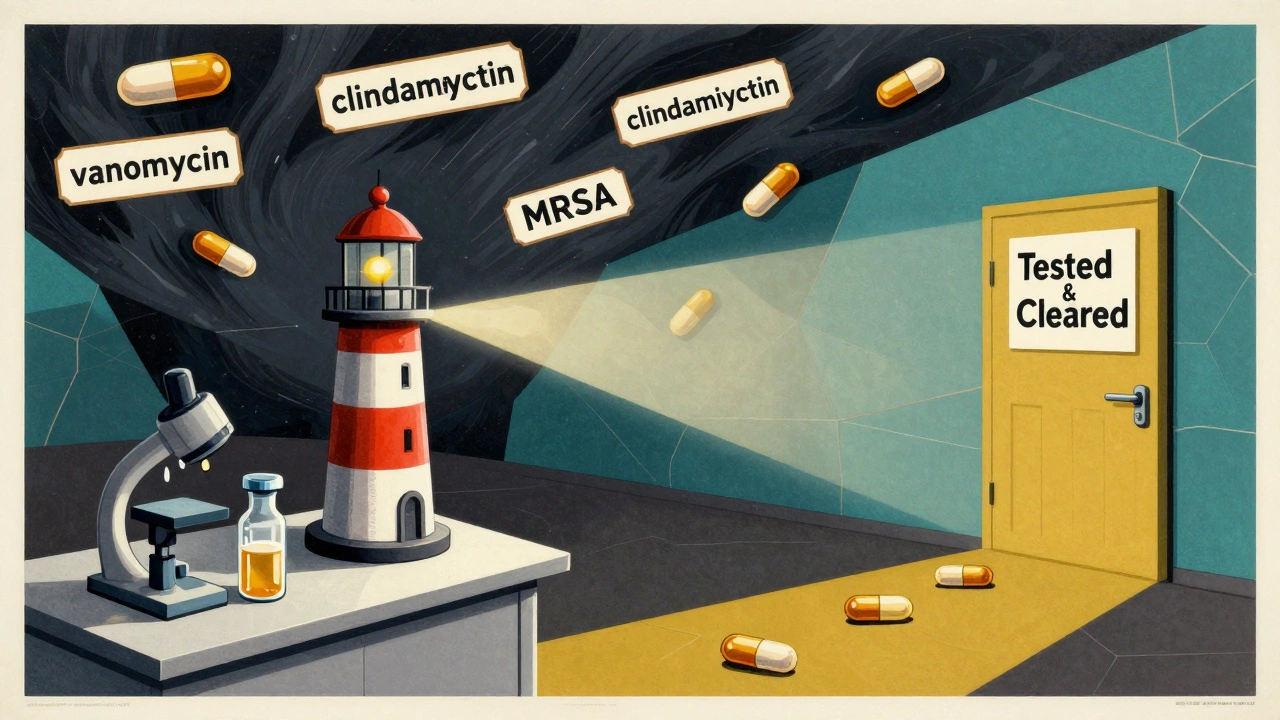
Penicillin is one of the oldest and most effective antibiotics ever made. It’s been used since the 1940s to treat everything from strep throat to pneumonia. But back then, doctors didn’t always know how to tell the difference between a real allergy and a side effect. A rash after taking penicillin? That got labeled as an allergy. A stomach ache? Also an allergy. A headache? Same thing. Fast forward to today, and those old labels stick. People carry them for decades-even if they haven’t taken penicillin since childhood. The problem? Once you’re labeled “penicillin allergic,” doctors avoid giving you penicillin or any related antibiotics, even if they’re the best, safest, or cheapest option. That’s not just inconvenient. It’s dangerous. When doctors can’t use penicillin, they turn to broader-spectrum antibiotics. These drugs kill more types of bacteria, good and bad. That increases the chance of antibiotic-resistant infections like MRSA and C. difficile. Studies show people with a penicillin allergy label are 50% more likely to get MRSA and 35% more likely to get C. difficile than people without the label.What a Real Penicillin Allergy Looks Like
Not every bad reaction is an allergy. A true penicillin allergy means your immune system mistakes the drug for a threat and attacks it. There are two main types:- Immediate reactions (within 1 hour): These are IgE-mediated and can be life-threatening. Symptoms include hives, swelling of the lips or tongue, trouble breathing, wheezing, low blood pressure, or passing out. This is anaphylaxis. It needs epinephrine right away.
- Delayed reactions (more than 1 hour later): These are usually not life-threatening but still serious. A widespread rash that appears 3-5 days after taking the drug is common. Rarely, you might get Stevens-Johnson Syndrome or DRESS-severe skin and organ reactions that require hospital care.
Most People Can Outgrow Their Allergy
Here’s something most people don’t know: 80% of people who had a true IgE-mediated penicillin allergy lose it after 10 years without taking the drug. That means if you were told you were allergic in middle school and haven’t taken penicillin since, your body likely doesn’t react to it anymore. Delayed rashes? Even fewer people keep those. Most go away after 1-2 years. So if your allergy label is from childhood, it’s probably outdated. And if you’ve never had a serious reaction, you’re even less likely to be allergic now.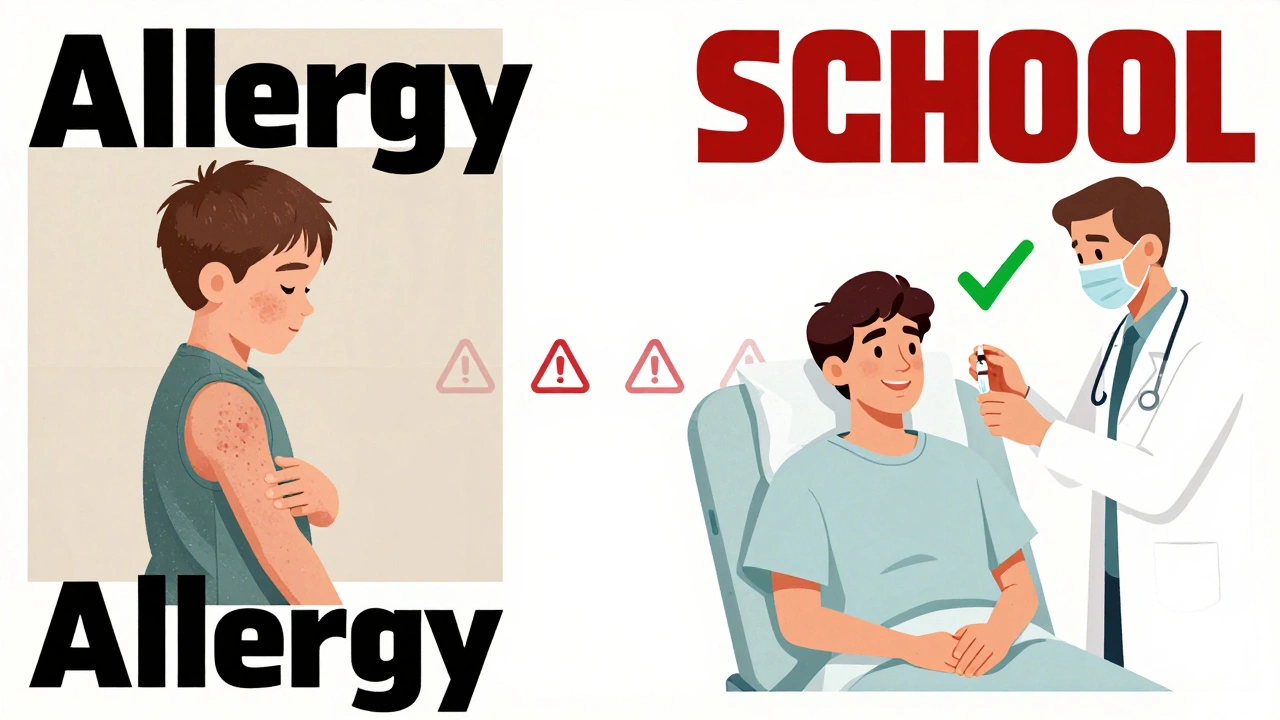
How to Find Out If You’re Really Allergic
You don’t need to guess. There’s a simple, safe test:- Penicillin skin test: A tiny amount of penicillin is placed under your skin. If you’re allergic, you’ll get a red, itchy bump within 15-20 minutes. This test checks for the IgE antibodies that cause anaphylaxis.
- Oral challenge: If the skin test is negative, you’re given a small dose of amoxicillin (a penicillin-type drug) and watched for an hour. No reaction? You’re not allergic.
Who Should Get Tested
You don’t need a doctor’s order to ask. If any of these sound like you, talk to your doctor about testing:- You were told you’re allergic to penicillin as a child
- You had a rash after taking penicillin, but no swelling or breathing problems
- You’ve never taken penicillin since the reaction
- You’re scheduled for surgery and need antibiotic prophylaxis
- You’ve had a recent infection and your doctor said they can’t use penicillin
What Happens If You Don’t Get Tested
Every time you’re given a different antibiotic because of a mislabeled allergy, you’re contributing to a bigger problem: antibiotic resistance. The CDC estimates that fixing penicillin allergy mislabeling could save the U.S. healthcare system $1.2 billion a year. That’s because:- Broader-spectrum antibiotics cost more
- They cause more side effects
- They lead to longer hospital stays
- They increase the chance of deadly infections like C. difficile
What to Do Right Now
If you think you’re allergic to penicillin, here’s what to do:- Check your medical records. What exactly was the reaction? When did it happen? Was it a rash? A stomach ache? Trouble breathing?
- Ask your doctor. Say: “I think I might have been mislabeled. Can we test me?”
- Don’t assume it’s safe to take penicillin again. Even if you’re sure you’re not allergic, don’t self-test. Testing must be done under supervision.
- Update your records. If you pass the test, make sure your doctor updates your file. Tell every new provider.
- Consider a medical alert bracelet. Only if you’ve had a confirmed anaphylactic reaction. Otherwise, it’s unnecessary and can cause confusion.
What You Should Never Do
- Don’t avoid penicillin because “everyone in my family is allergic.” Allergies aren’t inherited like eye color.
- Don’t say “I’m allergic” if you’re not sure. Say “I had a rash once, but I don’t know if it was an allergy.”
- Don’t wait until you’re in the ER to find out. Testing takes an hour. Anaphylaxis can kill you in minutes.
- Don’t assume cephalosporins are unsafe. If you didn’t have an IgE-mediated reaction, third- and fourth-generation cephalosporins are generally safe.
What’s Changing in 2025
Hospitals are waking up. By 2025, half of U.S. hospitals are expected to have formal penicillin allergy assessment programs. Electronic health records are being updated to flag patients who might be eligible for testing. Nurses are being trained to do oral challenges. Pharmacists are pushing for de-labeling. The message is clear: penicillin allergy labels are outdated, inaccurate, and dangerous. The fix isn’t complicated. It’s testing. It’s education. It’s updating records. You don’t need to live with a label that might be wrong. You don’t need to risk a resistant infection because your doctor didn’t have better options. You don’t need to pay more for medicine or stay longer in the hospital. All you need is to ask one question: “Could I still be allergic?”Can I outgrow a penicillin allergy?
Yes. About 80% of people who had a true IgE-mediated penicillin allergy lose their sensitivity after 10 years without exposure. Delayed rashes usually fade within 1-2 years. If you were labeled allergic as a child and haven’t taken penicillin since, you’re very likely no longer allergic.
Is a penicillin skin test painful?
It’s not painful. The test uses a tiny needle to place a small amount of penicillin under the skin. You might feel a slight pinch, like a mosquito bite. If you’re allergic, a red, itchy bump appears within 15-20 minutes. If not, there’s no reaction. The test is safe and quick.
What if I have a reaction during testing?
Testing is done in a controlled setting with medical staff and emergency equipment on hand. If you react, they’ll treat it immediately-usually with antihistamines or epinephrine. Reactions during testing are rare (less than 1%) and almost always mild. The risk of not testing is far greater.
Can I take amoxicillin if I’m allergic to penicillin?
Amoxicillin is a type of penicillin. If you have a true penicillin allergy, you should avoid it. But if you’ve never been properly tested, you might not be allergic at all. Many people labeled “penicillin allergic” tolerate amoxicillin just fine after a supervised oral challenge.
Do I need to wear a medical alert bracelet?
Only if you’ve had a confirmed anaphylactic reaction to penicillin. If you’ve only had a rash or a stomach upset, you don’t need one. Wearing a bracelet when you’re not truly allergic can lead to worse treatment-doctors might avoid all penicillin-type drugs, even when they’re the best option.
Can I take other antibiotics if I’m allergic to penicillin?
Yes, but it depends on the type of reaction. If you never had anaphylaxis or severe skin reactions, many other antibiotics-including third- and fourth-generation cephalosporins and carbapenems-are safe. If you’re unsure, get tested. Most people labeled allergic can safely take penicillin or related drugs after evaluation.

Courtney Black
December 11, 2025 AT 03:43So let me get this straight-we’ve been giving people unnecessary antibiotics for decades because someone got a rash at 7 and nobody bothered to check if it was real? And now we’re paying for it in superbugs and hospital bills? That’s not negligence. That’s a systemic failure wrapped in a white coat.
I’ve seen this in my own family. My mom’s labeled allergic since she was 8. She got C. diff at 62 because they gave her vancomycin instead of penicillin. She nearly died. They never tested her. Never even asked. Just assumed.
It’s not just medical ignorance. It’s institutional laziness. We don’t update records. We don’t re-evaluate. We just keep the label like a bad tattoo.
And now the system’s waking up? 2025? That’s 20 years too late.
But hey, at least we’re finally talking about it. Maybe now, someone’s kid won’t grow up thinking they’re allergic because their grandma said so.
God help us if this is the only thing it takes to fix a broken system: a CDC report and a billion-dollar price tag.
Raja Herbal
December 11, 2025 AT 07:11So if I had a rash at 12 and never took penicillin again, I’m basically a walking antibiotic resistance generator? Cool. So what’s the plan? Everyone gets a free skin test? Or do we just wait until someone dies from MRSA before we care?
Also, why is it always the poor people who get stuck with the expensive, toxic alternatives? Just saying.
Also also-why do doctors still write ‘penicillin allergy’ in bold red on charts like it’s a death sentence? It’s not a religion. It’s a data point.
Also also also-I’ve had 3 penicillin-based meds since I was 25 and didn’t die. Still labeled allergic. Still getting clindamycin. Still paying more. Still being treated like a walking biohazard.
Y’all are hilarious.
Rich Paul
December 12, 2025 AT 00:24yo so i had this rash after amoxicillin when i was 9 and now im 32 and my doc still says ‘allergic’ and i never got tested bc it’s ‘too risky’ but like… the doc never even asked me what the rash looked like? just took my word for it?
turns out i got a viral rash from mono, not penicillin. so i’ve been getting azithromycin for every sinus infection for 15 years. it’s like 3x more expensive and gives me diarrhea like a broken toilet.
just got my skin test last month. negative. now i’m cleared. my chart says ‘penicillin allergy’ still. i had to email my pcp 4 times. they’re still using the old label in the ehr.
so yeah. if you think you’re allergic, get tested. it’s 15 mins. it’s not painful. it’s not scary. your doctor just doesn’t wanna do the paperwork.
also cephalosporins are fine. stop being scared of them. they’re not magic poison. they’re just penicillin’s cooler cousins.
Delaine Kiara
December 12, 2025 AT 21:07THIS IS A TRAGEDY. A TRAGEDY.
I had a rash at 5. That was 40 years ago. I’ve never had another reaction. I’ve taken amoxicillin three times since I was 20. No problem. But my chart? ‘PENICILLIN ALLERGY – DO NOT ADMINISTER.’
My last surgery? They gave me vancomycin. I got C. diff. I spent 11 days in the hospital. I lost 20 pounds. I had to wear a diaper for a week.
My surgeon said, ‘We didn’t want to risk it.’
WHAT RISK? I WASN’T DYING. I WASN’T SWELLING. I WASN’T HAVING ANAPHYLAXIS.
My mom told me I was allergic. She didn’t know what it meant. Neither did I. Now I do. And I’m furious.
My doctor’s office still hasn’t updated my file. I called 7 times. They said ‘we’ll look into it.’
So now I’m writing this from my couch, still on antibiotics I don’t need, still scared to even say the word ‘penicillin’ out loud.
Someone please fix this. Before someone dies. Because it’s not a ‘maybe.’ It’s a ‘when.’
Ruth Witte
December 13, 2025 AT 04:53OMG I JUST GOT TESTED AND I’M NOT ALLERGIC 😭🎉
After 22 years of being told ‘no penicillin’ I finally went to an allergist and did the skin test + oral challenge. ZERO REACTION. I cried. I hugged the nurse. I bought myself a whole box of amoxicillin just to celebrate 😂
My doc updated my chart and I’m so done with clindamycin. It’s like drinking lava. Also, my last UTI? Took 3 weeks to clear. This time? Gone in 48 hours.
If you think you’re allergic-GO GET TESTED. It’s not scary. It’s not expensive. It’s just… so rarely offered.
Be your own advocate. Ask. Push. Don’t wait. Your body (and your wallet) will thank you 💪❤️
Katherine Rodgers
December 13, 2025 AT 10:52So let me get this straight-the entire medical system is built on assumptions, and now we’re surprised when it collapses?
People get labeled allergic because a kid got a rash from a virus. That label sticks for life. Doctors don’t question it. Pharmacies don’t question it. Hospitals don’t question it.
Meanwhile, we’re dumping broad-spectrum antibiotics into the environment like it’s a goddamn faucet.
And the solution? Testing. Simple. Cheap. Proven.
But no. We’d rather spend $1.2 billion on treating superbugs than $50 on a skin test.
It’s not ignorance. It’s economics. And it’s evil.
Also, if you’re still using ‘penicillin allergy’ as a diagnostic category without verification-you’re not a doctor. You’re a liability.
Lauren Dare
December 14, 2025 AT 07:24Let’s be real: the term ‘penicillin allergy’ is a relic of 1950s medicine. We didn’t have the tools to differentiate between viral rashes and true IgE reactions. Now we do. So why are we still using outdated labels?
It’s not just about antibiotics. It’s about trust. Patients trust their charts. Providers trust the labels. No one checks.
And when someone finally does? They’re met with resistance. ‘We’ve always done it this way.’
That’s not clinical practice. That’s institutional inertia.
And yet, the data is clear: de-labeling reduces MRSA, cuts costs, improves outcomes.
So why aren’t hospitals mandating it?
Because change requires work. And work requires accountability. And accountability? That’s the one thing medicine refuses to embrace.
Gilbert Lacasandile
December 16, 2025 AT 01:35I just wanted to say thank you for posting this. I never knew any of this.
I’ve been labeled allergic since I was 6. Never had a real reaction. Just a rash. But I always assumed it was real.
I just called my doctor and asked about testing. They said, ‘Oh, we can do that. Let’s schedule it.’
I didn’t even know it was an option.
So yeah. If you’ve been told you’re allergic and you’re not sure-ask. It’s okay to ask. You’re not being difficult. You’re being smart.
And if your doctor says no? Find someone who will say yes.
Thanks for the info. Really helpful.
Lola Bchoudi
December 16, 2025 AT 20:19As a nurse practitioner who’s run penicillin de-labeling clinics, I can tell you this: 90% of patients who come in thinking they’re allergic? They’re not.
We do skin tests. We do oral challenges. We educate. We update records. We follow up.
And the results? Patients feel empowered. They’re no longer afraid of antibiotics. They stop asking, ‘Can I take this?’ and start asking, ‘What’s the best one for me?’
It’s not complicated. It’s not expensive. It’s just… not standard.
If you’re a patient: ask.
If you’re a provider: offer.
If you’re a system: mandate.
We’ve got the tools. We’ve got the data. We just need the will.
And that? That’s the real cure.
Morgan Tait
December 17, 2025 AT 10:59Did you know the FDA doesn’t even require re-evaluation of allergy labels? That’s because the pharmaceutical industry doesn’t want you to know you can take penicillin again.
Why? Because the alternatives? Vancomycin, clindamycin, linezolid? Those are expensive. And guess who makes them?
Big Pharma. They’ve been quietly funding guidelines that keep you labeled allergic for life.
They don’t want you to know you can get a $50 skin test and save $10,000 in hospital bills.
They want you to keep buying the expensive antibiotics.
They want you to keep getting C. diff.
They want you to keep getting MRSA.
This isn’t a medical issue.
This is a corporate cover-up.
And if you’re not angry about this, you’re not paying attention.
They’re selling sickness. And you’re buying it.
Wake up.
Nikhil Pattni
December 18, 2025 AT 16:38Bro I was told I'm allergic since I was 5 and now I'm 35 and I never had any problem with penicillin or amoxicillin but still doctors avoid it like it's poison. Last time I had pneumonia they gave me azithromycin and I was sick for 3 weeks. I finally asked for test and it was negative. I'm like why didn't anyone tell me this before? I could've saved so much pain and money.
Also my cousin in India got tested and now he's fine. Why is this not common knowledge? I think doctors here are lazy or scared to change records.
Just go get tested. It's easy. It's safe. It's life changing.
Arun Kumar Raut
December 20, 2025 AT 05:49This is such an important topic. I’ve worked with patients who’ve avoided penicillin for 40 years because they got a rash as a kid. No one ever told them it could go away. No one ever offered to test them.
It’s not just about medicine. It’s about dignity. People deserve to know the truth about their own bodies.
I always tell my patients: ‘If you’re not sure, ask. Even if it’s been 30 years. Even if your mom said so. Even if the chart says ‘allergic.’
Get tested. You might be surprised.
And if your doctor says no? Find a new one. You deserve better.
Maria Elisha
December 21, 2025 AT 22:20Wow. So I’ve been avoiding penicillin my whole life because of a rash I got when I was 6. And now you’re telling me I’m fine? Cool. Guess I’ll just keep taking the expensive, diarrhea-causing antibiotics then. 😴
Angela R. Cartes
December 23, 2025 AT 10:00Oh great. Another ‘medical myth’ article. Next you’ll tell me vaccines don’t cause autism and fluoride isn’t a government mind-control agent 😏
Penicillin allergies are real. I know people who’ve died from anaphylaxis. You think it’s ‘just a rash’? You’re lucky you’ve never seen someone turn blue in the ER.
Also, why are you trusting a blog post over a doctor? 🤔
Also also, I’ve got a friend who ‘got tested’ and still had a reaction. So… yeah. Not so simple.
Just sayin’. Don’t be reckless. 💅
Lisa Whitesel
December 23, 2025 AT 17:50So the solution to a $1.2 billion problem is a skin test? Wow. What a revelation. No one ever thought of that before. Let’s just ignore the fact that 90% of people who get tested still don’t get labeled correctly because doctors are too lazy to update records. Let’s just blame the patients for not asking. Let’s pretend this is about health and not about broken systems and power structures. Let’s keep pretending the problem is individual ignorance when it’s institutional neglect. Let’s not talk about how the system profits from keeping people sick. Let’s not. Let’s just keep pretending we’re fixing things when we’re just rearranging deck chairs on the Titanic
Rich Paul
December 24, 2025 AT 00:01wait so if you had a rash at 5 and never took penicillin again you’re probably not allergic? then why did my doc say ‘don’t ever take it again’ like it’s a death sentence?
i just got tested and i’m fine. now my chart says ‘penicillin allergy’ still. i had to email my clinic 5 times. they said ‘we’ll update it next quarter.’
so like… what’s the point of testing if they won’t update the record?
also my last surgery? they used vancomycin. i got c. diff. i lost 15 lbs. i had to go to the er 3 times.
so yeah. testing’s great. but if the system doesn’t change? we’re just doing this for nothing.