

Most people know fiber is good for digestion, but few realize that not all fiber is the same. Two types-soluble and insoluble-do completely different jobs in your gut. Getting the right mix isn’t just about avoiding constipation. It’s about managing blood sugar, calming IBS, lowering cholesterol, and even improving your mood. If you’ve ever felt bloated after eating bran cereal or had diarrhea after a salad, you’ve probably run into the wrong kind of fiber for your body.
What soluble fiber actually does in your gut
Soluble fiber doesn’t just pass through you. It turns into a thick, gooey gel when it hits water. That gel slows down how fast your stomach empties and how quickly sugar gets absorbed into your blood. Studies show this can cut post-meal blood sugar spikes by 20-30%. That’s why people with type 2 diabetes often feel more stable after adding oats, beans, or chia seeds to their meals.
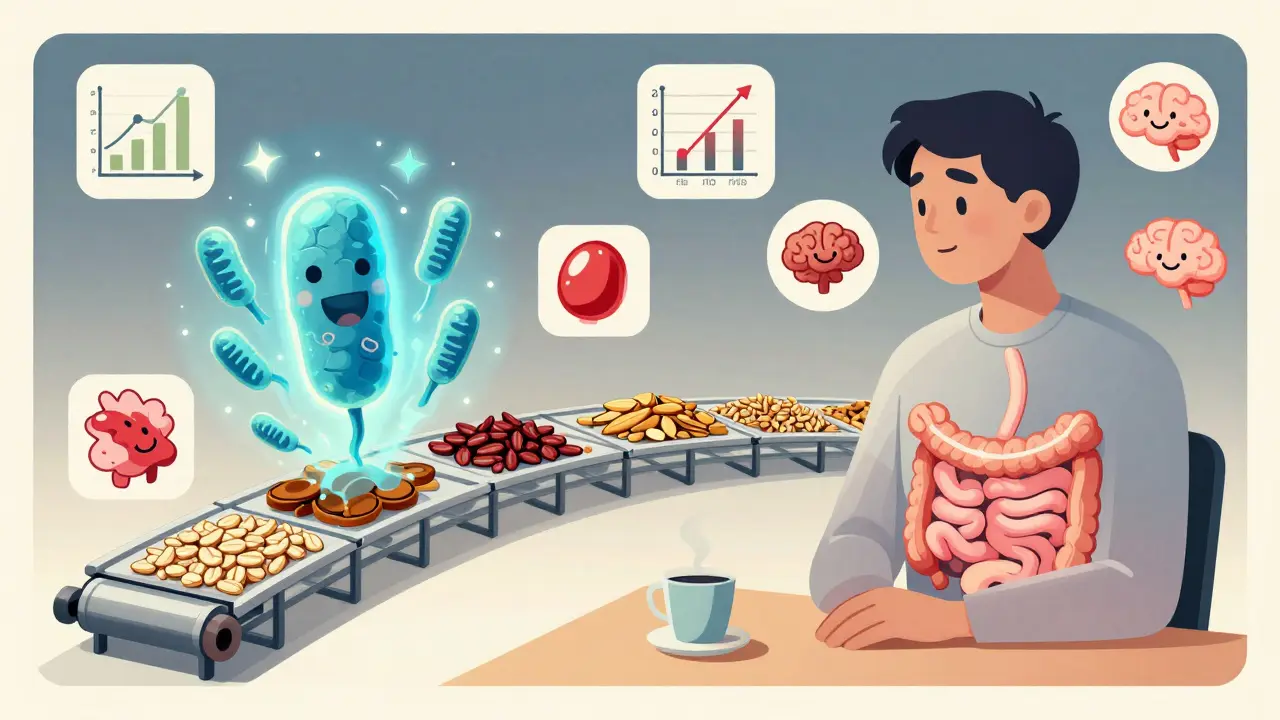
This gel also feeds the good bacteria in your large intestine. Those bacteria break down the fiber and produce short-chain fatty acids like butyrate. Butyrate isn’t just fuel for your colon cells-it’s linked to reduced inflammation and a stronger gut lining. Research from 2024 confirms that soluble fiber is the main driver behind these changes. It’s not just about digestion; it’s about your gut microbiome getting the right food to thrive.
And here’s something surprising: that same fermentation process boosts hormones like GLP-1 and peptide YY. These tell your brain you’re full. People who eat enough soluble fiber report feeling satisfied longer, with up to 25% less hunger between meals. That’s why so many people on the Mediterranean diet-who eat plenty of lentils, apples, and psyllium-lose weight without counting calories.
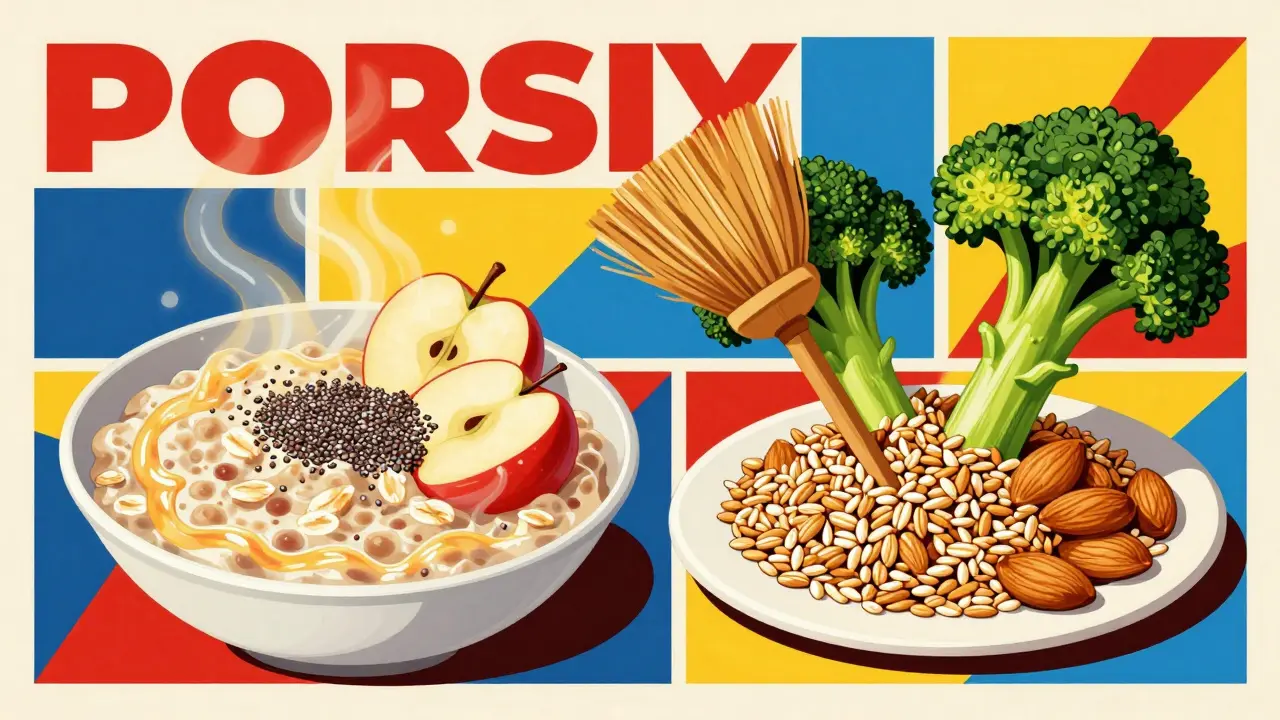
Insoluble fiber: the gut’s broom
Insoluble fiber doesn’t dissolve. It doesn’t turn to gel. It just moves through your system like a sponge, soaking up water and swelling up. That’s why it’s so effective for constipation. It adds bulk to stool and pushes it along faster. Research shows it can cut transit time by 24-48 hours, reducing constipation risk by 30-50%.
Think of it like a natural laxative that doesn’t cause cramps. Whole grains, wheat bran, nuts, seeds, and vegetable skins are packed with it. A medium apple with skin gives you about 1.8 grams of insoluble fiber. A cup of cooked lentils? Only 0.7 grams of soluble, but 2.5 grams of insoluble. That’s why bran cereals work so well for regularity.
But here’s the catch: insoluble fiber can make things worse if you have IBD like Crohn’s or ulcerative colitis during a flare-up. The rough texture can irritate already inflamed tissue. That’s why doctors often recommend limiting it to 10-15 grams per day during active symptoms. Once things calm down, you can slowly bring it back up.
Why you need both-not just one
There’s no such thing as “the best fiber.” Your gut needs both. Soluble fiber calms and feeds. Insoluble fiber cleans and moves. Together, they create balance.
Take the Mediterranean diet. It’s not just about olive oil and fish. It’s about 30-50 grams of fiber daily from a mix of vegetables, legumes, whole grains, nuts, and fruits. The ratio? Roughly 3 parts insoluble to 1 part soluble. That’s not an accident. It’s what nature intended.
Most people eat too much of one and not enough of the other. If you’re eating lots of white bread and rice, you’re getting almost no fiber. If you’re only eating oatmeal and psyllium, you might be missing out on the bulk-building power of bran and skins. You need the whole team.
And here’s the kicker: fiber from whole foods works better than supplements. A 2024 review in PMC showed that isolated fiber powders can’t replicate the complex mix of nutrients, antioxidants, and phytochemicals found in real food. That’s why chia seeds are better than chia powder. Apples are better than apple fiber extract.
How much should you really be eating?
The official recommendation? 25 grams per day for women, 38 for men under 50. But here’s the truth: only 5% of Americans hit that mark. The average is around 15 grams. That’s half of what your body needs.
Don’t try to jump from 10 to 30 grams overnight. That’s how bloating starts. Instead, add 5 grams per week. Start by swapping white rice for brown. Add a serving of beans to your lunch. Snack on an apple with skin. Include a tablespoon of chia seeds in your yogurt.
And don’t forget water. For every 25 grams of fiber, drink at least 1.5 to 2 liters. Without enough water, fiber just sits there and hardens. That’s when you get blocked up instead of moving freely.
What to eat for each type
Here’s a simple guide to foods that deliver each type of fiber-no guesswork needed.
- Soluble fiber (gel-forming): Oats (1-2g per 100g), lentils (2-3g), beans (5-8g), chia seeds (5.6g per 30g), apples (1.4g per medium), carrots (0.7g), psyllium husk (7g per tablespoon), flaxseeds (2.7g per tbsp), barley, avocados.
- Insoluble fiber (bulk-adding): Wheat bran (12g per 100g), whole-wheat flour (7.9g), nuts (2-4g per 30g), seeds (3-5g per 30g), kiwi skin (2.5g per fruit), broccoli stems, potato skins, corn, brown rice, quinoa.
Notice how many foods contain both? Beans have soluble and insoluble. Chia seeds do too. The trick is variety. Don’t just eat one thing. Rotate your sources.
Special cases: IBS, IBD, and diabetes
If you have IBS, soluble fiber is your friend. Oats, psyllium, and bananas often reduce both diarrhea and constipation. A Reddit survey from early 2023 showed 68% of IBS sufferers saw improvement within two weeks of adding soluble fiber daily.
But if you have IBD-Crohn’s or colitis-during a flare-up, avoid insoluble fiber. Skip the bran cereal, raw veggies, and nuts. Stick to peeled fruits, cooked vegetables, and oatmeal. Once you’re in remission, slowly reintroduce insoluble fiber over weeks.
For diabetes, soluble fiber is a game-changer. It slows sugar absorption, cutting post-meal spikes by 15-20%. That’s why diabetic diet plans always start with beans, lentils, and oats. Insoluble fiber helps too-it improves insulin sensitivity by 10-15% over time.
And if you’re trying to lower cholesterol? Soluble fiber pulls LDL (bad) cholesterol out of your bloodstream. Just 5-10 grams a day can drop it by 5-10%. That’s like a low-dose statin, but without the side effects.
What not to do
Don’t rely on fiber supplements unless you’re told to. Most powders are just isolated fibers-no vitamins, no antioxidants, no synergy. They’re expensive and don’t deliver the same gut-brain benefits.
Don’t drink coffee or alcohol with your high-fiber meals. Both dehydrate you, and fiber needs water to work. Stick to plain water, herbal tea, or broth.
Don’t ignore bloating. If you’re bloated for more than a few days after increasing fiber, you’re going too fast. Cut back for a week, then try again with smaller increments.
Where to start today
You don’t need to overhaul your diet. Start with one change:
- Swap your morning cereal for oatmeal with chia seeds and an apple.
- Add a handful of lentils to your soup or salad.
- Snack on almonds or an apple with skin instead of chips.
- Drink a glass of water with every meal.
Do that for a week. Then add another. In four weeks, you’ll be eating 25+ grams of fiber a day. Your gut will thank you. Your blood sugar will stabilize. Your cholesterol will drop. And you might even feel calmer, clearer, and less bloated.
Fiber isn’t magic. But it’s the closest thing we have to a natural, food-based medicine for your gut-and your whole body.
Can I get enough fiber from supplements?
Supplements like psyllium or inulin can help if you’re severely deficient, but they’re not a replacement for whole foods. Real foods contain fiber plus antioxidants, vitamins, and phytonutrients that work together. A 2024 review found isolated fiber supplements can’t replicate the gut benefits of eating oats, beans, or apples. Stick to food first.
Does soluble fiber help with diarrhea?
Yes. Soluble fiber forms a gel that thickens loose stools. That’s why people with IBS often find relief from oats, psyllium, or bananas. It doesn’t stop diarrhea-it regulates it. Insoluble fiber, on the other hand, can make diarrhea worse by speeding things up too much.
Is insoluble fiber bad for IBD?
During a flare-up, yes. Insoluble fiber from bran, raw veggies, nuts, and seeds can irritate inflamed gut tissue. Stick to low-residue foods like peeled apples, cooked carrots, and white rice until symptoms improve. Once you’re stable, slowly reintroduce insoluble fiber over several weeks.
How long does it take to see results from more fiber?
For bowel regularity, you’ll usually notice changes in 3-7 days. For blood sugar control, it takes about 2 weeks. For cholesterol reduction, it can take 4-6 weeks. Gut microbiome shifts-like increased butyrate production-take 4-8 weeks. Consistency matters more than speed.
Can fiber improve my mood?
Emerging research says yes. The gut and brain are connected. Fiber-fed bacteria produce short-chain fatty acids that signal your brain and boost mood-regulating chemicals. One study showed 78% of participants reported better mood and less anxiety after 8 weeks of high-fiber eating. It’s not a cure, but it’s a powerful support.
What if I’m allergic to nuts and seeds?
No problem. You can get plenty of both fiber types without them. Focus on oats, lentils, beans, apples, pears, carrots, broccoli, potatoes with skin, and whole grains like barley and quinoa. Psyllium husk (if tolerated) is also a great soluble fiber source. Variety matters more than any single food.
Start small. Stay consistent. Drink water. And let your gut do the rest.




Natasha Sandra
December 25, 2025 AT 18:03I literally started eating chia seeds last week and my bloating is GONE 😍 I used to think fiber just meant 'more poop' but now I get it-it’s like giving your gut a spa day! Also, my cravings for sugar? Vanished. Who knew a tiny black seed could be my new BFF? 🌱💖
Sumler Luu
December 26, 2025 AT 03:46This is actually one of the clearest explanations I’ve read on fiber. I’ve struggled with IBS for years and never knew soluble fiber could help with both diarrhea and constipation. I’m going to try swapping my bran cereal for oats and see how it goes. Thanks for breaking it down so simply.
Sandeep Jain
December 27, 2025 AT 13:16man i never knew fiber was this complicated lol. i thought it was just 'eat more veggies' and done. but this? this is like a whole science class in one post. i tried psyllium once and felt like my stomach was a balloon. maybe i was doing it wrong. i’ll start slow-oatmeal with apple, no nuts. thanks for the tips 🙏
Fabio Raphael
December 27, 2025 AT 23:08Really appreciate how you tied in the gut-brain connection. I’ve noticed I’m less anxious since I started eating more beans and lentils-never connected it to fiber until now. I wonder if the butyrate is also affecting my sleep? I’ve been sleeping deeper lately. Anyone else notice that? Or am I just imagining things?
Amy Lesleighter (Wales)
December 28, 2025 AT 01:29fiber isnt magic its just food doing its job. stop overcomplicating it. eat beans. eat apples. eat oats. drink water. dont overthink. your gut knows what to do if you stop feeding it junk. done.
Rajni Jain
December 28, 2025 AT 04:15omg i’ve been eating so much bran cereal thinking it’s healthy but now i realize it’s probably why i get cramps 😅 i’m switching to cooked carrots and oats this week. also-psyllium husk? is that the same as metamucil? i’ve been scared to try it. any advice for beginners?
sakshi nagpal
December 29, 2025 AT 01:21An exceptionally well-researched and thoughtfully structured article. The distinction between soluble and insoluble fiber is often oversimplified in mainstream health media. Your inclusion of clinical references and practical, incremental dietary advice reflects a commendable commitment to evidence-based nutrition. I shall be sharing this with my nutrition students.
roger dalomba
December 30, 2025 AT 08:08Wow. A whole essay on fiber. I thought we were talking about poop. My bad.
Nikki Brown
January 1, 2026 AT 04:57Of course you didn’t mention gluten-free oats. People with autoimmune disorders can’t just ‘eat oats’-some are cross-contaminated. You’re spreading dangerous advice. And why no mention of FODMAPs? You’re not helping-you’re just another wellness influencer pretending to be a doctor. 🤦♀️
Peter sullen
January 2, 2026 AT 12:17While the foundational principles outlined herein are laudable, I would respectfully submit that the quantitative recommendations for daily fiber intake (25–38g) remain insufficiently calibrated to individual metabolic phenotypes. Moreover, the hydration imperative must be contextualized within renal function parameters, particularly in aging populations with reduced glomerular filtration rates. I propose a personalized, biomarker-driven fiber protocol, ideally integrated with microbiome sequencing and SCFA profiling.
Becky Baker
January 2, 2026 AT 14:35Why are we all eating beans and chia seeds like we’re in California? Back in Ohio, we just ate bread and meat and we were fine. This fiber thing is just another liberal health trend. Stick to real food-like steak.