
Every day, pharmacists make critical decisions about generic drugs-swapping brand names for cheaper alternatives, checking therapeutic equivalence, and ensuring substitutions won’t harm patients. But the rules around generics change constantly. A new FDA approval, a revised Orange Book rating, or a state law shift can turn last year’s knowledge into a liability. If you’re a pharmacist relying on what you learned in school, you’re already behind.
Why Generics Knowledge Isn’t Optional Anymore
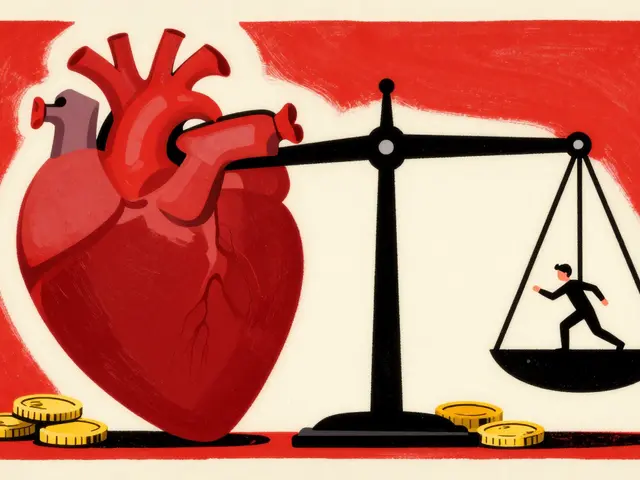
Generics make up 90% of all prescriptions filled in the U.S., but they only cost 23% of what brand-name drugs do. That’s a huge financial win for patients and insurers-but it puts enormous pressure on pharmacists to get every substitution right. One wrong call can mean a patient doesn’t get the right dose, experiences side effects, or even has a dangerous reaction.
The FDA requires generic drugs to match brand-name drugs in strength, purity, and bioequivalence-meaning they must deliver the same amount of active ingredient into the bloodstream within 80-125% of the original. Sounds simple, right? But bioequivalence doesn’t tell the whole story. For drugs with a narrow therapeutic index-like levothyroxine, warfarin, or phenytoin-even tiny differences in absorption can cause serious harm. That’s why pharmacists need to know not just if a generic is approved, but whether it’s therapeutically equivalent according to the FDA’s Orange Book.
And the Orange Book isn’t static. It’s updated every month. In 2023 alone, the FDA approved 983 new generic drugs. That’s nearly three new generics every day. If you’re not actively tracking these changes, you’re making decisions based on outdated data.
What the Law Actually Requires
All 50 states require pharmacists to complete continuing education (CPE) to renew their licenses. The number of hours varies-from 15 in some states to 30 in others-but the content is where things get tricky. Most states don’t spell out exactly which generics topics you need to cover. That’s left to the accrediting body: the Accreditation Council for Pharmacy Education (ACPE).
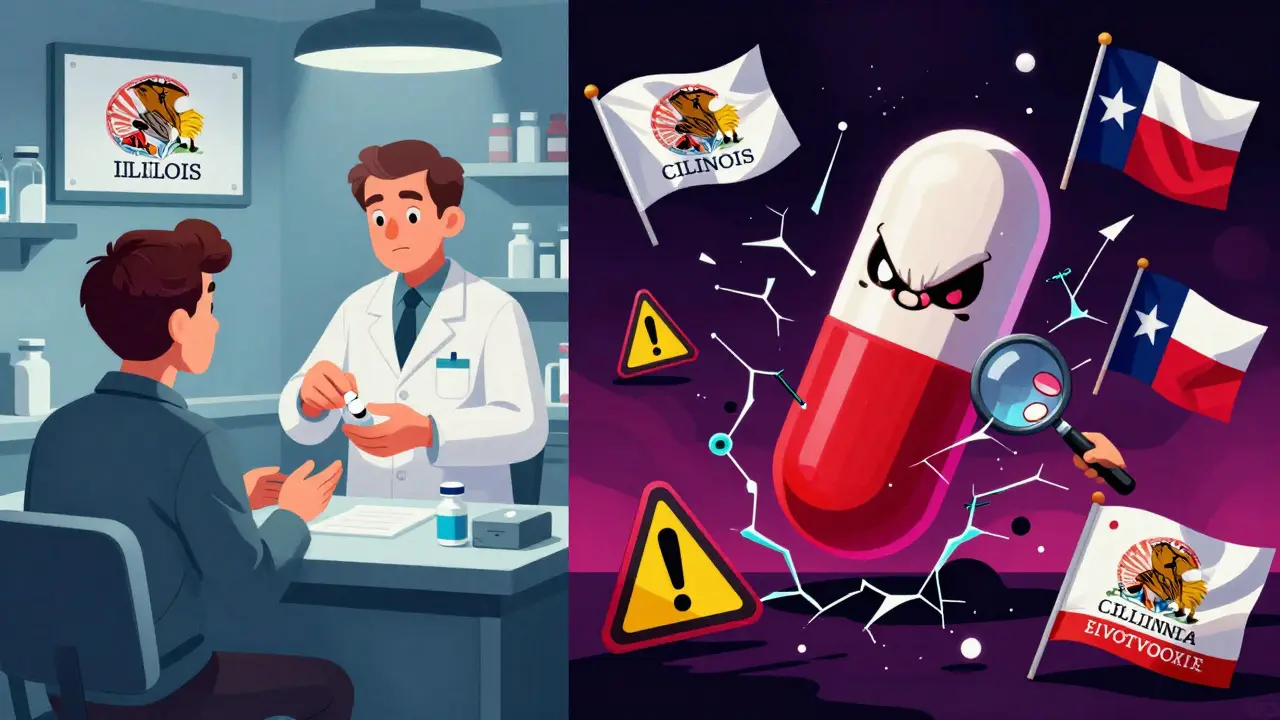
ACPE sets the rules. Their Category 2 topics include pharmacy law and regulations, which means you must understand DEA requirements for controlled substance transfers, how to verify a prescriber’s DEA number, and state-specific substitution laws. But here’s the catch: some states add their own mandatory training. In Illinois, you need one hour each on sexual harassment prevention, implicit bias, and-as of January 2025-cultural competency. Texas has unique rules for narrow therapeutic index drugs. New York requires you to submit your CE certificates with your renewal. California asks you to keep records for two years. And if you’re licensed in multiple states? You’re playing a game of regulatory whack-a-mole.
And it’s not just about hours. ACPE classifies CE into three types: knowledge-based (lectures), application-based (case studies), and certificate programs. The data shows pharmacists learn best through application-based courses. One study found that pharmacists who took case-based generics training made 37% fewer substitution errors. Why? Because they didn’t just memorize facts-they practiced making decisions under real-world pressure.
Where the Real Risks Are
ACPE’s 2021 analysis found that 42.7% of all pharmacy malpractice claims involved generic substitution errors. That’s not a small number. It’s the leading cause of legal trouble for pharmacists.
Here’s a real example: A patient on levothyroxine was switched from one generic to another because the pharmacy’s system flagged it as “therapeutically equivalent.” But the new product had a different inactive ingredient that affected absorption. The patient developed severe hypothyroidism. The pharmacist didn’t know the two generics weren’t truly interchangeable for this patient. That’s not a mistake you can afford.
Another growing risk? Biosimilars. These aren’t traditional generics. They’re complex biologic drugs with no exact copy. The FDA has only approved a handful for interchangeability so far, but that’s changing fast. A 2023 ASHP survey found that 78% of hospital pharmacists felt unprepared to handle biosimilar substitutions. And if you’re not trained on how to interpret FDA interchangeability labels, you’re risking patient safety.
What the Best CE Looks Like
Not all continuing education is created equal. Many pharmacists complain about “cookie-cutter” courses-long PowerPoint slides with multiple-choice quizzes at the end. They’re boring. They don’t stick. And they don’t prepare you for the real world.
The most effective generics-focused CE includes:
- Case studies based on actual substitution errors
- Hands-on practice reading the FDA Orange Book
- Breakdowns of recent FDA approvals and therapeutic equivalence changes
- State-specific law summaries
- Interactive scenarios with feedback
Platforms like Pharmacist’s Letter and PocketPrep offer ACPE-accredited modules that do this right. One pharmacist on Reddit said a 2-hour module on levothyroxine substitutions helped her catch a dangerous switch before it happened. That’s the kind of training that saves lives.
And it’s not just about content-it’s about delivery. Courses with scores above 4.5/5 on CE21 are almost always application-based. Knowledge-based courses? They average 3.2/5. Pharmacists aren’t asking for more lectures. They’re asking for better tools to make better decisions.
How to Stay Ahead in 2026
Most pharmacists spend just over 5 hours a year on generics-specific education. That’s not enough. Experts say you need at least 8-10 hours annually if you’ve been practicing more than 10 years. Newer pharmacists still need 4-6 hours to stay sharp.
Here’s a practical plan:
- Check your state’s CE requirements every January. Rules change.
- Sign up for monthly updates from the FDA Orange Book.
- Take at least one application-based CE course on generics each quarter.
- Join a professional group like ASHP or APhA-they send out alerts on new generic approvals and legal changes.
- Use your pharmacy’s EHR to flag patients on narrow therapeutic index drugs. Review their generics quarterly.
And don’t wait for your state to force you to learn. The best pharmacists are the ones who stay ahead of the curve. CVS Health ran a pilot where pharmacists got just-in-time alerts on substitution risks through their EHR. Errors dropped by 28%. That’s not magic-that’s smart, targeted learning.
The Future of Generics Education
ACPE just announced new standards effective January 2025: all generics CE must now include biosimilars interchangeability and REMS program training. That’s a big shift. It means even if you took a course last year, you’ll need to retake it in 2025 to meet requirements.
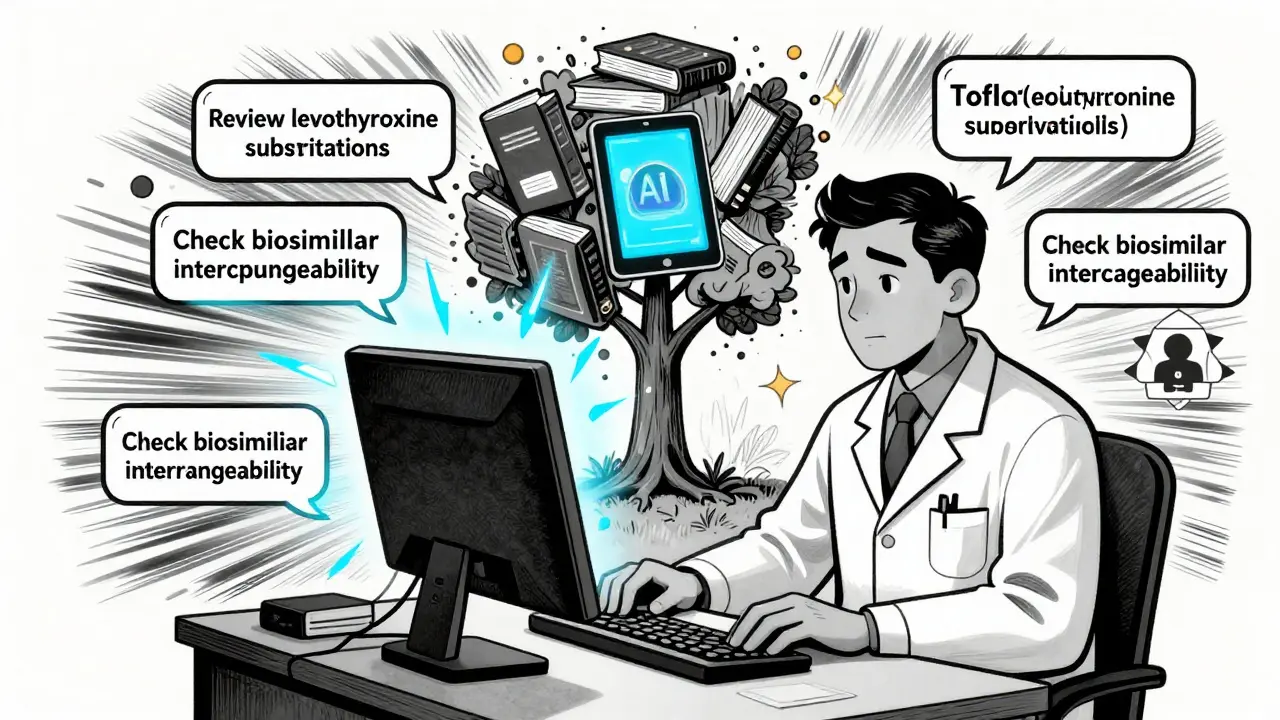
And AI is coming. IQVIA predicts that by 2027, 35% of CE will be personalized-using algorithms to find your knowledge gaps and push you only the content you need. Imagine getting a notification: “You haven’t reviewed levothyroxine substitutions since 2023. Here’s a 10-minute case study.” That’s the future. And it’s coming fast.
But don’t wait for AI to save you. Right now, you have the power to control your own learning. The stakes are too high to rely on outdated knowledge. Generics aren’t just cheaper drugs-they’re complex medical tools. And you’re the only one who can make sure they’re used safely.
Do I need separate CE credits for each state where I’m licensed?
Yes. Each state sets its own CE requirements, including hours, topics, and documentation rules. If you’re licensed in Illinois and Texas, you must meet both states’ rules. Some credits may overlap, but you can’t assume they will. Always check with each state’s board before submitting.
What’s the difference between a generic and a biosimilar?
Generics are chemically identical copies of small-molecule drugs, like metformin or lisinopril. Biosimilars are highly similar versions of complex biologic drugs, like insulin or Humira. They’re not exact copies because biologics are made from living cells. Only biosimilars labeled as “interchangeable” by the FDA can be substituted without prescriber approval. Most aren’t yet.
How often is the FDA Orange Book updated?
The FDA updates the Orange Book monthly. New generic approvals, therapeutic equivalence ratings, and patent expirations are added every first business day of the month. Pharmacists should subscribe to FDA email alerts or use tools like the Orange Book mobile app to stay current.
Can I use free CE courses to meet my requirements?
Yes-as long as they’re ACPE-accredited. Many providers, including Pharmacist’s Letter, offer free, accredited courses on generics, law, and ethics. Always check the course description for the ACPE provider number and activity type. Unaccredited courses won’t count toward license renewal.
What happens if I don’t complete my CE on time?
You risk license suspension or non-renewal. Some states allow a grace period with a late fee, but others don’t. In Illinois, your license expires on the date printed on your card-no extensions. Always plan ahead. Set calendar reminders for deadlines and complete CE at least two weeks before your renewal date.
Curtis Younker
January 27, 2026 AT 18:14Man, I just finished a 3-hour CE course on generics last week and honestly? It felt like watching paint dry. But then I did the case study on levothyroxine swaps and nearly threw my coffee across the room. That’s the stuff that sticks. No more boring PowerPoints for me - give me real scenarios or don’t bother.
Shawn Raja
January 28, 2026 AT 18:57So we’re telling pharmacists to memorize 983 new generics a year… but the FDA updates the Orange Book monthly and half the time the ratings change without warning? And we wonder why people make mistakes? This system is designed to fail. We’re asking humans to be walking databases while ignoring that brains aren’t cloud servers.
Neil Thorogood
January 29, 2026 AT 11:12Just had a patient come in crying because her thyroid med was switched and now she’s exhausted all day. I didn’t catch it because I trusted the system. Not anymore. I manually check every levothyroxine script now. Even if it takes 3 extra minutes. Lives > efficiency. 💔
eric fert
January 30, 2026 AT 23:17Let’s be real - this whole generics thing is just a corporate cost-cutting scheme disguised as patient care. The FDA approves generics based on bioequivalence, but bioequivalence doesn’t mean biologically identical. You think they care if someone gets a weird rash from a new filler? No. They care if the pill costs $0.12 instead of $12. We’re just the frontline shock absorbers for their profit margins.
Conor Flannelly
February 1, 2026 AT 22:29There’s a quiet crisis here that no one talks about: pharmacists are drowning in regulatory noise while patients assume we’re omniscient. I’ve been practicing 18 years and I still check the Orange Book every Monday. But I’m lucky - I have time. What about the rural pharmacist working 12-hour shifts with no support? They’re not failing - the system is.
Allie Lehto
February 2, 2026 AT 07:13Why do we even have state-specific rules? It’s insane. I’m licensed in CA and TX and I swear I spent more time filling out CE paperwork than learning anything. One state wants a certificate, another wants a logbook, another wants a signed affidavit from my cat. This isn’t education - it’s bureaucratic performance art.
Jessica Knuteson
February 3, 2026 AT 08:20AI will fix this. In 2027, algorithms will flag risky substitutions before you even open the script. No more memorizing Orange Book entries. No more state-by-state chaos. You’ll get a push notification: ‘This generic has a 37% higher failure rate in patients over 65.’ You’ll thank me later.
Robin Van Emous
February 4, 2026 AT 11:46I get that change is scary, but let’s not pretend this is all bad. The fact that we’re even having this conversation means we care. I’ve seen pharmacists save lives just by asking one extra question: ‘Has this med ever been switched before?’ That’s not AI. That’s human connection. Let’s not lose that in the rush to automate.
rasna saha
February 5, 2026 AT 07:38As a pharmacist in India, I can’t believe how much pressure you all are under. Here, generics are the norm - no one even thinks about brand names. But we don’t have the Orange Book or state laws. Just experience and trust. Maybe we’re doing it wrong… or maybe you’re overcomplicating it.
Conor Murphy
February 6, 2026 AT 04:13I used to roll my eyes at CE. Then I had a patient with epilepsy get a seizure because her phenytoin generic changed suppliers. She didn’t know. I didn’t know. We both trusted the system. Now I do a quick Orange Book check before every substitution. It takes 45 seconds. I’d rather look like a nerd than bury someone.
Dan Nichols
February 6, 2026 AT 11:20Stop pretending biosimilars are the next big threat. They’re still less than 1% of prescriptions. Focus on the real problem: 42% of malpractice claims come from basic generic swaps. Not biosimilars. Not AI. Not regulation. Just laziness. If you’re not checking the Orange Book daily, you’re negligent. Period.
Aishah Bango
February 7, 2026 AT 21:41It’s not about education - it’s about accountability. If you’re not keeping up, you shouldn’t be dispensing. No excuses. You’re not a nurse. You’re not a tech. You’re a pharmacist. The buck stops with you. If you can’t handle the workload, get out.
Marian Gilan
February 8, 2026 AT 00:21EVERYTHING is a conspiracy. The FDA, ACPE, Big Pharma - they all want you to think generics are safe. But did you know some generics have different fillers that trigger autoimmune responses? And they hide it in the fine print? I’ve seen it. I’ve seen the lab reports. They don’t want you to know. They want you to keep swapping. Wake up.
Patrick Merrell
February 9, 2026 AT 17:28My pharmacy just started using a new EHR that flags high-risk generics automatically. I used to spend 10 minutes checking each script. Now it’s 10 seconds. And guess what? No errors this month. The tech works. Stop complaining and embrace it.
Henry Jenkins
February 10, 2026 AT 22:26One sentence: If you’re not spending at least 10 hours a year on generics CE, you’re gambling with lives. Not because the law says so - because you swore an oath. Not because you’re scared of losing your license - because you care about people. Do better.