
Sertraline Symptom Tracker
Track Your Symptoms
Nausea Tracker
Diarrhea Tracker
Expected Improvement Timeline
According to clinical studies, 87% of people see improvement within 4-6 weeks. Most symptoms peak around days 1-7 and gradually decrease over time.
Your Progress
Track your symptoms to see how you're doing compared to the expected improvement timeline.
Starting sertraline can be a turning point for people struggling with depression or anxiety. But for a lot of them, the first few weeks come with a rough surprise: nausea and diarrhea. These aren’t rare side effects - they’re common. In fact, about 25-30% of people taking sertraline (brand name Zoloft) report nausea, and at least 10% deal with diarrhea during the early days of treatment. It’s not just a minor inconvenience. For many, these symptoms are bad enough to make them consider quitting the medication altogether.
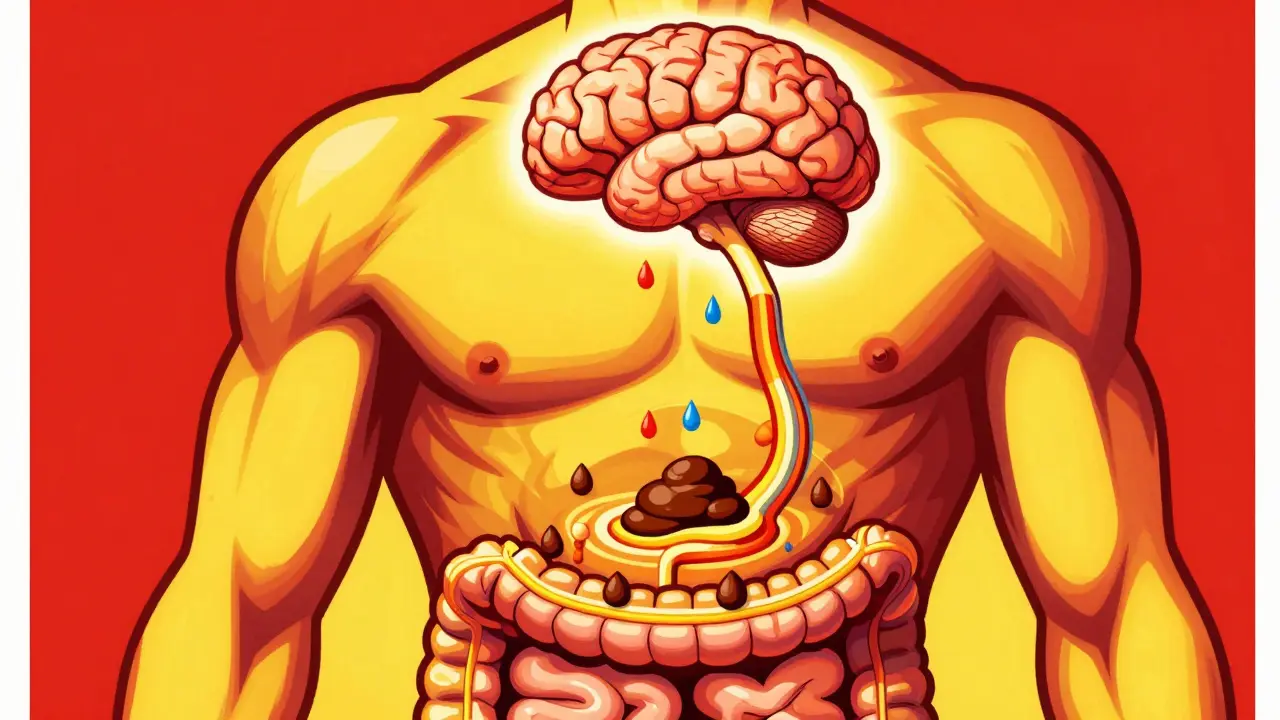
Why does this happen? It’s not a mistake. Sertraline works by boosting serotonin in the brain, which helps improve mood. But here’s the twist: 95% of your body’s serotonin is in your gut. When sertraline increases serotonin levels, it doesn’t just affect your brain. It also hits the serotonin receptors lining your digestive tract. That extra serotonin speeds up bowel movements and irritates the stomach lining, leading to nausea, loose stools, cramps, and even heartburn. That’s why sertraline has one of the highest rates of GI side effects among SSRIs - higher than fluoxetine, escitalopram, or paroxetine, according to a 2022 analysis of over 5,000 patients.
Why Nausea and Diarrhea Happen (And Why They Usually Go Away)
The good news? Most of these symptoms don’t last forever. Your body adapts. Clinical trials show that 87% of people see their nausea and diarrhea improve within 4 to 6 weeks. That’s because your gut receptors slowly adjust to the higher serotonin levels. The problem is, those first few weeks feel endless when you’re stuck on the toilet or too sick to eat.
Some people get lucky - their nausea fades after just a few days. Others struggle for weeks. Why the difference? It depends on your biology. Some people have genetic variations, like changes in the HTR3A gene, that make them more sensitive to serotonin spikes in the gut. Researchers are still studying this, but early data suggests these variants explain nearly 37% of why some people have worse GI side effects than others.
It’s also worth noting that persistent diarrhea - especially if it lasts more than four weeks - might not just be a side effect. The Therapeutic Goods Administration (TGA) in Australia and other health agencies have flagged a rare but real link between sertraline and a condition called microscopic colitis. It’s a type of inflammation in the colon that can cause chronic watery diarrhea. If your diarrhea doesn’t improve or gets worse after a month, don’t assume it’s just your body adjusting. Talk to your doctor. You might need a stool test or even a colonoscopy to rule it out.
What Actually Works: Proven Ways to Reduce Nausea
There’s no magic pill to stop the nausea, but there are proven, practical steps that make a real difference.
- Take sertraline with food - especially a full meal. A 2022 study in the Journal of Clinical Psychiatry found this reduces nausea by 35-40%. Don’t just grab a cracker. Eat something with protein and fat - like eggs, chicken, or peanut butter. Empty stomach? That’s a recipe for feeling sick.
- Try ginger. Ginger has been used for centuries to calm nausea. A 2021 randomized trial showed ginger supplements or ginger tea reduced nausea severity by 27% compared to placebo in people on SSRIs. Try a cup of ginger tea 30 minutes before taking your pill.
- Eat smaller, more frequent meals. Instead of three big meals, spread your food out into five or six small ones. This keeps your stomach from getting too full or too empty, both of which can trigger nausea.
- Suck on sugar-free hard candy. This isn’t just a trick. Chewing gum or sucking on candy stimulates saliva, which helps neutralize stomach acid and soothes the throat. One 2019 meta-analysis found this simple habit improved patient-reported nausea scores significantly.
- Avoid spicy, greasy, or rich foods. These are harder to digest and make your gut more sensitive. Stick to bland, easy foods like toast, rice, bananas, and oatmeal during the first few weeks.
Reddit users on r/SSRI - a community with nearly 50,000 members - report similar results. In a 2022 thread with over 300 comments, 89% said they had nausea, and 72% found relief by taking sertraline with a full meal. One user wrote: “I started taking it with a tuna sandwich at dinner. The next day, I didn’t feel like I was going to throw up. Game changer.”

How to Handle Diarrhea Without Stopping the Medication
Diarrhea is harder to ignore than nausea. It can disrupt work, sleep, and social life. But here’s the key: don’t panic. Most cases are temporary. Still, you need to manage it right.
- Stop caffeine and alcohol. Both are gut irritants and make diarrhea worse. Cut out coffee, energy drinks, soda, and alcohol completely for the first month.
- Avoid high-fat and fried foods. These are harder to digest when your gut is already overstimulated. Think pizza, fries, and creamy sauces.
- Stay hydrated. Diarrhea pulls fluid out of your body. Drink water, herbal teas, or oral rehydration solutions (like Pedialyte). Dehydration can make you feel worse and even delay your body’s adjustment.
- Try soluble fiber. Foods like oats, applesauce, and bananas can help firm up stools. Avoid insoluble fiber like bran or raw veggies - they can make diarrhea worse.
- Use over-the-counter loperamide (Imodium) only if needed. It’s okay for occasional use, but don’t rely on it long-term. It masks the symptom, not the cause. If you’re using it daily for more than a week, talk to your doctor.
A 2020 study in Gut found that patients who followed these dietary changes had diarrhea resolve 45% faster than those who didn’t. One patient in the study said, “I stopped drinking my morning coffee and switched to herbal tea. Within three days, my trips to the bathroom dropped from five to two.”
When to Call Your Doctor
Not every side effect needs a panic call. But some signs mean it’s time to speak up:
- Diarrhea lasts more than 4 weeks
- Nausea is so severe you can’t keep food or water down for more than 24 hours
- You notice blood in your stool
- You have severe stomach cramps, fever, or unexplained weight loss
- Your symptoms get worse instead of better after 2-3 weeks
These aren’t normal. Your doctor might suggest:
- Lowering your dose to 25-50mg and increasing it slowly over 4-6 weeks
- Switching to an antidepressant with better GI tolerability - like escitalopram (Lexapro), which has a 44% lower risk of causing diarrhea than sertraline
- Testing for microscopic colitis if diarrhea persists
The American Psychiatric Association and NICE UK both recommend this approach. If side effects are still problematic after two weeks, don’t just tough it out. There are better options.
What If Nothing Works?
Some people try everything - food, ginger, timing, hydration - and still can’t tolerate sertraline. That’s okay. It doesn’t mean you’re broken or that antidepressants won’t work for you.
Escitalopram (Lexapro) is now the first-choice SSRI for many doctors because it causes fewer GI issues. In 2023, 34.7% of primary care doctors preferred it over sertraline for new patients - up from just 22% in 2018. Fluoxetine (Prozac) is another option with lower GI risk, though it can cause other side effects like fatigue or insomnia.
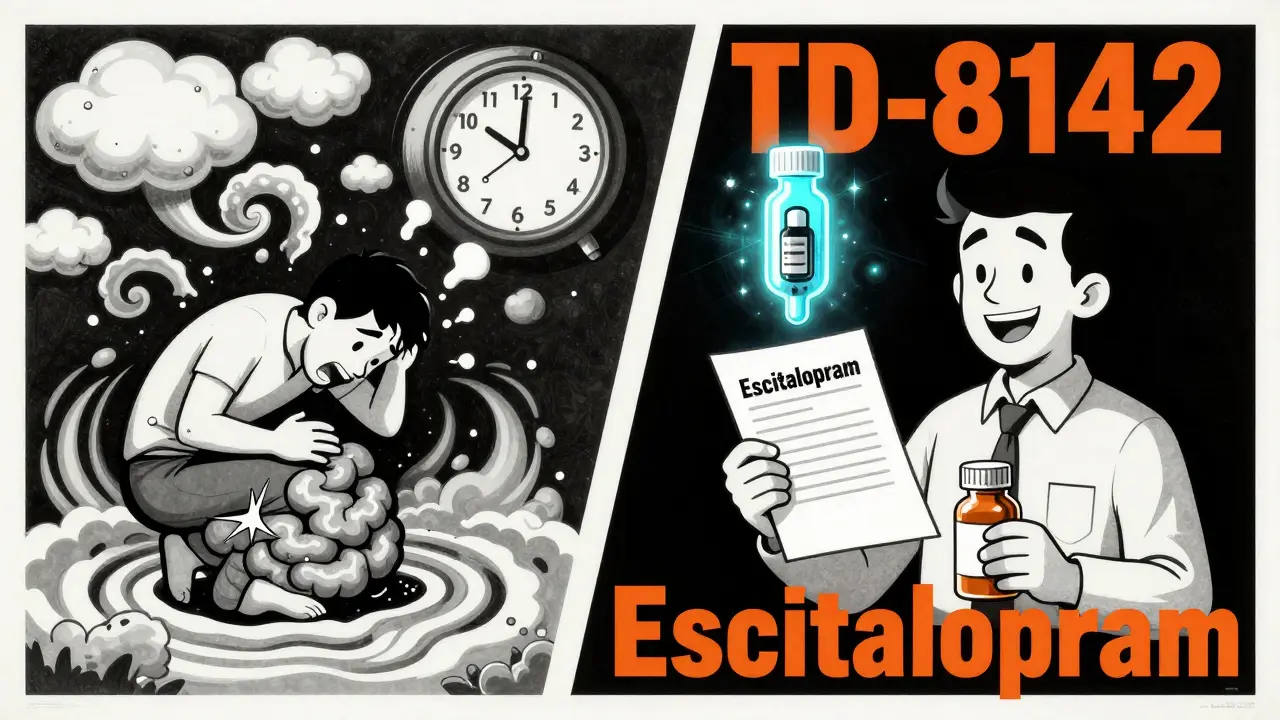
There’s also new research on gut-selective SSRIs. A drug called TD-8142, currently in Phase II trials, blocks serotonin only in the gut - not the brain. Early results show a 62% reduction in nausea and diarrhea while keeping the antidepressant effect. That could change the game in the next few years.
Right now, though, the best advice is simple: don’t give up too soon. Most people get through the first month. But if you’re truly struggling, your doctor can help you switch - and there’s no shame in that.
Real Numbers, Real Experiences
Let’s put this in perspective:
- 28.7% of people who start sertraline stop within 8 weeks because of GI side effects - compared to 19.3% for escitalopram.
- 68.3% of patients on Drugs.com reported nausea improved within 14 days.
- 64.2% of users on Patient.info saw diarrhea resolve in 3 weeks with diet changes.
- 18.7% of sertraline users had to switch medications due to GI problems - more than any other SSRI.
These aren’t just statistics. They’re real people - moms, teachers, construction workers - who pushed through the rough patch, or made a smart switch. You’re not alone. And you don’t have to suffer in silence.
trudale hampton
March 21, 2026 AT 20:32Been on sertraline for 11 weeks now. Nausea hit hard week one-felt like I was gonna puke every time I stood up. Took it with a big peanut butter sandwich at dinner and boom, next day was 70% better. No magic, just food. Also stopped my morning coffee. Huge difference.
Shaun Wakashige
March 23, 2026 AT 14:05lol i just took it on an empty stomach and cried into my cereal
Thomas Jensen
March 24, 2026 AT 14:15They say 95% of serotonin is in your gut… but have you ever wondered who decided that? Who funded that study? Big Pharma’s got a vested interest in you staying on the pill. What if the real problem isn’t serotonin-it’s the damn pill itself? And what about the glyphosate in your food? That’s what’s really wrecking your gut. They don’t want you to know that. I’ve been off SSRIs for 2 years now. My digestion? Perfect. My mood? Better. Coincidence? I think not.
Solomon Kindie
March 24, 2026 AT 14:48so like if 95 of serotonin is in the gut then why does the drug even work on the brain like its not even a real thing its just a theory like the moon landing was fake
Nicole James
March 26, 2026 AT 14:30Wait… so you're telling me that the same chemical that's supposed to fix my anxiety is also the one making me feel like I'm about to die on the toilet? And they say it's 'common'? Common doesn't mean acceptable. I think this whole system is designed to keep us docile, dependent, and medicated. They don't want us to heal-they want us to manage. And ginger? Really? That's the solution? I'm not buying it.
Nishan Basnet
March 27, 2026 AT 07:58As someone from India where ginger tea is basically medicine, I can confirm-it works. I took sertraline with a bowl of rice and dal, sipped ginger tea before bed, and avoided spicy food. By day 10, my stomach was calm. Also, hydration is everything. Don’t underestimate plain water. And yes, caffeine is the enemy. I quit coffee cold turkey. No regrets.
Chris Dwyer
March 28, 2026 AT 15:52You got this. Seriously. The first month is the hardest, but it gets better. I remember being so scared I almost quit-then I followed the food advice and it turned my whole experience around. You’re not broken. Your body’s just adjusting. Keep going. You’re stronger than you think. And if it’s still rough after 6 weeks? Talk to your doc. No shame in switching. You deserve to feel good, not just less awful.
matthew runcie
March 30, 2026 AT 06:26Food with sertraline works. Ginger helps. Caffeine kills. Simple. Not every post needs a conspiracy. Just do the basics. You’ll be fine.
shannon kozee
March 30, 2026 AT 18:17Diarrhea lasted 3 weeks for me. Cut out coffee, added bananas and oatmeal, drank electrolytes. Done. No Imodium. No drama. Just consistency.
Paul Cuccurullo
March 31, 2026 AT 20:55It is profoundly courageous to endure the physiological upheaval that accompanies the initiation of sertraline therapy. One must not underestimate the profound biological recalibration occurring within the gastrointestinal tract-a silent, unseen revolution, orchestrated by the very neurotransmitter that governs our emotional equilibrium. To persist through nausea and diarrhea is not merely to tolerate side effects; it is to embrace the sacred journey toward mental restoration. Let not the discomfort of the body obscure the luminous potential of the mind.
Natali Shevchenko
April 2, 2026 AT 07:51I’ve been thinking about how weird it is that we treat serotonin like it’s just a brain chemical, when it’s literally everywhere. Like, your gut has more serotonin receptors than your brain. So when we take a drug to fix our mood, we’re basically hijacking the entire digestive system. It’s like trying to fix a broken phone by pouring water into the charging port. It’s not wrong-it’s just… incomplete. Maybe we need to start thinking about mental health as a whole-body thing, not just a brain thing. Maybe the answer isn’t just more drugs, but better food, less stress, more sleep. Sertraline helped me-but it didn’t fix me. I did. And it took time.
Johny Prayogi
April 3, 2026 AT 21:32Just took it with a big steak dinner and now I’m vibin’ 🍽️💪 No nausea, no stress. Ginger tea is my new BFF. Also, if you’re still having diarrhea after 4 weeks? Go get checked. Don’t be dumb. Your colon ain’t a suggestion box.