Tacrolimus Levels: What You Need to Know About Monitoring and Management
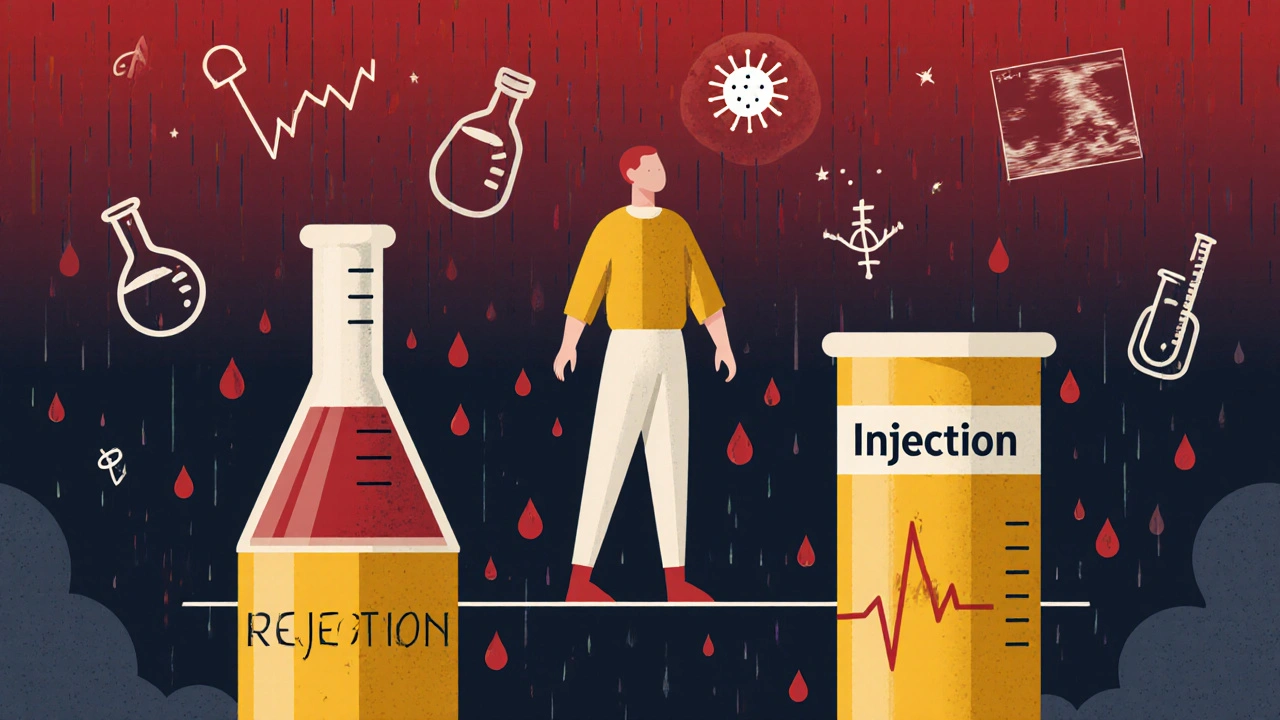
When you're on tacrolimus, a powerful immunosuppressant used mainly after organ transplants to prevent rejection. Also known as FK506, it's one of the most common drugs given to kidney, liver, and heart transplant patients. But tacrolimus isn’t like a regular pill you take and forget. Its effectiveness and safety depend almost entirely on your blood levels — too low and your body might reject the new organ; too high and you risk kidney damage, nerve problems, or even seizures.
Tacrolimus levels are measured through regular blood tests, usually just before your next dose (trough level). Doctors aim to keep them in a narrow range — often between 5 and 15 ng/mL, depending on the transplant type and time since surgery. Many patients don’t realize that even small changes in diet, other medications, or illness can throw these numbers off. For example, grapefruit juice can spike tacrolimus levels by blocking how your body breaks it down. Antibiotics like erythromycin or antifungals like fluconazole can do the same. On the flip side, drugs like rifampin or St. John’s wort can drop levels dangerously low. Your body’s metabolism, liver function, and even your genetics play a role too. That’s why two people on the same dose can have completely different levels.
Managing tacrolimus isn’t just about numbers — it’s about connecting those numbers to how you feel. If you start having tremors, headaches, or trouble sleeping, it could be a sign your levels are too high. If you notice swelling, fever, or your transplant organ feels tender, low levels might be the issue. Many patients get used to checking their levels like a daily routine, but few know how to interpret them without help. That’s why working with your transplant team — not just your pharmacist or primary doctor — is critical. They track trends over time, not just single readings. And they adjust doses slowly, because changing tacrolimus too fast can be risky.
Below, you’ll find real-world guides on how to avoid dangerous interactions, what to do when levels drift, and how other medications and lifestyle choices affect your tacrolimus. Whether you’re a transplant patient, a caregiver, or a healthcare provider, these posts give you the practical tools to stay safe and in range.