You've probably been at the pharmacy counter and had the pharmacist ask if you're okay with the "generic version" of your prescription. For some, it sounds like a bargain; for others, it feels like a risk. Does a cheaper pill actually work as well as the one with the fancy label? The short answer is yes, but there are a few nuances you should know before you make the switch.
The Bottom Line: What's the Real Difference?
To clear the air: Generic drugs is a medication created to be identical to an existing brand-name drug in dosage, safety, strength, and quality. They aren't "knock-offs" or inferior versions; they are pharmaceutical equivalents. When a company develops a new drug, they get a patent that lasts about 20 years. During this time, they are the only ones who can sell it, which is why brand-name drugs are so expensive-they have to make back the millions spent on research and clinical trials.
Once that patent expires, other companies can apply to make the same drug. But they don't have to redo the massive clinical trials. Instead, they just have to prove bioequivalence. This means the generic version delivers the same amount of active ingredient into your bloodstream in the same amount of time as the original. According to the FDA, generics typically cost 80-85% less than the brand name, saving patients hundreds of dollars per prescription.
| Feature | Brand-Name | Generic |
|---|---|---|
| Active Ingredients | Original Formula | Identical |
| FDA Safety Standards | Strict | Strict (Same Standards) |
| Price | Higher (Premium) | Significantly Lower |
| Appearance | Unique/Trademarked | Different (Color/Shape) |
| Inactive Ingredients | Standardized | May vary (fillers, dyes) |
Why Do They Look Different?
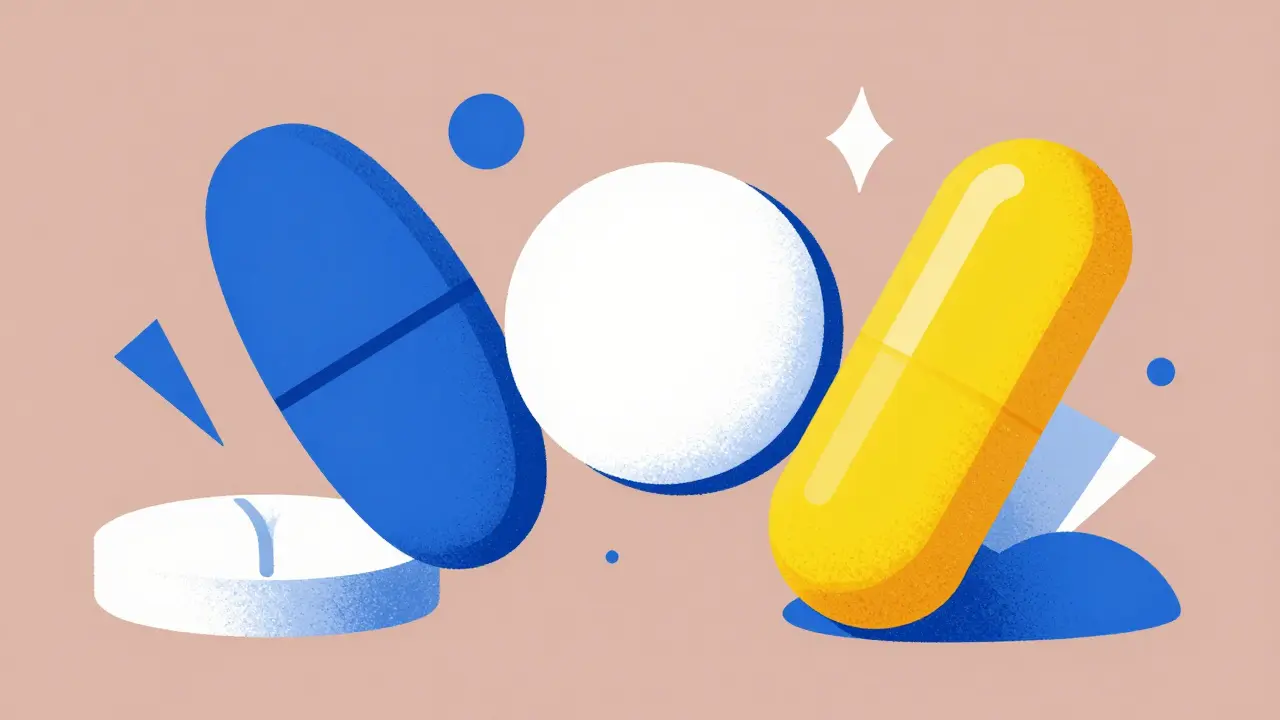
If the drugs are the same, why is one a blue oval and the other a white circle? It comes down to trademark laws. Generic manufacturers aren't allowed to make their pill look exactly like the brand-name version. This is why your medication might change color or shape if your pharmacy switches brands.
While the Active Pharmaceutical Ingredient (the part that actually treats your condition) is identical, the "inactive ingredients"-like binders, dyes, and flavorings-can differ. For 99% of people, this doesn't matter. However, if you have a specific allergy to a certain dye or filler, you'll want to check the list of inactive ingredients for both versions.
When Is the Switch a No-Brainer?
For most chronic conditions, generics are the gold standard for affordability. If you're managing high blood pressure with Lisinopril or treating diabetes with Metformin, the cost savings add up fast. In the U.S., generics now make up about 90% of all prescriptions filled. Why? Because for these types of medications, the therapeutic effect is virtually identical.
Think about it this way: if you're paying $12.50 for a generic versus $68.30 for a brand name with the same result, the choice is simple. For many patients, switching to a generic version of a drug like fluticasone/salmeterol for asthma can save hundreds of dollars a month without any dip in symptom control.
The "Narrow Therapeutic Index" Exception
Is there ever a time when you should stick to the brand name? Yes, but it's rare. Some drugs have what's called a narrow therapeutic index. This means the window between a dose that works and a dose that is toxic (or ineffective) is very small.
Examples include Warfarin (a blood thinner) or Levothyroxine (for thyroid issues). Because tiny fluctuations in the blood concentration can cause a problem, some doctors prefer their patients to stay on one specific version-whether brand or generic-rather than switching back and forth. The FDA actually requires tighter bioequivalence ranges (90-111%) for these specific drugs to ensure consistency.
How to Manage Your Medications Safely
If you decide to use generics, a bit of organization goes a long way. Since the names can be confusing-one is the brand name (like Tylenol) and one is the generic (like acetaminophen)-it's easy to accidentally double up if you're buying over-the-counter meds and prescriptions.
- Keep a Master List: Write down both the brand and generic names of everything you take.
- Ask Your Pharmacist: If you notice a change in the pill's color or shape, ask if the manufacturer has changed.
- Check Your Prescription: Most states have automatic substitution laws, meaning the pharmacist will give you the generic unless your doctor explicitly writes "Dispense as Written."
Common Myths vs. Reality
You've probably heard that generics take longer to work because they are "cheaper." That's a myth. Because the FDA requires the same rate and extent of absorption, the drug enters your system at the same speed as the brand name. Another common fear is that generics are made in lower-quality facilities. In reality, the FDA monitors generic manufacturing plants with the same rigor as brand-name factories.
Are generic drugs less effective than brand-name drugs?
No. To be approved, generic drugs must be bioequivalent to the brand-name drug, meaning they must deliver the same amount of active ingredient into the bloodstream at the same rate. They are designed to produce the same clinical effect.
Why are generic drugs so much cheaper?
Generic manufacturers don't have to pay for the original research, development, and extensive clinical trials that the brand-name company funded. They also don't spend millions on advertising and marketing, allowing them to pass those savings to the consumer.
Can I switch from a brand-name drug to a generic at any time?
In most cases, yes. However, you should always consult your doctor first, especially if you are taking medications with a narrow therapeutic index (like certain seizure or thyroid meds) where consistency is critical.
What are "biosimilars"?
Biosimilars are similar to generics but for biologic drugs (complex medicines made from living cells). Because biologics are much larger and more complex than chemical drugs, they cannot be identical copies, but they are designed to be "highly similar" with no clinically meaningful differences.
Does the FDA really test generic drugs?
Yes. The FDA requires generic manufacturers to prove pharmaceutical equivalence and bioequivalence. They also perform regular inspections of manufacturing facilities to ensure safety, purity, and quality standards are met.
Next Steps for Your Health
If you're currently paying a lot for a brand-name prescription, your next step should be a quick conversation with your pharmacist. Ask them, "Is there an FDA-approved generic for this medication?" If the answer is yes, check with your doctor to ensure that a generic is appropriate for your specific health needs.
For those on specialized medications, such as those for epilepsy or severe thyroid disorders, ask your doctor if your specific drug is considered "narrow therapeutic index." If it is, discuss whether staying on a single consistent brand (even a generic brand) is better for your stability than switching between different manufacturers.