
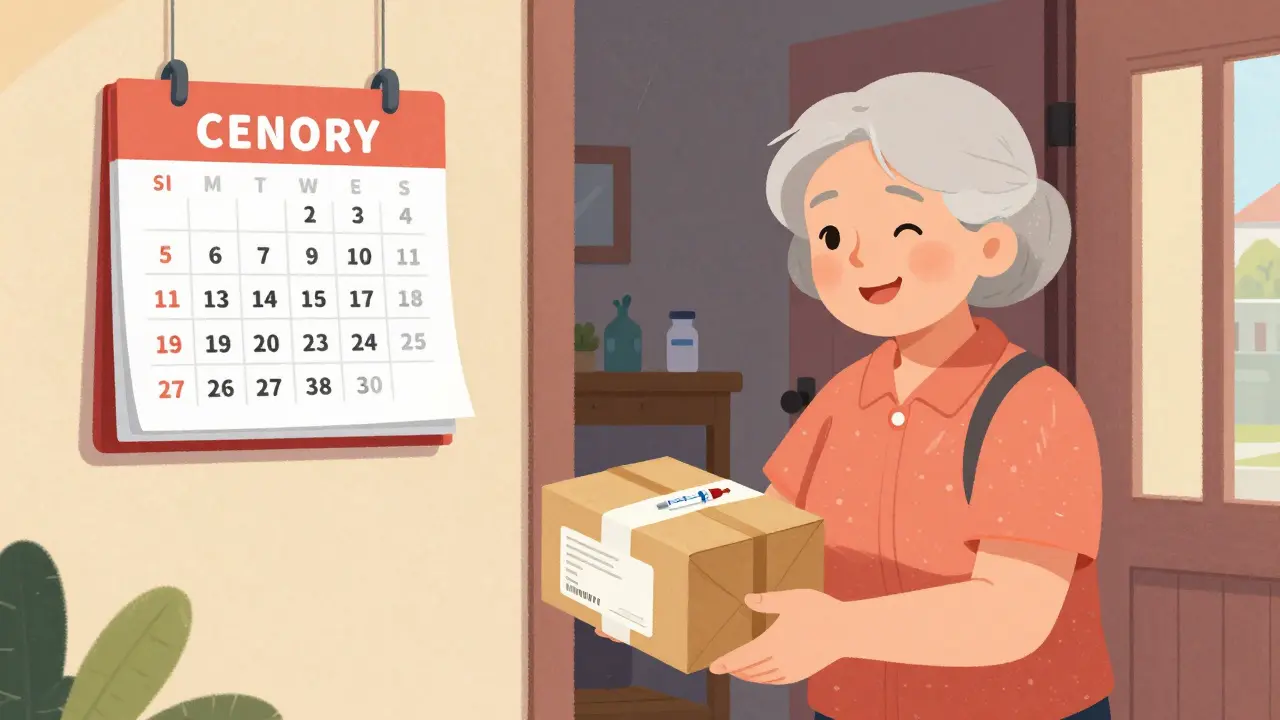
Getting your medications delivered to your door isn’t just a luxury-it’s a game-changer for sticking to your treatment plan. If you’ve ever missed a dose because you couldn’t get to the pharmacy, were too tired, or just ran out of time, you know how easy it is to fall behind. That’s where pharmacy delivery and mail-order services come in. They’re not magic, but they’re close. For people managing chronic conditions like diabetes, high blood pressure, or cholesterol, using these services can mean the difference between staying healthy and ending up in the hospital.
How Mail-Order Pharmacies Actually Work
Mail-order pharmacies aren’t some mysterious black box. They’re licensed pharmacies, just like your local one, but they ship your meds straight to your home. Most offer 90-day supplies instead of the usual 30-day refill. That means fewer trips, fewer co-pays, and fewer chances to forget. For example, if your copay is $15 for a 30-day supply, you’ll pay $30 for a 90-day supply through mail-order-saving you $15 every three months. Over a year, that’s $60 saved on just one medication.These services work through your insurance plan, your employer’s health benefits, or even directly out-of-pocket. Most major insurers in the U.S. include mail-order as a standard option. You don’t need special approval-just ask your doctor to write a 90-day prescription and send it to the mail-order pharmacy linked to your plan.
Once you’re enrolled, you can order refills online, over the phone, or through a mobile app. Many services, like those run by Express Scripts, CVS Caremark, or OptumRx, let you set up automatic refills so you never have to remember. You’ll get a notification when it’s time to reorder, and your meds arrive in discreet, temperature-controlled packaging. If you’re on something that needs to stay cool-like insulin or certain biologics-they’ll ship it with ice packs and special insulation.
Why People Stick to Their Meds Better with Mail-Order
Here’s the real kicker: people who use mail-order pharmacies are way more likely to take their meds as prescribed. Studies show 82% of patients on 90-day mail-order refills stick to their treatment, compared to just 52% who fill 30-day prescriptions at a retail pharmacy. That’s not a small difference-it’s life-changing.Why? Because convenience removes the biggest barriers. If you’re elderly, have mobility issues, work long hours, or live far from a pharmacy, getting to the store can be a daily struggle. One Reddit user with multiple sclerosis said mail-order was “life-changing” because they no longer had to fight to get to the pharmacy just to pick up their disease-modifying drugs. That’s the kind of impact this service has.
It’s not just about getting there. It’s about forgetting. When you’re on three or four meds, keeping track of refill dates is a full-time job. Mail-order pharmacies help by syncing your refills so everything arrives on the same day. Most now let you request synchronized delivery-so your blood pressure pill, your cholesterol med, and your diabetes drug all show up together. No more juggling multiple refill schedules.
What You Can and Can’t Get Through Mail-Order
Not every medication can be mailed. Controlled substances-like opioids, benzodiazepines, or stimulants-are strictly excluded. These require in-person pickup due to federal regulations. Same goes for certain specialty drugs that need special handling or in-person counseling, like some cancer treatments or injectables.But for the vast majority of maintenance medications? You’re covered. That includes:
- High blood pressure meds (lisinopril, amlodipine)
- Cholesterol drugs (atorvastatin, rosuvastatin)
- Diabetes medications (metformin, glimepiride, insulin pens)
- Thyroid pills (levothyroxine)
- Antidepressants and anxiety meds (sertraline, escitalopram)
- Heartburn and acid reflux drugs (omeprazole, famotidine)
If you’re unsure whether your med qualifies, just call your pharmacy or check your insurance plan’s formulary. Most have a searchable list online. And if your doctor prescribes a new med, ask them right away: “Can this be sent through mail-order?” Many will say yes.
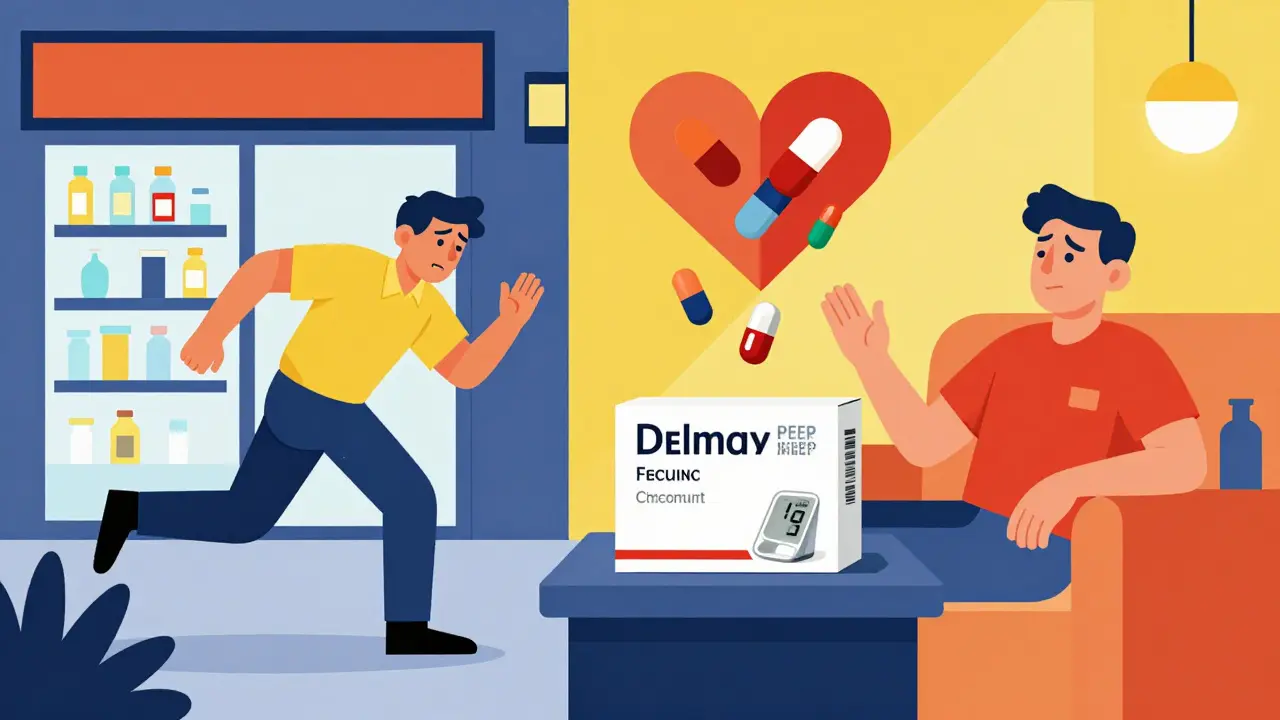
How to Get Started-Step by Step
Getting set up is easier than you think. Here’s how:- Check your insurance plan. Log into your insurer’s website or call customer service. Ask: “Do you offer mail-order pharmacy benefits?” Most do, and it’s free to use.
- Find your mail-order pharmacy. Your insurer will list which pharmacy they partner with-usually Express Scripts, CVS Caremark, or OptumRx. Some plans use smaller ones like Birdi or Patient Direct Pharmacy.
- Transfer your prescriptions. You can do this online by logging into the mail-order site and entering your current pharmacy’s info. Or call them and give them your prescription details. It takes 3-5 business days.
- Order your first 90-day supply. You’ll pay your usual copay (often just two copays total for 90 days). Make sure your address is correct. Some services let you choose delivery dates.
- Set up automatic refills. Once you’re on the system, turn on auto-refill. You’ll get a text or email when it’s time to reorder.
Some services, like HomeMed and Birdi, offer 24/7 pharmacist support. You can call anytime with questions about side effects, interactions, or how to take your meds. No need to wait for your doctor’s office to open.
Pros and Cons You Should Know
It’s not perfect, but it’s better than the alternative. Here’s the real talk:Pros
- Saves money: 25-35% cheaper than three separate 30-day fills.
- Improves adherence: 82% vs. 52%-that’s a huge gap in health outcomes.
- Time-saving: 97% of users say they save hours each month.
- Higher accuracy: Mail-order pharmacies use robotic systems and double-checks, making them 23 times more accurate than retail pharmacies.
- Great for chronic conditions: If you’re on long-term meds, this is the smartest way to stay on track.
Cons
- Not for emergencies: Need antibiotics for an infection? Go to your local pharmacy. Mail-order takes days.
- Delivery delays happen: About 8% of users report packages arriving later than expected. Always order refills at least 10 days before you run out.
- Lost or damaged packages: Roughly 1.2% of shipments get damaged or lost. Most companies will replace them quickly if you report it.
- No face-to-face advice: While pharmacists are available by phone, you miss the quick chat you’d have at your local pharmacy.
That’s why experts recommend keeping a relationship with your local pharmacist, even if you use mail-order. They can help with new prescriptions, answer quick questions, and spot potential problems.
Real Stories, Real Results
A 68-year-old woman in Ohio switched to mail-order for her diabetes and blood pressure meds. She used to spend two hours every month driving to the pharmacy, waiting in line, and then driving home. Now, her meds arrive every 90 days. She says she’s taken every pill for over a year-something she couldn’t do before.A man in Michigan with chronic kidney disease got his insulin and blood thinners delivered through Birdi Pharmacy. He said the pharmacist called him personally to explain how to store his insulin properly. “They treated me like a person, not a number,” he told a patient forum.
On Trustpilot, Patient Direct Pharmacy has a 4.7/5 rating from over 300 reviews. People praise next-day delivery and how easy it is to work with workers’ compensation insurers. On Reddit, users with autoimmune diseases say mail-order gave them back control over their lives.
What’s Next for Pharmacy Delivery?
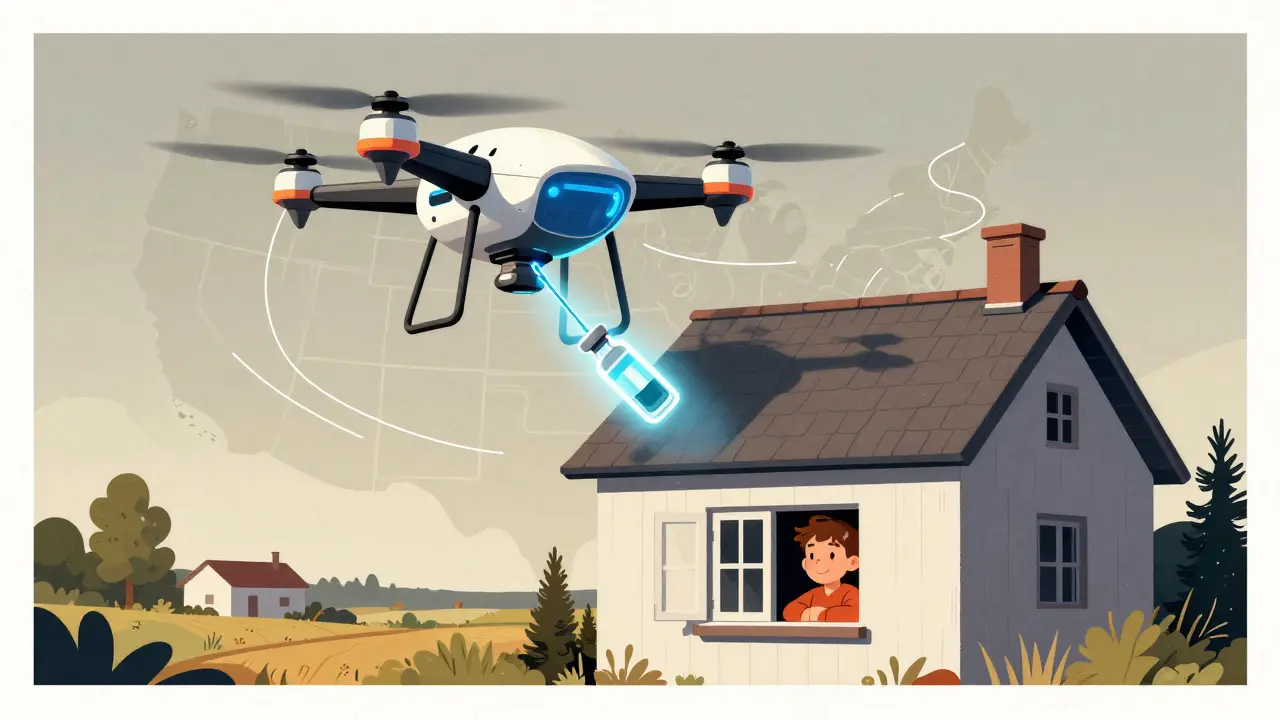
The industry is growing fast. In 2022, mail-order pharmacies handled $102 billion in prescriptions. By 2028, that’s expected to hit $189 billion. Why? Because the population is aging, and more people are living with chronic conditions.New tech is making it even better. Some companies now use AI to predict when someone might miss a dose and send a reminder. UnitedHealthcare reported a 17% drop in missed doses after adding this feature. Others are testing drone deliveries in rural areas-think of your meds arriving by air instead of by truck.
And integration with telehealth is growing. Now, you can have a video visit with your doctor, get a new prescription sent instantly, and have your meds delivered the same day. That’s the future-and it’s already here.
Final Tip: Don’t Wait Until You’re Out
The biggest mistake people make? Waiting until their bottle is empty to reorder. That’s how you end up skipping doses. Set a calendar reminder: order your next refill 10 days before you run out. That gives time for processing, shipping, and any delays. If you’re on auto-refill, double-check that your address and insurance info are still current. A small change in your plan or address can cause a delay.Pharmacy delivery isn’t about replacing your local pharmacist. It’s about making sure you never miss a dose. For anyone on long-term meds, it’s one of the simplest, most effective ways to take control of your health.
Can I use mail-order pharmacy if I don’t have insurance?
Yes. Many mail-order pharmacies, like Patient Direct Pharmacy and Birdi, offer cash pricing that’s often lower than retail pharmacy prices-even without insurance. You can compare prices online before ordering. Some even have discount programs for low-income patients.
How long does it take to get my first mail-order prescription?
It usually takes 3-5 business days from the time your doctor sends the prescription to the pharmacy. That includes transfer time, processing, and shipping. If you need your meds faster, ask your doctor for a 30-day retail prescription to cover the gap while your mail-order order processes.
Can I switch back to a retail pharmacy if I change my mind?
Absolutely. You can switch anytime. Just call your local pharmacy and ask them to transfer your prescriptions back. Most will do it for free. You’re not locked in. Mail-order is a tool-not a commitment.
Are mail-order pharmacies safe and secure?
Yes. All major mail-order pharmacies follow HIPAA rules for privacy and use secure systems to protect your health data. Medications are dispensed using robotic systems with multiple safety checks, making them more accurate than most retail pharmacies. Packaging is tamper-resistant and temperature-controlled for sensitive drugs.
What if my medication is lost or damaged in transit?
Contact the pharmacy immediately. Most have a 24/7 customer service line. They’ll verify the issue and send a replacement at no extra cost. Keep the packaging and any damaged meds as proof. It’s rare-only about 1.2% of shipments are affected-but they’re ready to fix it.
Can I get my medications delivered on a specific day?
Many services let you choose your delivery window. You can often pick a date that works for you, especially if you’re home during the day. Some even offer weekend delivery. When setting up your account, look for the delivery scheduling option.
Do mail-order pharmacies handle specialty drugs?
Yes, many do. Insulin, injectables, and biologics are commonly shipped with special packaging and cold-chain logistics. Check with your plan or pharmacy to confirm your specific drug is covered. Some specialty meds require prior authorization, but the pharmacy will handle that for you.
Is mail-order pharmacy available in Australia?
While the article focuses on U.S.-based services, Australia has similar options through the Pharmaceutical Benefits Scheme (PBS) and private providers like Chemist Warehouse and MyMediStore. These offer home delivery for chronic medications, often with bulk dispensing and subsidized pricing. Check with your pharmacist or PBS for details.
Kegan Powell
January 27, 2026 AT 02:47this changed my life honestly 🙌 i used to skip my blood pressure meds because i was too tired after work now they just show up like magic no more driving across town in the rain i feel like a superhero
April Williams
January 27, 2026 AT 14:54you people are so gullible. mail-order? yeah right. they're tracking everything. your meds, your habits, your sleep patterns. next thing you know the government's telling you what to take and when. this is how they control the population
Harry Henderson
January 27, 2026 AT 15:06STOP WASTING TIME. IF YOU'RE ON MEDS YOU NEED THEM. PERIOD. MAIL-ORDER ISN'T A LUXURY IT'S A SURVIVAL TOOL. GET ON IT NOW OR YOU'RE JUST MAKING YOUR LIFE HARDER FOR NO REASON
Paul Taylor
January 27, 2026 AT 19:22i've been using mail-order for five years now and honestly the biggest benefit isn't even the money it's the peace of mind knowing that when i wake up in the morning my meds are already there waiting for me like a quiet friend who never lets me down. i used to have this panic every month when my bottle was empty and i hadn't gotten to the pharmacy yet now i just breathe. the pharmacy even sent me a handwritten note once when my insulin shipment was delayed. i cried. not because i was sad but because someone cared enough to write it
Desaundrea Morton-Pusey
January 29, 2026 AT 11:17why do we even have to do this? why can't the government just make pharmacies deliver everything for free? this is basic healthcare. why am i paying extra to not die? this system is broken
Murphy Game
January 30, 2026 AT 08:40did you know that some mail-order pharmacies use the same warehouse as your online shopping returns? i read a whistleblower report. they repackage expired meds and call them 'new'. your insulin could be sitting in a truck for weeks. you think they care? they don't even know your name
John O'Brien
January 31, 2026 AT 14:28bro just do it. i was skeptical too until i got my first shipment. 90 days of metformin for 20 bucks. i saved like 80 bucks. and the app sends you a notification when it's coming. it's literally the easiest thing you'll ever do for your health
Andrew Clausen
January 31, 2026 AT 20:03The article incorrectly states that mail-order pharmacies are '23 times more accurate' than retail pharmacies. This figure lacks a verifiable source and misrepresents the actual data from the Journal of Managed Care & Specialty Pharmacy, which reports a 2.3% error rate for mail-order versus 5.2% for retail-a difference of approximately 58%, not 2300%. Precision matters.
Anjula Jyala
February 1, 2026 AT 05:04in india we have PBS equivalent called PMJAY and private players like 1mg and Netmeds they use blockchain for cold chain tracking and ai-driven adherence analytics. you americans are still stuck in 2010 thinking mail-order is innovative. its basic logistics. if you dont have a digital health ID you're already behind
Kathy McDaniel
February 2, 2026 AT 11:29i just signed up yesterday and my first box came today!! it was so cute they put a little thank you note and a sticker on the box 🥹 i feel so seen