

When you pick up a generic pill at the pharmacy, you expect it to work just like the brand-name version. But how does the FDA make sure it actually does-especially after it’s already on the shelf? The truth is, the approval process for generic drugs is not the same as for new drugs. And that’s why what happens after approval matters more than most people realize.
Why Post-Market Surveillance Matters for Generics
Generic drugs don’t need to repeat the same long, expensive clinical trials that brand-name drugs go through. Under the Hatch-Waxman Act of 1984, manufacturers only need to prove their product is bioequivalent to the original-meaning it delivers the same amount of active ingredient into the bloodstream at the same rate. That’s it. No need for large-scale studies on long-term side effects, rare reactions, or how it performs in older adults, pregnant women, or people with multiple health conditions. But here’s the catch: clinical trials usually involve a few thousand people at most. Real-world use involves millions. A side effect that shows up in 1 out of 10,000 patients won’t show up in a trial. That’s why the FDA can’t just approve a generic and walk away. It has to keep watching.The Tools the FDA Uses to Watch Generics
The FDA doesn’t rely on guesswork. It uses a network of systems to catch problems early. The main ones are:- FAERS (FDA Adverse Event Reporting System): This is the biggest database of patient and doctor reports about unexpected side effects, medication errors, or product failures. Anyone-patients, pharmacists, doctors-can submit a report through MedWatch. In 2023, over 1.2 million reports came in, and about 30% involved generic drugs.
- Sentinel Initiative: This system taps into real-world data from insurance claims and electronic health records covering over 200 million Americans. Instead of waiting for someone to report a problem, Sentinel actively scans for patterns. For example, if a sudden spike in kidney issues pops up in people taking a specific generic blood pressure drug, the system flags it.
- Proactive Pharmacovigilance: The FDA’s Office of Generic Drugs doesn’t just wait for reports. It regularly mines MedWatch data for early warning signs. If a new generic version of a popular drug starts getting more complaints about dizziness or nausea than the brand or other generics, investigators dig in.
- Unannounced Factory Inspections: The FDA shows up at manufacturing plants without warning to check that the drug is still being made the same way it was during approval. A change in a binder, coating, or filler might seem small-but it can affect how the drug dissolves in your body.
Complex Generics Are the Biggest Challenge
Not all generics are created equal. Simple pills-like a 10mg tablet of lisinopril-are easy to copy. But complex products like inhalers, topical creams, or extended-release capsules are trickier. Their effectiveness depends on how the drug is delivered, not just how much is in it. For example, a generic asthma inhaler might have the same active ingredient as the brand, but if the propellant or nozzle design is slightly different, the dose you get might not reach your lungs the same way. Bioequivalence studies can’t always catch that. That’s why the FDA has been pushing hard for better tools. In 2020, it launched the Center for Research on Complex Generics with the University of Maryland and the University of Michigan. Researchers there are studying how formulation changes affect real patient outcomes. And in 2023, the FDA spent $5.2 million on AI and machine learning projects to automatically spot safety signals in huge datasets.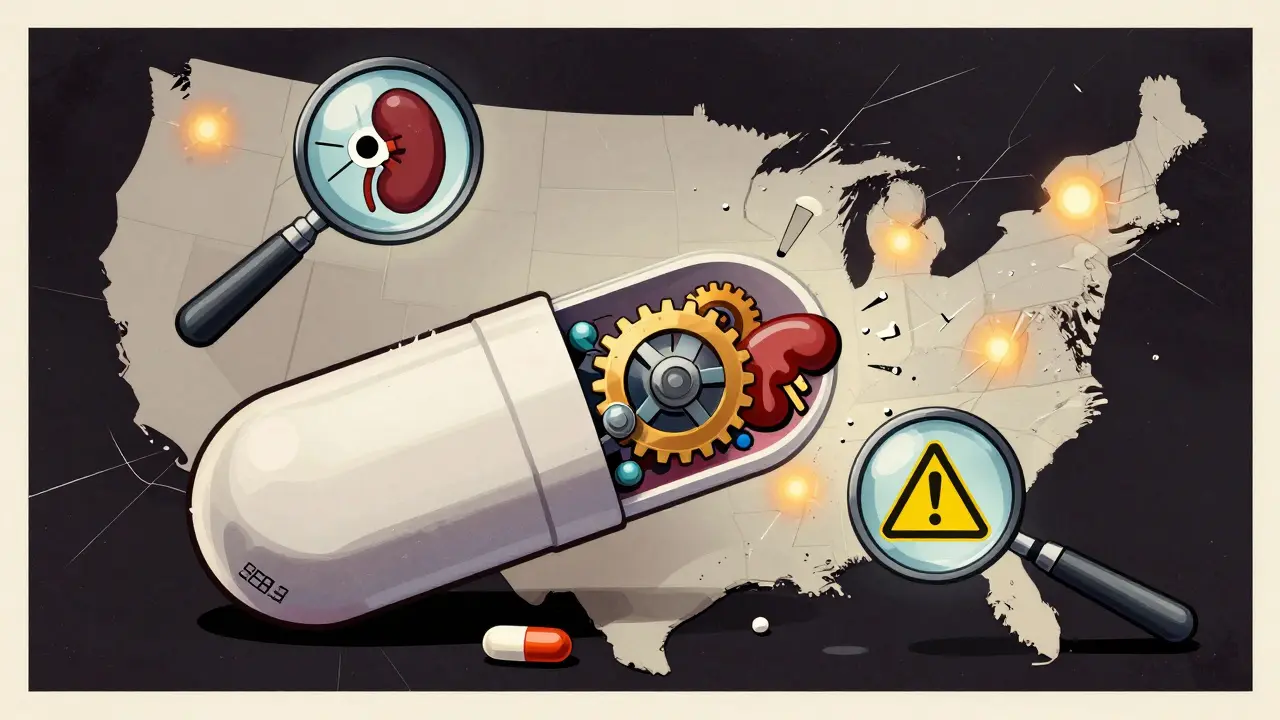
What Happens When a Problem Is Found?
Finding a signal is just the first step. The FDA doesn’t jump to pull a drug off the market. It investigates first. Did the problem happen with just one manufacturer’s version? Or all generics of that drug? Is it a true safety issue-or just patient perception? There’s something called the “nocebo effect”-when patients expect a generic to be worse, they feel worse. A 2019 JAMA study found that 15% of complaints about generics were about perceived lower effectiveness, even when lab tests showed no difference. But when the evidence points to a real risk, the FDA acts. Actions can include:- Updating the drug label with new warnings
- Issuing a “Dear Healthcare Provider” letter
- Requiring the manufacturer to change the formulation
- Ordering a voluntary recall
Who Reports Problems? And Why It Matters
The system only works if people report issues. Doctors and pharmacists report regularly, but patients are often the first to notice something off. A change in how a pill tastes, a new rash, or feeling “not quite right” after switching brands can be early signs. You don’t need to be a scientist to report. Go to MedWatch and fill out a simple form. Even if you’re not sure, report it. The FDA doesn’t expect you to know the cause. They just need to know what happened.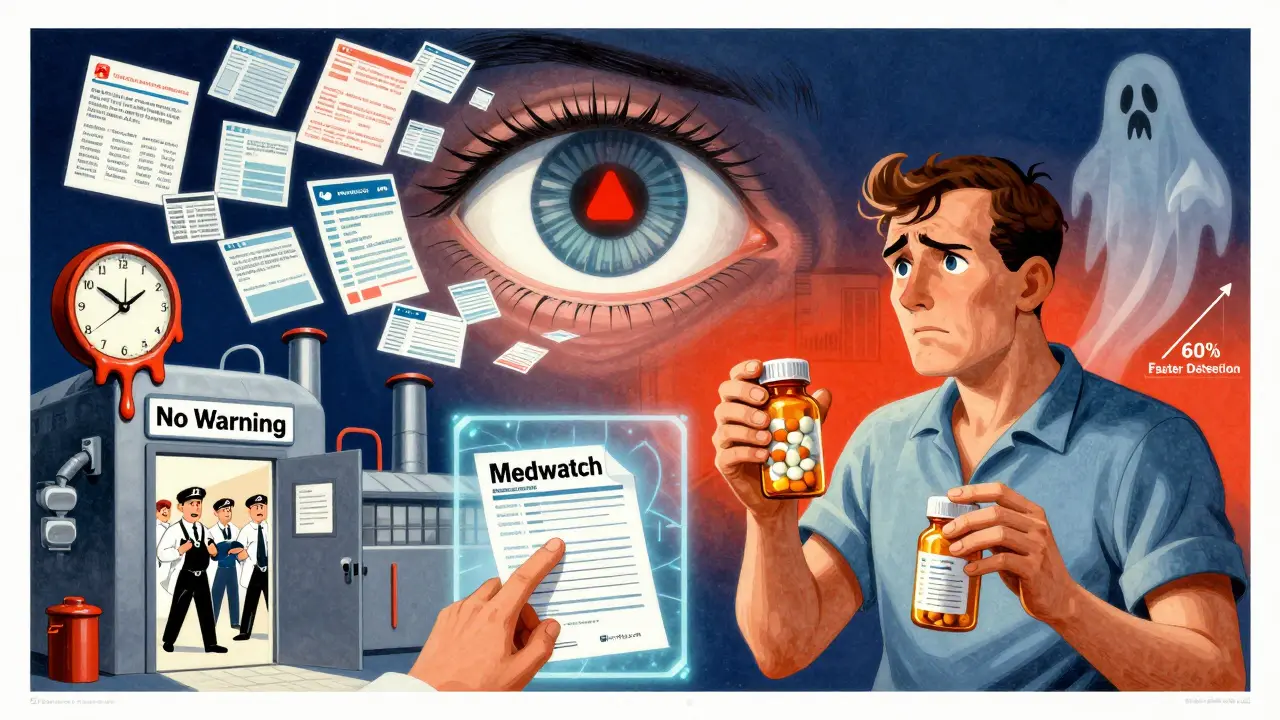
What’s Next for Generic Drug Safety?
The future of post-market surveillance is smarter, faster, and more automated. The FDA is testing AI tools that can scan millions of electronic health records and social media posts (with privacy protections) to detect unusual patterns. One pilot project in 2025 used machine learning to identify a potential safety signal in a generic diabetes drug six weeks faster than traditional methods. The goal isn’t to replace human experts-it’s to give them better tools. By 2027, experts predict AI could cut the time to detect safety issues in complex generics by 60-70%. That means fewer people get hurt before a problem is fixed.What You Should Know
You don’t need to be an expert to stay safe. Here’s what you can do:- If you switch to a generic and feel different, don’t assume it’s “all in your head.” Write down what changed-timing, symptoms, dosage.
- Keep your pharmacy’s name and the drug’s lot number. Different manufacturers make the same generic, and problems can be isolated to one batch.
- Report anything unusual through MedWatch. Your report could help someone else.
- Don’t avoid generics because of fear. They’re safe, effective, and save billions. But stay aware.
The FDA doesn’t have a crystal ball. But with better data, smarter tools, and people like you reporting what they notice, the system keeps getting stronger. Generics are a lifeline for millions. Keeping them safe isn’t just a job for regulators-it’s a shared responsibility.
Are generic drugs as safe as brand-name drugs?
Yes, generic drugs are required by law to be as safe and effective as their brand-name counterparts. The FDA only approves them after proving they contain the same active ingredient, work the same way in the body, and meet the same quality standards. However, because generics don’t go through the same large-scale clinical trials, post-market surveillance is critical to catch rare or long-term side effects that might not show up during approval.
How does the FDA know if a generic drug is causing problems after it’s on the market?
The FDA uses multiple systems, including FAERS (a database of patient and provider reports), the Sentinel Initiative (which analyzes real-world health data from insurance and electronic records), and routine inspections of manufacturing plants. It also actively scans for unusual patterns in adverse event reports, especially for complex generics like inhalers or extended-release pills. When a potential issue is found, teams of scientists and epidemiologists investigate to determine if it’s linked to the drug or another factor.
Can I report a side effect from a generic drug myself?
Yes, absolutely. The FDA encourages patients, caregivers, and consumers to report any unexpected side effects, medication errors, or product issues through MedWatch, its official safety reporting program. You don’t need to be a doctor or know the exact cause-just describe what happened, when, and with which drug. These reports help the FDA detect emerging safety signals early.
Why are complex generics harder to monitor than simple ones?
Complex generics-like inhalers, topical creams, or extended-release tablets-depend on more than just the amount of active ingredient. Their delivery system (like the propellant in an inhaler or the coating on a pill) affects how the drug is absorbed. Small changes in formulation can change how well the drug works in real patients, even if lab tests show bioequivalence. That’s why the FDA is investing in AI and specialized research to improve surveillance for these products.
What happens if the FDA finds a problem with a generic drug?
The FDA doesn’t immediately pull the drug. It first investigates to confirm the issue is real and linked to the product. If confirmed, actions can include updating the drug’s label with new warnings, requiring the manufacturer to change the formulation, issuing a safety alert to doctors, or requesting a voluntary recall. In rare cases, the FDA can take legal action to remove a product from the market if it poses a serious risk.
Is the FDA doing enough to monitor generics?
The FDA has one of the most comprehensive post-market surveillance systems in the world, but experts agree it’s always evolving. Critics point out that resources for monitoring complex generics have historically been limited. The agency acknowledges this and is actively investing in AI, real-world data tools, and research partnerships to close those gaps. While the system isn’t perfect, it’s significantly more robust today than it was a decade ago.
Harshit Kansal
January 6, 2026 AT 05:50Just switched my generic blood pressure med last month and felt like a zombie for two weeks. Turned out it was a bad batch. Never knew you could report this stuff - now I will.
Katie Schoen
January 6, 2026 AT 06:02LOL the FDA has more tools than my iPhone has apps. AI scanning social media for drug complaints next? Next they'll be reading our TikTok rants about stomach cramps and calling it ‘real-world evidence.’
Jeane Hendrix
January 6, 2026 AT 12:59So the FDA uses FAERS and Sentinel but still relies on patients to self-report? That’s like asking people to text 911 when their car catches fire. Bioequivalence doesn’t equal bio-identical - the excipients matter more than they admit. I’ve had three different generics of sertraline and two of them made me feel like a ghost. The third? Perfect. Same active ingredient. Different fillers. That’s not science, that’s roulette.
Melanie Clark
January 7, 2026 AT 23:48They’re lying. The FDA is owned by Big Pharma. Generics are deliberately made to fail just enough so you go back to the brand. That’s why they push the nocebo effect so hard - it’s a distraction. My cousin died after switching to a generic seizure med. They said it was ‘coincidental.’ Coincidental. Like the 37 other deaths they buried in FAERS.
Vinayak Naik
January 9, 2026 AT 13:49Bro in India we get generics that cost 1/10th of US price and work better. Why? Because manufacturers here don’t cut corners on fillers. FDA’s inspection system is decent but they’re way behind on complex generics. I worked in a pharma lab - coating thickness on extended-release pills? Tiny changes wreck absorption. They need more muscle here.
Saylor Frye
January 10, 2026 AT 09:07It’s cute how you think AI can detect ‘safety signals.’ You realize most patients can’t spell ‘ibuprofen’ correctly in a MedWatch form? The data is garbage. You’re training algorithms on noise. The real issue is that generics are commoditized - no one cares enough to invest in post-market fidelity.
Beth Templeton
January 12, 2026 AT 00:39Report it. Sure. Because nothing says ‘patient empowerment’ like filling out a 12-page PDF form while your hands shake from the side effects.
Gabrielle Panchev
January 12, 2026 AT 15:12Let me just say - and I’ve read every single FDA guidance document, every white paper from the Office of Generic Drugs, every peer-reviewed study on bioequivalence since 2008 - the entire premise of Hatch-Waxman is fundamentally flawed. You cannot, under any scientific principle, claim that two drugs are therapeutically equivalent if they differ in excipients, dissolution profiles, or manufacturing processes - even if plasma concentrations are statistically identical. And yet, the FDA continues to approve generics based on a single, flawed metric - AUC and Cmax - ignoring pharmacodynamic variability, protein binding, and metabolic polymorphisms. It’s not just inadequate - it’s dangerously naive. And don’t get me started on the fact that they don’t require comparative bioavailability studies in elderly populations or those with renal impairment - which is, by the way, the demographic that uses generics the most!
Matt Beck
January 14, 2026 AT 02:27So we’re trusting algorithms to catch drug dangers… but not trusting people who actually take the pills? 🤔 The system is a paradox wrapped in a spreadsheet, inside a regulatory loophole. We’re all lab rats now. 🐭
Molly McLane
January 14, 2026 AT 02:28I’m a nurse and I’ve seen this firsthand. A patient switched to a generic antidepressant and started having panic attacks every afternoon. We thought it was anxiety worsening - turns out, the new version had a different coating that changed absorption timing. She felt fine again after switching back to the brand. No one reported it because they didn’t know they could. Please, if you feel off after a switch - speak up. It’s not ‘all in your head.’
Katelyn Slack
January 15, 2026 AT 08:18i just want to say thank you for explaining this. i didnt know you could report stuff like this. i’ll start doing it. i switched to a generic and got a weird rash. i thought it was laundry detergent lol
Kiran Plaha
January 16, 2026 AT 20:13My dad takes a generic statin. He’s 72. His doctor says it’s the same. But he says he’s more tired now. I checked the lot number. Maybe it’s just age. Or maybe it’s the filler. Either way, I’m filing a MedWatch report. Just in case.
Tiffany Adjei - Opong
January 16, 2026 AT 21:14Oh wow, the FDA is using AI? That’s adorable. The same AI that thinks ‘I feel dizzy’ means ‘I’m in love’? And you really believe machine learning can tell the difference between a real side effect and someone who drank too much coffee? Please. The real problem? No one’s auditing the labs that test bioequivalence. Half of them are in China. And the FDA hasn’t visited most of them since 2019. You think they’re watching? They’re scrolling TikTok.
Ryan Barr
January 17, 2026 AT 06:15Post-market surveillance is a Band-Aid on a gunshot wound. The system was designed for 1984. We’re in 2025. The gap isn’t just technical - it’s philosophical. We treat drugs like widgets. They’re not.