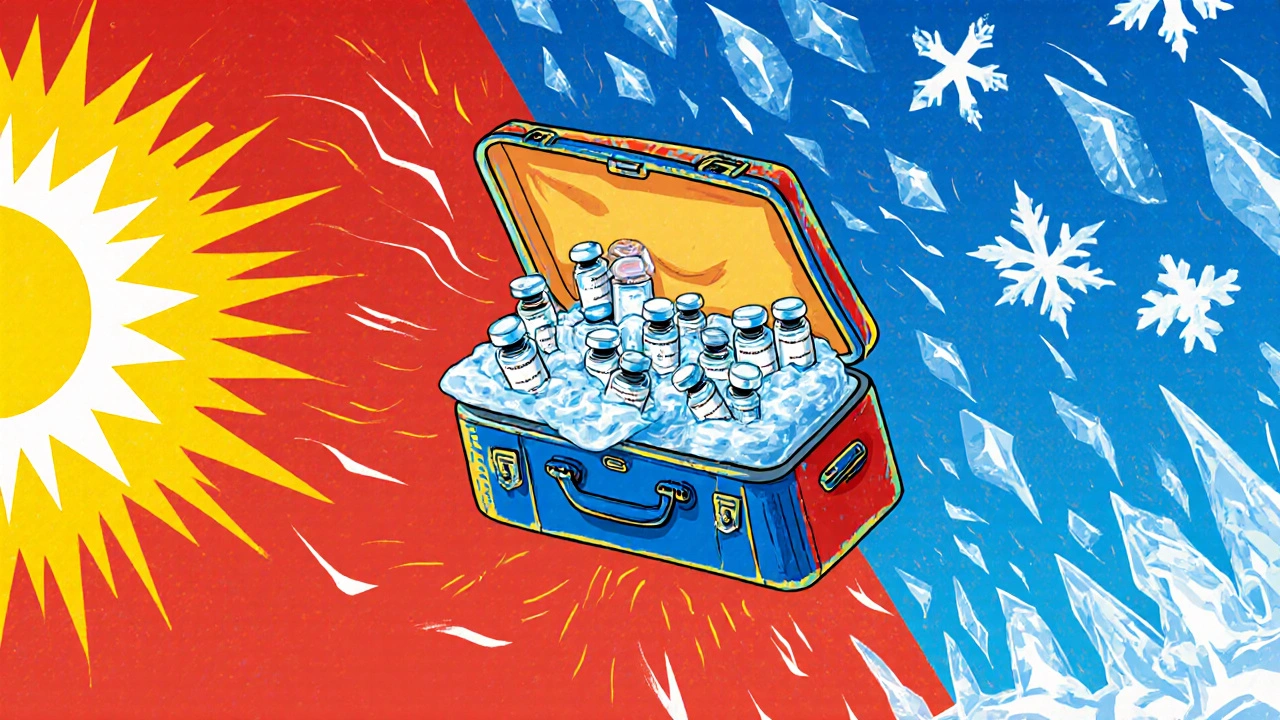
Insulin Travel: How to Safely Carry and Use Insulin On the Go
When you have diabetes, insulin, a life-sustaining hormone used to control blood sugar. Also known as injectable glucose regulator, it's not just medicine—it's your daily safety net. But what happens when you leave home? Airplane cabins, hot cars, or long road trips can wreck your insulin if you don’t know how to protect it. You can’t just toss it in your bag and hope for the best.
Insulin storage, the way you keep insulin at the right temperature before and during travel matters more than most people realize. Unopened insulin needs to stay between 36°F and 46°F (2°C–8°C), but once you start using it, it can last up to 28 days at room temperature—up to 86°F (30°C). That’s fine for a weekend trip, but not for a desert hike or a 12-hour flight in July. That’s where insulin cooling, using portable devices or packs to keep insulin cool without freezing comes in. Brands like Frio, CoolPacks, or even simple insulated pouches with reusable gel packs work. Just don’t let insulin freeze—it turns useless, no matter how fresh the bottle looks.
And don’t forget the travel with diabetes, the full set of preparations needed to manage diabetes safely outside your routine environment. TSA allows insulin and supplies through security—no prescription needed—but you should still carry a doctor’s note. Keep insulin in your carry-on, never checked luggage. Temperatures in cargo holds can drop below freezing or spike over 100°F. One traveler lost their entire insulin supply because they trusted the airline’s baggage system. Don’t be that person.
You’ll also need to think about time zones. If you’re on a long-haul flight, your insulin schedule might get thrown off. If you normally take insulin at 8 a.m. and 8 p.m., and you fly from New York to Tokyo, you’ll need to adjust timing gradually—or talk to your doctor about switching to a long-acting insulin for the trip. Don’t guess. A missed dose or a wrong timing can send your blood sugar into dangerous territory.
And what about syringes or pens? Pack extras. Always. A pen can break. A needle can bend. A vial can leak. Bring at least 50% more than you think you’ll need. And carry glucose tablets or gel in your pocket—not in your checked bag. Low blood sugar doesn’t wait for baggage claim.
Many people don’t realize that heat isn’t the only enemy. Light exposure can degrade insulin too. Keep it in a dark pouch, not in your sunlit purse or car console. Even a few hours in direct sunlight can weaken it. And never leave insulin in a hot car—even in winter. The dashboard can hit 140°F on a sunny day.
When you land, check your insulin. If it looks cloudy, clumpy, or discolored—pitch it. No exceptions. Your body doesn’t care if it’s expensive or hard to replace. If it’s damaged, it won’t work. And if you’re abroad, know how to find insulin locally. Carry the generic name (like insulin glargine or insulin lispro) and the brand name in both English and the local language. Translation apps help, but having it written down saves time and avoids mistakes.
There’s no single right way to travel with insulin—but there are plenty of wrong ones. The good news? You’re not alone. Thousands of people with diabetes fly, hike, and road-trip every day with zero problems. They just plan ahead. Below, you’ll find real stories, practical tips, and step-by-step guides from people who’ve been there. Whether you’re flying to Cancun or driving to the mountains, you’ll find exactly what you need to keep your insulin—and your health—on track.