Legitimate Pharmacy: How to Spot a Safe Online Pharmacy and Avoid Dangerous Scams
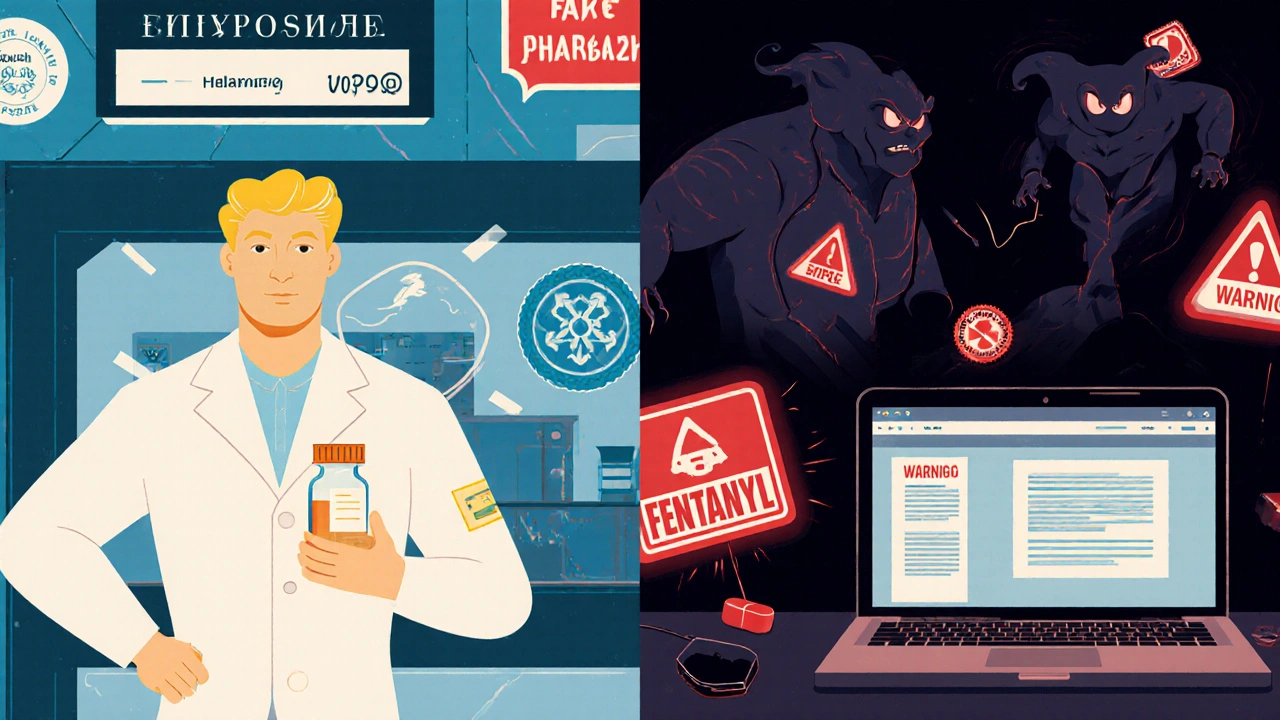
When you need medication, a legitimate pharmacy, a licensed, regulated business that dispenses FDA-approved drugs with a valid prescription. Also known as a verified pharmacy, it follows strict rules on storage, labeling, and patient safety. Too many people don’t realize how easy it is to stumble into a fake site that looks real—complete with professional logos, fake reviews, and low prices. These aren’t just inconvenient—they’re deadly. The FDA estimates that over 50% of online pharmacies selling prescription drugs operate illegally, often shipping counterfeit pills that contain no active ingredient, toxic chemicals, or the wrong dosage.
A verified pharmacy, a pharmacy that displays its license and physical address, and requires a valid prescription before shipping. It doesn’t sell drugs without a prescription, doesn’t ship from offshore warehouses with no oversight, and doesn’t use pressure tactics like "no doctor needed" or "24-hour delivery." Real pharmacies work with licensed pharmacists who review your history, check for interactions, and answer your questions. They’re linked to real-world clinics and follow the same rules as your local drugstore. Look for the VIPPS seal (Verified Internet Pharmacy Practice Sites) or check if they’re licensed in your state—those are non-negotiable signs of legitimacy.
The risks of skipping this step are real. People have ended up in the ER after taking fake Viagra that contained rat poison. Others got antibiotics that didn’t work because they were just sugar pills. Even "generic" versions from shady sites can be dangerously different from the real thing. Your medical history matters here too—something as simple as taking a fake blood thinner can lead to a stroke, while a fake antidepressant can trigger withdrawal symptoms you weren’t prepared for. The fake pharmacy risks, the dangers of buying medication from unlicensed online sellers, including poisoning, drug interactions, and untreated conditions. are not theoretical—they happen every day.
Knowing what to look for saves lives. A legitimate pharmacy will never ask you to pay with cryptocurrency or gift cards. It will show you a physical address, a phone number you can call, and a licensed pharmacist on staff. It won’t promise miracles or bypass your doctor. The posts below cover exactly how to check a pharmacy’s credentials, what red flags to watch for, how to spot counterfeit pills, and what to do if you’ve already ordered from a suspect site. You’ll also find real examples of how people got burned—and how they recovered. This isn’t about fear. It’s about control. You deserve safe medication. You just need to know how to find it.