Vaccine Transport: How Cold Chains Keep Vaccines Safe and Effective
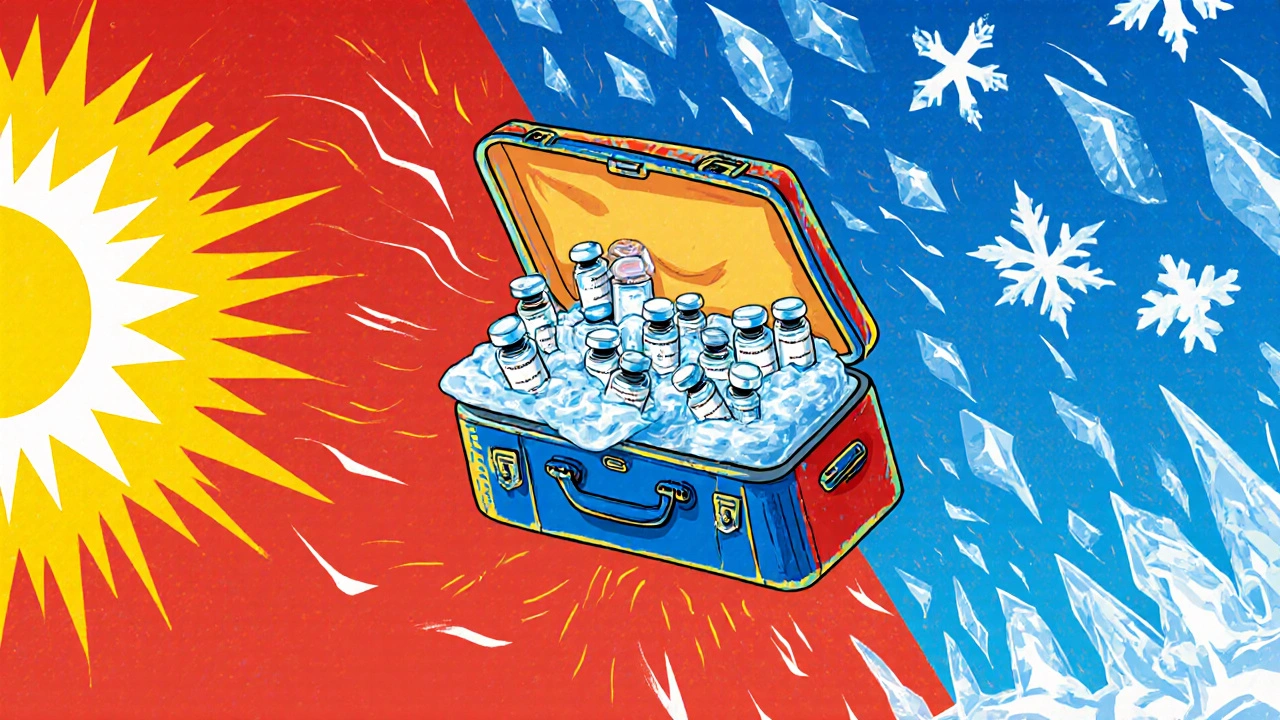
When you get a vaccine, it didn’t just sit on a shelf—it traveled through a vaccine transport, a tightly controlled system that moves vaccines from manufacturers to clinics while maintaining exact temperature conditions. Also known as cold chain, it’s the invisible backbone of every immunization you receive. One degree too warm, and the vaccine can lose effectiveness. One hour too late, and it might spoil before it even reaches your arm. This isn’t theory—it’s daily reality for health workers, logistics teams, and global health programs.
Cold chain, the network of refrigerated storage and transport used to preserve vaccines starts at the factory, where vaccines are packed in temperature-stable containers. From there, they move through warehouses, delivery trucks, airplanes, and finally, clinic fridges. Each step must stay within strict ranges—usually between 2°C and 8°C for most vaccines, though some, like the mRNA COVID-19 shots, need ultra-cold storage at -70°C. The system relies on temperature control, real-time monitoring tools that track heat exposure and alert teams if conditions break. Sensors, data loggers, and GPS trackers aren’t luxuries—they’re mandatory. A 2021 WHO report found that over 50% of vaccines in low-resource areas are exposed to temperatures outside safe limits, leading to wasted doses and broken trust.
Vaccine logistics, the planning and execution of moving vaccines across distances, often through challenging environments is where science meets street-level grit. In rural Africa or mountainous regions of Asia, vaccines travel by motorcycle, donkey cart, or even on foot. Solar-powered cold boxes, insulated bags, and drone deliveries are now part of the toolkit. But even the best gear fails without trained staff who know how to read thermometers, handle ice packs, and respond to power outages. It’s not just about keeping things cold—it’s about keeping people alive.
What you’ll find below are real-world stories and practical guides on how vaccine transport works—from the barcode scanners tracking each vial, to the protocols that stop spoiled doses from reaching patients, to how clinics verify storage conditions before administering shots. These aren’t abstract policies. They’re the reason your flu shot still works, and why a child in a remote village can get protected against measles. This collection cuts through the noise and shows you exactly how the system holds together—and where it still breaks.