
Opioid Side Effect Risk Calculator
Calculate Your Side Effect Risk
Side Effect Risk Assessment
Personalized Management Recommendations
When opioids are prescribed for severe pain-after surgery, for cancer, or due to chronic injury-they work. But they also come with a set of side effects that don’t go away just because you get used to them. Constipation, drowsiness, and nausea are the most common, and they affect most people who take these drugs long-term. Ignoring them doesn’t make them disappear. In fact, leaving them unmanaged can lead to stopping your medication altogether, worsening pain, or even dangerous withdrawal.
Constipation: The One Side Effect That Never Goes Away
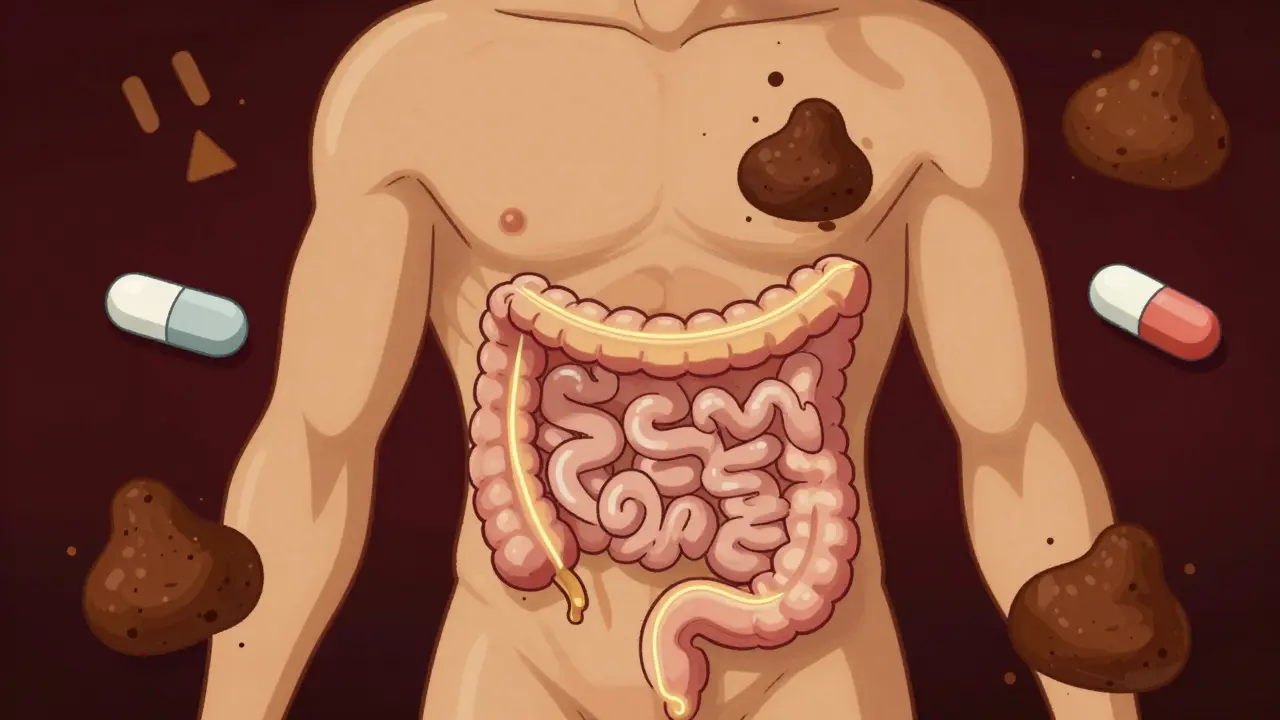
Almost everyone who takes opioids for more than a few weeks will get constipated. It’s not rare. It’s expected. Opioids slow down your gut by binding to receptors in your intestines, making stool move slower and water get sucked out. The result? Hard, painful bowel movements that don’t improve over time-unlike drowsiness or nausea, which often fade.
Doctors used to wait until patients complained before acting. That’s outdated. The American Academy of Family Physicians recommends starting a laxative regimen on day one of opioid therapy. Don’t wait for symptoms. Prophylaxis works. A mix of a stimulant laxative like senna and an osmotic agent like polyethylene glycol (Miralax) is the standard first-line approach. These help keep things moving without interfering with pain relief.
If that doesn’t cut it, there’s a class of drugs called PAMORAs-peripherally acting mu-opioid receptor antagonists. Medications like methylnaltrexone (Relistor) and naloxegol (Movantik) block opioid effects in the gut but don’t cross into the brain. That means your pain control stays intact while your bowels start working again. These aren’t over-the-counter fixes. They’re prescription tools for people who’ve tried everything else and still can’t go.
Drowsiness: When Your Brain Feels Like It’s Underwater
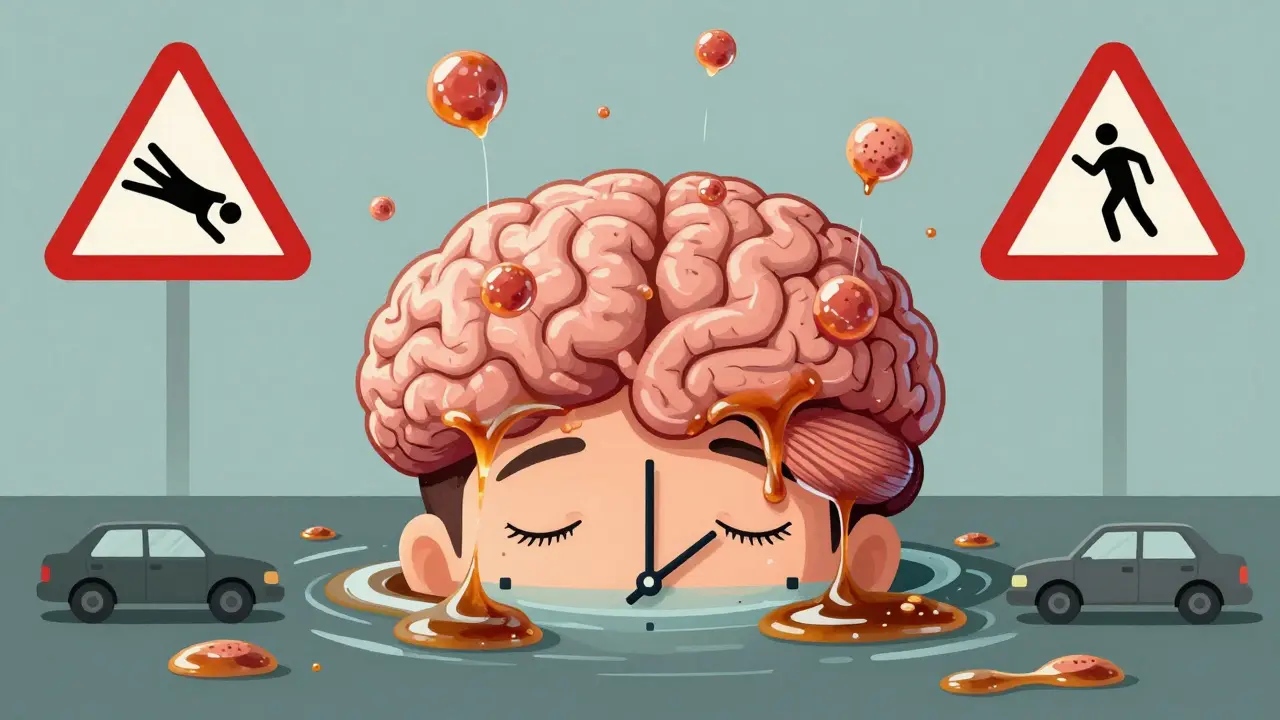
When you first start opioids, you might feel like you’re walking through molasses. Your thoughts get foggy. You yawn constantly. You struggle to stay awake during the day. That’s drowsiness-and it’s real. Between 20% and 60% of new opioid users experience it, according to clinical studies. For most, it fades within a week or two as the body adjusts. But for 10% to 15% of long-term users, the fog never lifts.
It’s not just inconvenience. It’s risk. Drowsiness increases the chance of falls, car crashes, and mistakes at work. It also makes cognitive tasks-reading, remembering names, following instructions-harder. This is especially dangerous for older adults or those with existing brain changes.
Management starts with timing. Take your dose at night if possible. Avoid driving or operating machinery until you know how you react. Cut out other sedating meds like benzodiazepines or alcohol-they multiply the effect dangerously. If drowsiness lingers, talk to your doctor about lowering the dose. Sometimes, switching to a different opioid helps. There’s limited evidence for stimulants like methylphenidate (Ritalin) to fight opioid-induced sleepiness, but they’re rarely used due to side effects and lack of strong data.
Don’t ignore persistent drowsiness. It’s not just fatigue. It’s a sign your body might be struggling with the dose-or that you’re at higher risk for respiratory depression, the leading cause of opioid overdose death.
Nausea: Why Your Stomach Feels Like It’s in Revolt
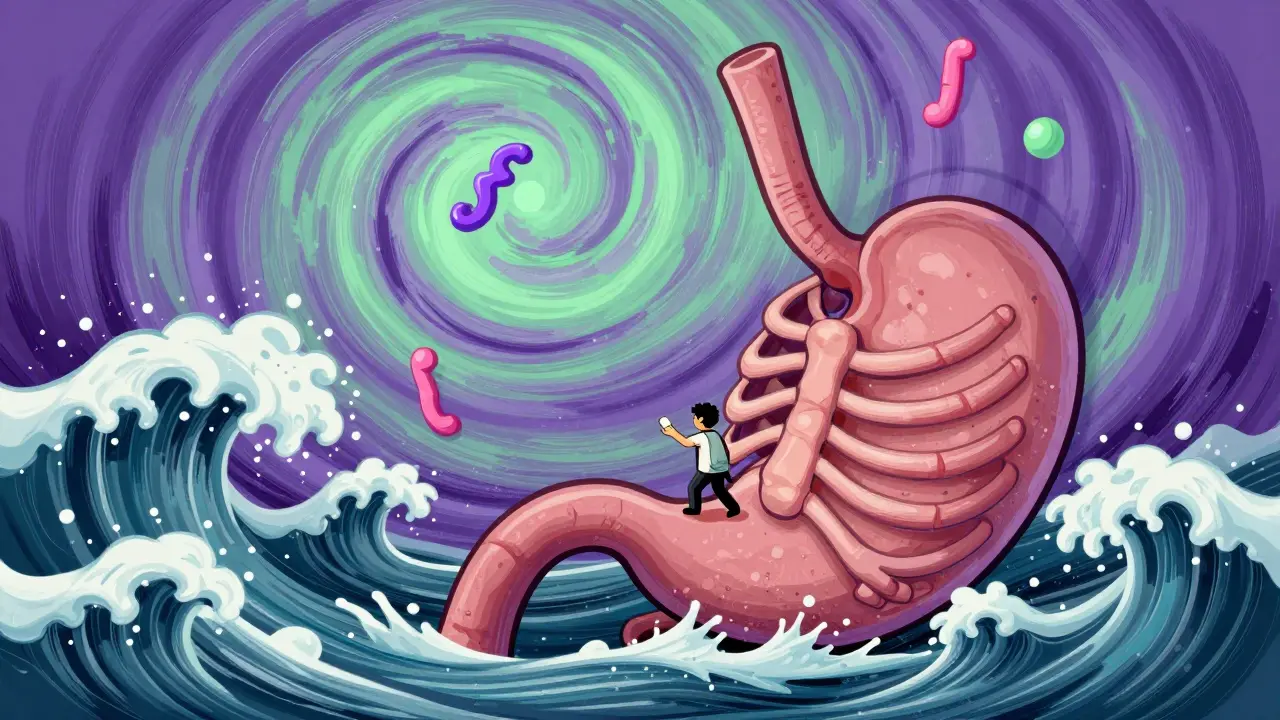
Nausea hits about one in four people when they start opioids. It’s not just an upset stomach. It’s the drug directly stimulating the brain’s vomiting center, plus slowing digestion so food sits there too long. For most, it fades within a few days. But for 1 in 10 long-term users, it sticks around-and it’s enough to make them quit their medication.
There are several types of anti-nausea drugs, each targeting a different pathway. Dopamine blockers like metoclopramide and prochlorperazine are usually tried first. If they don’t help, serotonin blockers like ondansetron (Zofran) are next. Antihistamines like promethazine work for some, especially if dizziness is also part of the problem. It’s trial and error. What works for one person might do nothing for another.
Don’t take these drugs long-term without supervision. Some, like metoclopramide, can cause movement disorders if used for months. Also, don’t assume nausea means you’re allergic to opioids. It’s a side effect, not an allergy. Many people who stop opioids because of nausea end up switching to a different one and feeling fine.
Here’s a key point: nausea can also show up during withdrawal. If you suddenly stop taking opioids, you’ll likely get nausea, vomiting, and diarrhea-not because the drug stopped working, but because your body is in shock. That’s why tapering off slowly under medical care is critical. The FDA warns that abrupt discontinuation can trigger uncontrolled pain, anxiety, and even suicidal thoughts.
Why Managing Side Effects Isn’t Optional
These side effects aren’t just annoying. They’re treatment killers. If you’re too constipated to leave the house, too drowsy to work, or too nauseated to eat, you’ll stop taking your meds-even if you’re still in pain. And when you stop suddenly, withdrawal hits hard. That’s when people turn to street drugs, which are far more dangerous.
The CDC reports that over 8 million Americans misused prescription opioids in 2023. More than two-thirds of them said they did it to relieve physical pain. That’s telling. It means many people aren’t getting their pain under control with safe, managed care. They’re self-treating because the side effects were never addressed.
Good pain management isn’t just about choosing the right drug. It’s about planning for the side effects before they start. That means:
- Starting laxatives on day one
- Taking opioids at night if drowsiness is an issue
- Trying different anti-nausea meds until you find one that works
- Never stopping opioids cold turkey
- Talking to your doctor before adding any other sedating meds
There’s a myth that opioids are only for end-of-life care. That’s not true. Millions of people with chronic pain live full lives on them-when side effects are managed well. The goal isn’t to avoid opioids. It’s to use them safely, with a plan.
What to Do Next
If you’re on opioids and dealing with constipation, drowsiness, or nausea:
- Don’t wait. Talk to your doctor today.
- Ask if you’re on the right dose-sometimes less is more.
- Request a bowel regimen if you’re not already on one.
- Keep a symptom log: when nausea hits, how sleepy you feel, how often you go to the bathroom.
- Ask about PAMORAs if laxatives aren’t enough.
There are alternatives. Physical therapy, nerve blocks, non-opioid pain relievers like gabapentin or duloxetine, and even cognitive behavioral therapy can reduce opioid needs. But if you need opioids, you deserve to take them without suffering through side effects that could’ve been prevented.
Is constipation from opioids permanent?
No, but it doesn’t go away on its own either. Unlike drowsiness or nausea, constipation usually lasts as long as you’re taking opioids. It requires active management with laxatives or prescription medications like methylnaltrexone. Waiting for it to improve is a mistake.
Can I just stop taking opioids if the side effects are too bad?
No. Stopping suddenly can cause severe withdrawal symptoms including nausea, vomiting, diarrhea, anxiety, and intense pain. It can even trigger suicidal thoughts. Always work with your doctor to taper off slowly. If side effects are unbearable, ask about switching to a different opioid or adding treatments to manage them.
Why do opioids make me so sleepy?
Opioids depress the central nervous system, which slows brain activity. This leads to drowsiness, mental fog, and slower reaction times. It’s most intense when you start or increase your dose. For most, it improves within a week or two. If it doesn’t, your dose may be too high, or you might need a different medication.
Are there any natural remedies for opioid-induced constipation?
Drinking more water and eating fiber helps-but not enough on their own. Opioids physically slow gut movement, so natural methods rarely work alone. Laxatives are still the standard. Some people find mild benefit from prune juice or magnesium, but these shouldn’t replace medical treatment. Always check with your doctor before trying supplements.
Can I drink alcohol while taking opioids?
Never. Alcohol multiplies the sedative effects of opioids, greatly increasing the risk of dangerous respiratory depression, coma, or death. Even one drink can be risky. The CDC and FDA both warn against combining opioids with alcohol or benzodiazepines like Xanax or Valium.
What’s the difference between tolerance and dependence?
Tolerance means you need higher doses to get the same pain relief. Dependence means your body has adapted to the drug and will go into withdrawal if you stop. Both are normal with long-term opioid use. Neither means you’re addicted. Addiction involves compulsive use despite harm. If you’re taking opioids as prescribed, you’re likely dependent-not addicted.



Kelly Weinhold
January 30, 2026 AT 00:07Man, I wish more doctors would just tell patients this upfront. I was on oxycodone after my knee surgery and thought the constipation was just ‘normal’ until I couldn’t leave the house for a week. Started Miralax day one with my script and it changed everything. No more shame, no more suffering. Just take the laxative like your vitamins. Seriously, if your doc doesn’t mention it, ask. It’s not weird-it’s smart.
Kimberly Reker
January 30, 2026 AT 12:31So many people think opioid side effects are just ‘part of the deal’-but they’re not. They’re treatable. I’ve seen patients cry because they couldn’t poop for weeks and thought they were broken. Then we put them on senna + PEG and they cried again-but this time because they could finally sit down without pain. It’s not about being weak. It’s about being informed. Your gut doesn’t care about your pain meds. It just wants to move.
Rob Webber
January 31, 2026 AT 03:07Stop coddling people. If you can’t handle constipation and drowsiness, don’t take opioids. There are other pain meds. I’ve been on them for 12 years. I don’t whine. I take my meds, I deal with it, and I don’t turn it into a TED Talk. This article reads like a PSA for the overly sensitive. Grow up.
Lisa McCluskey
January 31, 2026 AT 12:04Agreed with the laxative advice. I’ve been prescribing this for over a decade. Day one. No exceptions. Also, don’t ignore drowsiness after two weeks. It’s not tolerance-it’s a red flag. Many patients think it’s just ‘getting used to it’ when it’s actually dose toxicity. Check liver enzymes, check CNS depression risk. Simple.
owori patrick
January 31, 2026 AT 19:54From Nigeria, I’ve seen too many people stop opioids because they didn’t know what to do about nausea. We don’t have access to Zofran everywhere. But even just ginger tea and small meals helped some. The key is talking to someone-anyone. Don’t suffer in silence. You’re not alone.
Darren Gormley
February 1, 2026 AT 23:40LOL at the ‘PAMORAs are the solution’ nonsense. Methylnaltrexone costs $1,200 per dose. Who’s paying? Medicare? Insurance? Nah. Most people just suffer. This article is written for rich Americans with good coverage. Meanwhile, I’m on 10mg oxycodone and eating prunes like a medieval peasant. Real talk: healthcare is broken.
Mike Rose
February 3, 2026 AT 00:32why do opioids make u sleepy? bc they r strong. duh. also constipation? yeah ur gut stops. just drink water and eat fiber. no need for all this fancy med stuff. my cousin took them for a month and never had probs. just stop being a baby.
Shubham Dixit
February 3, 2026 AT 05:14Let me be clear-this whole narrative is a Western luxury problem. In India, we’ve been managing chronic pain for generations with turmeric, heat packs, and sheer will. Opioids? We use them only when the body is literally shutting down. And even then, we don’t ask for fancy laxatives-we pray, we drink warm water with lemon, and we endure. This article reads like a pharmaceutical marketing brochure dressed as medical advice. The real issue isn’t constipation-it’s overprescribing. We’ve turned pain into a commodity. And now we’re selling solutions to problems we created. You don’t need Miralax. You need less opioids. The body isn’t broken. The system is.
Eliana Botelho
February 3, 2026 AT 12:26Okay but what if you’re a 72-year-old woman with arthritis and your grandkid just got a new puppy and you’re trying to walk it every day but you’re so drowsy you keep falling asleep on the porch? And your doctor says ‘just take it at night’ but then you’re up at 3 a.m. with constipation and you can’t sleep anyway? And your daughter says ‘just stop the pills’ but then you can’t even get out of bed? So now you’re stuck between being a zombie and being in agony? And nobody listens? This isn’t about ‘management.’ This is about being trapped in a system that doesn’t care if you live or die as long as the script gets filled. I’ve been on this for five years. I’m tired. Not sleepy. Tired.
Claire Wiltshire
February 4, 2026 AT 22:33Thank you for this thorough, compassionate overview. I’ve worked in pain management for 18 years, and I’ve seen too many patients discontinue opioids unnecessarily because side effects weren’t addressed proactively. The key is early intervention, patient education, and a team-based approach. I always encourage patients to keep a daily symptom log-it’s astonishing how patterns emerge when you track nausea timing or bowel movements. And yes, PAMORAs are underutilized. They’re not a last resort-they’re a tool. Use them wisely. You deserve to live well while managing pain.