
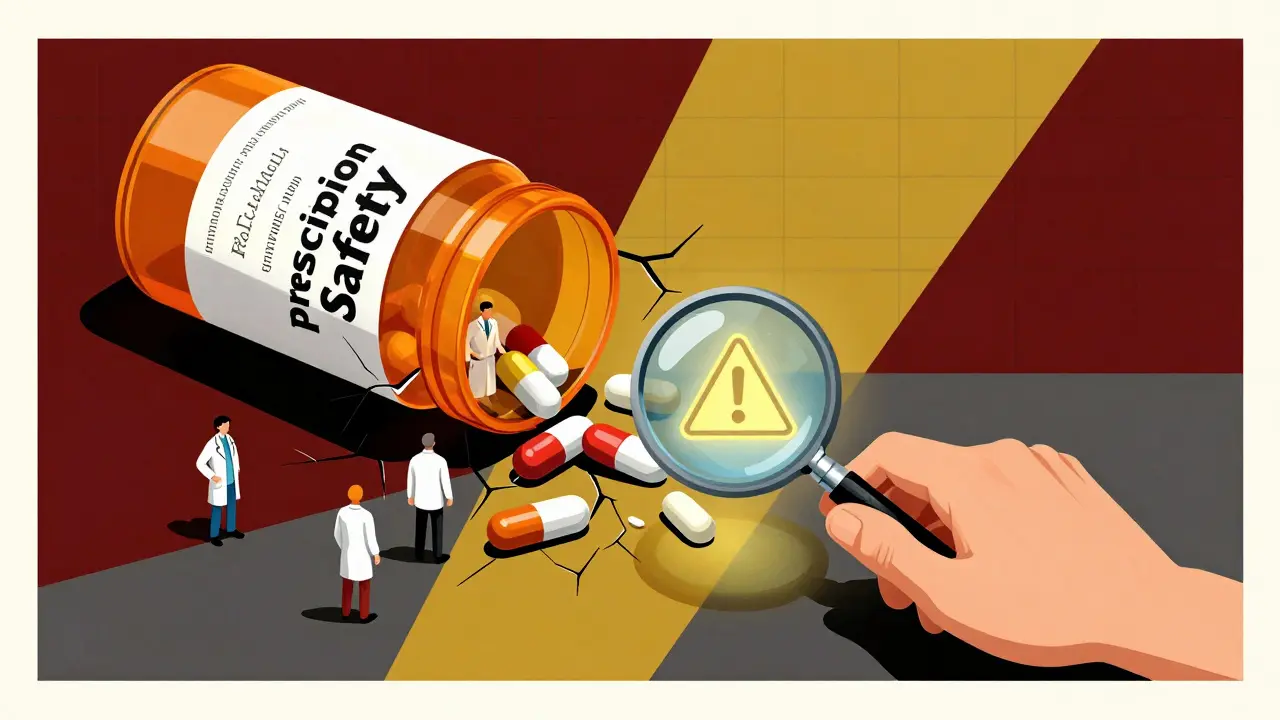
Every year, more than 1.5 million people in the U.S. are harmed by medications they took exactly as prescribed. That’s not a rare accident. It’s a systemic problem-and most of it is preventable. You might think if you follow the label, you’re safe. But the truth is, medication errors happen at every step: when a doctor writes the prescription, when the pharmacy fills it, when you take it at home, and even when you mix it with something else. The numbers don’t lie. One in every 20 patients worldwide suffers harm from a medication error. That’s 5%. And in the U.S., that translates to 1.3 million people injured each year, with 7,000 of them dying in hospitals alone.
What’s Really Going Wrong?
It’s not just about forgetting a pill. The biggest dangers come from things you can’t always see. IV medications are the most dangerous-nearly half of all hospital errors happen with injections. Antibiotics cause the most harm overall, followed by drugs for mental health and heart conditions. Why? Because they’re powerful, they’re used often, and small mistakes have big consequences. A 10% overdose of a blood thinner can cause internal bleeding. A wrong dose of insulin can send someone into a coma. A mix-up between two similar-looking pills can trigger a seizure.And it’s not just hospitals. At home, between 2% and 33% of people make mistakes with their meds. That’s a huge range, but it shows how common it is. People forget doses, take them at the wrong time, double up because they’re unsure if they already took it, or stop early because they feel better. A recent analysis of Reddit’s r/meds community found that 68% of posts were about confusion over dosage instructions. That’s not user error-it’s a communication failure.
Who’s Most at Risk?
Older adults are the most vulnerable. One in three seniors takes five or more medications daily. That’s called polypharmacy-and it’s a ticking time bomb. A study in Australia found that 11% fewer antipsychotic drugs were prescribed to people over 65 between 2016 and 2021. Why? Because doctors realized these drugs often caused more harm than good in seniors-drowsiness, falls, confusion, even sudden death. But many still get them.Younger people aren’t safe either. Nearly 9 million Americans misused prescription painkillers in 2021. And now, the biggest threat isn’t stolen pills-it’s fake ones. The DEA seized over 10 million counterfeit oxycodone pills in 2021 alone. Most of them are laced with fentanyl, a synthetic opioid 50 to 100 times stronger than morphine. In 2023, the DEA seized more than 80 million fake pills with fentanyl. For Americans aged 18 to 45, fentanyl is now the leading cause of death. And you can buy them on social media, disguised as legitimate prescriptions.
Where Do Errors Happen?
Medication errors don’t happen because nurses are tired or doctors are careless. They happen because systems are broken. Dr. Donald Berwick, a former head of Medicare, put it plainly: “Most medication errors are system failures, not individual failures.”Here’s how it breaks down:
- Prescribing: Doctors write unclear handwriting, choose the wrong drug, or miss dangerous interactions.
- Dispensing: Pharmacies misread prescriptions or pull the wrong bottle. In some countries, up to 53% of errors happen here.
- Administering: Nurses give the wrong dose or route-especially with IV meds.
- Monitoring: No one checks if the drug is working or causing harm.
- At home: Patients don’t understand instructions, don’t know what side effects to watch for, or mix meds with alcohol or supplements.
Infusion pumps-devices that deliver IV drugs-are a major problem. Between January 2023 and August 2024, over 200,000 pump-related incidents were reported to the FDA. That includes 204 deaths. These machines aren’t broken. They’re misused, poorly programmed, or not properly maintained.
What’s Being Done?
Some places are getting it right. Australia launched a national plan to cut medication harm by 50% by 2025. They’ve already seen results: a 37% drop in opioid deaths since 2018 thanks to real-time prescription tracking. They’ve also reduced insulin-related hospitalizations by 10%. Their success came from simple changes: better tech, tighter rules on high-risk drugs, and training for doctors and pharmacists.In the U.S., the Centers for Medicare & Medicaid Services (CMS) is tracking 16 new safety measures for 2025. They’re watching how well patients take their cholesterol, blood pressure, and diabetes meds. They’re also monitoring high-dose opioid use and antipsychotics in dementia patients-two areas where harm is common.
The FDA requires special safety programs for the riskiest drugs, called REMS. The EU now requires special security features on prescription packaging to fight fake meds. But these efforts aren’t enough. The global market for patient safety tools is growing fast-projected to hit $14.3 billion by 2029. That’s because we’re finally realizing: saving lives means fixing systems, not just blaming people.
What You Can Do Right Now
You can’t control what happens in the hospital or pharmacy. But you can control what happens in your hands. Here’s how to protect yourself:- Keep a live list of every medication you take. Include the name, dose, why you take it, and when. Update it every time your doctor changes something. Carry it with you.
- Use one pharmacy for everything. That way, the pharmacist can spot dangerous interactions between your prescriptions, over-the-counter drugs, and supplements.
- Ask the 3 questions every time you get a new prescription: What is this for? How do I take it? What side effects should I watch for? If they can’t answer clearly, ask again or get a second opinion.
- Check the pills. If your pill looks different than last time-color, shape, markings-ask the pharmacist. Fake pills are often identical to the real ones. But sometimes, they’re not.
- Never take meds from unverified online sources. The DEA says 32% of all counterfeit drugs seized in the U.S. come from online sellers. If it’s not from a licensed pharmacy, it’s a gamble with your life.
- Know the signs of a bad reaction. Sudden dizziness, rash, trouble breathing, confusion, or unusual bleeding? Call your doctor or go to the ER. Don’t wait.
Australia’s “5 Moments for Medication Safety” is a simple tool anyone can use:
- When you start a new treatment
- When you add a new drug
- When you move between care settings (hospital to home, doctor to pharmacy)
- When you’re on high-risk meds (blood thinners, insulin, opioids)
- When you review your meds every 6 to 12 months
What’s Next?
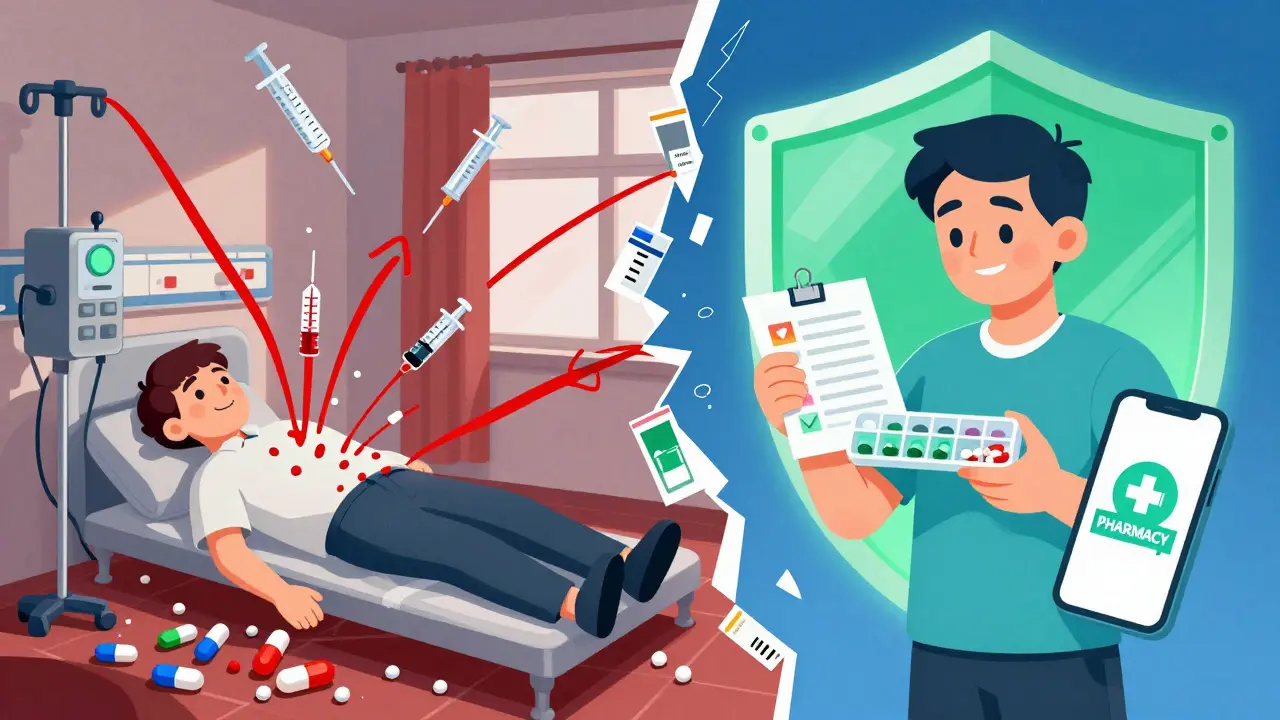
The future of medication safety lies in technology. Artificial intelligence tools are being tested to automatically check your meds against your history and flag mistakes before they happen. One study predicts AI could cut medication errors by up to 30% by 2027. But tech alone won’t fix this. It needs patients who speak up, doctors who listen, and pharmacies that double-check.Medication safety isn’t just about pills. It’s about trust. It’s about knowing your body, asking questions, and refusing to accept “I don’t know” as an answer. The system is flawed. But you have more power than you think.
How common are medication errors?
Globally, about 1 in 20 patients (5%) experience harm from a medication error. In the U.S., more than 1.5 million people are injured each year, and around 7,000 die in hospitals alone due to preventable mistakes. These errors happen at every stage-from prescribing to taking the pill at home.
What types of medications cause the most harm?
Antibiotics cause the highest number of medication-related harms, followed by antipsychotics, central nervous system drugs, and cardiovascular medications. These are powerful drugs with narrow safety margins. Small mistakes-like a wrong dose or a bad interaction-can lead to serious injury or death.
Are fake drugs a real danger?
Yes. Counterfeit medications are a growing global threat. In the U.S., about 32% of all seized fake drugs are found in North America. Many are laced with fentanyl, a deadly synthetic opioid. Between 2019 and 2021, over 55% of overdose deaths involving oxycodone were from fake pills. These are sold online and even on social media, often disguised as real prescriptions.
Why do older adults have higher risks?
Older adults often take five or more medications daily, a situation called polypharmacy. This increases the chance of dangerous drug interactions. They’re also more sensitive to side effects like dizziness, confusion, and low blood pressure. Antipsychotics, often prescribed for behavior issues in dementia, can cause sudden death in seniors. Many are now being reduced or stopped for safety.
What should I do if my pill looks different?
Always ask your pharmacist. Pill appearance can change due to a different manufacturer, but it can also mean you got a counterfeit. Fake pills often look identical to the real ones, but sometimes they’re slightly off in color, size, or markings. Don’t assume it’s fine-verify it before taking it.
Can I trust online pharmacies?
Only if they’re licensed and require a prescription. The DEA warns that most fake drugs come from unregulated online sellers. Look for the VIPPS seal (Verified Internet Pharmacy Practice Sites) or check the pharmacy’s license through your state board. If a site sells pills without a prescription, it’s illegal-and dangerous.
How can I prevent mistakes at home?
Use a pill organizer, set phone reminders, keep a written list of all your meds, and take them at the same time every day. Never skip doses because you feel better. Never mix meds with alcohol unless your doctor says it’s safe. If you’re confused, call your doctor or pharmacist. Don’t guess.

Elaine Douglass
December 20, 2025 AT 04:20I never realized how many people get hurt just by taking meds the right way. My grandma almost died from a mix-up with her blood thinner. I keep her list on my phone now and check with the pharmacist every time. You're not alone in this.
Takeysha Turnquest
December 20, 2025 AT 17:02We live in a world where your medicine can kill you before your morning coffee even kicks in. The system doesn't care. It's not about blame. It's about collapse. And we're all just trying not to die while scrolling through TikTok.
Alex Curran
December 21, 2025 AT 14:23In Australia we've seen real drops in harm since we rolled out real-time tracking and cut back on antipsychotics for seniors. It's not magic. Just better systems. Pharmacies now flag interactions before you even leave the counter. Simple stuff. But it saves lives.
Lynsey Tyson
December 23, 2025 AT 02:36I used to think if I followed the label I was safe. Then I got prescribed two meds that messed with each other and ended up in the ER. I didn't know to ask about interactions. Now I always ask the three questions. It feels awkward but it's worth it.
Edington Renwick
December 23, 2025 AT 23:56People think they're smart because they read Reddit. But most of these 'errors' are just dumb people not paying attention. If you can't read a pill bottle, maybe you shouldn't be taking pills.
Sarah McQuillan
December 25, 2025 AT 18:15This is all just fearmongering. The real danger is Big Pharma and the government hiding the truth. Why do you think they don't let you buy insulin over the counter? They want you dependent. Fake pills? Probably government sting ops to scare you into buying more expensive 'safe' meds.
Aboobakar Muhammedali
December 27, 2025 AT 00:06I work in a pharmacy back home in India. We don't have fancy tech but we talk to every patient. Ask them what they're taking. Check if they know why. Sometimes they say 'the blue one for pain' and we catch it before it's too late. Human connection still matters.
Laura Hamill
December 27, 2025 AT 05:44FENTANYL IS A GOVERNMENT WEAPON. THEY PUT IT IN PILL TO CONTROL THE POPULATION. YOU THINK IT'S ACCIDENTS? NO. THEY WANT YOU DEAD OR ADDICTED. I SAW A VIDEO OF A PILL THAT WASN'T EVEN A PILL. IT WAS A MICROCHIP. 🤯
Alana Koerts
December 29, 2025 AT 03:49The whole post is just fluff. 1.5 million injuries? That's less than 0.5% of the population. You're more likely to die from falling down stairs. Stop scaring people. Also why is Australia mentioned so much? Are we supposed to be jealous?
Dikshita Mehta
December 30, 2025 AT 19:51I've been a nurse for 18 years. The biggest issue isn't the pills. It's the time. Doctors have 7 minutes per patient. Pharmacists are rushed. Nurses are overworked. If you're taking 5 meds, ask for a med review. Most places offer it for free. Just call and say 'I want a med reconciliation'.
Erica Vest
December 31, 2025 AT 20:35Always use one pharmacy. Always. I had a patient who got the wrong antibiotic because he used three different pharmacies. He ended up with C. diff and spent three weeks in the hospital. One pharmacy means one record. One record means fewer mistakes.
Dev Sawner
January 1, 2026 AT 01:08It is an incontrovertible fact that the erosion of personal responsibility in contemporary American society has led to the normalization of medical negligence. One must not abdicate agency over one's own pharmacological regimen to institutional actors. The onus remains squarely upon the individual.
Moses Odumbe
January 1, 2026 AT 23:35AI is gonna fix this. Just wait. In 2027, your phone will scan your pills and auto-call your doctor if something's off. 🤖💊 Also, if you're over 65 and on antipsychotics, you're basically a walking time bomb. Just saying.
Kelly Mulder
January 3, 2026 AT 06:23I mean, if you can't even read a prescription label, maybe you shouldn't be allowed to own a phone, let alone a pill bottle. This isn't rocket science. It's basic literacy. And yet, we treat people like children. Pathetic.
Tim Goodfellow
January 5, 2026 AT 04:41This is the most important thing I've read all year. Seriously. I used to think meds were just... pills. Now I get it. It's like driving a car without a manual. You gotta know what's under the hood. And if someone gives you a new part? Ask. Always ask. This isn't fear. It's power.