Imagine waking up and realizing that your body is fighting a silent battle against itself. You might feel fine, but inside, a cluster of seemingly unrelated issues-a bit of extra weight around the middle, slightly high blood pressure, and a few odd numbers on a blood test-are teaming up to increase your risk of a heart attack or type 2 diabetes. This isn't just bad luck; it's a clinical condition known as metabolic syndrome is a group of interrelated metabolic risk factors that raise the risk of cardiovascular disease and diabetes. Also known as Syndrome X, it affects roughly 35% of adults in the US, and the numbers only climb as we get older. If you've noticed your waistline expanding while your energy dips, you're seeing the outward signs of a complex internal struggle with insulin.
The Red Flags: How Do You Know if You Have It?
You don't diagnose metabolic syndrome with a single test. Instead, doctors look for a "collection" of symptoms. To be diagnosed, you generally need to meet at least three of the five following criteria. Think of these as markers that tell us your metabolism is starting to misfire.
| Risk Factor | Threshold/Value | Notes |
|---|---|---|
| Waist Circumference | Men: >40 in (102 cm) | Women: >35 in (88 cm) | Varies by ethnicity (e.g., lower for South Asians) |
| Triglycerides | ≥150 mg/dL (1.7 mmol/L) | Or use of medication for high triglycerides |
| HDL Cholesterol | Men: <40 mg/dL | Women: <50 mg/dL | The "good" cholesterol that protects the heart |
| Blood Pressure | Systolic ≥130 or Diastolic ≥85 mm Hg | Includes those on blood pressure meds |
| Fasting Glucose | ≥100 mg/dL (5.6 mmol/L) | 100-125 mg/dL often indicates prediabetes |
The Root Cause: Why the Waistline Matters
It's not just about how your clothes fit. The fat stored in your abdomen-called visceral fat-isn't just passive storage; it's biologically active. When you have excess abdominal obesity, this fat releases proinflammatory cytokines like tumor necrosis factor-alpha and resistin. These chemicals act like "noise" that jams the signal your body sends to cells to take up sugar.
This leads us to the real villain here: insulin resistance is a condition where cells in your muscles, fat, and liver stop responding properly to the hormone insulin. When your cells ignore insulin, your pancreas pumps out more to compensate. Eventually, the system crashes, and sugar stays in your blood, leading to high glucose levels. This is why waist size is often the first domino to fall in the metabolic cascade.
The Connection Between Triglycerides and Sugar
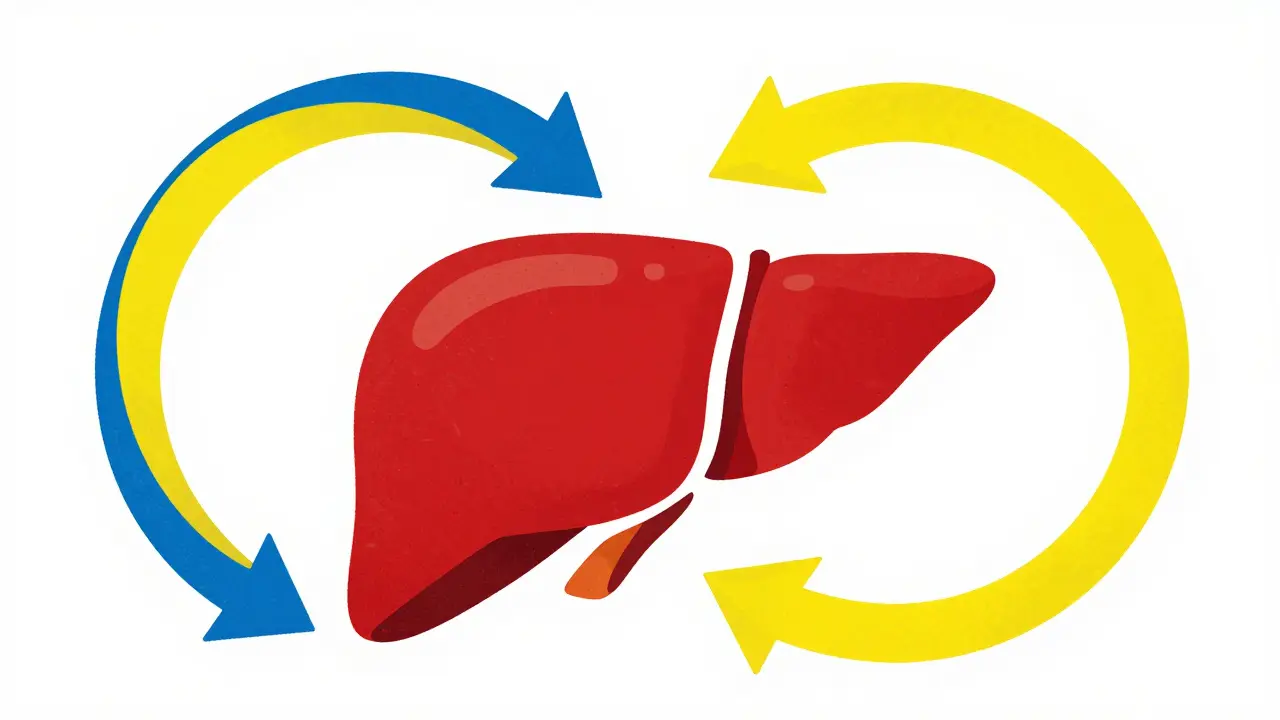
You might wonder why a blood fat like triglycerides is linked to blood sugar. It all happens in the liver. When your body is resistant to insulin, the liver doesn't get the signal to stop producing glucose. At the same time, it starts churning out more free fatty acids.
The liver packages these fats into VLDL is Very-Low-Density Lipoprotein, a type of "bad" cholesterol that carries triglycerides through the blood. This causes your triglycerides to spike. Here is the kicker: these high fats can actually leak back into the muscle and liver, creating "lipotoxicity," which makes your insulin resistance even worse. It's a vicious cycle where high sugar leads to high fats, and high fats keep the sugar high.
The Real-World Risks: What Happens if It's Ignored?
Ignoring these numbers is like ignoring a check-engine light in your car. You can keep driving for a while, but the damage is happening under the hood. People with metabolic syndrome face a 5-fold increase in the risk of developing Type 2 Diabetes is a chronic condition affecting how the body processes blood glucose. Beyond diabetes, the risk of cardiovascular disease jumps significantly. In fact, every 4-inch increase in your waist circumference is linked to a 10% higher risk of coronary heart disease.
If your triglycerides climb above 200 mg/dL, you aren't just dealing with "metabolic syndrome" anymore-you're in a high-risk zone for atherosclerotic cardiovascular disease, regardless of what your other cholesterol levels look like. Your arteries effectively become more prone to clogging because the balance of fats in your blood is completely skewed.
Taking Control: How to Reverse the Cycle
The good news is that metabolic syndrome isn't a life sentence. Because it's driven by lifestyle and biology, you can push it back. The most effective weapon? Weight loss. Even a modest 5-10% reduction in body weight can flip the switch on insulin sensitivity and lower your blood pressure.
Here is a practical approach to managing the triad of waist, fats, and sugar:
- Movement: Aim for 150 to 300 minutes of moderate activity per week. Whether it's brisk walking in the park or swimming, the goal is to make your muscles "hungry" for glucose, which lowers your blood sugar naturally.
- The Plate: Shift toward a Mediterranean-style diet. Focus on healthy fats like olive oil and nuts, and cut back on refined sugars. The PREDIMED trial showed that this way of eating can reduce major cardiovascular events by 30%.
- Sugar Limits: Keep added sugars to less than 10% of your daily calories. Sugary drinks are a primary driver of triglyceride production in the liver.
- Alcohol: Moderation is key. Limit yourself to one drink a day for women and two for men, as alcohol can spike triglyceride levels rapidly.
If lifestyle changes aren't enough, doctors might suggest medications. Metformin is a medication used to lower blood glucose levels by improving insulin sensitivity. Other options include fibrates for triglycerides or ACE inhibitors for blood pressure. However, these are supports-the heavy lifting still happens through diet and exercise.

Looking Ahead: The Future of Metabolic Health
Science is moving beyond just measuring waistlines. Researchers are now looking at the "TyG index" (a calculation combining triglycerides and glucose) to get a more accurate picture of insulin resistance. There is also fascinating work on the gut microbiome-the bacteria in your belly-and how they might be manipulated to help regulate metabolism.
We are also seeing a shift toward personalized medicine. For instance, we now know that South Asian populations develop these complications at much lower BMI thresholds than Caucasians. This means a "one size fits all" waist measurement doesn't work. Future care will likely involve continuous glucose monitors (CGMs) to track how your body reacts to specific foods in real-time, allowing you to tweak your diet with precision.
Can I reverse metabolic syndrome?
Yes, in many cases it can be reversed or significantly managed. Losing 5-10% of your body weight and increasing physical activity can improve insulin sensitivity, lower triglycerides, and reduce blood pressure, potentially moving you back below the diagnostic thresholds.
Why is waist size more important than overall weight?
Not all fat is created equal. Subcutaneous fat (under the skin) is less harmful than visceral fat (around the organs). Visceral fat acts like an endocrine organ, secreting chemicals that cause inflammation and insulin resistance, making it a much more accurate predictor of metabolic risk than BMI alone.
What is the difference between prediabetes and metabolic syndrome?
Prediabetes refers specifically to blood glucose levels that are higher than normal but not yet high enough for a diabetes diagnosis. Metabolic syndrome is a broader cluster of conditions. You can have prediabetes without metabolic syndrome, but most people with type 2 diabetes also meet the criteria for metabolic syndrome.
How do triglycerides affect my heart?
High triglycerides contribute to the thickening of artery walls (atherosclerosis). When levels exceed 200 mg/dL, the risk of heart attack and stroke increases independently of your LDL ("bad") cholesterol levels.
Can stress cause metabolic syndrome?
While the primary drivers are diet and inactivity, chronic stress releases cortisol, which can increase abdominal fat storage and raise blood glucose levels, making it harder to manage the syndrome.
Next Steps for Your Health
If you suspect you might have metabolic syndrome, your first step is a comprehensive blood panel and a waist measurement. Don't just look at the "total cholesterol" number; ask your doctor specifically for your triglyceride and HDL levels, as well as a fasting glucose test.
If you're already diagnosed, start small. Don't try to overhaul your entire life in one day. Start by swapping one sugary drink for water and adding a 15-minute walk after dinner. These small changes help stabilize your glucose and set the stage for larger improvements in your overall metabolic health.