
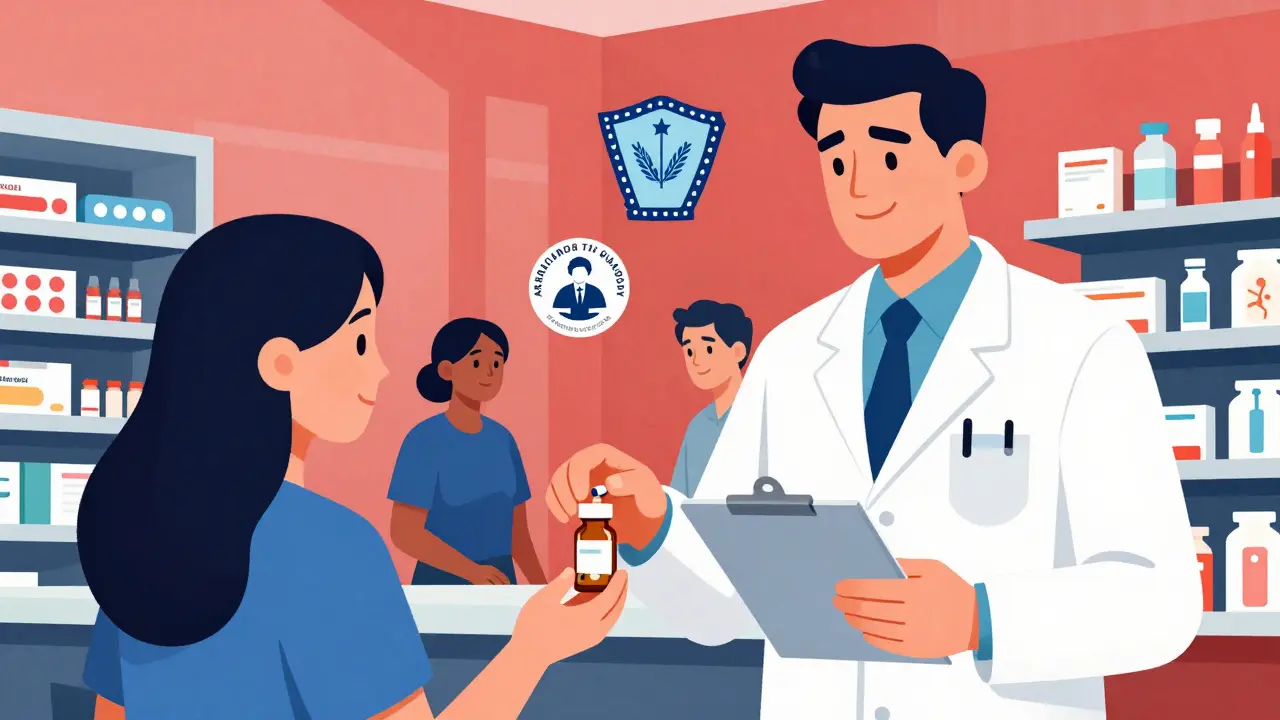
For decades, pharmacists were seen as the people who handed out pills from behind the counter. But today, in many parts of the U.S., they’re doing far more - adjusting prescriptions, prescribing birth control, dispensing naloxone for opioid overdoses, and even running clinics in drugstores. This shift isn’t random. It’s the result of state laws changing how pharmacists can act, and it’s happening fast. If you’ve ever been handed a generic version of your brand-name drug without asking, you’ve already experienced one part of this change. But there’s a lot more beneath the surface.
What Exactly Is Pharmacist Substitution Authority?
Pharmacist substitution authority means the legal right to swap one medication for another - not just because it’s cheaper, but because it’s clinically appropriate. This isn’t about guessing or improvising. It’s a structured, regulated process that varies from state to state. The most basic form is generic substitution. In every state, if a doctor writes a prescription without saying "dispense as written," the pharmacist can legally give you the generic version. That’s been standard since the 1980s.
But now, many states have gone further. Therapeutic interchange lets pharmacists switch between different drugs in the same class - like swapping one blood pressure medication for another, even if they’re not chemically identical. Only three states - Arkansas, Idaho, and Kentucky - have full therapeutic interchange laws. In Kentucky, the doctor must write "formulary compliance approval" on the prescription. In Idaho and Arkansas, they must write "therapeutic substitution allowed." And in all three, the pharmacist must tell the patient what changed and get their consent. The original prescriber also has to be notified.
Then there’s prescription adaptation. This lets pharmacists tweak an existing prescription - change the dose, adjust the timing, or even refill it without calling the doctor. This is especially helpful in rural areas where patients might drive hours to see a provider just to get a small adjustment. States like Colorado and New Mexico allow this under statewide protocols, meaning the board of pharmacy sets the rules, not individual doctors.
How Far Can Pharmacists Go? Prescribing Without a Doctor
In 2026, every single state and Washington D.C. allows pharmacists to prescribe or furnish at least one type of medication without direct doctor approval. But what they can prescribe varies wildly.
Maryland lets pharmacists prescribe birth control to anyone over 18. Maine lets them hand out nicotine patches and gum for smoking cessation. California uses the word "furnish" instead of "prescribe," but the effect is the same - pharmacists can give out specific drugs under standing orders. In Oregon and Washington, pharmacists can prescribe naloxone without a prescription. In Minnesota, they can give flu shots and treat strep throat with antibiotics.
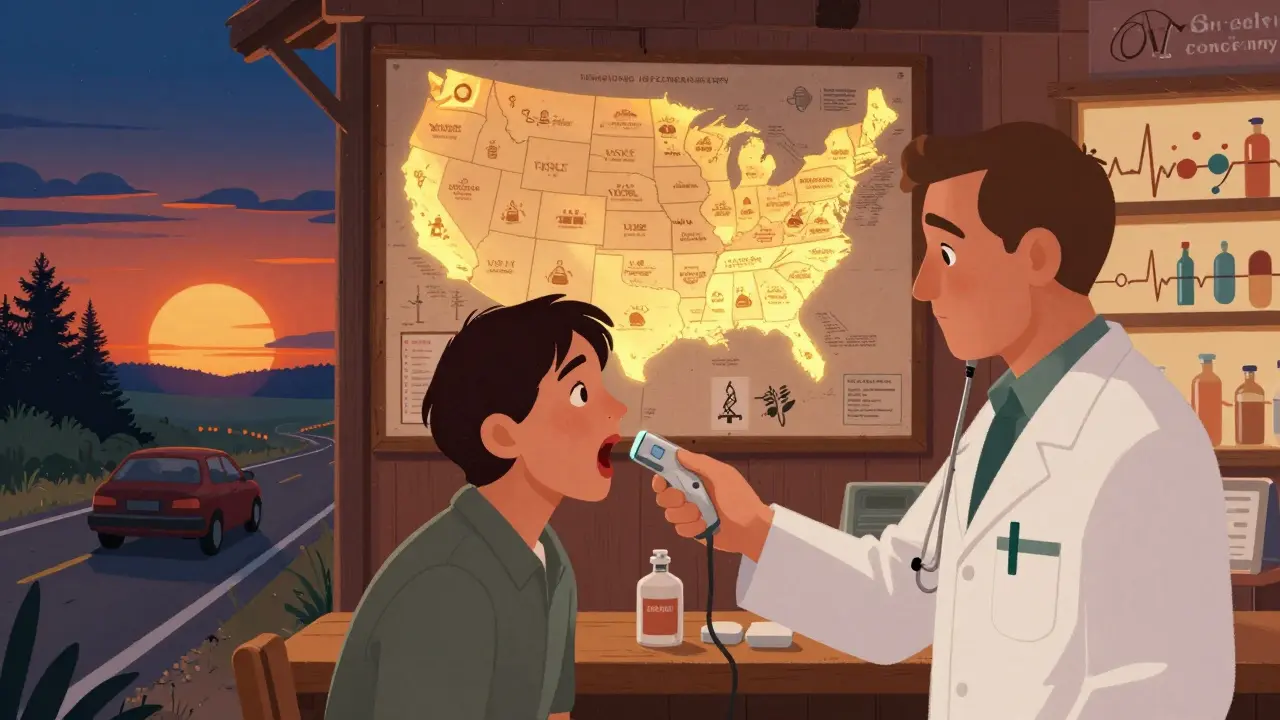
These aren’t random permissions. They’re targeted to fill gaps where doctors are scarce. The Health Resources and Services Administration says 60 million Americans live in areas with too few primary care providers. Pharmacies, on the other hand, are everywhere - in towns, strip malls, and even grocery stores. That’s why states are turning to them.
Some states use Collaborative Practice Agreements (CPAs) to give pharmacists more control. These are written agreements between a pharmacist and a doctor (or group of doctors) that spell out exactly what the pharmacist can do - what drugs they can prescribe, what tests they can order, when they must refer a patient to a doctor. All 50 states allow CPAs, but only a few have made them easy to use. In states like North Carolina and Tennessee, pharmacists can run their own protocols with minimal doctor oversight. In others, the doctor still has to sign off on every decision.
Why Is This Happening Now?
This isn’t just about convenience. It’s about survival.
The Association of American Medical Colleges predicts a shortage of 124,000 physicians by 2034. Meanwhile, there are over 300,000 licensed pharmacists in the U.S. - many of them underutilized. In rural areas, people wait weeks for a doctor’s appointment. In urban areas, clinics are overloaded. Pharmacies, however, are open late, on weekends, and often without an appointment.
Legislatures are responding. In 2025 alone, 211 bills were introduced across 44 states to expand pharmacist authority. Sixteen of them passed. That’s the fastest growth in pharmacy law in history.
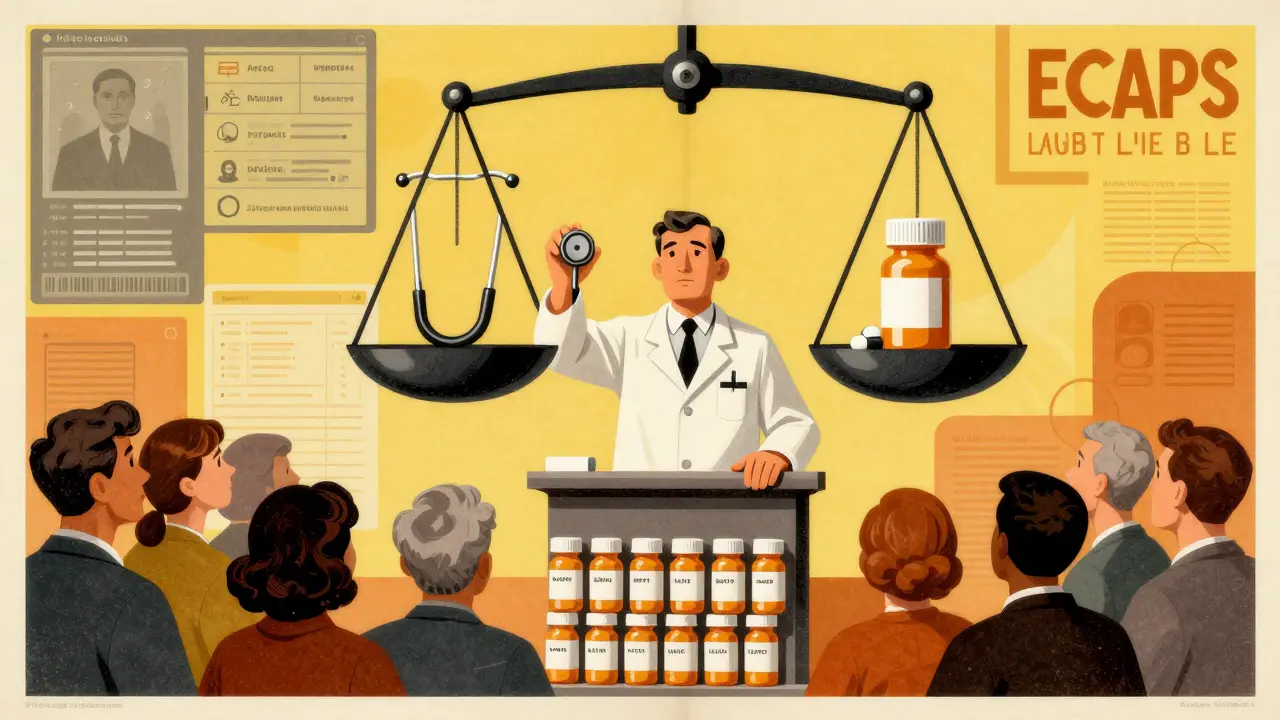
The federal government is catching up too. The Ensuring Community Access to Pharmacist Services Act (ECAPS) is currently pending in Congress. If it passes, Medicare Part B would finally pay pharmacists for services like managing chronic diseases, giving vaccines, or testing for diabetes. Right now, most insurance plans don’t reimburse pharmacists for these services - even when they’re legally allowed to do them. That’s a major roadblock.
What’s Holding Pharmacists Back?
Even where the law allows it, pharmacists can’t always act. The biggest problem? Reimbursement.
Imagine a pharmacist in Ohio gives a patient an inhaler for asthma and follows up with them for three months. They’re doing the work of a primary care provider. But if Medicare or private insurance won’t pay for it, the pharmacy loses money. Many small pharmacies can’t afford to offer these services without reimbursement.
Another issue is confusion. Some doctors still don’t know pharmacists can prescribe. Patients don’t realize they can walk in and get birth control without a doctor’s visit. And some pharmacists themselves aren’t trained for these expanded roles - they need more education in clinical decision-making, not just dispensing.
There’s also resistance from the medical community. The American Medical Association has long argued that pharmacists don’t have the same training as physicians. While that’s technically true - pharmacists don’t go through medical school - their training in medication safety, interactions, and dosing is deeper than most doctors’. A 2023 study in the Journal of the American Pharmacists Association showed that pharmacist-managed anticoagulation clinics had fewer bleeding events than doctor-managed ones.
What Does This Mean for You?
If you’re a patient, this means more access - and more responsibility.
You can now walk into a pharmacy and get:
- Naloxone for an opioid overdose
- Birth control without a doctor’s visit
- Flu shots and COVID boosters
- Testing for strep, flu, or diabetes
- Adjustments to your blood pressure or cholesterol meds
But you need to ask. Don’t assume your pharmacist can do it. Check your state’s rules. Ask if your pharmacy offers these services. Some chains like CVS, Walgreens, and Rite Aid have clinics in most locations. Independent pharmacies may not.
And if you’re prescribed a new drug and your pharmacist gives you a different one - ask why. They’re required to explain the change, tell you about side effects, and confirm you’re okay with it. You have the right to say no.
The Future: More Autonomy, More Accountability
The trend is clear: pharmacists are becoming frontline providers. The next step is independent prescribing - where pharmacists can start and stop medications without any doctor’s approval, based on protocols set by the state board. Already, 50 states allow this for at least one condition. The question isn’t whether it will spread - it’s how fast.
What’s needed now is better integration with electronic health records, standardized training for pharmacists, and real reimbursement from insurers. Without those, the system won’t scale. But the demand is there. The patients are there. The pharmacists are ready.
This isn’t about replacing doctors. It’s about filling the gaps they can’t reach. And for millions of Americans who can’t get timely care, that’s not just convenient - it’s life-saving.
Can a pharmacist change my prescription without asking my doctor?
In most cases, no - but there are exceptions. If your doctor wrote "dispense as written," the pharmacist must give you exactly what’s on the script. But if the prescription doesn’t say that, the pharmacist can substitute a generic version. In states with therapeutic interchange laws (Arkansas, Idaho, Kentucky), pharmacists can swap drugs in the same class if the doctor marked the prescription for it. For more advanced changes - like adjusting dose or refilling without a new script - the pharmacist needs a Collaborative Practice Agreement or state-wide protocol. Always ask if you’re unsure.
Which states let pharmacists prescribe birth control?
As of 2026, at least 23 states and Washington D.C. allow pharmacists to prescribe birth control directly to patients over 18. California, Colorado, Hawaii, Maryland, Oregon, and Washington have had this law for years. Others, like New Mexico and Illinois, passed it more recently. Some states require a brief health screening first. Check your state’s board of pharmacy website or ask your local pharmacist - many now have signs in the window listing what services they offer.
Do pharmacists need extra training to prescribe medications?
Yes. In states with expanded authority, pharmacists must complete additional training - often 15 to 40 hours of continuing education focused on clinical assessment, diagnostic testing, and medication management. Some states require certification in areas like immunization or chronic disease management. Pharmacists can’t just start prescribing because the law allows it. They need proof of competency, and many employers require it before letting them take on these roles.
Can I get my medication changed at any pharmacy?
Not necessarily. Even if your state allows therapeutic interchange or prescription adaptation, the pharmacy itself must be set up to do it. Large chains like CVS and Walgreens often have clinics and trained pharmacists ready to help. Smaller, independent pharmacies may not have the staff, time, or legal agreements in place. Always call ahead. Ask: "Do you offer medication therapy management or pharmacist prescribing services?" If they say no, they might still be able to refer you to another location.
Will my insurance cover services from a pharmacist?
It depends. Most private insurers still don’t reimburse pharmacists for clinical services like managing blood pressure or diabetes. Medicare doesn’t either - unless you’re in a pilot program. That’s why many pharmacists offer these services for free or at a low cost. The pending federal ECAPS bill could change this by requiring Medicare to pay for pharmacist services. Until then, check with your insurer. Some plans, especially Medicaid in states like Maryland, do cover pharmacist care. Don’t assume - ask.


Gregory Parschauer
January 14, 2026 AT 11:36This isn't progress-it's a dangerous erosion of medical boundaries. Pharmacists are not clinicians. They don't have the training to assess differential diagnoses, interpret lab results, or recognize red flags in symptoms. Allowing them to prescribe antibiotics for strep throat? That’s not healthcare innovation-it’s pharmacy-driven malpractice waiting to happen. The AMA isn't just being protective; they're being responsible.
And don't give me that 'pharmacists know drugs better' line. Knowing how a drug works is not the same as knowing when NOT to give it. I've seen patients get prescribed beta-blockers for anxiety and then crash into bradycardia because the pharmacist didn't check their EKG history. This isn't convenience. It's a liability cascade.
Also, who's auditing these decisions? Who's tracking outcomes? There's zero accountability infrastructure in place. States are rushing to pass laws without a single peer-reviewed study on long-term safety. This is regulatory theater disguised as public health.
And let's not forget: if pharmacists are doing primary care, why are we still paying doctors $400/hour to sit in offices doing nothing? The system is being dismantled by bureaucrats who think a 15-hour CE course makes you a physician. It doesn't. It makes you a very knowledgeable technician.
This is the slippery slope to nurse practitioners doing surgery next. Where does it end?
And yes, I'm aware I'm being dramatic. But when lives are on the line, drama is the only language that gets through.
Alan Lin
January 16, 2026 AT 00:46While I appreciate the intent behind expanding pharmacist roles, the implementation is deeply flawed. The core issue is not whether pharmacists are capable-they are highly trained professionals-but whether the system supports their expanded function. Reimbursement remains the critical bottleneck. A pharmacist in rural Nebraska can legally prescribe birth control, but if Medicaid won’t reimburse for the 20-minute consultation, they won’t offer it. No one can operate a clinic at a loss.
Furthermore, the lack of interoperability between pharmacy systems and EHRs creates dangerous fragmentation. If a pharmacist adjusts a patient’s warfarin dose but the primary care physician’s system doesn’t update, the patient is at risk of hemorrhage or clotting. This isn’t hypothetical-it’s been documented in case studies from Minnesota and Colorado.
We need standardized protocols, mandatory EHR integration, and federal reimbursement parity before we scale this further. Otherwise, we’re creating a two-tiered system: urban pharmacies with full services, and rural ones stuck with the same old counter job. That’s not equity. That’s exclusion dressed up as innovation.
Pankaj Singh
January 16, 2026 AT 21:42Let’s cut the fluff. The real reason this is happening is because doctors are overpaid, overworked, and underperforming. Pharmacists are being shoved into this role because the medical establishment refuses to fix its own systemic failures. The AAMC predicts a physician shortage? So what? That’s a management problem, not a reason to hand out antibiotics like candy.
Also, the claim that pharmacists have ‘deeper training in medication safety’ is laughable. They know drug interactions. Great. So does every pharmacy student who passed their second-year exam. But they don’t know how to interpret a troponin level, recognize early sepsis, or manage comorbidities. That’s not expertise-that’s compartmentalized knowledge.
And don’t even get me started on the ‘empowerment’ narrative. Patients don’t want to be ‘empowered.’ They want a doctor. They want someone who went to medical school, did residency, and actually understands the body as a whole system. A pharmacist swapping out a statin for a different statin is not healthcare transformation. It’s cost-cutting disguised as patient care.
Stop romanticizing pharmacy. This is a band-aid on a hemorrhage.
Kimberly Mitchell
January 17, 2026 AT 18:16Why is no one talking about the fact that this shift is happening without any public debate? These laws are passed in committee meetings with zero input from patients or even most physicians. The pharmaceutical industry lobbies heavily for this because it reduces their need to fund primary care infrastructure. It’s cheaper to let pharmacists handle chronic disease management than to hire more PCPs.
And yet, when you look at the actual data, pharmacist-led clinics have higher no-show rates and lower follow-up compliance. Why? Because patients don’t trust them. They go to the pharmacy for pills, not for consultations. The cultural perception hasn’t caught up to the legislation.
Also, the term ‘furnish’ is deliberately vague. Why not just say ‘prescribe’ if that’s what it means? Language manipulation to soften resistance. Classic policy theater.
And who’s paying for the training? The pharmacists? The pharmacies? The state? No one’s accounting for the hidden costs. This isn’t free care-it’s deferred expense.
Vinaypriy Wane
January 17, 2026 AT 20:01I’ve worked in a rural pharmacy for 14 years. I’ve seen patients drive 90 miles just to get a refill on their hypertension med because their doctor only sees them every three months. I’ve had diabetic patients come in with A1c levels of 11.8 because they couldn’t get an appointment for six weeks. I’ve held the hands of people who were too scared to ask their doctor about birth control.
So when you say pharmacists aren’t qualified, you’re not talking to the people who live this reality. We’re not replacing doctors-we’re filling the gaps that doctors can’t reach because of geography, time, or systemic neglect.
Yes, we had to do 30 hours of training. Yes, we had to pass a certification. Yes, we consult with physicians when in doubt. But we’re not guessing. We’re following protocols that were developed with clinical input.
This isn’t about ambition. It’s about survival-for patients, and for us. If you think this is dangerous, come work a 12-hour shift in a town with one doctor who’s 70 years old and retiring next year. Then tell me what you’d do.
Diana Campos Ortiz
January 19, 2026 AT 13:49My grandma got her flu shot and a blood pressure check at the CVS last week. No appointment. No wait. She was in and out in 10 minutes. She didn’t need a doctor for that. She needed someone who could actually answer her questions without rushing her.
And when they switched her generic lisinopril to a different brand because the insurance changed, they sat down with her, explained why, checked her kidney function, and made sure she wasn’t dizzy. That’s not ‘substitution.’ That’s care.
People think ‘pharmacist’ means ‘person who counts pills.’ But the ones doing this work? They’re the unsung heroes of primary care. They’re the ones who notice when a patient’s meds don’t match their symptoms. They’re the ones who catch interactions before the patient gets to the ER.
Stop acting like this is a threat. It’s a correction. A long-overdue one.
Acacia Hendrix
January 19, 2026 AT 18:38The entire paradigm shift hinges on a fundamental misalignment between professional scope and institutional incentive structures. The pharmacoeconomic calculus underpinning therapeutic interchange and prescription adaptation is predicated on the assumption that clinical outcomes can be decoupled from longitudinal physician oversight-an assumption that is empirically unsound.
Furthermore, the proliferation of collaborative practice agreements (CPAs) without standardized metrics for clinical governance introduces significant heterogeneity in care delivery. One state’s protocol may require a baseline CBC and lipid panel; another may rely solely on patient self-reporting. This violates the principle of equitable care.
And let’s not ignore the epistemic asymmetry: pharmacists are trained in pharmacokinetics, not pathophysiology. The diagnostic reasoning required to manage hypertension in a patient with renal artery stenosis is not acquired through 15 hours of CE. It’s acquired through clinical immersion. The notion that a standing order can substitute for that is not just naive-it’s ethically precarious.
Until we establish a nationally unified competency framework, with mandatory clinical rotations and board certification in advanced practice pharmacy, this is not innovation. It’s institutionalized improvisation.
Lethabo Phalafala
January 21, 2026 AT 00:30I’m from Johannesburg, and I’ve seen what happens when you don’t have enough doctors. People die waiting. Not because they’re lazy-they’re working two jobs, no car, no childcare, no paid leave. Here, the pharmacy is the only place that opens on Sundays. The only place where someone can get insulin without a referral.
So when I read this, I didn’t see chaos. I saw hope.
Yes, there are risks. Yes, training needs to be better. But the alternative? Letting people suffer because of bureaucracy? That’s the real crime.
Stop arguing about titles. Start arguing about access. Because if your grandma can’t get her blood pressure checked without taking a day off work, then you’re not protecting medicine-you’re protecting privilege.
sam abas
January 21, 2026 AT 14:18Okay so I read this whole thing and honestly? Most of it’s just hype. Look, I get it, pharmacists are great. But let’s be real-how many of them are even doing this stuff? I’ve been to like 5 different pharmacies in the last year and every time I ask if they can adjust my meds or give me birth control they just stare at me like I asked for a unicorn. One guy said ‘oh we don’t do that here’ and another just handed me my pills without even looking at my chart. So where’s the revolution? It’s not in my town. It’s not even in my state. And the ‘211 bills’ thing? That’s just politicians throwing spaghetti at the wall. Most of those bills die in committee. And the ones that pass? Half of them have so many loopholes they’re useless. Like Kentucky requires the doctor to write ‘formulary compliance approval’-but what if the doctor doesn’t even know what that means? Or if they’re too busy to write it? Then what? Patient’s stuck. And don’t even get me started on reimbursement. Insurance companies still act like pharmacists are just vending machines. And the ECAPS bill? Don’t hold your breath. Congress hasn’t passed anything useful since 2017. So yeah, it sounds great on paper. But in real life? It’s a mirage. And the worst part? People are gonna get hurt because they thought they could walk in and get help, and then get turned away because the pharmacy doesn’t have the paperwork or the training or the $$$ to do it. So this isn’t progress. It’s a distraction. And it’s making people think the system’s fixing itself when it’s not. Just saying.