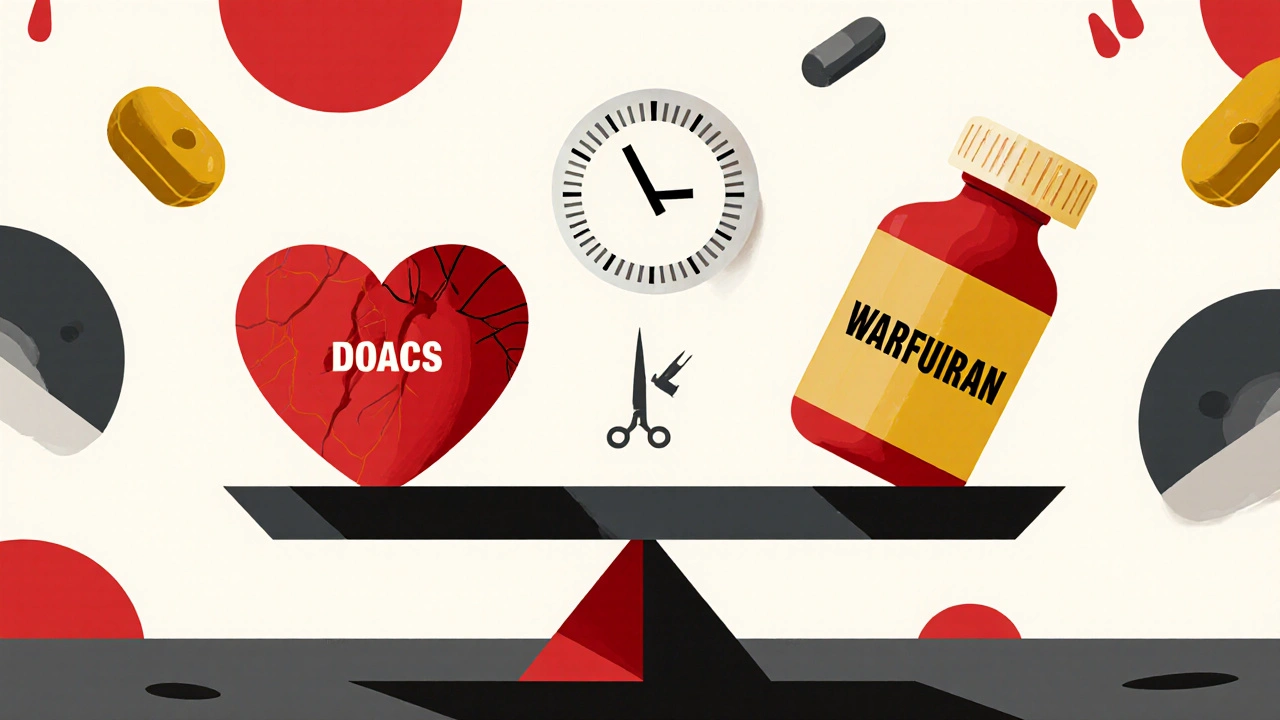
DOACs: What They Are, How They Work, and What You Need to Know
When you hear DOACs, Direct Oral Anticoagulants are a class of medications used to prevent dangerous blood clots without the need for frequent blood tests. Also known as novel oral anticoagulants, they’ve changed how millions manage conditions like atrial fibrillation and deep vein thrombosis. Unlike older drugs like warfarin, DOACs work quickly, don’t require regular INR checks, and have fewer food or drug interactions. That’s why doctors now prescribe them more often than ever.
DOACs include specific drugs like apixaban, a common choice for stroke prevention in atrial fibrillation, rivaroxaban, often used after knee or hip surgery to prevent clots, and dabigatran, targeted at reducing the risk of clot-related strokes. Each one blocks a different part of the clotting process—some stop factor Xa, others block thrombin. This precision is why they’re safer for many people, especially those who struggle with warfarin’s dietary restrictions or lab visits.
But DOACs aren’t perfect. They still carry bleeding risks, especially in older adults or those with kidney problems. And unlike warfarin, there’s no universal antidote for all of them—though specific reversal agents exist for some. If you’re on one, you need to know your kidney function, avoid certain painkillers like NSAIDs, and never stop suddenly without talking to your doctor. These drugs are powerful, and they demand respect.
What you’ll find below are real, practical guides on how DOACs fit into everyday care. You’ll see how they interact with other medications, what to do if you miss a dose, how they affect surgery plans, and why some patients do better on them than others. These aren’t theoretical articles—they’re written by people who’ve lived with these drugs, managed side effects, or helped patients navigate the confusion around switching from warfarin. Whether you’re just starting on a DOAC or have been on one for years, there’s something here that will help you take control.