
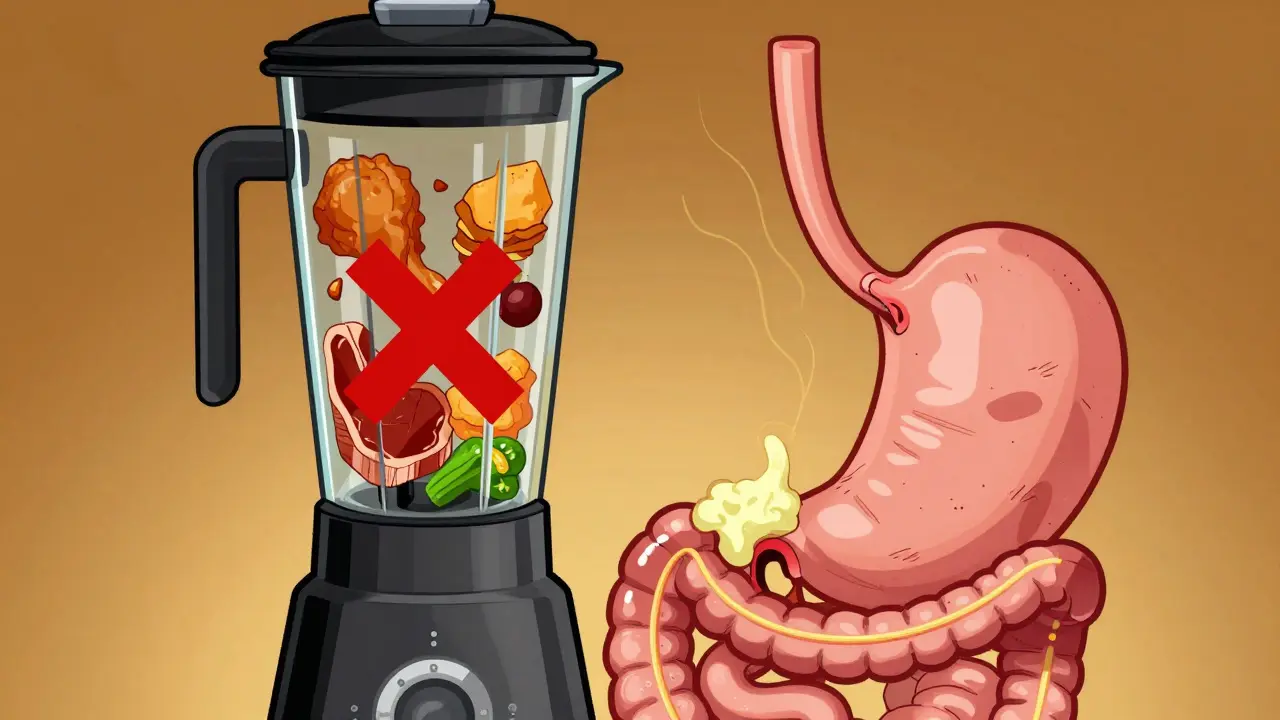
When your stomach refuses to empty, even when you’ve eaten a simple meal, life changes fast. You feel full after just a few bites. Nausea hits without warning. Vomiting becomes part of your routine. This isn’t just indigestion - it’s gastroparesis, a condition where the stomach takes too long to move food into the small intestine. No blockage. No infection. Just broken signals between your brain and stomach muscles. And for millions of people, especially those with diabetes or nerve damage, it’s a daily battle.
What Exactly Is Gastroparesis?
Gastroparesis means "delayed gastric emptying." Your stomach doesn’t work like it should. Normally, after you eat, the stomach relaxes to hold food, then contracts in waves to grind it into a thin slurry. That slurry slowly moves into the small intestine. In gastroparesis, those contractions are weak or absent. Food sits. It ferments. It forms hard lumps called bezoars. And you suffer.
The root cause? Usually nerve damage - especially to the vagus nerve. This nerve tells your stomach when to contract. Diabetes is the biggest offender. Up to 50% of people with type 1 diabetes and 30% with type 2 eventually develop it. Surgery, autoimmune diseases like scleroderma, and even viral infections can trigger it too. But here’s the twist: about 30% of cases have no clear cause at all. These are called idiopathic gastroparesis.
It’s not rare. The American College of Gastroenterology says about 4% of the population has it. And women are four times more likely to get it than men. If you’ve been told your symptoms are "just stress" or "anxiety," but they’ve lasted three months or longer - get tested.
How Do You Know You Have It?
The symptoms are unmistakable if you’ve lived them:
- Nausea (90% of patients)
- Vomiting undigested food (75-80%)
- Early fullness - you can’t finish a normal meal (85%)
- Long-lasting bloating after eating (70%)
- Abdominal pain (65%)
- Bloating and belching
- Heartburn
Doctors don’t diagnose this based on symptoms alone. They need proof the stomach is delayed. The gold standard test is gastric emptying scintigraphy. You eat a meal with a tiny bit of radioactive material. Then, cameras track how fast it leaves your stomach. If less than 40% is gone after two hours, you have gastroparesis. Some clinics use breath tests or wireless motility capsules now too.
But here’s the catch: symptoms overlap with other conditions. Functional dyspepsia, stomach ulcers, even bowel obstruction can mimic it. That’s why ruling out mechanical blockages is critical. An endoscopy or CT scan often comes first.
Why Diet Is the First Line of Defense
There’s no cure for gastroparesis. But here’s the good news: diet alone helps 65% of patients significantly. You don’t need fancy pills or surgery right away. You need to relearn how to eat.
Think of your stomach like a blender that’s broken. It can’t grind food anymore. So you have to give it food that’s already soft. That means:
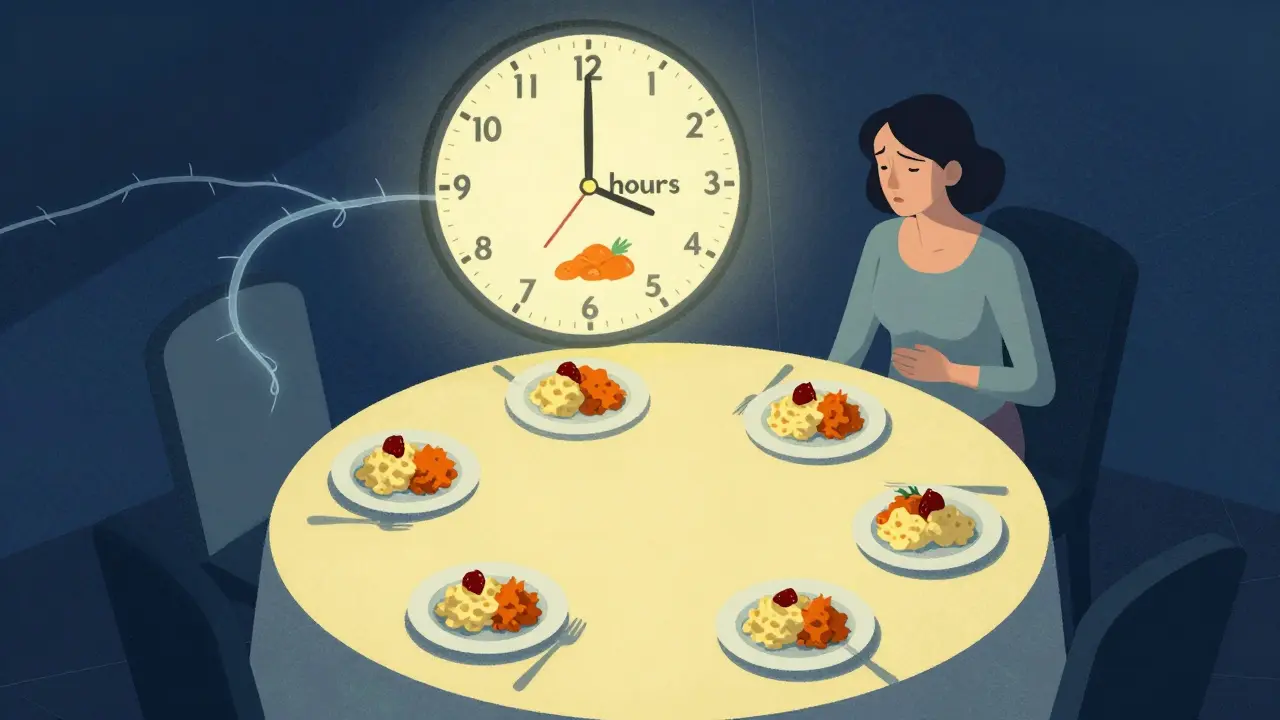
- Small meals - 5 to 6 per day
- Portion size: 1 to 1.5 cups max
- Calories per meal: 300-600
- Fat under 3 grams per meal
- Fiber under 15 grams per meal
Why these numbers? Fat slows emptying by 30-50%. Fiber from raw veggies, whole grains, or nuts builds up like a clog. Carbonated drinks puff up your stomach by 25%, making bloating worse. Even liquids and solids together increase stomach volume by 40%. That’s why you should wait 30 minutes between drinking and eating.
Blending your food isn’t optional - it’s essential. Mayo Clinic found that 70% of patients improved when food was blended to a smooth consistency, with particle size under 2mm. Think soups, smoothies, mashed potatoes, applesauce, well-cooked carrots. No chunks. No skins. No seeds.
What to Eat - And What to Avoid
Here’s a real-world guide:
Good Choices
- Lean proteins: skinless chicken, turkey, fish, tofu, eggs
- Cooked vegetables: carrots, zucchini, squash, spinach (blended or mashed)
- Fruits: bananas, applesauce, melon, canned peaches (no skins or seeds)
- Grains: white rice, refined pasta, oatmeal (not steel-cut)
- Liquids: water, clear broths, electrolyte drinks
Strictly Avoid
- Fried or fatty foods: pizza, fries, butter, cream, cheese
- Raw vegetables: salads, broccoli, celery, onions
- High-fiber fruits: apples with skin, berries, pears, oranges
- Whole grains: brown rice, quinoa, bran cereals
- Tough meats: steak, pork chops, sausages
- Carbonated drinks: soda, sparkling water, beer
- Alcohol and caffeine
And here’s a tip many miss: chew every bite 20-30 times. That reduces particle size before it even hits your stomach. It’s like pre-blending with your teeth.
When Diet Isn’t Enough
Some people still struggle. That’s when meds or procedures come in.
Metoclopramide is the most common prokinetic drug. It boosts stomach contractions by 20-25%. But it comes with a serious warning: long-term use can cause irreversible movement disorders. Doctors use it cautiously, often for short bursts.
Another option: gastric electrical stimulation (GES). It’s like a pacemaker for your stomach. Electrodes send mild pulses to trigger contractions. The FDA approved it in 2000. Studies show 70% of patients get relief - especially those who didn’t respond to meds. About 45% cut vomiting by more than half.
Newer treatments are on the horizon. Per-oral pyloromyotomy (POP) is a minimally invasive procedure that cuts the muscle at the bottom of the stomach. It reduces resistance by 80% and works in 60-70% of cases. Relamorelin, a new drug that mimics the hunger hormone ghrelin, showed 35% improvement in emptying in recent trials. And AI is being tested to read scintigraphy scans faster and more accurately.
Complications You Can’t Ignore
If left unchecked, gastroparesis doesn’t just make you feel bad - it can kill you.
- Bezoars: hard food masses that block the stomach. 6% of patients get them. Some need surgery.
- Dehydration: from constant vomiting. 25% of moderate-severe cases end up in the hospital for fluids.
- Malnutrition: 30-40% of chronic patients lose weight. 20% lose over 10% of their body weight.
- Blood sugar chaos: in diabetics, delayed food absorption causes wild glucose swings. 85% struggle with control.
- Hospitalizations: severe cases average 3.5 hospital visits per year, each lasting over 5 days.
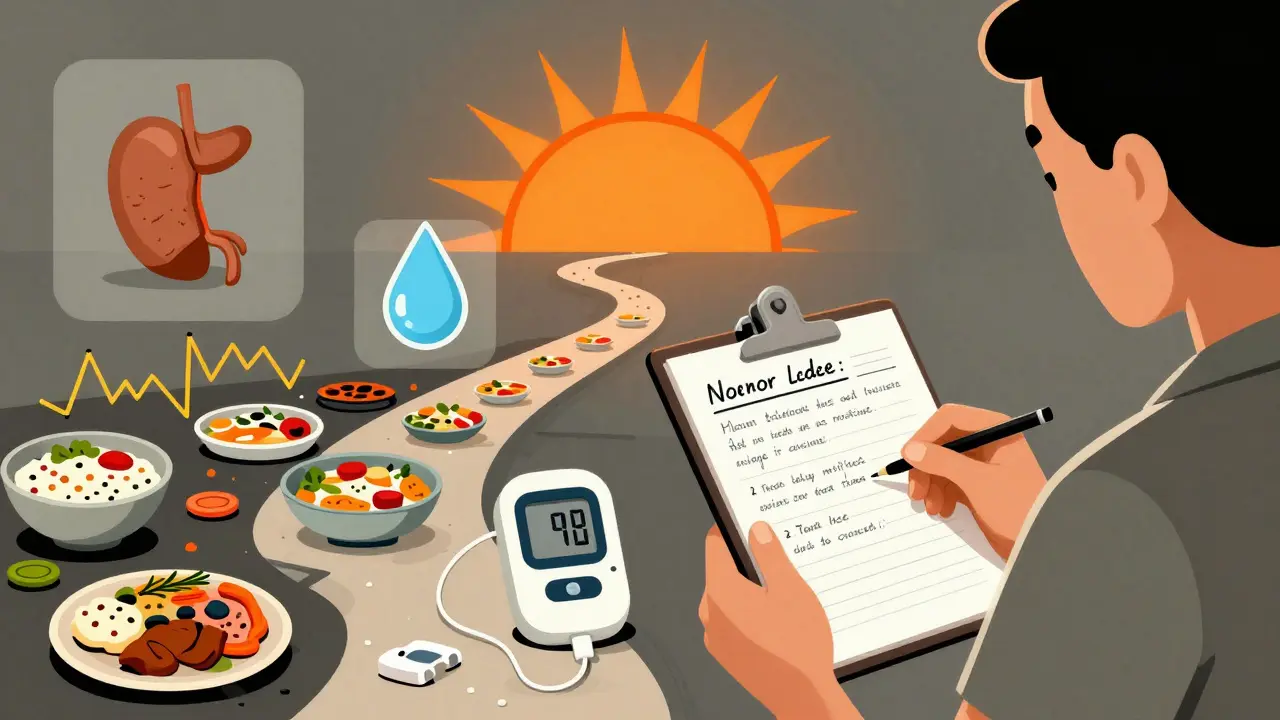
That’s why tracking your symptoms matters. Keep a food and symptom diary. Note what you ate, when, and how you felt. Cleveland Clinic found that 80% of patients discover their personal triggers this way. Maybe it’s almond milk. Or mashed potatoes with butter. Or eating too fast. You won’t know unless you write it down.
The Real-Life Impact
This isn’t just a physical illness. It’s a life-altering one.
75% of patients say gastroparesis limits daily activities. 40% can’t hold a full-time job. 65% feel anxious about eating. 50% avoid social events because they don’t know when they’ll feel sick. Some develop feeding aversion - they dread meals so much they skip them.
But here’s hope: those who stick with the diet see results. UCLA found 60% cut symptoms by over half within 8-12 weeks. Working with a registered dietitian who specializes in gastroparesis improves outcomes by 40%. Don’t try to do this alone. Find someone who’s done this before.
What’s Next?
Research is moving fast. Scientists are studying the gut microbiome - early trials show certain probiotics can reduce symptoms by 30%. Genetic testing might soon predict who responds best to which drug. Stem cell therapies are being tested to repair damaged nerves. And by 2030, experts predict 5 million Americans will have gastroparesis - mostly because diabetes rates keep rising.
The message is clear: you can’t out-eat this. But you can out-strategize it. Start with small meals. Blend your food. Cut fat and fiber. Drink water between meals. Track your triggers. Work with a dietitian. And don’t wait until you’re hospitalized to act. The sooner you change how you eat, the sooner you’ll get your life back.
Can gastroparesis go away on its own?
No, gastroparesis is a chronic condition. While symptoms can improve with treatment - especially diet and lifestyle changes - the underlying nerve or muscle dysfunction doesn’t reverse itself. Some people with mild, temporary cases (like after surgery or infection) may see improvement over time, but most require ongoing management. The goal isn’t cure - it’s control.
Is a liquid diet the best option for gastroparesis?
Liquid meals can help in the short term, especially if vomiting or severe nausea is present. But long-term, a pure liquid diet doesn’t provide enough nutrients. The best approach is a progression: start with liquids if needed, then move to blended soft foods, and finally to small, well-prepared solid meals. The key is texture - not just consistency. Foods should be blended to under 2mm particle size, not just poured.
Why can’t I eat raw vegetables with gastroparesis?
Raw vegetables contain tough cellulose fibers that your stomach can’t break down. These fibers don’t dissolve - they pile up in the stomach, forming blockages or bezoars. Even small amounts can trigger bloating and vomiting. Cooking and blending vegetables breaks down those fibers, making them digestible. Think of it like this: your stomach has lost its blender. You have to pre-blend everything for it.
Does drinking water help or hurt with gastroparesis?
It depends on how you drink it. Drinking large amounts of water with meals increases stomach volume by 35%, worsening bloating and slowing emptying. The right way: sip 1-2 ounces (30-60ml) of water every 15 minutes throughout the day. That’s about 4-6 small sips at a time. This keeps you hydrated without overloading your stomach. Avoid gulping.
Can I still enjoy meals out with gastroparesis?
Yes - but you need to plan. Call ahead and ask for modifications: no oils, no sauces, no raw veggies, no whole grains. Request mashed potatoes instead of fries, grilled chicken instead of steak, and applesauce instead of fruit salad. Many restaurants are willing to accommodate if you explain you have a medical condition. Bring your own snacks if needed. Eating out doesn’t have to be off-limits - just more intentional.
What’s the biggest mistake people make with gastroparesis diets?
Trying to eat "normal" meals just in smaller portions. That doesn’t work. The problem isn’t volume - it’s texture and composition. Eating a small steak or a half-sandwich still overwhelms the stomach. The biggest mistake is ignoring particle size. You need food that’s soft, blended, low-fat, and low-fiber - not just reduced in quantity.
Anil bhardwaj
February 25, 2026 AT 14:48Been dealing with this for years. The diet stuff? Spot on. Blending everything was a game-changer. I used to think I just needed to eat less, but nope - it’s all about texture. Now I make smoothies with cooked carrots, banana, and egg whites. No chunks. No regrets. Life’s still weird, but at least I’m not vomiting every meal.
lela izzani
February 26, 2026 AT 07:25As a dietitian who works with GI patients, I can’t stress enough how underappreciated the 2mm particle size rule is. Most people think "soft food" means mashed potatoes - but if there’s even a skin left, it’s a problem. I’ve had patients improve within weeks just by blending longer and straining through cheesecloth. It’s tedious, but it works.
Joanna Reyes
February 27, 2026 AT 03:00I’ve been in this for 8 years. I tried everything - meds, GES, even the pyloromyotomy. What actually saved me? The timing. Not just what I eat, but *when*. I learned that drinking water 30 minutes *before* eating made a bigger difference than any drug. And chewing each bite 30 times? Sounds ridiculous until you realize your teeth are doing the blender’s job. My stomach still hates me, but now it’s more like a grumpy roommate than a hostile enemy. Also, avoid almond milk. It’s sneaky. High in fiber. I didn’t know until I got a bezoar. Don’t be me.
Nerina Devi
February 28, 2026 AT 11:32This post brought me to tears. I’m from India, and we eat dal, rice, and curry every day. I used to think my symptoms were just "Indian food being too heavy." Then I realized it was the lentils, the skins on the tomatoes, the raw onions in chutney. I started blending my dal with a hand blender, removing all skins, cooking everything until it’s mush. My mom still thinks I’m crazy. But I’m alive. And I’m eating. That’s victory.
Dinesh Dawn
February 28, 2026 AT 21:19Yeah, I get it. Blending food sounds wild. But I did it for 6 months and now I can actually enjoy dinner without feeling like I’m about to explode. My wife makes these smooth soups with chicken, sweet potato, and a splash of coconut milk. Tastes like comfort food. I didn’t think I’d ever eat again without fear. Thank you for this.
Vanessa Drummond
March 2, 2026 AT 00:07Ugh, I hate how everyone treats this like it’s just a diet thing. People think if you just "try harder," you’ll get better. I’ve had three ER visits. I’ve lost 20 pounds. And now I’m supposed to chew every bite 30 times? Like I’m a toddler? Some of us have jobs, kids, lives. This isn’t a wellness blog. It’s a fucking prison.
Nick Hamby
March 3, 2026 AT 16:30There’s a profound philosophical dimension here that often goes unexamined: gastroparesis forces us to confront the illusion of control over our own bodies. We assume digestion is automatic, invisible, reliable - like breathing. But when the vagus nerve fails, the body reveals its fragility. The dietary regimen isn’t just medical - it’s a ritual of surrender and precision. Each blended meal becomes a meditation on impermanence. And yet, in that surrender, we find agency. We become architects of our survival, one 2mm particle at a time.
Gwen Vincent
March 4, 2026 AT 02:53Just wanted to say thank you for writing this. I was diagnosed last year and felt so alone. I’ve been too embarrassed to talk about vomiting at work or skipping birthdays because I’m too nauseous. This gave me a roadmap. I’m trying the blending now. It’s weird, but I’m trying.
tia novialiswati
March 4, 2026 AT 07:32YES! I started blending my food and it changed everything. I even make smoothie bowls with cooked spinach, banana, and whey protein. Tastes like dessert. My kids think I’m weird, but I’m alive and not in the hospital. You got this 💪
Christopher Brown
March 4, 2026 AT 21:51Blending food? That’s a socialist solution. Real Americans eat steak. If your stomach can’t handle it, maybe you’re just weak.
Sanjaykumar Rabari
March 6, 2026 AT 13:13They say it's the vaccines. I know a guy who got gastroparesis after the shot. Now they're hiding the truth. They don't want you to know it's the 5G towers and the food additives. Eat only rice and water. That's what my cousin did. He's fine now. They don't want you to know.