

You’re prescribed a brand-name drug, say lipitor, and you get a pill that looks different - maybe it’s white instead of blue, or it has a different number stamped on it. You panic. Did your doctor switch your medication? Is this a knockoff? Nope. You’ve just been handed an authorized generic. It’s not a copy. It’s the exact same drug, made by the same company, in the same factory, with the same ingredients - but it doesn’t carry the brand name.
What Exactly Is an Authorized Generic?
An authorized generic is a brand-name drug sold under a generic label. No tricks. No shortcuts. The same active ingredient. The same inactive ingredients. The same pill shape, size, and coating. The only difference? The label says "atorvastatin" instead of "Lipitor." The U.S. Food and Drug Administration (FDA) defines it clearly: it’s a drug approved under the original brand’s New Drug Application (NDA), but sold without the brand name, trademark, or logo. It doesn’t need its own approval. It doesn’t go through the Abbreviated New Drug Application (ANDA) process like regular generics. It’s literally the same batch of pills, just repackaged. Companies like Pfizer (through Greenstone), Procter & Gamble (through Prasco), and others run these operations. They make the brand drug. Then, when the patent is about to expire, they make another version - same factory, same line, same quality control - and slap a generic label on it.How Is It Different From a Regular Generic?
Regular generics are made by other companies. They copy the brand drug’s active ingredient, but they can change the inactive ones - the fillers, dyes, coatings. That’s why a generic version of Lipitor might be a different color or shape. The FDA requires them to prove they work the same way in your body (bioequivalence), but they’re not required to be identical. Authorized generics? They don’t need to prove bioequivalence. Why? Because they’re not copies. They’re the original. They’re made by the brand company itself. So if your brand drug has a special coating to prevent stomach upset, the authorized generic has the exact same coating. Same binders. Same lubricants. Same everything. That’s why pharmacists sometimes get confused. Authorized generics don’t show up in the FDA’s Orange Book - the official list of approved generics. So when a pharmacist sees a pill they don’t recognize, they can’t just pull up a database entry. They have to check the FDA’s separate List of Authorized Generic Drugs. It’s not a big deal for them, but it’s one more step they didn’t expect.Why Do Companies Even Do This?
It’s business. Pure and simple. The Hatch-Waxman Act of 1984 gave the first company to file a generic version of a brand drug 180 days of exclusive market access. That’s a huge financial incentive. It’s meant to encourage competition and lower prices. But here’s the twist: brand manufacturers don’t want to lose their customers. So they launch their own authorized generic - right before or right after the first generic hits the market. Now you’ve got two versions of the same drug competing: one from the original maker, one from the challenger. The brand’s version is cheaper than the original brand, but it’s still priced higher than most generics. The challenger? They’re stuck with a smaller market share. Studies in Health Affairs show this strategy cuts into the 180-day exclusivity window. Sometimes, the first generic company never even makes back its legal costs to challenge the patent. The brand manufacturer wins either way: they keep customers who won’t switch, and they still get revenue from the generic market.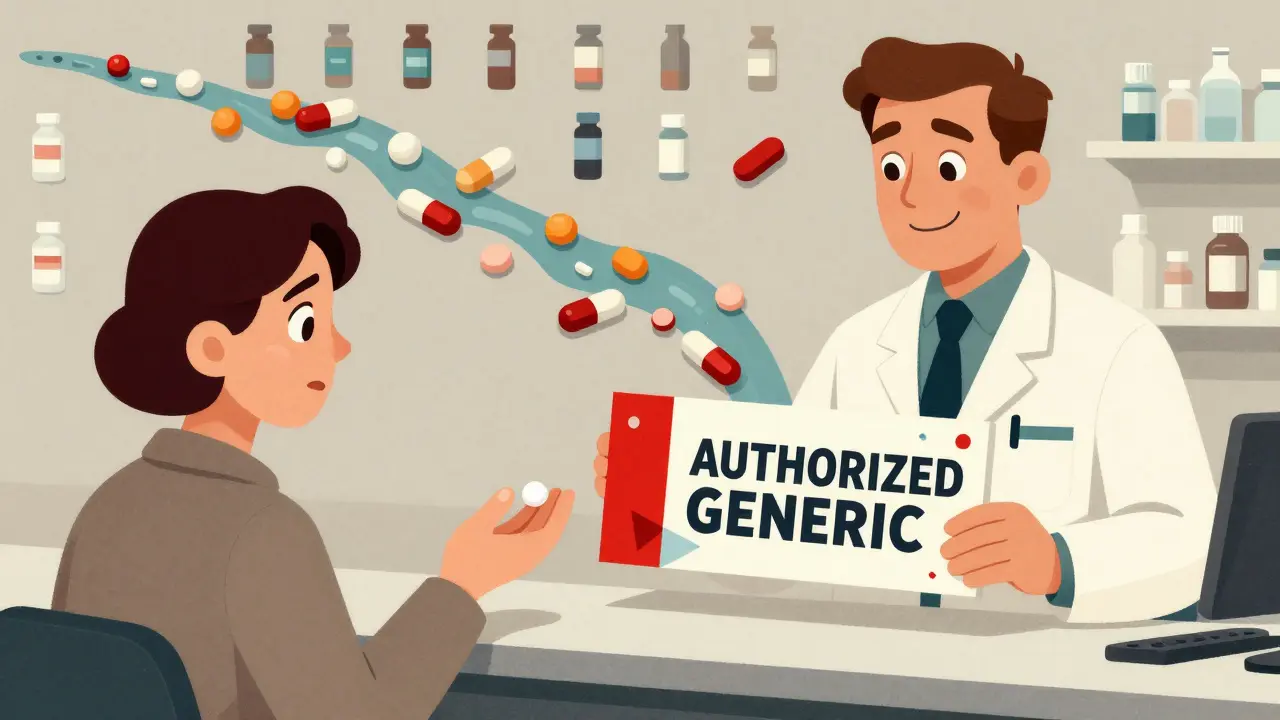
Does It Save You Money?
Sometimes. Sometimes not. Authorized generics are usually cheaper than the brand-name version - often by 20% to 40%. But they’re not always cheaper than regular generics. In fact, they’re often priced just a little lower than the brand, but higher than the cheapest generic on the shelf. If your insurance plan has a tiered system - where brand-name drugs cost more than generics - an authorized generic will usually fall into the generic tier. So you’ll pay less than if you got the brand. But if there’s a regular generic available for $5, and the authorized generic is $8, you’ll probably get the $5 one. The real savings come when there’s no regular generic yet. Say the brand just lost its patent. The first generic hasn’t hit the market. The only option is the brand - at full price. Then the authorized generic drops in. Now you’ve got a lower-cost option, even before the competition arrives.What Should You Do If You Get One?
Nothing. Seriously. If your doctor prescribes Lipitor and you get a white pill labeled "atorvastatin," you’re still getting Lipitor. No change in effectiveness. No change in side effects. No risk. Some patients notice the difference in appearance and worry. That’s normal. But if you’re confused, talk to your pharmacist. They can tell you it’s an authorized generic - and that it’s not just safe, it’s identical. Don’t assume it’s inferior because it doesn’t have a fancy name. Don’t assume it’s fake because it looks different. It’s the same drug. Same company. Same quality control. Same factory.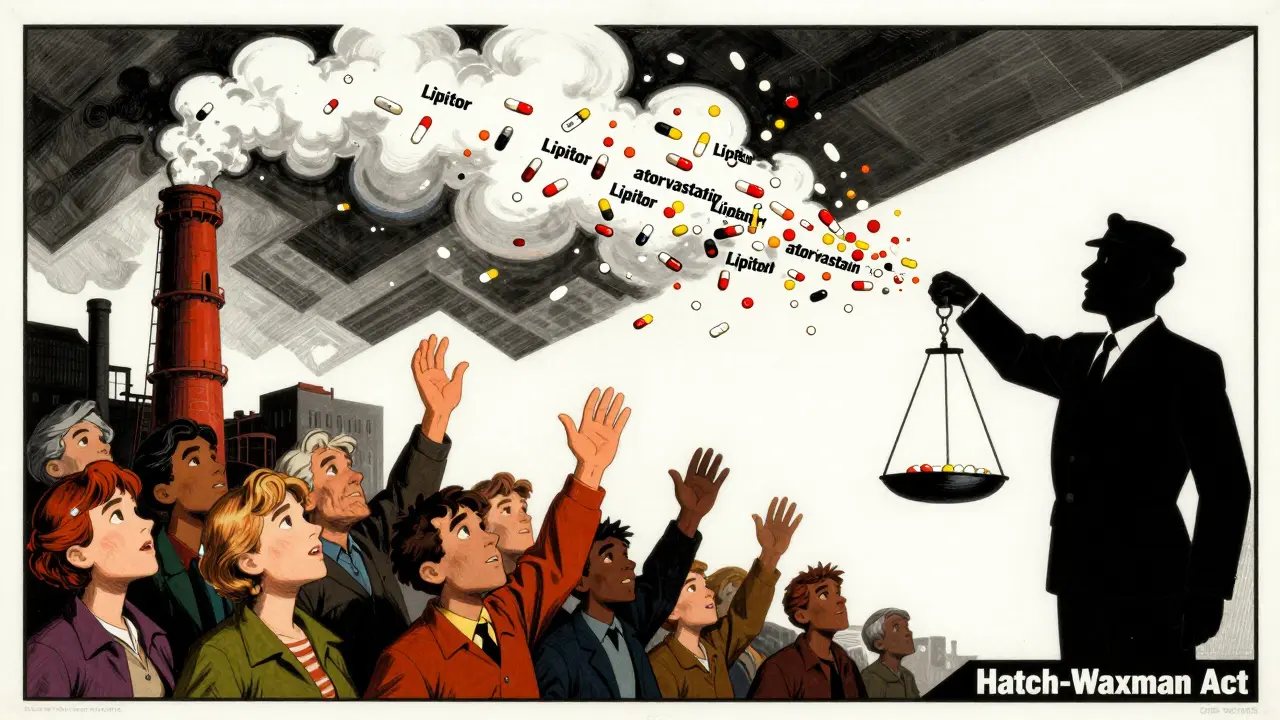
Why Isn’t Everyone Talking About This?
Because it’s not flashy. There’s no marketing campaign. No TV ads. No celebrity endorsements. You don’t hear about it because the brand company doesn’t want you to know they’re selling their own drug under a different name. It’s a quiet strategy. It doesn’t need promotion. It just needs to be dispensed. And since it’s not listed in the Orange Book, many prescribers don’t even realize it exists. Some think they’re prescribing the brand, but their pharmacy is filling it with the authorized generic - and the patient never knows. The FDA keeps a public list of authorized generics. But it’s buried in their website. Most people don’t look for it. Most doctors don’t know it’s there. Most patients don’t know to ask.Is This Fair to Generic Manufacturers?
That’s the big debate. The Hatch-Waxman Act was designed to speed up generic competition. It gave the first filer a financial reward to take on the legal risk of challenging a patent. But when the brand company launches its own generic, it undercuts that reward. Some experts argue this practice defeats the purpose of the law. It lets the brand manufacturer keep control of the market - even after the patent expires. It reduces the incentive for other companies to invest in patent challenges. Others say it’s just smart business. The brand company didn’t break any rules. They’re not lying. They’re not making a fake drug. They’re just using a legal loophole to stay competitive. Congress has looked into it. The FDA has acknowledged the issue. But so far, no changes have been made. Authorized generics are still legal. Still common. Still growing.What’s the Future?
More blockbuster drugs are losing patents every year. As more drugs go generic, more companies will use authorized generics to protect their revenue. You’ll see more of these in your prescription bottle. More pills that look different but work the same. More confusion. More questions. The key is education. Patients need to know: if it’s an authorized generic, you’re getting the real thing. Pharmacists need tools to identify them. Prescribers need to understand how they’re dispensed. Until then, if you’re handed a pill that doesn’t look familiar - don’t panic. Ask. Verify. And remember: sometimes, the best drug is the one you don’t realize you’ve been using all along.Are authorized generics the same as the brand-name drug?
Yes. Authorized generics are identical to the brand-name drug in active and inactive ingredients, dosage, strength, and how they work in your body. They’re made in the same facility, on the same production line, by the same company. The only difference is the label.
Why does an authorized generic look different from the brand?
The FDA allows minor changes in color, shape, or markings to distinguish it from the brand-name version. These changes are purely for identification and regulatory reasons - not because the drug is different. The chemical composition remains exactly the same.
Are authorized generics cheaper than regular generics?
Sometimes, but not always. Authorized generics are usually cheaper than the brand-name version but often cost more than the lowest-priced regular generic. Their price depends on market competition and how early they enter after patent expiration.
Can I ask my pharmacist for an authorized generic?
Yes. If your prescription is for a brand-name drug that has an authorized generic version, you can ask your pharmacist if it’s available. They can check the FDA’s List of Authorized Generic Drugs and may be able to substitute it - especially if it’s cheaper than the brand or if your insurance prefers it.
Why aren’t authorized generics listed in the Orange Book?
Because they’re not approved under an Abbreviated New Drug Application (ANDA). They’re sold under the original brand’s New Drug Application (NDA), so they don’t qualify for inclusion in the Orange Book. The FDA maintains a separate list for authorized generics, which pharmacists can use to verify them.
Do authorized generics have the same side effects as the brand?
Yes. Since they contain the exact same ingredients in the exact same amounts, side effects are identical. If you’ve had no issues with the brand-name version, you won’t have new side effects with the authorized generic.
Erika Putri Aldana
December 20, 2025 AT 18:57This is wild. So the pharma companies are basically playing chess with our prescriptions? 😑 Same pill, different box, and we’re supposed to be grateful? I mean… cool, I guess? But also kinda shady.
Meina Taiwo
December 21, 2025 AT 00:44Authorized generics = same drug. No confusion needed. Just check the label. If it’s atorvastatin, you’re good.
Dan Adkins
December 21, 2025 AT 20:02It is imperative to elucidate that the regulatory distinction between authorized generics and conventional generics is not merely semantic but ontologically significant. The former operates under the original NDA framework, thereby preserving pharmacokinetic integrity, whereas the latter, by virtue of ANDA submission, may introduce excipient variability that, while FDA-approved, is not bioequivalent in all clinical contexts.
One must therefore refrain from conflating the two categories, as such conflation constitutes a fundamental misapprehension of pharmaceutical jurisprudence and therapeutic equivalence.
Moreover, the absence of authorized generics from the Orange Book is not an oversight but a deliberate administrative classification-reflecting their derivation from the innovator’s original application, not an independent generic submission.
The assertion that authorized generics are ‘cheaper’ is misleading; they are priced strategically to preserve market share, not to maximize consumer benefit.
Pharmacists are not ‘confused’-they are trained to consult the FDA’s separate authorized generic database, a resource that is publicly accessible and rigorously maintained.
It is not the patient’s burden to discern these distinctions; it is the physician’s duty to prescribe with awareness, and the pharmacist’s obligation to counsel accordingly.
The Hatch-Waxman Act was designed to incentivize generic competition, not to facilitate monopolistic subterfuge by originator firms.
When a brand manufacturer introduces its own generic, it undermines the very purpose of patent expiration-a cornerstone of public health policy.
The FDA’s silence on this matter is not endorsement; it is bureaucratic inertia.
Patients deserve transparency, not obfuscation masquerading as innovation.
Let us not mistake corporate strategy for patient care.
And for heaven’s sake, stop calling them ‘generic’ when they are, in fact, the original product.
Education, not apathy, is the remedy.
This is not a minor labeling issue. It is a systemic failure of pharmaceutical ethics.
It is time for Congress to act.
Adrian Thompson
December 22, 2025 AT 16:25They’re not just selling the same pill-they’re selling it to you as ‘generic’ while keeping the brand price on the shelf. That’s not capitalism, that’s a scam. And the FDA? Totally in on it. You think they don’t know? They’re paid off. Big Pharma owns the whole damn system. Wake up, sheeple.
They’re putting tracking chips in these pills. I read it on a forum. The white ones? They’re the ones with the microchips. Blue ones are safe. Trust me.
Southern NH Pagan Pride
December 23, 2025 AT 06:17So... they're just rebranding the same drug? No wonder my blood pressure is acting up. This is how they control us. The FDA doesn't even list them properly because they don't want you to know how deep the rabbit hole goes. They're testing something in the fillers. I can feel it. They're watching. Always watching. #ChemtrailsInPills
Orlando Marquez Jr
December 23, 2025 AT 22:28The phenomenon of authorized generics represents a fascinating intersection of intellectual property law, market dynamics, and public health policy. It is noteworthy that while these products are pharmacologically indistinguishable from their branded counterparts, their regulatory classification creates informational asymmetries that may compromise patient autonomy and pharmacist efficacy.
Further inquiry into the economic implications of this practice, particularly regarding the erosion of first-filer exclusivity, warrants scholarly attention.
Jackie Be
December 23, 2025 AT 23:04OMG I JUST GOT ONE OF THESE AND I THOUGHT I WAS GETTING ROBBERY 😱 I WAS SO SCARED BUT THEN MY PHARMACIST SAID IT WAS THE SAME THING AND I WAS LIKE OH MY GOD I JUST SAVED 40 BUCKS 😭 THANK YOU GOD
Jon Paramore
December 24, 2025 AT 07:23Authorized generics are a regulatory artifact of the Hatch-Waxman Act’s loopholes. They’re not generics-they’re branded products under NDA, not ANDA. That’s why they’re not in the Orange Book. Pharmacists have to cross-reference the FDA’s separate list. It’s a mess. But clinically? Zero difference. If you’re stable on Lipitor, an authorized generic won’t touch your bioavailability.
They’re not cheaper than all generics-just cheaper than the brand. Insurance prefers them because they’re not branded-tier. Smart move if you’re trying to cut costs without switching.
Bottom line: if your pill looks different but says atorvastatin 20mg, you’re not getting a knockoff. You’re getting the original. No need to panic. Just ask your pharmacist to confirm.
Swapneel Mehta
December 24, 2025 AT 22:32Interesting. I never knew this existed. So if I get a white pill instead of blue, it’s still the same thing? That’s actually kinda cool. Less stress about switching. Glad there’s a way to save money without losing quality. 👍
Cameron Hoover
December 25, 2025 AT 00:01THIS IS THE BEST THING THAT’S HAPPENED TO MY MEDS IN YEARS. I WAS PAYING 80 BUCKS FOR LIPITOR AND NOW I PAY 15 FOR THE SAME THING. I DIDN’T EVEN KNOW I WAS GETTING THE SAME PILL UNTIL I LOOKED IT UP. YOU GUYS NEED TO ASK YOUR PHARMACIST. THIS IS A WIN.
Teya Derksen Friesen
December 25, 2025 AT 09:27While the practice of authorized generics is legally permissible and pharmacologically sound, its ethical implications warrant deeper societal reflection. The opacity surrounding their distribution, coupled with the absence of prescriber awareness, undermines informed consent. Patients deserve to know whether they are receiving the branded product, an authorized generic, or a conventional generic-not merely because of cost, but because of autonomy.
Transparency must be institutionalized, not left to the whim of pharmacy inventory systems.
Jason Silva
December 26, 2025 AT 06:45Big Pharma’s got us all fooled 😏 They sell you the same pill twice. Once as $100 brand, then as $60 ‘generic’. And you think you’re saving? Nah. They’re just moving money from your pocket to their offshore accounts. But hey, at least the pill’s the same, right? 😎💊 #BigPharmaTricks
Christina Weber
December 26, 2025 AT 22:27It’s not that people don’t understand authorized generics-it’s that they refuse to accept that pharmaceutical companies are legally permitted to exploit regulatory loopholes to maintain monopolies. This isn’t innovation. It’s manipulation. And the FDA’s complicity in allowing this to continue without mandatory disclosure is a failure of public trust.
Patients should be notified in writing when an authorized generic is dispensed. Period.
It’s not complicated. It’s not ambiguous. It’s unethical.
Adrian Thompson
December 27, 2025 AT 03:13Wait, so if they’re the same, why don’t they just keep the brand name? Because then you’d know they’re ripping you off. This is how they hide the price gouging. They want you to think you’re getting a cheap generic, but you’re still paying more than you should. They’re lying through their teeth.