
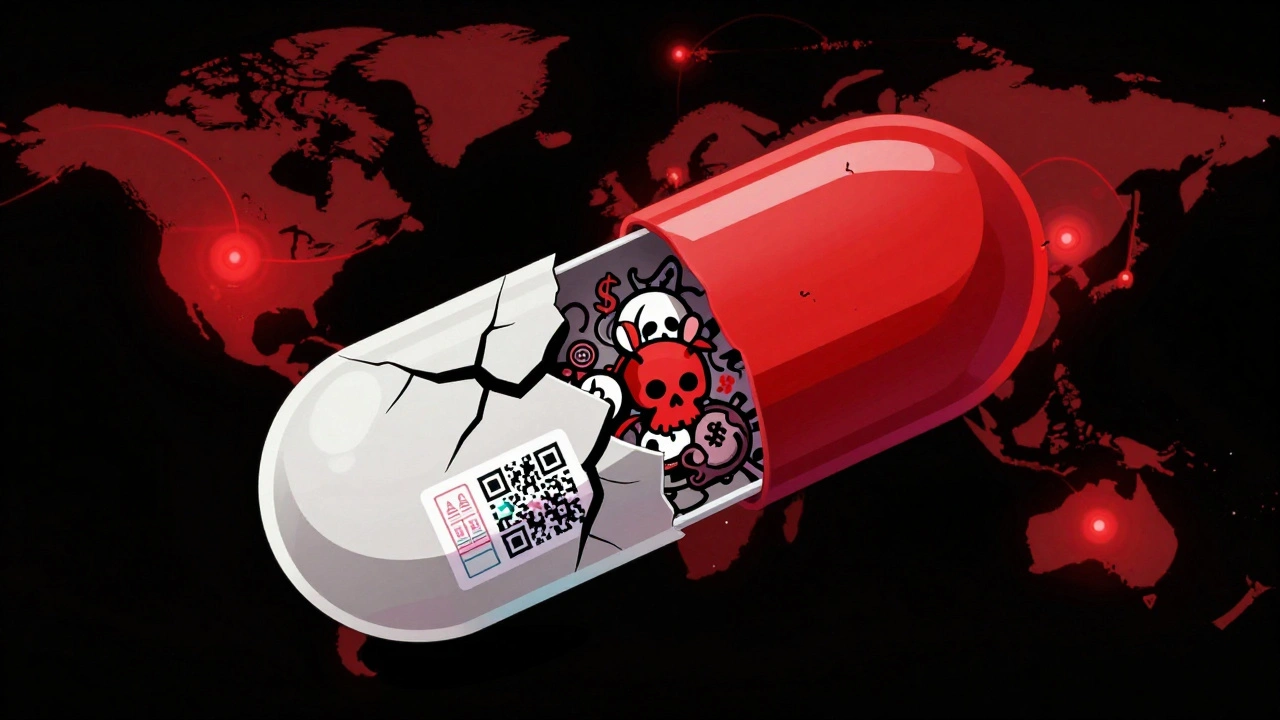
Every year, millions of people take generic drugs because they’re affordable, effective, and widely available. But what if the pill you swallowed didn’t contain the medicine it claimed to? What if it was a fake - made in a hidden lab, packed in a perfect copy of the real box, and sold through a website that looks legit? This isn’t science fiction. It’s happening right now, and the supply chain is leaking.
How Fake Drugs Are Made
Counterfeit generic drugs aren’t made in some Hollywood-style underground lab with bubbling beakers. They’re made in factories - sometimes in places with weak regulations - using cheap, often dangerous ingredients. The goal? To look exactly like the real thing and fool everyone, including pharmacists and patients.These fake pills usually have the right color, shape, and logo. Some even have the correct tablet scoring. But here’s the catch: the active ingredient? It might be missing. Or diluted. Or replaced with something toxic. In 2021, a study in the American Journal of Tropical Medicine and Hygiene found that 77% of counterfeit drugs seized in legitimate supply chains were oral tablets - especially antibiotics, heart meds, and antimalarials. One batch of fake malaria pills in Africa was found to contain only 10% of the needed artemisinin. That’s not just ineffective - it’s deadly. It lets the disease survive and mutate, making future treatments harder.
Manufacturers use commercially available printing machines to copy packaging with 95% accuracy. Holograms? Replicated. QR codes? Fake but functional-looking. Even the blister packs feel right when you press them. A 2023 Europol report showed that some counterfeit cancer drugs now use AI-generated holograms that bypass visual inspection tools. These aren’t amateur operations. They’re organized, tech-savvy, and profitable.
How They Slip Into the Legitimate Supply Chain
You might think: “I buy my meds from a pharmacy. I’m safe.” But that’s not always true. Counterfeit drugs don’t need to be sold on shady websites to reach you. They can slip in through the back door of the legal system.There are three main ways this happens:
- Parallel Importation: A drug sold legally in one country is bought in bulk and resold in another where it’s more expensive. But if the original supplier is compromised, fake drugs can get mixed in during transit. This is common in regions with different pricing rules, like parts of Europe and Southeast Asia.
- Grey Market Sales: Unauthorized distributors buy real drugs in bulk, then mix in fake ones. They don’t break the seal - they just add counterfeit pills to the batch. A 2022 survey of 1,200 pharmacists across 45 countries found that 68% had seen suspected fakes in their inventory. Of those, 32% couldn’t tell the difference by sight alone.
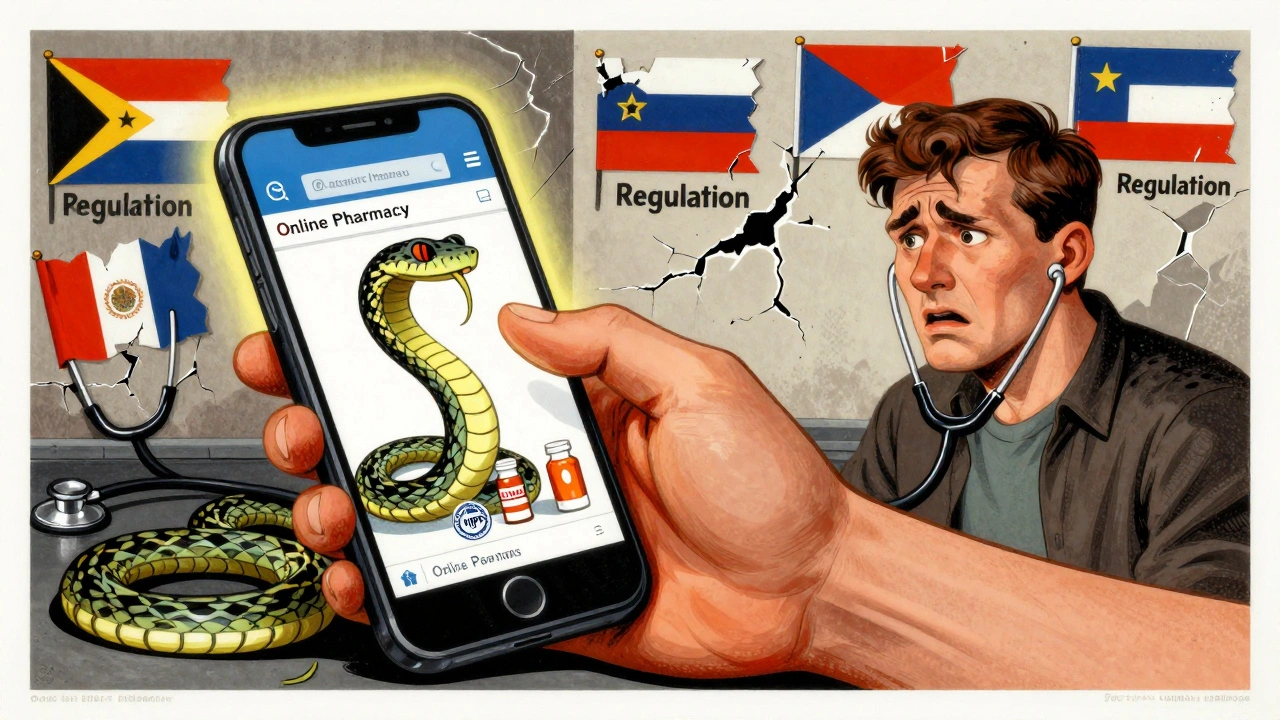
- Online Pharmacies: The NABP says 95% of online pharmacies operate illegally. You click “Buy Now,” and a box arrives from a warehouse in China, India, or Eastern Europe. The website looks professional. The packaging is perfect. But the pills? They might contain chalk, rat poison, or no active ingredient at all. Reddit user u/PharmaWatcher posted in March 2023 about receiving fake Lipitor with the wrong color and scoring. Lab tests confirmed it had no atorvastatin.
Even legitimate distributors can be fooled. The 2008 heparin crisis killed 149 people in the U.S. because a Chinese supplier mixed in a toxic chemical that looked like the real ingredient. It passed every standard test. It wasn’t a fake - it was a contaminated real product. That’s how deep the problem goes.
Why Generic Drugs Are the Main Target
You might wonder: why target generics? They’re cheaper, right? So why bother faking them?Because they’re everywhere. The global generic drug market hit $438.7 billion in 2022. That’s a huge target. Brand-name drugs have strong patents and security. Generics? They’re made by dozens of companies, often in different countries. Quality control varies. And because they’re sold at low margins, some manufacturers cut corners - intentionally or not.
Counterfeiters love generics because they don’t need to reverse-engineer the formula. They just copy the brand’s packaging and fill it with whatever’s cheap. The 2018 recalls of ARB blood pressure drugs due to carcinogenic impurities showed how easily quality can break down in generic supply chains. If a real manufacturer can accidentally make dangerous drugs, imagine what a fake one can do.
Where the Weak Spots Are
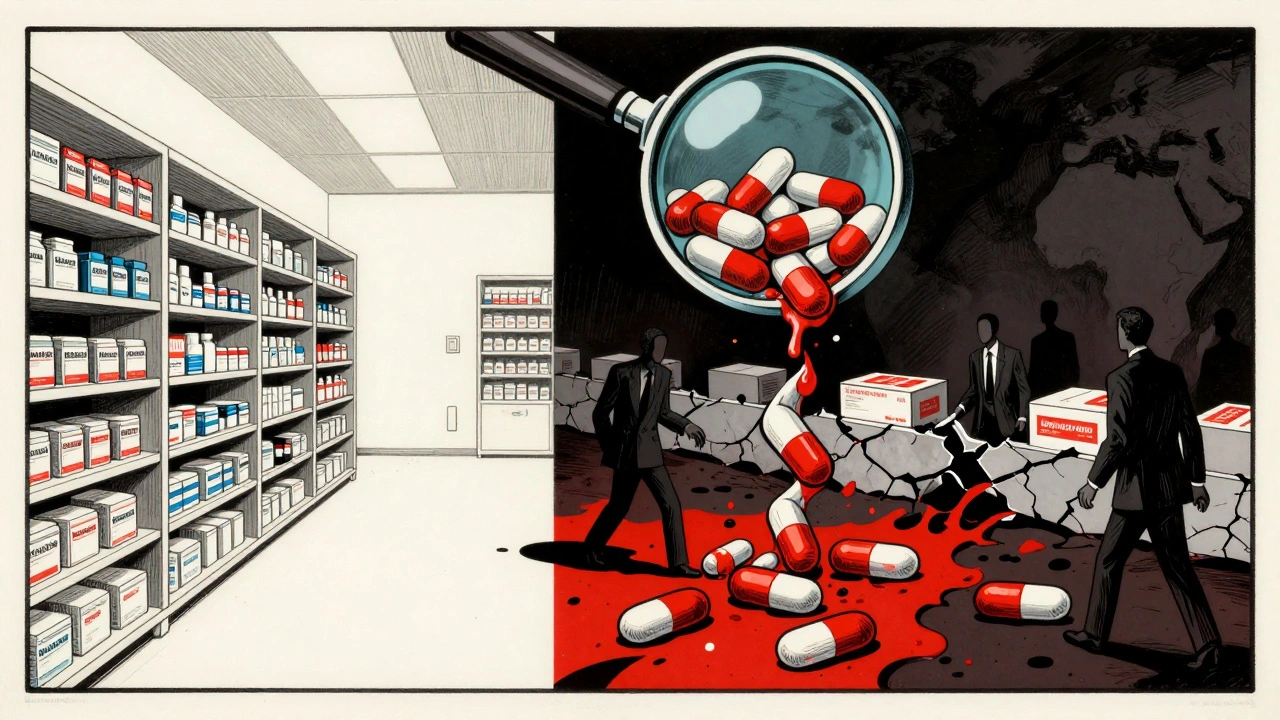
The supply chain for medicines is long. A pill might start in a lab in India, go through a distributor in Singapore, be shipped to a warehouse in Germany, then delivered to a pharmacy in Canada. At every step, there’s a chance for tampering.Only 40% of countries have full track-and-trace systems. That means there’s no way to follow a pill from factory to pharmacy. The U.S. passed the Drug Supply Chain Security Act (DSCSA) in 2013, requiring full serialization by 2023. But most low-income countries can’t afford the technology. WHO estimates adding a digital code to each pill costs $0.02-$0.05. Sounds small. But for a country that sells millions of pills a year? That’s millions in extra cost.
And then there’s theft. The Pharmaceutical Security Institute recorded 786 incidents of drug theft in 2022. Stolen drugs are often resold on the grey market. Fake ones get mixed in to replace what was stolen. No one checks. No one knows.
What’s Being Done - And What’s Not Working
Some progress is being made. The EU’s Falsified Medicines Directive, rolled out in 2019, required unique identifiers on all prescription packages. Since then, counterfeit penetration in Europe has dropped by an estimated 18%. Companies like MediLedger are using blockchain to track drugs with 97.3% accuracy in trials.Pfizer has stopped over 302 million counterfeit doses since 2004 by working with customs, pharmacies, and law enforcement. That’s huge. But it’s not enough. The WHO reported a 22% increase in verified counterfeit cases between 2021 and 2022. Most of those came from online sales.
Here’s the problem: regulation is patchy. The U.S. has strong rules. India has weak enforcement. Africa has almost none. And counterfeiters exploit those gaps. A pill made in Bangladesh can be shipped to Nigeria, then repackaged and sold as “European stock” in London. By the time it’s detected, it’s already in someone’s medicine cabinet.
How to Spot a Fake - Even If You’re Not a Pharmacist
You don’t need a lab to protect yourself. Here’s what to check:- Packaging: Look for spelling errors, blurry logos, or mismatched colors. Even small differences matter.
- Pill appearance: Compare the size, shape, color, and scoring to a previous batch. If it looks off, ask your pharmacist.
- Source: Only buy from licensed pharmacies. If it’s a website you’ve never heard of, or it doesn’t ask for a prescription, walk away.
- Price: If it’s way cheaper than your usual pharmacy, it’s a red flag. Counterfeiters undercut prices to lure buyers.
- Verification codes: Some packages have QR codes or SMS verification. Use them. If they don’t work, report it.
And if you feel worse after taking a new batch of pills - nausea, dizziness, no improvement - talk to your doctor. It might not be the disease. It might be the drug.
What You Can Do
You’re not powerless. Here’s how to help stop the flow:- Report suspicious meds to your national drug regulator. In Australia, that’s the TGA. In the U.S., it’s the FDA.
- Don’t buy meds from unknown websites, even if they promise “free shipping” or “no prescription needed.”
- Ask your pharmacist where they source their generics. Reputable ones will tell you.
- Spread awareness. If someone you know buys pills online, ask them if they’ve checked the packaging.
The fight against fake drugs isn’t just about law enforcement or technology. It’s about people paying attention. The most effective defense is still the human eye - and the willingness to ask questions.
What’s Next?
Without global coordination, the problem will only get worse. The OECD predicts counterfeit drugs could make up 5-7% of global sales by 2030. Online markets will be the biggest threat. AI will make fakes harder to detect. But there’s hope: countries that invest in serialization, training, and cross-border cooperation are seeing real results.The truth is simple: if you can’t trace a pill, you can’t trust it. And when it comes to your health, trust isn’t optional.
How common are fake generic drugs?
In high-income countries, about 1% of medicines are counterfeit. But in low- and middle-income countries, that number can jump to 30% or higher. Africa alone accounts for 42% of all falsified medicines globally, according to IFPMA’s 2023 report. Generic drugs are the most common target because they’re widely used and harder to track.
Can pharmacies sell fake drugs on purpose?
Most licensed pharmacies don’t. But some, especially in countries with weak oversight, may unknowingly stock counterfeit drugs that entered through grey market suppliers. A 2022 survey found 68% of pharmacists worldwide had encountered suspected fakes - and many didn’t realize they were fake until lab tests were done.
Are online pharmacies ever safe?
Only if they’re verified by a trusted authority. In the U.S., look for the VIPPS seal. In Australia, check the TGA’s list of registered online pharmacies. The NABP says 95% of online pharmacies operate illegally. If a site doesn’t require a prescription, offers “miracle cures,” or has no physical address, avoid it.
What should I do if I think I’ve taken a fake drug?
Stop taking it immediately. Contact your doctor or pharmacist. Save the packaging and pills as evidence. Report it to your national drug regulator - in Australia, that’s the Therapeutic Goods Administration (TGA). If you’re abroad, contact local health authorities. Even if you feel fine, the drug may be causing silent damage.
Do fake drugs only affect developing countries?
No. While the highest rates are in low-income regions, fake drugs reach wealthy countries too. The EU seized €1.2 billion worth of counterfeit medicines at its borders between 2019 and 2022. In the U.S., counterfeit opioids, diabetes meds, and heart drugs have been found in the supply chain. Anyone buying medicine online - even from a “trusted” site - is at risk.
Rudy Van den Boogaert
December 5, 2025 AT 19:48I’ve been taking generic metformin for years and never thought twice about it. But after reading this, I checked my last bottle-turns out the font on the label is ever so slightly off. I called my pharmacy and they sent me a new batch. Turns out they’d just switched suppliers. Scary how easy it is to miss.
Thanks for the heads-up.
Jordan Wall
December 6, 2025 AT 18:49Let’s be real-this isn’t ‘counterfeit’ so much as it’s a systemic failure of neoliberal pharmaceutical governance. The commodification of health has created a perfect storm where profit > safety, and AI-generated holograms are merely the aesthetic symptom of a deeper rot. We’re not talking about ‘fake pills’-we’re talking about the death of epistemic trust in institutional medicine. 🤖💊 #PharmaCapitalism
Pavan Kankala
December 7, 2025 AT 10:47They’re not just selling fake drugs-they’re testing us. Who’s dumb enough to swallow something without knowing what’s inside? This is a government experiment. They want to see how many people will take pills from the internet without a prescription. Next thing you know, they’ll be putting tracking chips in the fillers. I’m not taking anything anymore. Not even aspirin.
They’re watching. Always watching.
Martyn Stuart
December 8, 2025 AT 07:45Important point: Always verify your pharmacy’s sourcing. Many independent pharmacies use wholesalers with traceable, audited supply chains-ask for their documentation. Also, if you’re buying online, check the FDA’s BeSafeRx list. And if you’re in the UK, use the GPhC’s register. These aren’t just buzzwords-they’re lifelines. Double-check everything. Seriously. It’s worth the five minutes.
Jessica Baydowicz
December 9, 2025 AT 15:06OMG I just realized I bought my blood pressure meds from that ‘discount pharmacy’ last month because it was $20 cheaper… I’m so scared right now. 😳 I’m going to the pharmacy first thing tomorrow to get it checked. Thank you for writing this-it’s terrifying but so necessary. We need more people talking about this!! 💪❤️
Shofner Lehto
December 10, 2025 AT 06:17The real issue isn’t just fake pills-it’s the lack of transparency in the supply chain. We treat medicine like a commodity, not a human right. If every pill had a verifiable digital fingerprint, this wouldn’t be happening. The tech exists. The will doesn’t. Until regulators force serialization globally, we’re just playing whack-a-mole with criminals who are always five steps ahead.
Rachel Bonaparte
December 10, 2025 AT 07:07Okay, but let’s not pretend this is just about pills. This is about control. Who owns your body? Who decides what goes into it? The same corporations that made opioids addictive are now profiting off fake generics. They don’t care if you live or die-as long as you keep buying. And don’t get me started on how the FDA is basically a revolving door for Big Pharma execs. This isn’t an accident. It’s engineered. The ‘1%’ statistic? That’s the tip of the iceberg. In reality, it’s more like 40% in the U.S. alone-they just don’t test enough to find it. You think your ‘trusted’ pharmacy is clean? Ask them where their metformin comes from. I dare you.
They’ll look away. They always do.
Michael Feldstein
December 10, 2025 AT 22:58That study about 77% of counterfeit drugs being oral tablets really stuck with me. I work in a clinic and we had a patient last month who kept saying her cholesterol meds weren’t working. We ran a test-turns out the tablet had zero atorvastatin. She’d bought it online because her insurance wouldn’t cover the brand. We had to get her on a new regimen. It’s not just about money-it’s about access. We need better safety nets, not just better detection.
Libby Rees
December 12, 2025 AT 15:13My mother takes three generic medications daily. After reading this, I called her pharmacist. They showed me the batch numbers and supplier certificates. Everything was legitimate. But I still printed out the FDA’s checklist and taped it to her medicine cabinet. Better safe than sorry. Simple steps matter.
Gillian Watson
December 13, 2025 AT 00:52My cousin in Nigeria got sick from fake malaria pills. He almost died. Now he only gets meds from the hospital. No online orders. No street vendors. Even if it costs more. It’s not worth the risk.