
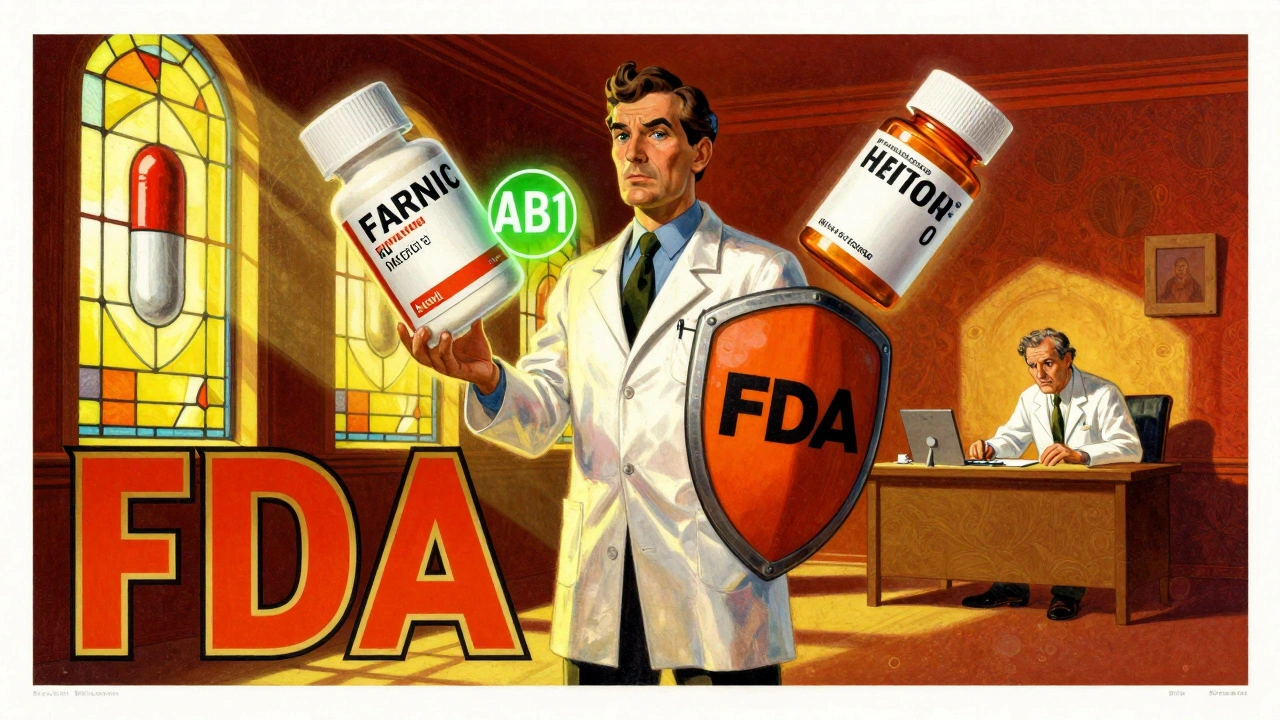
When a pharmacist hands you a generic pill instead of the brand-name version you expected, it’s not just a cost-saving swap-it’s the result of a quiet, critical conversation between two healthcare professionals. That conversation doesn’t happen by accident. It’s guided by science, law, and a shared goal: getting patients the right medicine at the right price. But not every prescriber understands how safe and effective generics really are. That’s where pharmacists step in-not to override, but to inform.
Why Generics Are the Default, But Not Always the Choice
Nearly 97% of all prescriptions filled in the U.S. are for generic drugs. That’s not because patients ask for them. It’s because pharmacists, armed with FDA data, know they’re just as safe and effective as the brand names-often at 80% less cost. The FDA’s Orange Book, updated every year, lists every approved generic and rates its therapeutic equivalence to the original drug. Most get an ‘A’ rating, meaning they’re interchangeable. But here’s the catch: not every prescriber checks that list. Some doctors still believe generics work differently, especially for drugs like warfarin, levothyroxine, or phenytoin-medications with a narrow therapeutic index. That means the difference between a helpful dose and a dangerous one is tiny. Even a small variation in how the body absorbs the drug can cause problems. That’s why pharmacists don’t automatically swap these. They call the prescriber. They show them the Orange Book rating. They explain why the generic is still appropriate-or why they should hold off.When a Prescription Says ‘Do Not Substitute’
About 15% of prescriptions come with a ‘dispense as written’ (DAW) tag. That means the prescriber doesn’t want the pharmacy to switch to a generic, even if one exists. But here’s the thing: 68% of those DAW notes are based on vague concerns-not documented patient reactions or clinical evidence. Maybe the doctor had a patient once who felt worse on a generic. Maybe they’re used to prescribing the brand. Or maybe they just never learned the full story. That’s when pharmacists become advocates. They don’t ignore the DAW. They respect it. But they also ask: Why? If the patient is paying $200 a month for a brand-name drug and the generic costs $12, the financial burden can mean skipping doses or skipping refills. Pharmacists pull up the FDA’s bioequivalence data-showing that 98.7% of generics meet strict standards for absorption-and share it. They don’t argue. They present facts. And when they do, prescribers change their minds 82% of the time, according to a 2021 study in the Journal of the American Pharmacists Association.The Hidden Problem: Inactive Ingredients
Generics must contain the same active ingredient as the brand. But they can have different fillers, dyes, or preservatives. For most people, that’s no issue. But for 1 in 12 patients with allergies or sensitivities, those inactive ingredients can cause rashes, stomach upset, or worse. A 2023 guide from A-SMEDS found that 8.7% of substitution problems trace back to these differences. A patient with a corn allergy might react to a generic version that uses cornstarch as a binder. Someone with lactose intolerance might get diarrhea from a pill that uses lactose as a filler. Pharmacists check the manufacturer’s product information before swapping. If there’s a risk, they call the prescriber-not to block the generic, but to find one that’s safe. Sometimes, that means switching to a different generic brand. Other times, it means sticking with the original. Either way, the patient gets the right medicine without a side effect.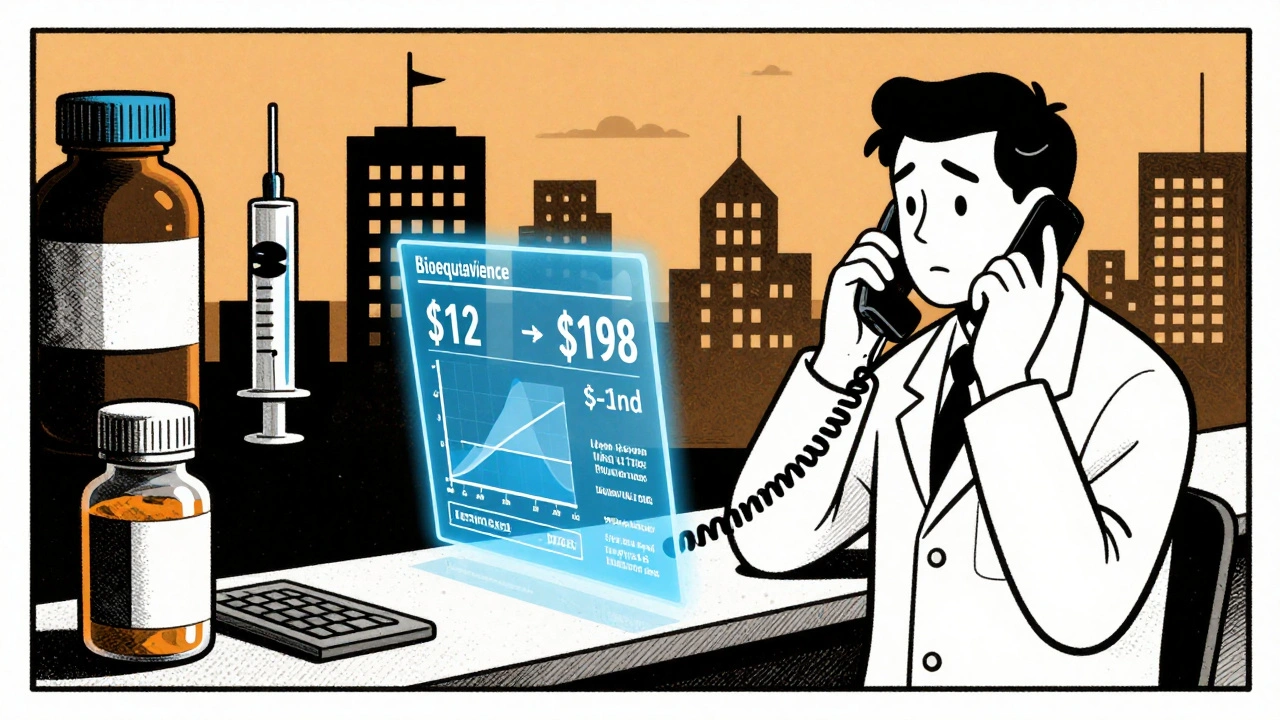
How Pharmacists Make the Case-And Why It Works
Good communication isn’t just about calling. It’s about structure. The American Society of Health-System Pharmacists recommends a simple four-step approach:- Contact the prescriber within 24 hours of receiving the prescription.
- Cite the Orange Book therapeutic equivalence rating (e.g., ‘AB1’ for levothyroxine).
- Share the cost difference-like ‘$12 generic vs. $198 brand’.
- Document the outcome in the patient’s record.
Why Some Prescribers Still Hesitate
Despite the evidence, a 2023 survey found that 37.6% of prescribers still worry about generics. The concerns? They’re not all irrational. For complex drugs like inhalers or topical creams, absorption can vary slightly between brands. A 2023 study showed 42% of doctors expressed concern about generic inhalers. That’s because the delivery system matters as much as the drug inside. Pharmacists respond by sharing the FDA’s Product-Specific Guidances-detailed documents that explain exactly how each generic version was tested. For inhalers, they point to the particle size, spray pattern, and lung deposition data. For topical creams, they show skin absorption rates. They don’t say, “It’s fine.” They say, “Here’s the data that proves it’s equivalent.” Another big barrier? Time. Pharmacists report having just 2.3 minutes per prescription to verify everything-dosage, interactions, allergies, and now, substitution. That’s not enough to explain bioequivalence ratios to every prescriber. That’s why tools like PharmAI’s Generic Substitution Assistant are gaining ground. Used by nearly 30% of chain pharmacies in 2023, these AI tools analyze the prescription, pull the right data, and draft a message the pharmacist can send in seconds. Accuracy improved from 76% to 94%.What’s Changing-and What’s Next
The 2022 Inflation Reduction Act, which took effect in January 2025, gives pharmacists a bigger role in Medicare Part D. For the first time, medication therapy management services for seniors will include proactive generic substitution recommendations. That means 21 million Medicare beneficiaries will benefit from pharmacist-led cost-saving interventions. Meanwhile, the FDA is preparing a major update to the Orange Book in 2024. This new digital version will include real-world data-like how many patients had adverse events or hospitalizations after switching to a generic. That’s not just theory. That’s lived experience. And it’s going to make pharmacist recommendations even stronger. The CDC is also launching a Generic Medication Safety Network in late 2024. It will track side effects and effectiveness across thousands of patients in near real time. If a particular generic version of a drug starts showing higher rates of dizziness or nausea, pharmacists and prescribers will know within days-not months.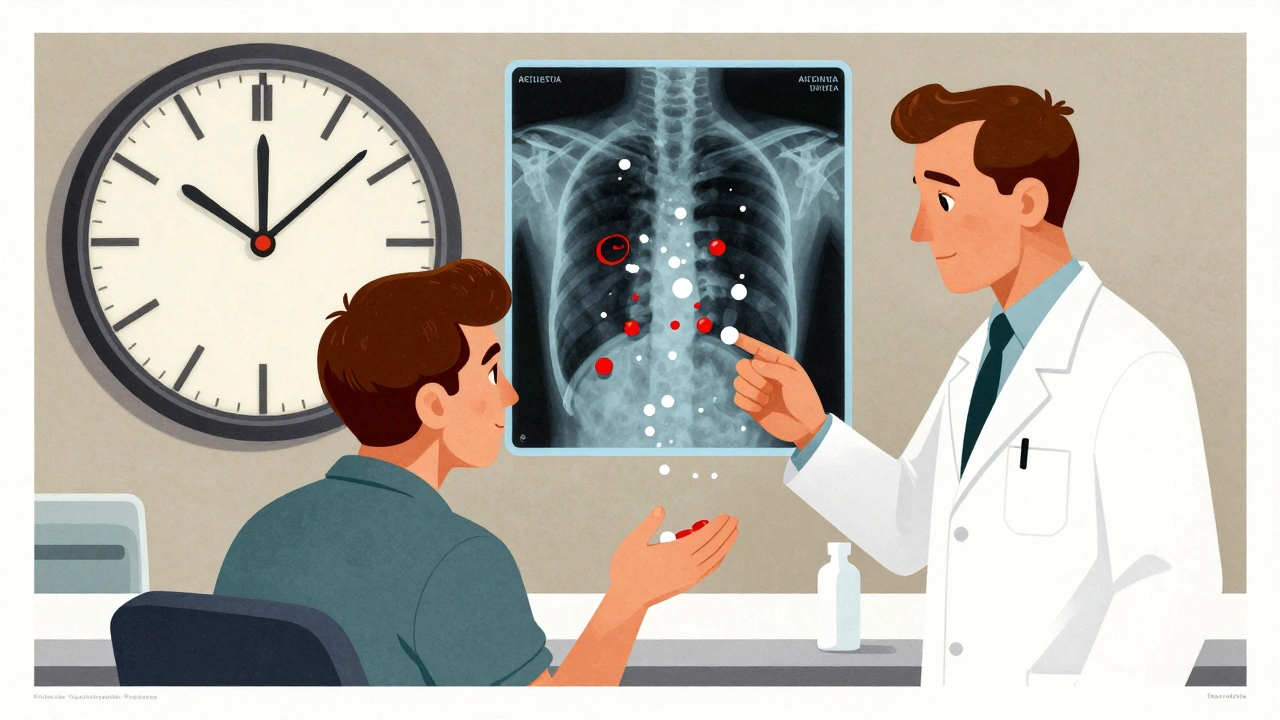

Michael Feldstein
December 4, 2025 AT 12:40I’ve seen this play out in my local pharmacy-pharmacist calls the doc, sends over the Orange Book data, and within 10 minutes, the prescription gets updated. No drama, just facts. It’s quiet hero work that most patients never even notice.
And honestly? I love that they’re not pushing generics for cost alone. They’re pushing them because they’ve done the homework. That’s professionalism.
jagdish kumar
December 6, 2025 AT 01:39They say science speaks-but who listens when the doctor’s ego is louder?
zac grant
December 7, 2025 AT 14:45Let’s not understate the operational brilliance here: pharmacists are essentially clinical data brokers between the FDA, EHRs, and prescribers. The 82% conversion rate isn’t luck-it’s protocol design. The four-step framework? That’s lean healthcare in action.
And the AI tools? They’re not replacing judgment-they’re amplifying it. When you’ve got 2.3 minutes per script and 17 variables to check, automation isn’t a luxury-it’s a survival tool. The 94% accuracy spike? That’s the difference between a near-miss and a preventable ADE.
Also, the inactive ingredient angle is criminally under-discussed. Lactose, cornstarch, FD&C dyes-these aren’t inert. For patients with IBD, celiac, or mast cell disorders, they’re landmines. Pharmacists doing that extra lookup? That’s precision medicine in real time.
michael booth
December 9, 2025 AT 08:27Pharmacists are the unsung guardians of medication safety and affordability. Their quiet interventions prevent hospitalizations, reduce financial toxicity, and uphold the integrity of the prescribing process. Every call made, every data point shared, every documented exchange contributes to a more reliable healthcare system. We must recognize and support this critical role with policy, funding, and respect.
Let us not forget: when a patient takes their medication as prescribed, it is often because a pharmacist cared enough to ensure it was the right choice.
Carolyn Ford
December 9, 2025 AT 15:57Wait, so you’re telling me that doctors are just… lazy? And pharmacists are the real doctors now? I mean, really? 82% of prescribers change their minds because of a phone call? That’s not evidence-it’s incompetence. And why are we trusting a $12 pill over a $200 one because some FDA chart says so? What about the patients who actually felt worse? Are their experiences just… invalid? I’ve seen people get sick from generics. You think a database overrides lived reality? That’s not science. That’s ideology.
Alex Piddington
December 10, 2025 AT 13:30Love this breakdown. The real win here isn’t just cost-it’s adherence. When people can afford their meds, they take them. Simple as that.
And props to the AI tools-pharmacists are drowning in paperwork. If tech can give them back 10 minutes a day to talk to patients instead of chasing prescriptions, that’s a win for everyone.
Also, the CDC’s real-time network? That’s the future. We need this kind of feedback loop. Not just for generics, but for all meds.
Dematteo Lasonya
December 11, 2025 AT 01:35One thing I’ve learned working in a community pharmacy: the most dangerous thing isn’t the generic. It’s the assumption that everyone understands the difference between active and inactive ingredients.
I had a patient last month who broke out in hives after switching to a generic metformin. Turns out, the new version used a dye she was allergic to. The brand didn’t. We called the doc, switched to a different generic brand that used titanium dioxide instead, and she’s been fine since.
It’s not about brand vs generic. It’s about matching the right formulation to the right person. That’s why pharmacists need time, tools, and authority to do this right.
Rudy Van den Boogaert
December 12, 2025 AT 08:57Carolyn, I get your concern. I’ve had patients react too. But here’s the thing-the data doesn’t lie. In over 98% of cases, generics are identical in effect. The rare reactions? Almost always from fillers, not the active ingredient. That’s why pharmacists check the manufacturer’s specs before swapping.
And if a patient has a real history of reacting to a specific generic? We note it. We avoid it. We don’t guess. We don’t assume. We document. That’s the whole point of the system.
It’s not about dismissing experience. It’s about using evidence to protect more people from harm. And honestly? The ones who get hurt by not switching? They’re the ones skipping doses because they can’t afford the brand. That’s the real tragedy.