
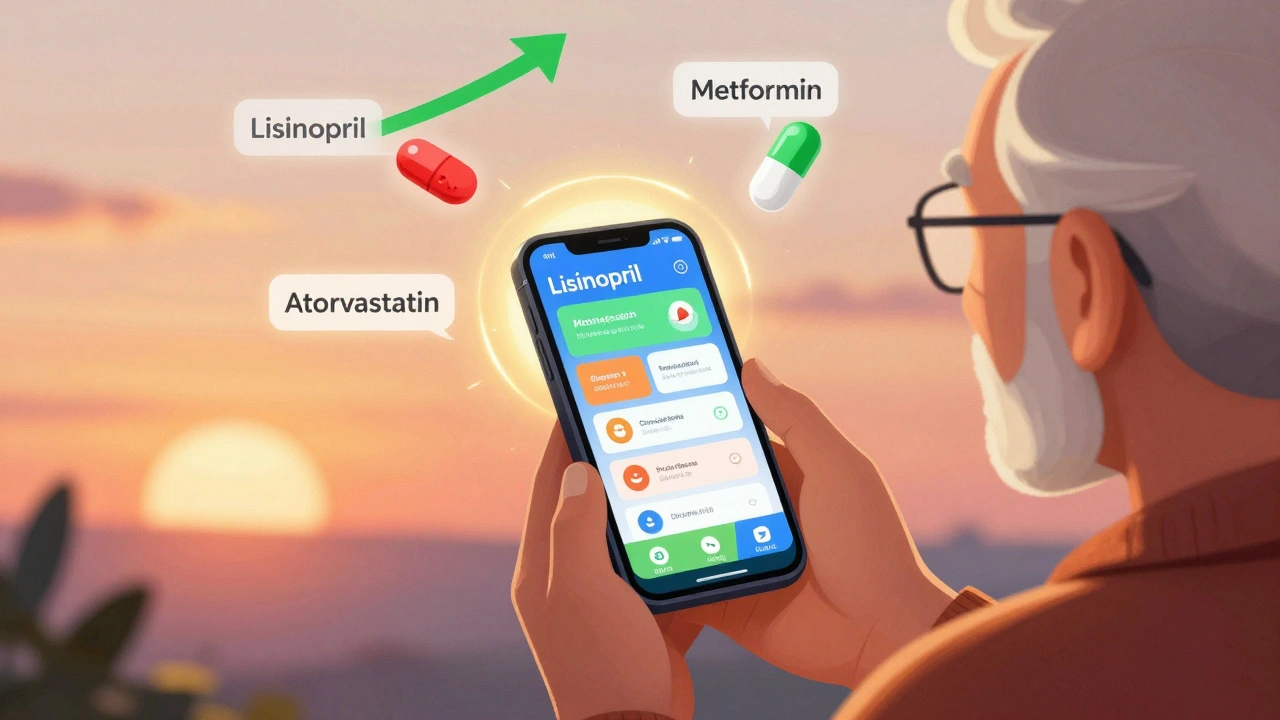
Skipping a pill here and there might seem harmless-until it’s not. Half of all people with chronic conditions like high blood pressure, diabetes, or heart disease don’t take their meds as prescribed. The result? More hospital visits, worse health, and higher costs. The good news? You don’t need a fancy device or a nurse reminding you. Your phone can do it better.
Why Your Phone Is the Best Medicine Timer
Pill organizers? They get messy. Alarm clocks? You turn them off. Electronic medicine boxes? They cost $30 to $50 a month and need extra setup. Your smartphone? It’s already in your pocket. And apps built for medication reminders are proven to work. A 2025 review of 14 clinical trials found that people using medication apps improved their adherence by an average of 0.57 points on the Morisky scale-a meaningful jump. That’s not just a number. It means fewer missed doses, lower blood pressure, and better HbA1c levels. One Reddit user with diabetes saw their HbA1c drop from 8.2 to 6.9 after six months using a medication app. That’s the difference between managing your condition and being at risk. These apps don’t just buzz at the right time. They track what you’ve taken, warn you about dangerous drug interactions, and even show you why each pill matters. Some sync with your pharmacy to auto-request refills. Others use AI to guess when you’re likely to forget-before you even miss a dose.What Makes a Good Medication App?
Not all apps are built the same. The best ones share a few key features:- Custom reminders-Set times, frequencies, and even repeat patterns. Need to take a pill at 7 a.m. and 7 p.m.? Done. Need to skip it on weekends? Easy.
- Digital log-See a history of what you took and when. No more guessing if you already took your morning dose.
- Medication library-Tap any pill in the app and get a simple explanation: what it’s for, common side effects, and what to avoid mixing it with.
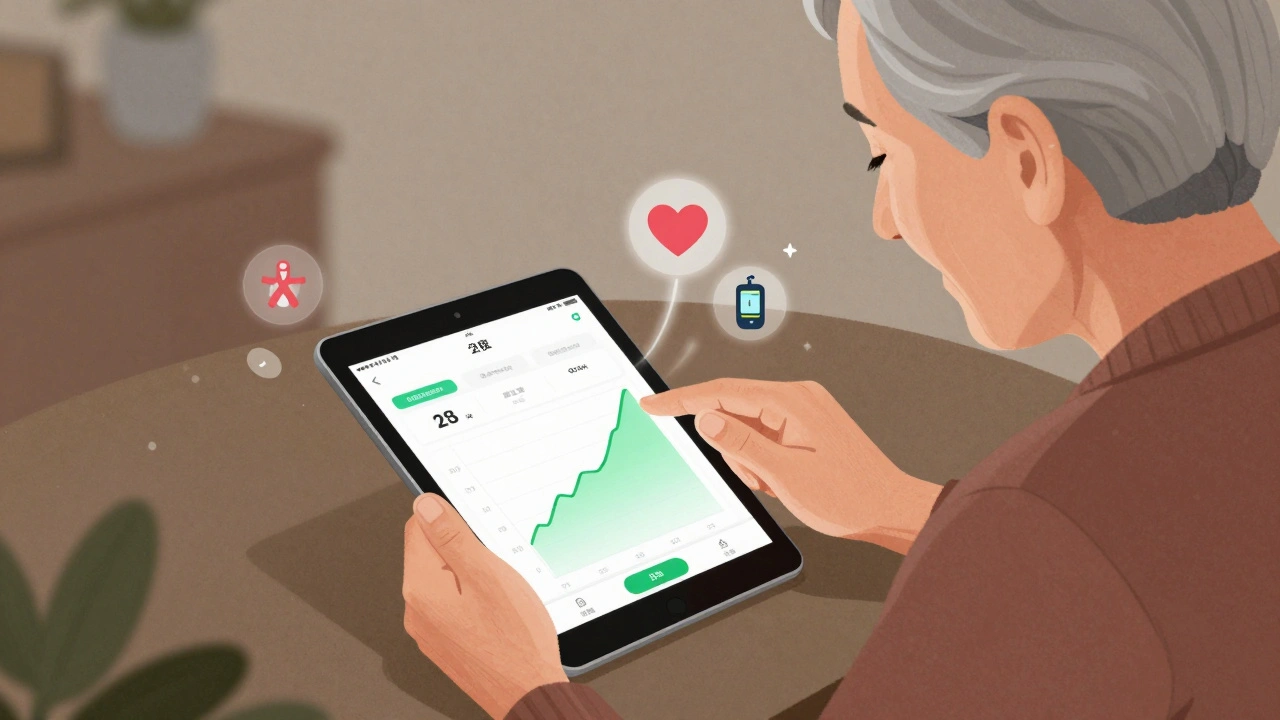
- Progress dashboard-See your weekly adherence rate. A green streak feels good. A red drop? That’s your cue to adjust.
- Shareable reports-Export your log to send to your doctor or pharmacist. No more scribbled notes on napkins.
Who Benefits the Most?
These tools work best for people juggling multiple medications. If you’re taking three or more pills a day, or if your schedule changes-like switching from once-daily to twice-daily doses-apps make life easier. They’re especially helpful for:- People with diabetes or heart disease
- Those on HIV or transplant medications (where missing even one dose can cause resistance)
- Older adults managing several chronic conditions
- Parents giving meds to kids or elderly relatives
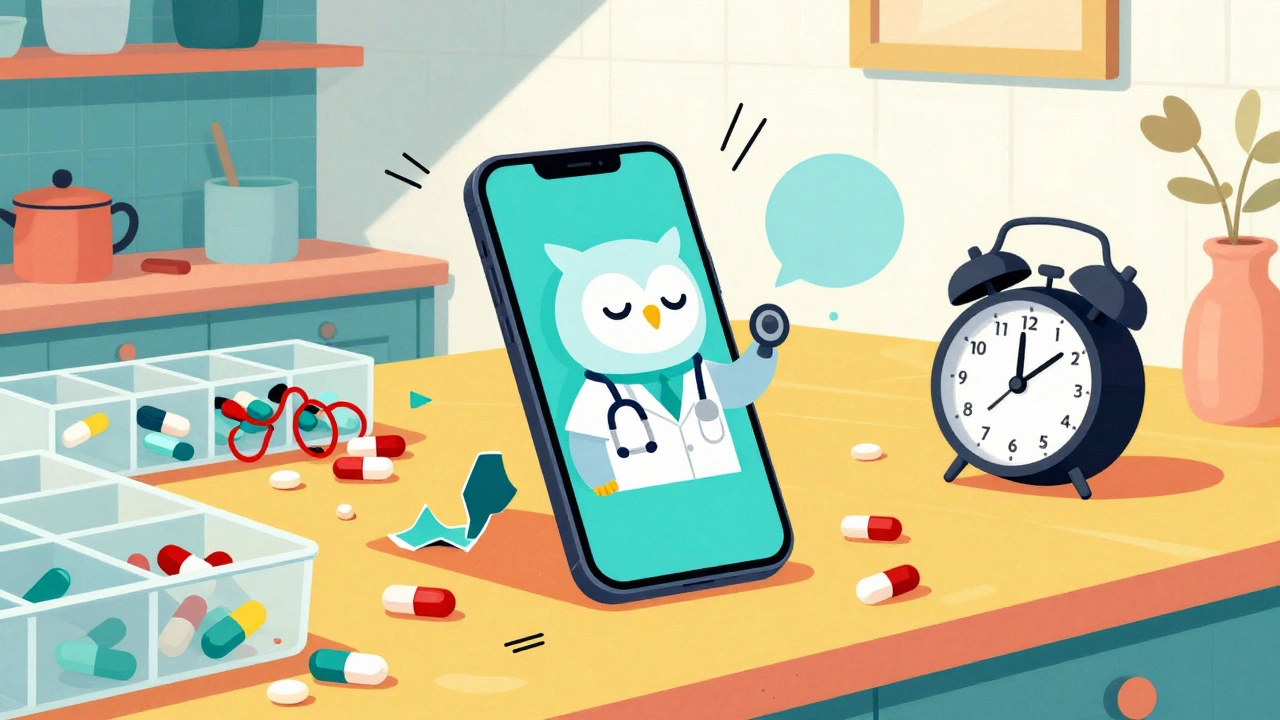
Getting Started in Under 25 Minutes
You don’t need to be tech-savvy. Here’s how to set it up:- Download a top-rated app like Medisafe or MyTherapy from your phone’s app store.
- Open the app and tap “Add Medication.”
- Search for your pill by name (e.g., “Lisinopril 10 mg”) or scan the barcode on the bottle.
- Set the time, frequency, and dose. Add notes like “take with food” or “avoid alcohol.”
- Turn on notifications. Allow the app to send alerts even if your phone is on silent.
- Test it. Set a reminder for 5 minutes from now. Does the alert come through? Does the sound work?
Common Problems and How to Fix Them
Some people quit after a few weeks. Why? Here’s what usually goes wrong-and how to fix it:- Too many notifications-You get 10 alerts a day and start ignoring them. Solution: Turn off non-essential reminders. Only keep the ones that matter. Use your phone’s “Focus Mode” to silence other apps during med times.
- App crashes or won’t sync-Enable cloud backup. Most apps save your data online. If you switch phones, your meds come with you.
- Forgetting to mark doses as taken-Some apps let you tap a button to confirm you took it. Others auto-log if you open the app. Pick one that matches your habits.
- It feels like a chore-Try turning on the app’s motivational features. Some send encouraging messages or let you earn badges for streaks.
Privacy and Security: Should You Worry?
Your health data is sensitive. Reputable apps follow HIPAA rules and use end-to-end encryption. That means only you and your doctor (if you share) can see your records. But not all apps are equal. Only about 64% of medication apps publicly state their security practices. Stick to well-known names: Medisafe, MyTherapy, Round Health. Avoid random apps with no reviews or unclear privacy policies. Also, turn on biometric login (fingerprint or face ID). It’s faster and safer than typing a password every time.What’s Next? AI, Voice, and Real-Time Tracking
The next wave of medication apps is smarter. In January 2024, Medisafe launched an AI coach that predicts missed doses with 83.7% accuracy. It learns your routine-like if you always skip your 8 p.m. pill on Fridays-and nudges you earlier. Google is testing a voice-controlled app called “Med Buddy,” launching late 2025. Just say, “Hey Google, did I take my blood pressure pill?” and it checks your log. Pfizer is even testing blockchain systems to verify adherence in clinical trials. That’s not for you yet-but it shows where the industry is headed: real-time, secure, automated tracking. Meanwhile, Medicare Advantage plans now cover these apps as a benefit. If you’re on Medicare, ask your plan if they’ll pay for one. Some employers offer them too-67 of the Fortune 100 companies include them in wellness programs.Final Thought: It’s Not About Technology. It’s About Consistency.
Apps won’t fix adherence if you don’t want to use them. But if you’re tired of forgetting, guessing, or feeling guilty-try one for 30 days. Set it up. Test the alarms. See how it feels. You’re not failing because you’re lazy. You’re human. And your phone? It’s the quietest, most reliable reminder you’ve ever had.Take your meds on time. Not because you have to. But because you deserve to feel better.
Vincent Soldja
December 4, 2025 AT 06:38Apps don't fix laziness.
Chloe Madison
December 5, 2025 AT 21:42I've been using Medisafe for my mom's diabetes meds for over a year now-she's 78, barely uses smartphones, but she *loves* the big buttons and the voice confirmation feature. She says it feels like someone's checking in on her. The weekly reports I get emailed? I print them and bring them to her appointments. No more napkin notes. No more "I think I took it?" It's been a game-changer for our whole family.
parth pandya
December 6, 2025 AT 15:51u shud try mytherapy its free and work beter then medisafe i use it for my bp meds and it even remind me to drink water after pill lol
Charles Moore
December 7, 2025 AT 22:01It’s not about the app-it’s about the person behind the phone. I’ve seen people with perfect adherence streaks still skip doses because they were too depressed to open the app. Tech is a tool, not a cure. The real breakthrough is when someone feels seen enough to want to take care of themselves. That’s what we should be building toward.
Makenzie Keely
December 9, 2025 AT 06:24Okay, but have you tried the new Round Health update? They just added a feature where it sends a gentle, personalized voice note from your own recorded voice saying "Hey, it’s time for your Lisinopril-you’ve got this!" I recorded mine while I was feeling confident after a workout. It’s weirdly motivating. My sister cried when she heard it-said it felt like I was there with her. That’s not tech. That’s love, encoded.
Joykrishna Banerjee
December 10, 2025 AT 22:02Let’s be real-this whole "phone app" narrative is a Silicon Valley fantasy. Most people who need adherence tools don’t have smartphones, let alone data plans. Meanwhile, the same companies that sell you these $4.99/month apps are the ones pricing insulin at $300 vials. The real issue isn’t forgetting your pill-it’s the system that makes you choose between food and medicine. This article is a distraction wrapped in a UI.
Gavin Boyne
December 12, 2025 AT 12:07Of course your HbA1c dropped-you probably also stopped eating sugar, started walking, and maybe quit smoking. But hey, let’s credit the app. Because nothing says "I care about my health" like a notification that says "Don’t be a failure."
Myson Jones
December 14, 2025 AT 09:28I work in primary care. I’ve seen patients use pill organizers, alarms, sticky notes, and apps. The ones who succeed? They have someone in their life who checks in. Not an app. Not a badge. A person. If you’re trying to help someone take their meds, be that person. The app just helps you remember to do it.
Albert Essel
December 15, 2025 AT 06:36Privacy concerns are valid, but I’m impressed by how many of these apps now offer local-only storage options. If you don’t sync to the cloud, your data stays on your device. For older users or those wary of digital tracking, this is a critical feature. Look for "offline mode" or "no cloud backup" in settings. It’s not always advertised, but it’s there.
Kidar Saleh
December 17, 2025 AT 05:33In the UK, we’ve had NHS-approved medication apps integrated into GP systems for years. Patients get automated refill requests, adherence reports sent directly to their doctor’s portal, and even SMS reminders if they’re not tech-savvy. It’s not a luxury-it’s infrastructure. Why does the US still treat health tech like a startup gimmick? We’re not talking about fitness trackers here. We’re talking about preventing strokes and kidney failure.
Ignacio Pacheco
December 17, 2025 AT 19:36So… the AI coach asks why you missed your pill. And then what? Does it send a therapist? A social worker? A check? Or does it just log your excuse and keep buzzing? I’ve missed doses because I was in the ER. Because my car broke down. Because I was too scared to face my diagnosis. No app can fix that. But a human who listens? That’s the real upgrade.
Cindy Lopez
December 18, 2025 AT 16:15Why are we assuming everyone wants to be tracked? Some people don’t want to know how often they fail. Some people just want to live without being reminded they’re sick. This isn’t productivity porn. It’s surveillance with a smiley face.
Jim Schultz
December 20, 2025 AT 07:37Let’s quantify this: 0.57-point Morisky improvement? That’s statistically significant but clinically negligible. You need a 1.0+ shift to see real outcomes. And where’s the control group? Who’s funding these "trials"? Hint: it’s not the NIH. It’s the app developers. This isn’t medicine-it’s behavioral marketing dressed in clinical jargon. And yes, I’ve read the papers. I’ve done the meta-analyses. You’re being sold a placebo with push notifications.
Francine Phillips
December 21, 2025 AT 03:11My dad uses a wind-up alarm clock and a pill box. He’s 82. He hasn’t missed a dose in three years. He doesn’t have a smartphone. He doesn’t want one. He just wants to know he’s doing right. Sometimes the simplest thing is the most powerful.