
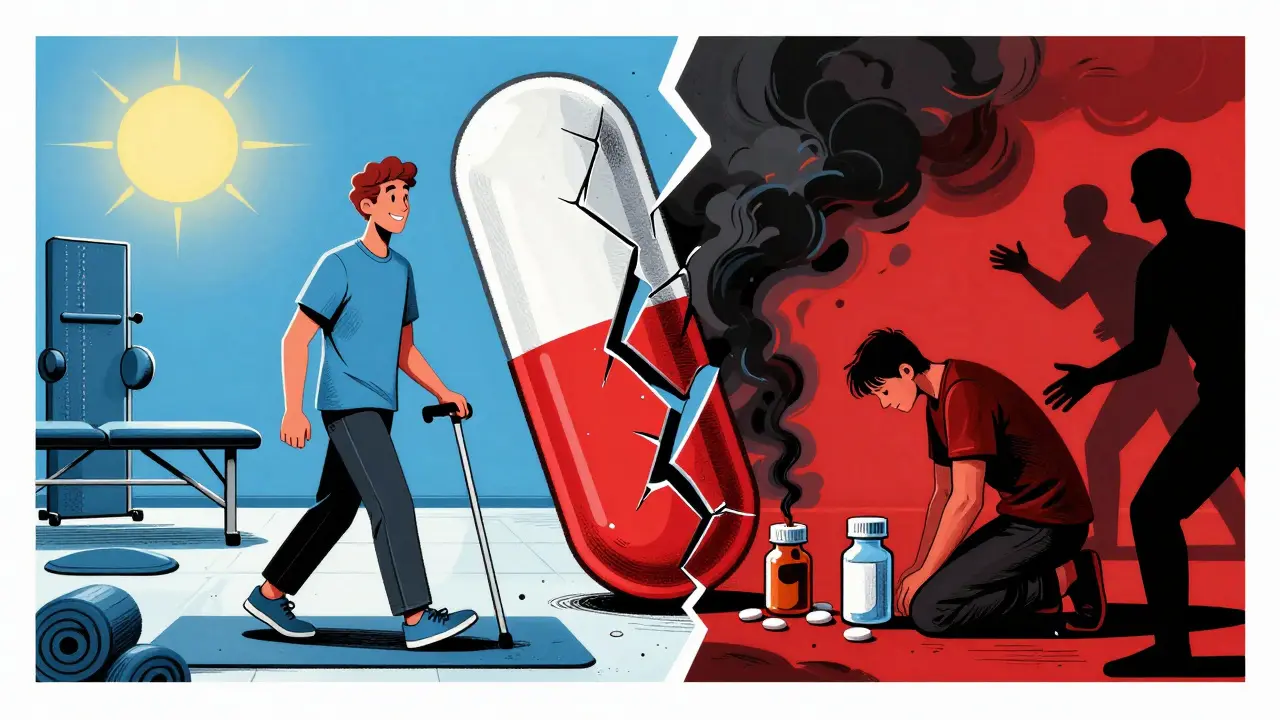
When you’re in severe pain, opioids can feel like a lifeline. They work fast, they work well, and for many, they’re the only thing that brings relief. But here’s the truth most people don’t talk about: opioid therapy isn’t a cure. It’s a tool-powerful, risky, and only meant for certain situations. Using it the wrong way can lead to dependence, overdose, or worse. So when is it actually appropriate? And when does the risk far outweigh the benefit?
It’s Not the First Answer for Chronic Pain
For long-term pain-like back pain, arthritis, or fibromyalgia-opioids are not the starting point. That’s not opinion. That’s what every major medical guideline says. The CDC’s 2022 update to its opioid prescribing guidelines is clear: non-opioid treatments should come first. That means physical therapy, exercise, cognitive behavioral therapy, acetaminophen, NSAIDs like ibuprofen, or even nerve-targeted medications like gabapentin. Why? Because the evidence for long-term opioid use in chronic pain is weak. Studies show that, on average, opioids reduce pain by less than two points on a 10-point scale in the first few weeks. After three to six months, that benefit fades. Meanwhile, the risks keep climbing. You don’t get stronger pain relief over time-you just get more tolerance. And that’s when doses creep up, and dependence starts to sneak in.When Opioids Might Actually Help
There are times when opioids make sense. The clearest case is severe acute pain-like after major surgery, a broken bone, or serious trauma. In those first few days, opioids can be lifesaving. But even then, they should be short-term. The Veterans Affairs and Massachusetts General Hospital guidelines say opioids should be the last resort for acute pain, not the first. A three-day supply is often enough. Five days is the absolute max. Another legitimate use is in cancer care or end-of-life pain. But the CDC guidelines explicitly exclude these cases from their recommendations because the goals are different. Here, comfort matters more than avoiding dependence. That’s not the same as treating a 45-year-old with chronic lower back pain who’s been on oxycodone for two years.The Numbers Don’t Lie: Dependence Starts Early
You might think addiction happens only to people who misuse drugs. But opioid use disorder (OUD) can develop even in patients who take their pills exactly as prescribed. About 8 to 12% of people on long-term opioid therapy for chronic pain will develop OUD. That’s roughly one in every 10 patients. And the risk doesn’t stay flat-it spikes with dose. If you’re on 20 morphine milligram equivalents (MME) per day, your risk is low. But every extra 10 MME adds 8-11% more risk of overdose. At 50 MME, your risk is four times higher than at 20 MME. At 90 MME or more, the risk of overdose jumps dramatically. And if you’re also taking a benzodiazepine-like Xanax or Valium-for anxiety or sleep? Your risk of overdose goes up nearly 11 times. That’s not a small interaction. That’s a red flag.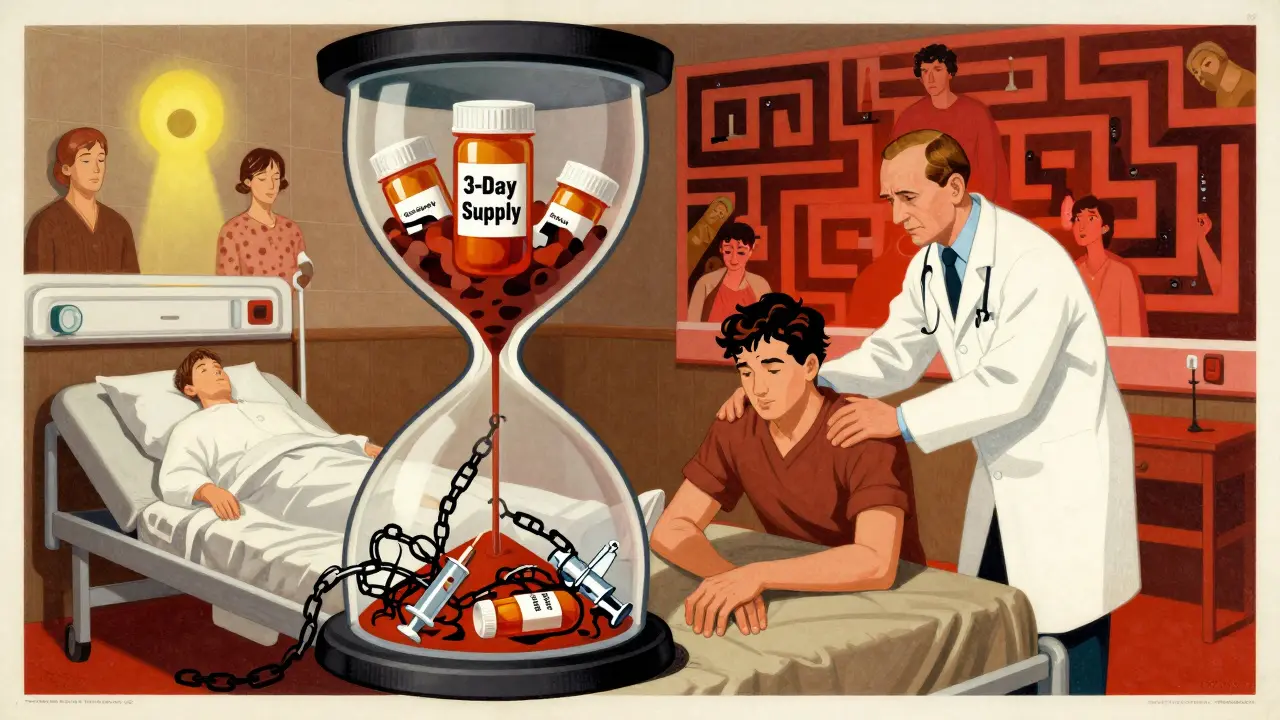
Who’s Most at Risk?
Some people are more vulnerable than others. Age matters. People over 65 are more likely to have slower metabolism, which means opioids stay in their system longer. That increases the chance of dizziness, falls, and breathing problems. A history of substance use disorder-even if it’s in the past-raises your risk threefold. Mental health conditions like depression or PTSD also increase vulnerability. Genetics play a role too. Research shows that between 40% and 60% of a person’s risk for opioid addiction is inherited. That means two people with the same pain, same dose, same doctor-can have wildly different outcomes. One stays safe. The other slips into dependence. There’s no way to predict it perfectly. That’s why monitoring is non-negotiable.Monitoring Isn’t Optional-It’s Essential
If you’re on opioids for more than a few weeks, your doctor should be checking in regularly. Not just to refill the prescription. To see if you’re actually getting better. The VA/DoD guidelines say you need at least quarterly check-ins. For high-risk patients, it’s monthly. What do they look for? Three things: pain level (on a scale of 0 to 10), how well you’re functioning (can you walk, work, sleep?), and whether you’re using the medication as directed. That last part isn’t about trust. It’s about safety. Urine drug tests catch things like missing pills, mixing with alcohol, or using drugs not prescribed. Tools like the Current Opioid Misuse Measure (COMM) help spot behaviors like hoarding pills, doctor shopping, or sudden dose increases. If you’re not improving-if your pain hasn’t gone down or your life hasn’t gotten better-staying on opioids longer isn’t helping. It’s just keeping you stuck.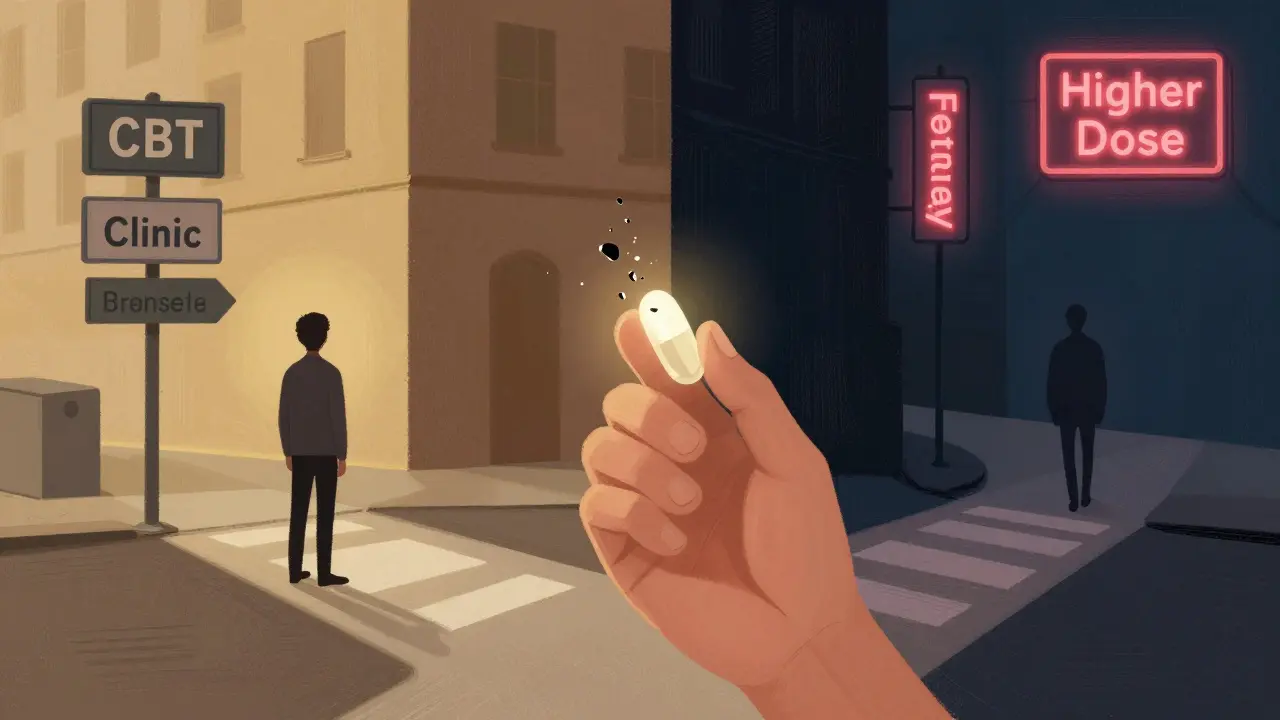

Marc Bains
January 31, 2026 AT 09:00Look, I get it - opioids aren’t magic. But I’ve seen people with chronic pain go from bedridden to walking again after a low-dose regimen. It’s not about addiction, it’s about function. If you’re not improving, sure, taper. But don’t shame people for needing something that lets them hold their kid’s hand again. Medicine isn’t one-size-fits-all.
And yeah, the stats are scary. But so is watching someone lose their life because they were denied relief because some bureaucrat decided pain isn’t ‘real’ unless it fits a checklist.
kate jones
February 1, 2026 AT 14:43Per the CDC 2022 guidelines, non-opioid pharmacologic and non-pharmacologic interventions are first-line for chronic non-cancer pain due to insufficient long-term efficacy data and dose-dependent risk escalation. The number needed to treat (NNT) for ≥30% pain reduction is approximately 10 at 12 weeks, with a number needed to harm (NNH) for opioid-related adverse events of 5. The risk of opioid use disorder (OUD) increases exponentially beyond 50 MME/day, with a hazard ratio of 3.6 compared to <20 MME/day. Urine drug monitoring and validated tools like the COMM are essential for risk stratification - not for distrust, but for harm reduction.
Additionally, polypharmacy with benzodiazepines confers an OR of 10.8 for fatal overdose. This isn’t anecdotal - it’s epidemiologically robust. Clinicians ignoring this are practicing malpractice, not medicine.
Natasha Plebani
February 2, 2026 AT 05:44There’s a deeper question here that no one’s asking: what does it mean to ‘live better’ if your body is a battlefield and your mind is tired of fighting? Opioids don’t fix pain - they just make the noise quieter. But if the noise is all you’ve known for years, silence feels like loss.
Is the goal to eliminate pain, or to eliminate the person who needs painkillers to feel human? We’ve turned suffering into a moral failing instead of a biological reality. The system doesn’t fail people because they get addicted - it fails them because it never offered them anything else to hold onto.
And genetics? Yeah, 40-60% heritability. That means two people in the same room, on the same dose, with the same pain - one survives, the other drowns. And we act surprised? We built a system that treats biology like a choice.
Rob Webber
February 3, 2026 AT 16:42This article is pure propaganda. You think doctors are saints? They’re just following Big Pharma’s playbook. Opioids were pushed hard for decades - now they’re scapegoating patients to cover their own greed. I’ve been on low-dose oxycodone for 8 years. I work full-time. I raise two kids. I don’t shoot up. I don’t steal. But you want to take my meds because some junkie OD’d? Screw that.
They’ll take your pills, then tell you to ‘just meditate.’ Like pain is a vibe you can manifest away. Wake up.
Darren Gormley
February 5, 2026 AT 03:15😂 LMAO another ‘evidence-based’ article from the pain police. Did you know 90% of people who take opioids for chronic pain don’t become addicts? The ‘8-12%’ stat is cherry-picked from studies that exclude people who taper properly. And guess what? Most of those ‘overdoses’ are from fentanyl-laced heroin - not prescriptions.
Also, ‘non-opioid treatments’? Have you tried physical therapy when your spine is fused? Or CBT when you can’t get out of bed? This isn’t medicine. It’s ideology dressed in lab coats.
Meanwhile, real people suffer while bureaucrats count MMEs like they’re playing Tetris. 🤡
Mike Rose
February 5, 2026 AT 20:26bro i just want to sleep without screaming. why is this so hard? they gave me oxy for a herniated disc and now i’m ‘at risk’? i didn’t even know what mme meant until i googled it after my dr said ‘we need to taper.’
why does everyone act like i’m a junkie? i take one pill a day. i work. i pay taxes. i don’t even drink.
just let me have my life.
Russ Kelemen
February 6, 2026 AT 04:37Let me say this gently - if you’re reading this and you’re on opioids for chronic pain, you’re not broken. You’re not weak. You’re someone who’s been trying to survive a system that didn’t give you better options.
But here’s the truth: staying on them longer than necessary doesn’t mean you’re failing - it means the system failed you. You were never given access to real alternatives: PT that didn’t cost $200 a session, therapists who took your insurance, community support that didn’t require you to be ‘recovered’ before you could breathe.
If you’re ready to taper, I’ve seen people do it with buprenorphine and peer coaching. Not cold turkey. Not shamed. Just supported. You deserve that. And if you’re not ready? That’s okay too. Your pain is valid. Your dignity is too.
There’s no rush. But you don’t have to do it alone.
Niamh Trihy
February 7, 2026 AT 06:54One thing missing from most discussions: access. In rural areas, a 30-minute drive to a pain clinic is a luxury. PT? $150/session with a $2k deductible. CBT? Waitlist is 6 months. Meanwhile, the local pharmacy has oxycodone in stock and no questions asked. It’s not that people choose opioids - it’s that they’re the only option left.
Policy needs to fix the infrastructure, not just blame the patient. You can’t expect someone to ‘choose’ therapy when they can’t afford to take time off work to get there.
Yanaton Whittaker
February 8, 2026 AT 20:17THIS IS WHY AMERICA IS FALLING APART. They want to take away our pain meds so we can ‘suffer like the good old days.’ What’s next? No aspirin? No Tylenol? We’re a nation of whiners now? My grandpa worked in a steel mill with a broken back and didn’t whine about it. Now we need a therapist and a yoga mat just to get out of bed?
Stop coddling people. Take the pill. Get up. Move. That’s how you heal. Not with some government-approved pain plan.
Kathleen Riley
February 9, 2026 AT 21:25It is incumbent upon the medical establishment to transcend the reductionist paradigm of pharmacological intervention and embrace a phenomenological approach to somatic suffering - one wherein the existential weight of chronic pain is not merely quantified via visual analog scales, but acknowledged as an ontological condition that resists biomedical assimilation.
Furthermore, the commodification of analgesia under neoliberal healthcare frameworks has rendered the patient-subject a mere consumer of pharmaceutical commodities, thereby obfuscating the ethical imperative to restore agency through holistic, non-instrumentalized care.
Thus, the imperative is not to taper, but to reconstitute the therapeutic relationship as a space of radical presence - not prescription.
Beth Cooper
February 10, 2026 AT 11:12Wait - did you know the CDC got their data from a pharmaceutical-funded study? And that the ‘8-12% addiction rate’ is actually just ‘dependence’ - which is totally different, but they lie to scare people? I read on a forum that the government is using this to push people into methadone clinics so they can track them with microchips.
Also, NSAIDs cause kidney damage. Acetaminophen causes liver failure. And physical therapy? That’s just a scam to get you to pay for massages. The real solution is CBD oil and prayer. I’ve seen people cured with just one bottle and a YouTube video.
They’re lying about everything. Even the ‘naloxone’ they give out? It’s laced with fentanyl to make people need more. Don’t trust the system. They want you addicted so they can control you.
Also, my cousin’s friend’s dog got prescribed oxycodone and now it’s a millionaire. Coincidence? I think not. 🐶💰