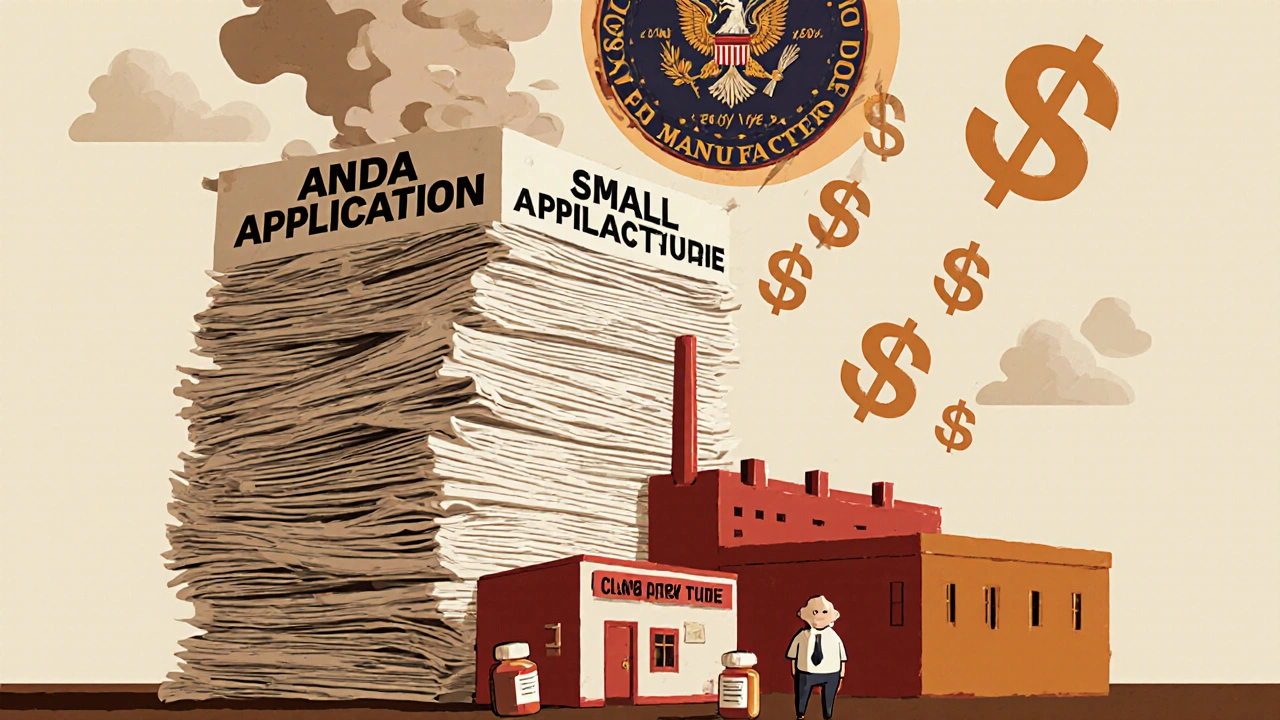
ANDA Application: What It Is and How Generic Drugs Get Approved
When you pick up a generic pill at the pharmacy, you might not think about the paperwork behind it—but there’s a whole system called the ANDA application, a formal request submitted to the U.S. Food and Drug Administration to market a generic version of a brand-name drug. Also known as Abbreviated New Drug Application, it’s the shortcut that lets safe, cheaper drugs reach the market without repeating every single clinical trial. This isn’t just bureaucracy—it’s what keeps your prescriptions affordable.
The Hatch-Waxman Act, a 1984 law that balanced innovation with access to generics created the ANDA pathway. Before this, generic makers had to do full clinical trials just to prove their drug worked. Now, they only need to show their version is bioequivalent—meaning it delivers the same amount of active ingredient into your bloodstream at the same rate as the brand name. That’s why a 10mg tablet of generic lisinopril works just like the brand version, but costs a fraction. The FDA, the federal agency responsible for reviewing and approving drug applications in the United States checks manufacturing sites, reviews chemistry data, and confirms the generic won’t harm you. They don’t test for new effects—they verify the copy is identical in quality and performance.
What does this mean for you? More choices. Lower prices. And no compromise on safety. The same active ingredient. Same dosage. Same instructions. Just without the brand name markup. You’ll find ANDA-approved drugs for everything from blood pressure pills to antibiotics, and even for complex treatments like immunosuppressants or diabetes meds. These aren’t second-rate options—they’re the backbone of modern pharmacy.
Behind every generic you take is a carefully documented ANDA. It includes data on how the drug dissolves, what excipients it contains, how stable it is over time, and how it compares side-by-side with the original. The FDA doesn’t just approve the formula—they audit the factory where it’s made. That’s why you can trust a generic from a U.S.-based plant, even if it’s made overseas. The rules are strict, and the inspections are real.
Some people still think generics are "weaker" or "less effective." That’s a myth. The FDA requires generics to match the brand within 80% to 125% of the active ingredient’s absorption rate. That’s tight enough to ensure consistent results. And if a generic fails? It gets pulled. No second chances.
What you’ll find in the posts below are real-world examples of how this system affects your health. You’ll see how authorized generics work, how drug patents expire and open the door for cheaper versions, how supplements interact with approved meds, and how to spot a legitimate pharmacy selling FDA-approved generics. Whether you’re managing chronic illness, switching meds, or just trying to save money, understanding the ANDA process helps you make smarter choices.