CPAP vs BiPAP: What’s the Difference and Which One Is Right for You?
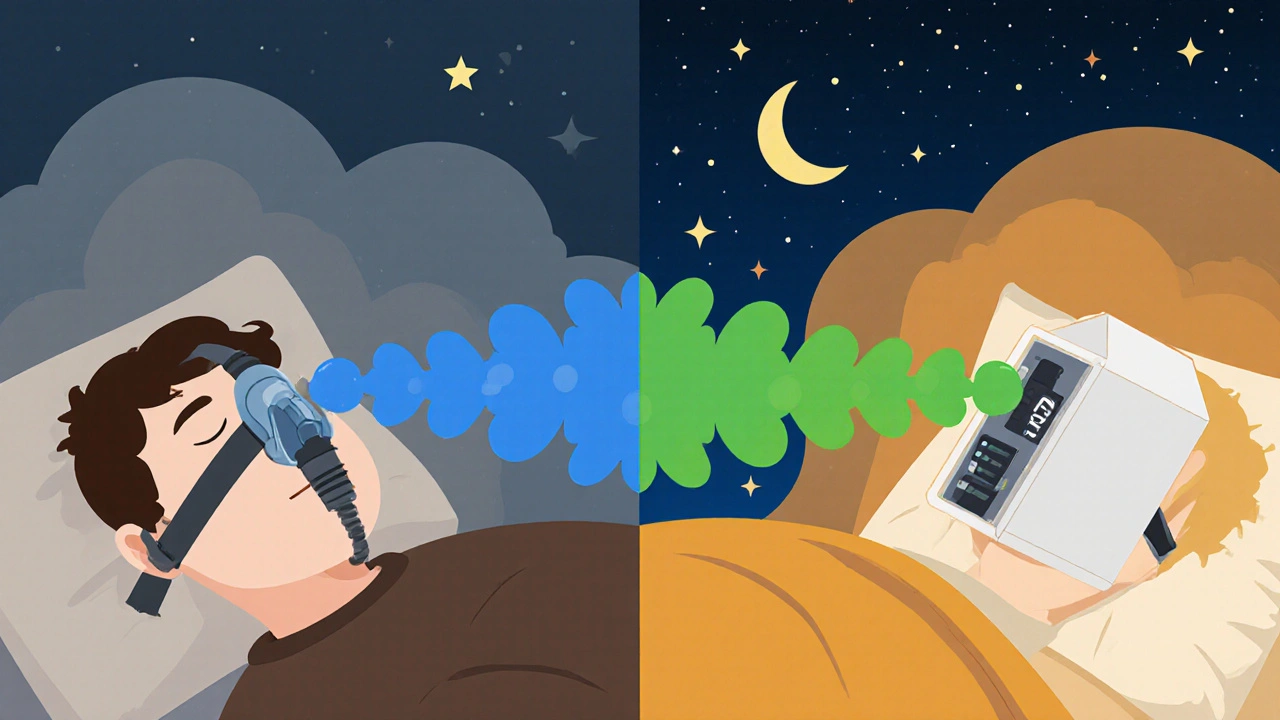
When you’re dealing with sleep apnea, a condition where breathing repeatedly stops and starts during sleep. Also known as obstructive sleep apnea, it’s not just about snoring—it’s about your body struggling to get enough oxygen at night. That’s where CPAP, a device that delivers constant air pressure to keep your airway open comes in. But if CPAP feels too stiff or you’re still waking up tired, you might have heard about BiPAP, a machine that gives two different pressure levels: higher when you inhale, lower when you exhale. These aren’t just fancy machines—they’re tools that can turn sleepless nights into restful ones, and the right choice depends on your specific breathing needs.
CPAP is the go-to for most people with obstructive sleep apnea. It’s simple: one pressure, all night. But if you have complex breathing issues—like COPD, heart failure, or central sleep apnea—BiPAP often works better. Why? Because exhaling against high pressure can feel like breathing through a clogged straw. BiPAP eases that by dropping the pressure when you breathe out. It’s not just about comfort—it’s about keeping your lungs and heart from working too hard. Some people start with CPAP and switch to BiPAP because their body needs more support, especially if they’re using higher pressures or have other lung conditions. And yes, both machines use masks, hoses, and humidifiers—you can’t avoid the gear, but you can find a setup that doesn’t feel like a sci-fi helmet.
Doctors don’t pick these devices randomly. They look at your sleep study results, your lung function, your heart health, and even how well you tolerated the first machine. If your oxygen levels crash at night or your CO2 builds up, BiPAP might be the fix. If you’re just starting out and your airway collapses simply because it’s relaxed, CPAP is usually enough. Neither is better overall—they’re just built for different problems. And while cost and insurance coverage can influence your choice, the real question is: which one helps you sleep without gasping?
What you’ll find below are real stories and facts from people who’ve used these machines, what went wrong, what worked, and how to avoid common mistakes. From mask leaks to pressure settings that feel too high, we’ve covered the practical stuff doctors don’t always explain. Whether you’re new to therapy or tired of your current setup, the posts here give you the clear, no-fluff details you need to make smarter choices—for your sleep, your health, and your next doctor’s visit.