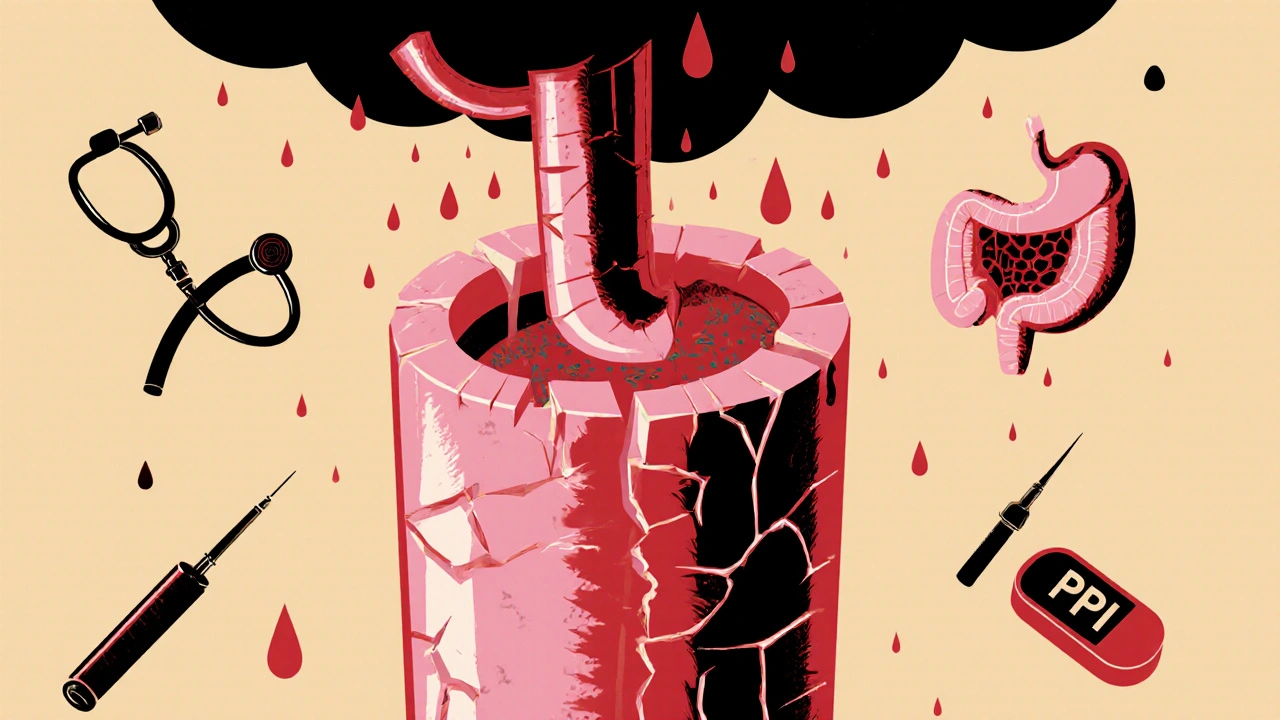
Esophageal Screening: What It Is, Who Needs It, and What to Expect
When you have long-term heartburn or acid reflux, your body might be sending a signal that needs more than just antacids. Esophageal screening, a medical process used to examine the lining of the esophagus for early signs of damage or cancer. It's not a routine checkup for everyone—but if you’ve had GERD for more than five years, this test could be life-saving. Also known as upper endoscopy, a procedure where a thin, flexible tube with a camera is passed down the throat to view the esophagus, it’s the most accurate way to spot changes before they turn dangerous.
Most people who need esophageal screening have chronic GERD, gastroesophageal reflux disease, a condition where stomach acid frequently flows back into the esophagus. Over time, that acid burns the lining, and in about 10% of cases, it leads to Barrett's esophagus, a condition where the normal tissue in the esophagus is replaced by tissue similar to the intestine. This isn’t cancer—but it’s the biggest known risk factor for esophageal cancer, a fast-moving cancer that’s often caught too late because it shows no early symptoms. Screening catches Barrett’s early, so doctors can monitor it or treat it before cancer develops.
It’s not just about acid. Smoking, obesity, being male over 50, and having a family history of esophageal cancer all raise your risk. If you’re in one of these groups and have had heartburn for years, don’t wait for pain to get worse. Screening is quick, usually done under light sedation, and takes less than 20 minutes. No major prep—just fasting overnight. The real work happens after: if biopsies show changes, your doctor might recommend follow-ups every 1–3 years, or even simple treatments to remove abnormal cells.
What you’ll find in these articles isn’t just theory. Real stories from people who avoided cancer because they got screened. Guides on how to prepare for an endoscopy without stress. Clear breakdowns of what your biopsy results mean. And honest talks about when screening might not be needed—because not every case of heartburn requires an endoscope. This collection gives you the facts, not fear, so you can decide what’s right for your body.