Live Vaccines: How They Work, Who Needs Them, and What You Should Know
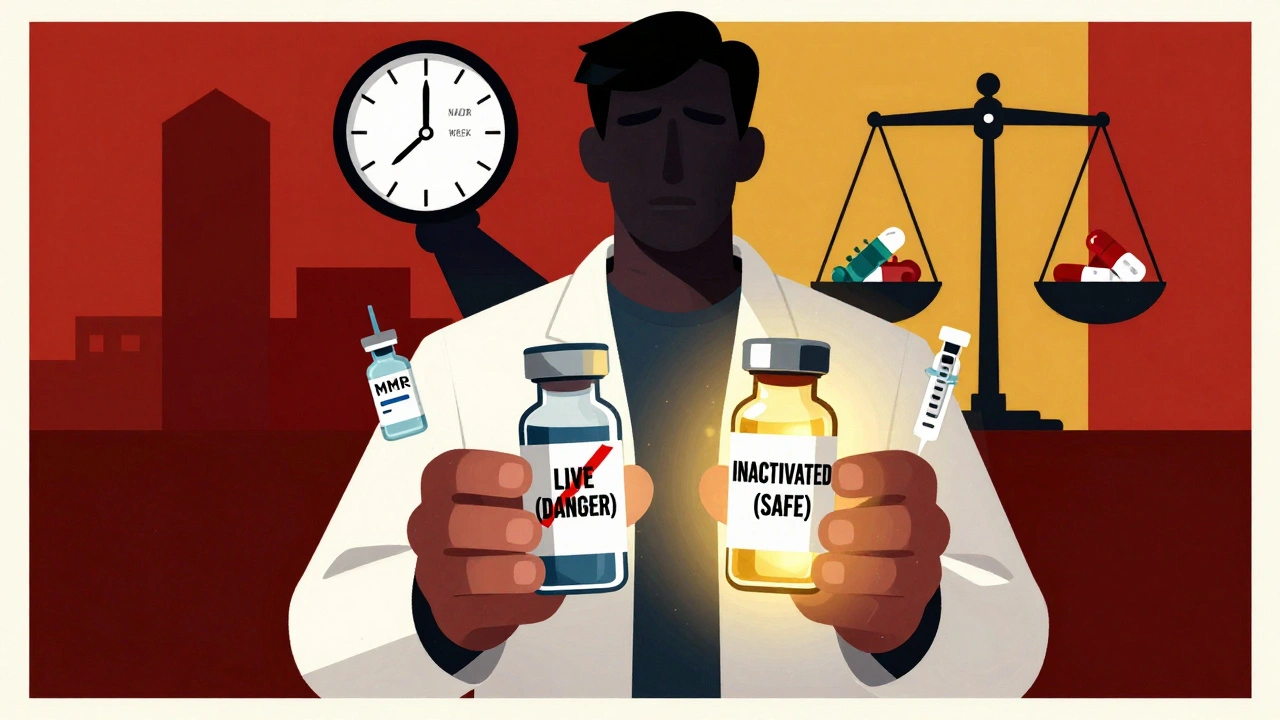
When you get a live vaccine, a vaccine made from a weakened form of the virus or bacteria that causes the disease. Also known as attenuated vaccines, they’re designed to mimic a real infection without making you sick—teaching your immune system how to fight off the real thing later. Unlike dead or synthetic vaccines, live vaccines contain a version of the germ that’s still alive but can’t cause illness in healthy people. This makes them powerful: one or two doses often give you lifelong protection.
These vaccines are used for diseases like measles, mumps, rubella, chickenpox, and yellow fever. They work best because they replicate in your body just enough to trigger a strong immune response—similar to what happens when you naturally catch the disease. But that same strength means they’re not for everyone. People with weakened immune systems—due to cancer treatment, organ transplants, or certain autoimmune conditions—should avoid them. Even a weakened virus can become dangerous if your body can’t control it. Pregnant women also shouldn’t get live vaccines, since the virus could potentially cross the placenta.
Storage is another critical factor. live vaccines, require strict temperature control to stay effective. Most need to be kept cold—between 2°C and 8°C—throughout transport and storage. If they freeze or get too warm, the live organisms can die, and the vaccine becomes useless. That’s why you’ll see refrigerated carriers and temperature logs at clinics and hospitals. It’s not just bureaucracy; it’s science.
Some live vaccines are combined into single shots, like MMR (measles, mumps, rubella) or MMRV (which adds chickenpox). That means fewer shots, fewer visits, and better protection. But timing matters. You can’t get a live vaccine if you’ve recently had another one—you need at least four weeks between doses. And if you’re about to have surgery or start immunosuppressants, your doctor will check your vaccine history first.
Side effects are usually mild: a low fever, sore arm, or a mild rash. But they’re signs the vaccine is working. In rare cases, a person might develop a very mild version of the disease—like a few chickenpox spots after the vaccine. That’s not a failure; it’s proof your immune system is learning.
There’s a reason live vaccines are still used decades after they were developed: they’re among the most effective tools we have. They’ve wiped out smallpox, nearly eliminated polio, and kept measles outbreaks in check. But their power comes with responsibility. Knowing who should get them, who shouldn’t, and how to handle them properly makes all the difference.
Below, you’ll find real-world guides on vaccine safety, storage, and how they interact with other medications and health conditions. Whether you’re planning travel, managing a chronic illness, or just trying to understand your next shot, these articles give you the facts without the fluff.