
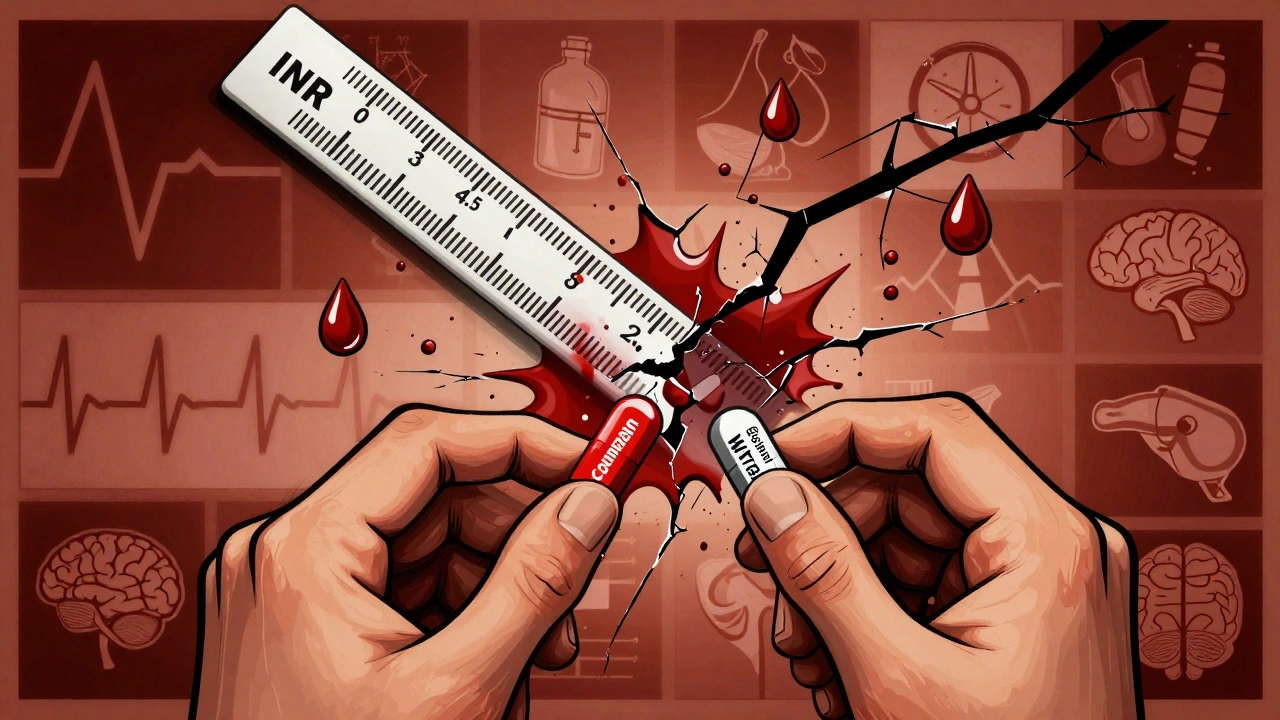
When you switch from a brand-name drug to a generic version, most people assume it’s like swapping one brand of battery for another-same power, lower price. But for NTI drugs, that assumption can be dangerous. Narrow Therapeutic Index (NTI) drugs have a razor-thin margin between helping and harming. A 10% change in blood levels might mean your seizure stays under control-or triggers a life-threatening episode. A 15% drop could turn a stable INR into a bleeding risk. These aren’t hypotheticals. Real patients have been hospitalized, had transplants rejected, or suffered breakthrough seizures after switching to a generic version of an NTI drug.
What Makes a Drug an NTI Drug?
NTI drugs are defined by their narrow window between effectiveness and toxicity. The FDA says these are medications where small differences in dose or blood concentration can cause serious harm-like organ failure, life-threatening bleeding, or uncontrolled seizures. Think of it like driving a car with no speedometer. You’re told to stay between 55 and 65 mph, but if you go 66, you crash. That’s the kind of precision needed with drugs like warfarin, phenytoin, cyclosporine, and levothyroxine.
Standard generic bioequivalence rules allow a 20% variation-80% to 125% of the brand’s blood levels. But for NTI drugs, that’s like saying it’s okay for your insulin dose to vary by 30%. For warfarin, a 10% change can push your INR out of range. For phenytoin, even a 5% drop can trigger seizures. That’s why countries like Canada and the EU require tighter limits: 90% to 111% for NTI drugs. The FDA still uses the wider range, even though its own experts admit it’s risky.
Warfarin: The Most Common NTI Drug
Warfarin is the most prescribed NTI drug in the U.S., used by millions to prevent strokes and clots. About 48% of NTI drug starts are for warfarin. The big question: can you switch from brand-name Coumadin to a generic without risk?
Observational studies say yes-but with caveats. One study of 36,911 patients found that 42% of those switched to generic warfarin needed an INR adjustment within weeks. Some saw their INR spike; others dropped dangerously low. But randomized trials? They show no major difference in bleeding or clotting events between brand and generic. So which is right?
The answer lies in context. If you’re stable on Coumadin and your doctor switches you to a generic without checking your INR for two weeks, you’re playing Russian roulette. But if you’re monitored closely-INR tested at day 3, day 7, and day 14-you’re likely fine. The AMA recommends extra monitoring after any switch. Most pharmacists agree: 41% say they always recommend follow-up tests for NTI drugs.
Antiepileptic Drugs: When the Brain Can’t Wait
Phenytoin and levetiracetam are two of the most concerning NTI drugs. For epilepsy patients, a drop in blood levels-even 10%-can mean a seizure. And it’s not just one seizure. It’s a cascade: ER visits, brain damage, even sudden death.
A study of 760 epilepsy patients found that switching to generic levetiracetam led to increased seizures, memory loss, depression, and aggression. Nearly half of those patients had to go back to the brand. Another study showed phenytoin generics had 22% to 31% lower blood levels than the brand. Doctors reported 50 cases of breakthrough seizures after switching-almost half of those patients had lower drug levels at the time of the seizure.
Seventy-three percent of U.S. states have laws that either ban automatic substitution of antiepileptic drugs or require the prescriber to explicitly allow it. Why? Because the risk isn’t theoretical. Patients on Reddit and epilepsy forums have shared stories of losing jobs, driving licenses, and independence after a switch. One mother wrote: “My son had his first grand mal seizure in three years the week after the pharmacy gave him a different pill.”
Immunosuppressants: A Transplant Can Fail in Days
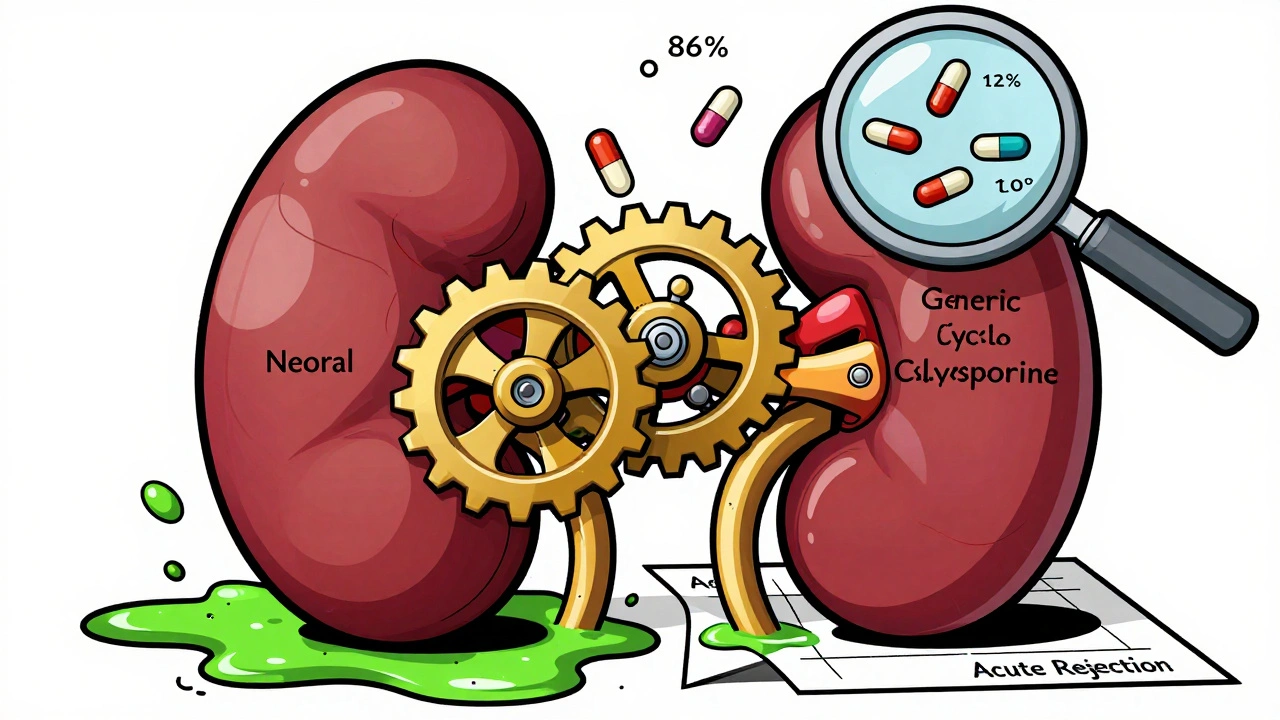
Cyclosporine and tacrolimus keep transplanted organs alive. Too little? Rejection. Too much? Kidney failure, nerve damage, cancer. There’s no middle ground.
In one study, 13 out of 73 transplant patients switched from Neoral (brand) to generic cyclosporine needed their dose adjusted within two weeks. Trough levels jumped from 234 ng/mL to 289 ng/mL-no change in dosage, just a different pill. That’s a 23% increase. One patient had acute rejection. Another needed dialysis.
Tacrolimus studies are more mixed. Some generics passed bioequivalence tests under tighter standards. But here’s the catch: not all generics are made the same. One lab found active ingredient levels ranged from 86% to 120% across different generic manufacturers. So switching from Mylan to Sandoz-both generics-could still cause a 34% spike in drug exposure. That’s not bioequivalence. That’s a gamble.
Levothyroxine: The Silent Threat
Levothyroxine is the most prescribed drug in the U.S. and the second most common NTI drug after warfarin. It’s used for hypothyroidism. Sounds simple, right? Wrong.
Even tiny changes in levothyroxine levels can cause heart palpitations, weight gain, depression, or osteoporosis. The FDA has flagged levothyroxine as a drug where generic switches can cause clinically significant changes. One study found patients switched to a new generic had TSH levels rise by 20% or more. Many needed dose adjustments. The American Thyroid Association advises sticking with the same brand or generic-once you’re stable, don’t switch.
And here’s something most patients don’t know: different manufacturers use different fillers and binders. Those inactive ingredients can affect how the pill dissolves in your gut. For levothyroxine, that’s enough to throw off your thyroid levels. That’s why some endocrinologists refuse to switch patients-even if it’s the same generic brand, just a different lot.
What Do the Experts Really Say?
Pharmacists are split. Eighty-seven percent say generics are just as effective. But those working in non-chain pharmacies-where they know their patients personally-are more cautious. Female pharmacists are more likely to warn about NTI switches. Why? Because they see the fallout.
The FDA says AB-rated generics are therapeutically equivalent. But they also admit the current 80-125% standard isn’t ideal for NTI drugs. In 2022, they released draft guidance proposing product-specific bioequivalence standards-meaning warfarin might have different rules than cyclosporine. That’s progress. But it’s slow.
Doctors who treat transplant patients, neurologists, and cardiologists are the most resistant to automatic substitution. They’ve seen the damage. A survey of neurologists found 70% avoid switching patients on antiepileptics unless the patient and family are fully informed and agree to close monitoring.
What Should You Do?
If you’re on an NTI drug, here’s what you need to know:
- Know your drug. Is it warfarin, phenytoin, cyclosporine, levothyroxine, or digoxin? If yes, treat it like a precision instrument.
- Ask your pharmacist: “Is this the same brand/generic I’ve been taking?” If they say “it’s the same thing,” ask again. Different manufacturers = different pills.
- Insist on monitoring. After any switch, get your blood levels checked within 7-14 days. For warfarin: INR. For phenytoin: serum level. For cyclosporine: trough level.
- Ask your doctor to write “Dispense as written” or “Do not substitute” on your prescription. It’s legal. It’s your right.
- If you feel different after a switch-more tired, more anxious, more seizures, more bruising-don’t wait. Call your doctor. Don’t assume it’s “just adjustment.”
Generic drugs save billions. That’s good. But saving money shouldn’t come at the cost of your health. For NTI drugs, consistency matters more than cost. Once you find a formulation that works, stay with it.
What’s Changing?
The FDA is starting to wake up. They’ve launched the Complex Generic Drugs Initiative to improve oversight. Post-marketing data shows NTI drugs make up 18% of all generic-related adverse events-even though they’re only 5% of generic prescriptions. That’s a red flag.
By 2030, experts predict a 15-20% rise in therapeutic drug monitoring for NTI drugs. More blood tests. More doctor visits. More cost-but less risk. Some insurers are already requiring pre-authorization for NTI generic switches. Others are starting to cover the brand-name version if the patient has had issues with generics before.
The future isn’t about banning generics. It’s about smarter substitution. Personalized dosing. Pharmacogenomics. Clinical trials are now testing whether your genes can predict how you’ll respond to a specific generic version. That’s the real solution: not one-size-fits-all, but one-size-fits-you.
Are all generic NTI drugs the same?
No. Different manufacturers use different inactive ingredients, manufacturing processes, and quality controls. Studies show active ingredient levels in generic NTI drugs can vary from 86% to 120% of the brand. Switching between two different generics-even if both are labeled “generic”-can cause dangerous changes in blood levels.
Can I ask my doctor to prevent generic substitution?
Yes. You have the right to ask your doctor to write “Dispense as Written” or “Do Not Substitute” on your prescription. This legally prevents the pharmacy from switching your medication without your doctor’s approval. Many patients with NTI drugs do this to avoid risks.
How long after switching should I get blood tested?
For most NTI drugs, get tested within 7 to 14 days after switching. Warfarin patients need an INR check at day 3, day 7, and day 14. For cyclosporine or tacrolimus, trough levels should be checked at 2 and 4 weeks. For phenytoin or levetiracetam, serum levels should be checked within 10 days. Don’t wait for symptoms-test early.
Why do some states ban automatic substitution of antiepileptic drugs?
Because switching generics for drugs like phenytoin or levetiracetam has led to documented increases in seizure frequency, hospitalizations, and even deaths. Studies show up to 31% lower drug levels after switching. States with restrictions have seen fewer emergency visits for uncontrolled seizures. The risk is too high to allow automatic substitution without informed consent.
Is it safer to stick with the brand-name NTI drug?
If you’re stable on a brand-name drug and switching causes no issues, generics may be fine. But if you’ve ever had a problem after a switch-like a spike in INR, a seizure, or rejection symptoms-sticking with the same formulation (brand or generic) is the safest choice. Consistency beats cost savings for NTI drugs.
Final Thoughts
Generic drugs aren’t the enemy. They make healthcare affordable. But NTI drugs aren’t like antibiotics or statins. They’re like fine-tuned instruments. One wrong turn, one different pill, and the music stops. The data doesn’t lie: for some patients, switching generics isn’t a cost-saving measure-it’s a medical risk. You don’t need to avoid generics entirely. You just need to be informed, vigilant, and proactive. Ask questions. Demand monitoring. Know your drug. Your life might depend on it.




Gareth Storer
December 5, 2025 AT 11:37So let me get this straight - we’re telling people to risk seizures, transplants failing, and bleeding to death because Big Pharma wants to save a few bucks? Brilliant. Next they’ll swap out my brakes for generic ones and say ‘it’s all the same, bro.’
Pavan Kankala
December 7, 2025 AT 09:55They don’t want you to know this, but the FDA is in bed with the big pharma lobbyists. NTI drugs? It’s all a controlled experiment. They let people get sick so they can sell more expensive monitoring tests. Watch the money trail - it leads straight to Wall Street.
Martyn Stuart
December 9, 2025 AT 08:53Important clarification: the 80-125% bioequivalence window was never meant for NTI drugs - it’s a blunt instrument applied to a scalpel. The FDA’s draft guidance in 2022 is a step forward, but it’s glacial. Patients need product-specific standards - not one-size-fits-all. And yes, different generics from different manufacturers? They’re not interchangeable. Not even close. Check your pill imprint, manufacturer, and always demand monitoring. Your life isn’t a cost-center.
Jessica Baydowicz
December 11, 2025 AT 08:27Y’all are doing such an amazing job raising awareness - this is HUGE. I’ve been on levothyroxine for 12 years and switched generics once - felt like I was drowning in fog for weeks. Thank you for saying what needs to be said. You’re not overreacting. You’re awake. Keep speaking up - your voice saves lives 💪
Shofner Lehto
December 11, 2025 AT 11:41It’s not about whether generics are bad. It’s about whether the system treats patients like data points instead of human beings. If your insulin dose can vary by 30%, you wouldn’t accept it. Why are we okay with it for warfarin? The answer is: because you’re not the one getting the blood draw at 3 a.m. after a seizure.
Emmanuel Peter
December 11, 2025 AT 18:54Wait, so if I’m on cyclosporine and my pharmacy switches me from Mylan to Sandoz, I’m basically getting a new drug? And nobody told me? That’s not a generic - that’s a lottery ticket with your kidneys as the prize. And the FDA says it’s ‘therapeutically equivalent’? Yeah, right. Like my toaster and my nuclear reactor are ‘equivalent’ because they both plug in.
Ollie Newland
December 13, 2025 AT 11:41For anyone reading this: if you’re on an NTI drug, you’re not being paranoid - you’re clinically literate. The 20% bioequivalence margin is a regulatory loophole dressed up as science. Real-world data shows spikes in adverse events post-switch. Pharmacists know this. Doctors know this. The system just doesn’t care enough to fix it. So you have to. Write ‘Do Not Substitute.’ Get your levels checked. Don’t trust the label - trust the lab.
Rebecca Braatz
December 14, 2025 AT 09:55I’m a nurse in a transplant unit. I’ve seen patients crash because their tacrolimus levels jumped 30% after a generic switch. No warning. No consent. Just a new pill bottle. I’ve held people as they cried because their new kidney started failing - all because a pharmacy saved $2. This isn’t healthcare. It’s corporate roulette. Fight for your meds. Your life isn’t negotiable.
Michael Feldstein
December 16, 2025 AT 06:29What’s wild is that we’re okay with this for NTI drugs but would never let a generic airplane part fly. We demand precision in everything else - why not here? The science is clear: variability matters. The solution isn’t to ban generics - it’s to demand smarter standards. Product-specific bioequivalence. Mandatory post-switch monitoring. Patient education. We can fix this. We just have to demand it.
jagdish kumar
December 16, 2025 AT 10:26Everything is a simulation. Even your pills.
Benjamin Sedler
December 17, 2025 AT 11:58Actually, the real problem is that people are too scared to take generics. They’re fine. You’re just scared because you’ve been fed fear porn by overcautious docs and alarmist Reddit threads. My cousin switched from Coumadin to generic and didn’t even notice. Chill out.
zac grant
December 18, 2025 AT 02:23Let’s not lose sight of the big picture: generics saved millions from bankruptcy. But for NTI drugs, we need tiered standards - like how we have different safety ratings for baby car seats vs. semi-trucks. Same principle. One size doesn’t fit all. The FDA’s new initiative is promising. Keep pushing for patient-centered rules. We’re not asking for luxury - just precision.