
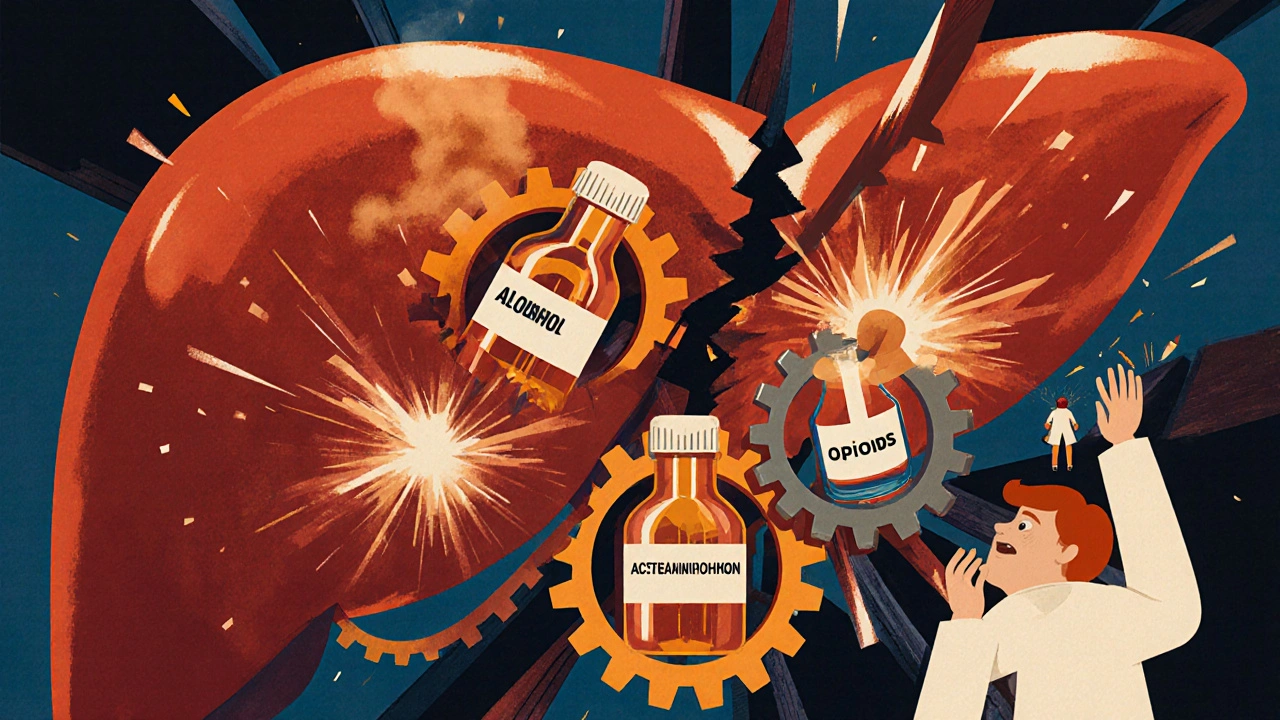
Alcohol and Medications: Dangerous Interactions and Health Effects
Mixing alcohol with medications can cause dangerous side effects, liver damage, or even death. Learn which drugs are risky, who’s most at risk, and how to stay safe.
When you drink alcohol, a central nervous system depressant that slows brain function and affects liver metabolism. Also known as ethanol, it doesn’t just make you feel relaxed—it changes how your body handles every drug you take. Whether it’s your blood pressure pill, painkiller, or antidepressant, alcohol can turn a safe treatment into a serious risk. The problem isn’t just about getting drunk. Even one drink can interfere with how your liver breaks down medicine, making side effects worse or the drug useless.
Take acetaminophen, a common pain reliever found in Tylenol and many cold medicines. Also known as paracetamol, it’s safe at normal doses—but with alcohol, even small amounts can cause sudden, severe liver damage. Or consider blood thinners, like warfarin or DOACs, used to prevent clots. Also known as anticoagulants, alcohol can make them too strong, raising your risk of bleeding—or too weak, leaving you vulnerable to stroke. The same goes for antidepressants, which affect brain chemicals like serotonin and norepinephrine. Also known as SSRIs or SNRIs, mixing them with alcohol can deepen depression, increase dizziness, and make you feel like you’re falling apart—even if you’re not drinking much. And don’t forget sleep aids, anxiety meds, or even antibiotics—alcohol doesn’t just add to the drowsiness, it can create new, unpredictable reactions.
It’s not just about what you’re taking. Your age, weight, how often you drink, and your liver health all change the game. Someone in their 70s on multiple meds? The risk is higher. Someone with a history of liver issues? Even one glass could be dangerous. And here’s the thing: most people don’t realize the danger until it’s too late. Doctors rarely ask about alcohol use. Pharmacies don’t always warn you. You’re left guessing.
This collection of articles doesn’t just list risks—it shows you real, practical ways to protect yourself. You’ll find clear guidance on what happens when alcohol meets common prescriptions, how to spot warning signs you’re ignoring, and what to do if you’ve already mixed them. You’ll learn why some meds are okay with a drink and others aren’t, how timing matters more than you think, and how to talk to your doctor without feeling judged. These aren’t theoretical warnings. They’re based on real cases, real data, and real people who got lucky—or didn’t.
Know this: if you take any medication regularly, alcohol isn’t just a social habit—it’s a medical variable. And you deserve to understand how it affects you.
Mixing alcohol with medications can cause dangerous side effects, liver damage, or even death. Learn which drugs are risky, who’s most at risk, and how to stay safe.