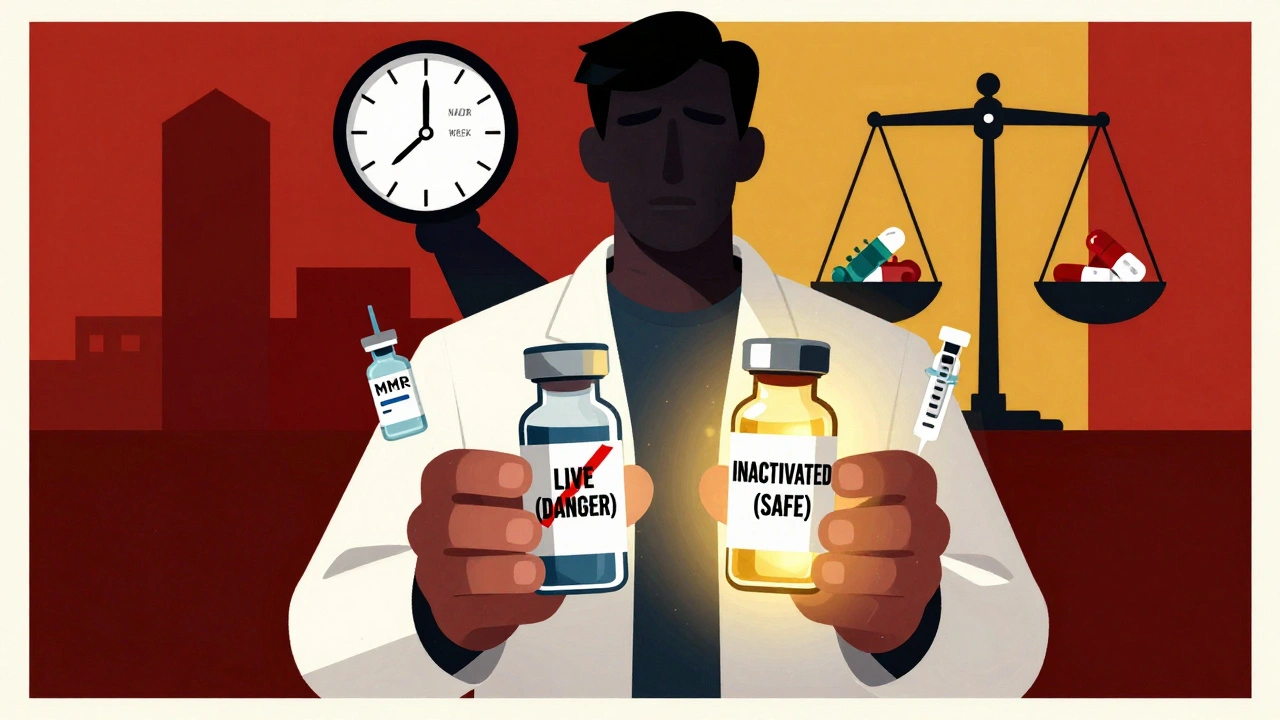
Inactivated Vaccines: How They Work and Why They Matter
When you get a shot to protect against polio, hepatitis A, or the flu, you might be receiving an inactivated vaccine, a type of vaccine made from viruses or bacteria that have been killed so they can’t cause disease. Also known as killed vaccines, these are one of the safest ways to train your immune system without risking infection. Unlike live vaccines, which use weakened versions of the germ, inactivated vaccines can’t replicate or spread in your body. That makes them ideal for people with weakened immune systems—like those on chemotherapy, with HIV, or taking immunosuppressants after an organ transplant.
These vaccines work by showing your immune system a dead version of the pathogen. Your body learns to recognize it, builds antibodies, and remembers how to fight it if the real thing shows up later. But because the germ is dead, your immune response isn’t as strong as with live vaccines. That’s why most inactivated vaccines need boosters—sometimes multiple doses over months or years—to keep protection high. For example, the polio vaccine (IPV) requires four doses before age six, and the hepatitis A shot needs two doses six months apart. Proper vaccine storage, keeping these vaccines cold from factory to clinic is critical. If they get too warm, the dead viruses can break down, and the shot won’t work. That’s why transporting vaccines in coolers or refrigerated trucks isn’t just a detail—it’s a lifesaver.
Not all vaccines are created equal. While some, like the MMR shot, use live viruses for long-lasting immunity, inactivated ones are the go-to when safety is the top priority. They’re also easier to produce at scale, which is why they’re used in global campaigns for diseases like rabies and typhoid. But they’re not perfect. Protection can fade faster than with live vaccines, and side effects like sore arms or low-grade fever are still possible. Still, for millions of people who can’t get live vaccines, these are the only option. And when paired with good hygiene and clean needles, they’ve helped wipe out deadly outbreaks.
What you’ll find below are real, practical guides on how these vaccines fit into everyday health—from how to store them during travel, to why some people need extra doses, to how they compare with newer mRNA shots. You’ll see how pharmacists check for proper handling, how temperature changes can ruin a batch, and why timing between doses matters more than you think. No theory. No fluff. Just what you need to know to stay protected—and help others do the same.