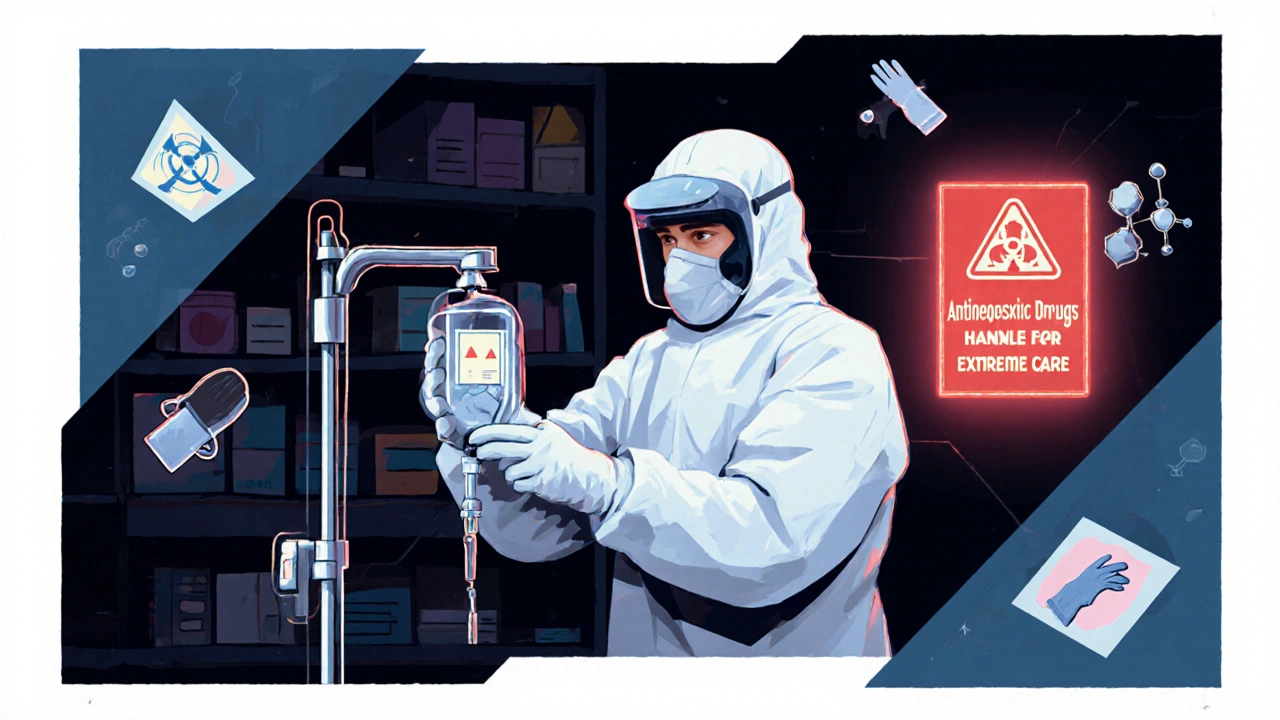
PPE for Chemo: What You Need to Know About Protective Gear for Chemotherapy
When handling chemotherapy, a type of powerful drug treatment used to kill cancer cells but also harmful to healthy tissue. Also known as antineoplastic therapy, it requires strict safety measures because even small amounts of exposure can cause skin irritation, reproductive harm, or long-term health risks. That’s where personal protective equipment, specialized gear designed to block contact with hazardous substances. Also known as PPE, it’s not optional—it’s the first line of defense for nurses, pharmacists, and even family members helping at home. You can’t just wear gloves and call it done. Chemo drugs can seep through regular latex, evaporate into the air, or stick to surfaces for days. Proper PPE includes nitrile gloves (double-gloving is standard), gowns that are lint-free and fluid-resistant, eye protection, and sometimes masks or respirators depending on the drug and how it’s given.
It’s not just about the gear—it’s about how you use it. A nurse changing a chemo bag needs to know the difference between a closed-system transfer device and an open one. A caregiver helping a patient take oral chemo pills must avoid touching the tablets directly and clean up spills with absorbent pads, not paper towels. Even the trash matters: chemo waste goes in special containers labeled for hazardous materials. These aren’t suggestions from a manual—they’re based on OSHA guidelines, NIOSH recommendations, and real incidents where people got sick from repeated low-level exposure.
And it’s not only for hospitals. More chemo is being taken at home now—pills, patches, even liquid forms. That means family members need to know how to handle dirty laundry, bathroom surfaces, or vomit safely. The same PPE rules apply: gloves when cleaning up, no sharing towels, and washing hands after every contact. If you’re caring for someone on chemo, you’re part of the safety team. Ignoring PPE isn’t bravery—it’s risk.
Below, you’ll find real-world advice from posts that cover everything from how chemo drugs interact with other meds to how to handle spills, store medications safely, and protect yourself when you’re not a professional. These aren’t theory pieces—they’re guides written by people who’ve seen what happens when safety slips. Whether you’re a patient, a caregiver, or a healthcare worker, the gear you wear, the steps you take, and the habits you build can make all the difference.