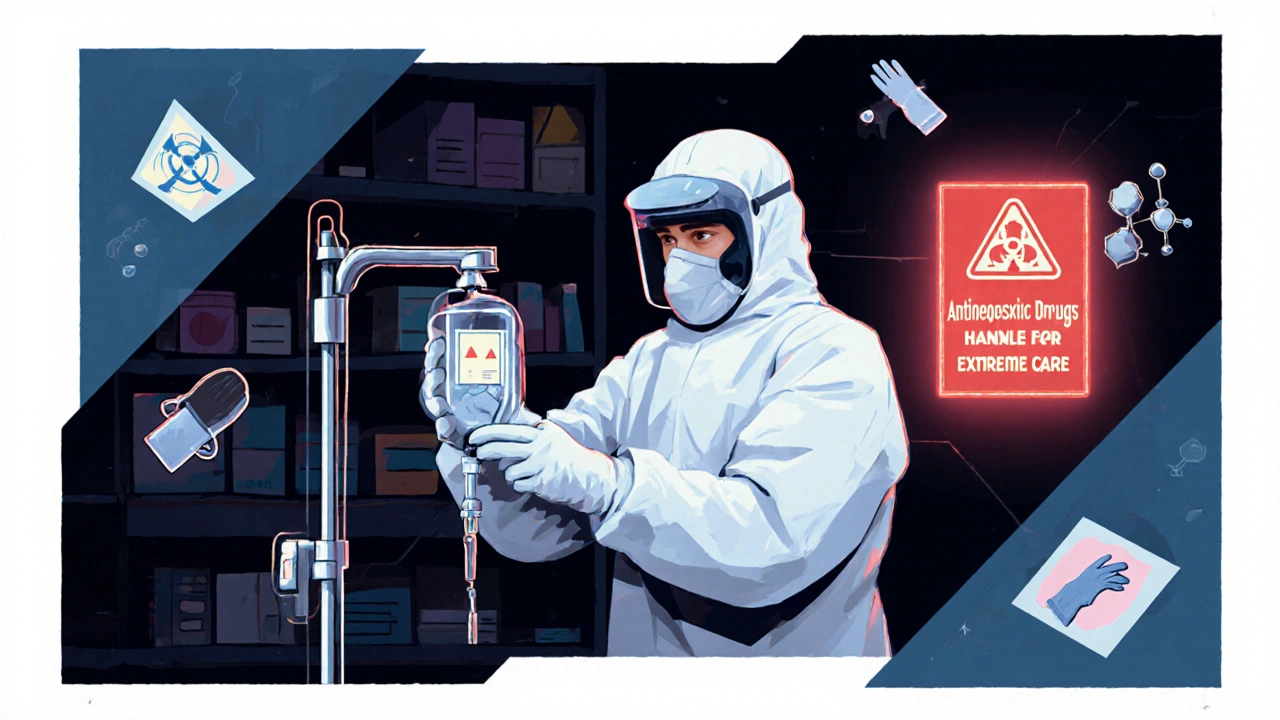
Antineoplastic Handling: Safe Practices for Cancer Drugs
When you hear antineoplastic handling, the safe procedures used to manage cancer-fighting drugs that can be toxic to humans. Also known as hazardous drug handling, it’s the unseen work that keeps nurses, pharmacists, and patients safe while delivering life-saving treatments. These drugs—like doxorubicin, paclitaxel, and cyclophosphamide—are designed to kill fast-growing cells. That’s why they work against tumors. But they don’t pick and choose. They can damage healthy tissue too. That’s why every step, from mixing to disposal, needs strict controls.
Antineoplastic handling isn’t just about wearing gloves. It’s about engineered systems: ventilated cabinets that pull air away from workers, closed-system transfer devices that prevent spills during IV prep, and sealed containers that stop contamination during transport. Hospitals follow guidelines from NIOSH and OSHA, and pharmacies train staff on how to handle spills, clean surfaces, and dispose of contaminated materials. A single drop of chemo on a counter can expose dozens of people over time. That’s why many facilities now use automated compounding robots—reducing human error and exposure risk.
It’s not just pharmacists doing this work. Nurses giving infusions, housekeeping staff cleaning rooms, and even waste handlers need training. Families caring for loved ones at home must know how to handle vomit, urine, or soiled linens safely. These drugs stay active in bodily fluids for days after treatment. Ignoring basic rules can lead to skin rashes, reproductive harm, or even long-term cancer risk for caregivers. The same drugs that save lives can hurt if handled wrong.
You’ll find real-world examples below—how barcode scanning cuts errors in chemo delivery, why certain drugs require special storage in cold or dark conditions, and how staff use checklists to avoid mixing the wrong dose. These aren’t theory papers. They’re practices used in clinics across the U.S. every day. Whether you’re a patient, caregiver, or healthcare worker, understanding antineoplastic handling isn’t optional. It’s the difference between healing and harm.